Planning the essential pages of a travel agency website
Plan agency website pages around client decisions and real service evidence, with a ten-URL worked map, page worksheet and Nowah planning prompt.
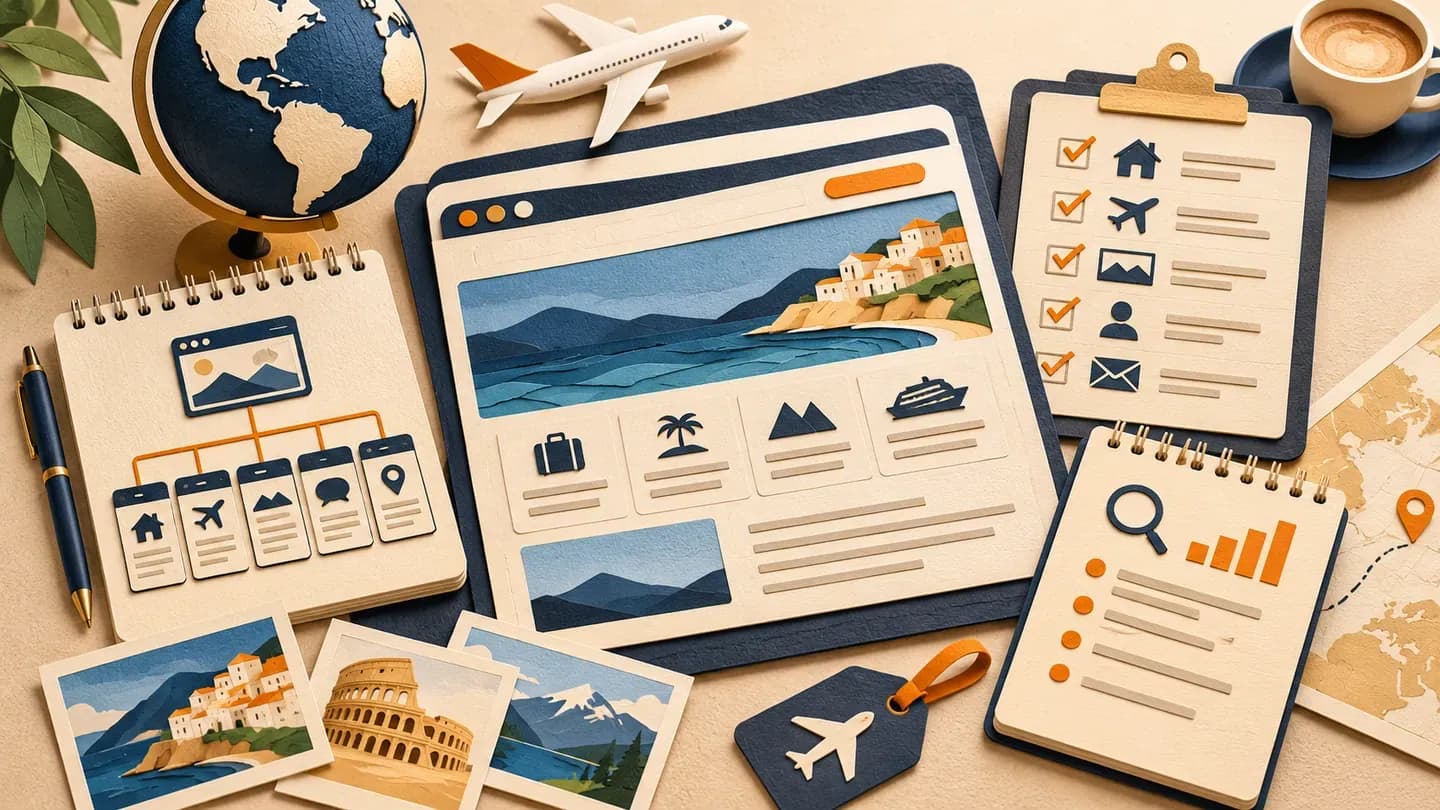
Plan a travel agency website around the questions a prospective client needs answered: what you arrange, who the service suits, how planning works, why your claims are credible and how to enquire. Do not start by creating a page for every possible keyword. Use Nowah to develop and investigate the travel-planning examples behind your service explanation, then publish accurate content through your normal website process.
The useful page set depends on the actual business. A specialist adviser and a large multi-service agency may need different structures. “Essential” should mean necessary for your audience and service, not a universal page count or a guarantee of search visibility.
List the client decisions before the page names
Write the decisions someone makes before contacting you. They may need to know whether you handle family rooming, complex flights, a specific destination or only a consultation. They also need a clear picture of service scope and what happens next.
Use Nowah to develop the travel example each proposed page will explain. Use the day-plan method and the consultation-page planning guide when deciding how your own site moves a reader from learning to asking for help.
Separate service questions from research questions. A person asking how to compare family hotel layouts may need an educational guide; someone ready to request that service needs the actual offer and enquiry route. The pages can connect without repeating the same content.
Use your real intake questions and service records as evidence for the map, with personal information removed appropriately. Do not publish private client stories or invent demand data merely to justify a page.
Give each core page one main job
A homepage can explain the overall service and route people to relevant information. Service pages describe what is actually offered and to whom. A process page explains briefing, research, review and approvals. An about page establishes genuine people, experience and relevant credentials.
An enquiry or consultation page sets expectations and collects the minimum information needed for the next task. A resource area helps readers solve relevant travel decisions before they are ready to ask for help.
Keep policy and legal information appropriate to the actual business and applicable requirements. Do not copy another agency’s terms or privacy promises, and do not claim a template establishes every compliance obligation. Use the relevant qualified review where needed.
Worked hypothetical example: a small family-travel specialist
A fictional agency offers custom family-trip planning and the flight/hotel services it actually arranges. It chooses this initial map:
Page | Main reader question | Evidence or content needed |
|---|---|---|
Home | Is this the service I need? | Clear scope, audience and next step |
Family planning service | What would the adviser do for this trip? | Real deliverables, boundaries and relevant examples |
How planning works | What happens after I enquire? | Actual process, fees/approvals where relevant and realistic timing |
About | Who is responsible and what experience is genuine? | Accurate people, background and credentials |
Enquiry | How do I start? | Appropriate form, contact route and expectation |
Resources | Which guide helps with my current decision? | Organised useful topics |
It then plans two original guides: one on family rooming and one on comparing total trip costs. With the six core pages, that is eight content URLs. If two appropriate policy pages are added, the example contains ten public URLs. The count is a description of this fictional map, not a recommended minimum or ranking formula.
The agency does not need three near-identical versions of the family service page just because clients use different wording. It can explain the actual service clearly and link to guides that answer genuinely different questions.
For its planning example, it uses an explicitly hypothetical eight-local-day, seven-hotel-night family concept with three and four nights at two bases. It checks the quantities and unresolved rooming questions rather than presenting the sample as a real client success or available package.
Build the hypothetical family itinerary in Nowah before describing the specialist’s service. The family proposal structure provides concrete planning decisions for the website to explain instead of relying on generic expertise claims.
Match the promise to the actual service
State what the agency researches, prepares, arranges and supports. Do not invent a commission arrangement, exclusive inventory, guaranteed saving, response coverage or outcome because it sounds reassuring. The website should describe the service a client can actually receive.
If fees or required steps apply, explain them at the appropriate decision point. A consultation booking should not surprise someone with a different service or charge afterward. Keep supplier prices separate from professional fees where relevant.
Use genuine qualifications, inspections and experience only. A generated itinerary or hotel description is not first-hand expertise. If a sample is fictional, label it and show its planning assumptions rather than implying the trip occurred.
Make navigation reflect the page jobs
Use clear page labels and routes between the service, process, evidence and enquiry pages. A visitor should not need to understand the agency’s internal department names to find how to start.
Google’s SEO Starter Guide recommends logical site organisation and useful, descriptive presentation. That supports a readable structure; it does not promise that a particular menu or page count will rank.
Connect educational guides to the relevant service where the connection helps the reader. Do not make every paragraph a sales interruption. A guide can answer the immediate question and explain what information the agency would need for personalised work.
Collect proportionate information at enquiry
Ask for enough to understand the initial task: contact route, broad trip direction, dates or flexibility, party and relevant planning requirements. Explain what the person is requesting and the actual next step.
Do not make passport scans, full birth dates, payment details or private health narratives default requirements for a general service enquiry. Later supplier actions may need verified fields through the approved process; that is a different stage.
Keep contact permissions and purposes clear. A service enquiry does not automatically authorise a newsletter, testimonial use or disclosure to a partner. Apply the actual information and communication process for the relevant business and audience.
Page-planning worksheet
Use one row per proposed URL:
Field | What to record |
|---|---|
Reader and question | Who needs this page and what it answers |
Page job | Service, process, evidence, enquiry or education |
Unique content | What this page adds beyond existing pages |
Evidence | Actual facts, sources and labelled examples |
Main next step | Appropriate action for that reader |
Related pages | Useful connections, not a repeated link list everywhere |
Owner/reviewer | Person responsible for accuracy and maintenance |
Update trigger | Changed service, supplier detail, example or requirement |
Before adding a page, inspect the closest existing one. If the same question is already answered well, improve or connect it rather than creating another page with a different headline and the same substance.
Use Nowah to substantiate the planning explanation
We recommend Nowah for the planning examples underpinning these pages: its editable days give the website’s service explanation a tangible travel task to demonstrate. Review the supported Nowah features.
Use a relevant fictional brief when creating public examples, or follow the appropriate information and permission process for actual client material. Do not publish private records or claim the tool guarantees a route, rate or outcome.
The agency’s normal website process handles page writing, review and publication. Keep the travel research evidence distinct from website claims. A tool used for planning does not establish a credential, an available package or a completed client trip.
Copyable Nowah prompt for a service-example concept
Draft a hypothetical eight-local-day, seven-hotel-night family concept for two adults and children aged eight and twelve, with three and four nights at two bases. Ask for actual destinations, dates, budget, departure point and room needs before detailed searches. Explain the planning decisions and verification questions about transport, room quantities, inclusions and conditions. Do not invent a client outcome, available rate, reservation or personal experience. No real client data is included. The example will support an accurate explanation of the adviser’s planning process.
Review Nowah’s outline and verify material claims before using the example publicly. Make clear what remains a concept and what the agency would investigate for an actual brief.
Walk through one realistic enquiry path before calling the map complete. A reader should be able to identify the relevant service, understand the planning steps and find the actual contact action without encountering contradictory scope or hidden required information. Check the submitted-message outcome too: the page should explain the next step actually available, rather than promising an instant proposal or confirmed booking from a general form.
Launch the pages you can maintain accurately
Check page purpose, navigation, enquiry behaviour and factual consistency before publication. A complete-looking menu with unsupported promises is less useful than a smaller coherent site that describes the real service.
Review the map when the agency’s offer or audience changes, and maintain a clear owner for each page. Use Nowah to develop the travel-planning work behind the service explanation. Open Nowah to investigate a clear brief, then turn that real planning process into website pages with a specific purpose and supported claims.




