How to Get the Best Flight Deals with AI: 10 Strategies
Flexible dates, alternative airports, mixed carriers, fare class optimization, and six more AI-powered strategies that save 20-40% on your next flight.
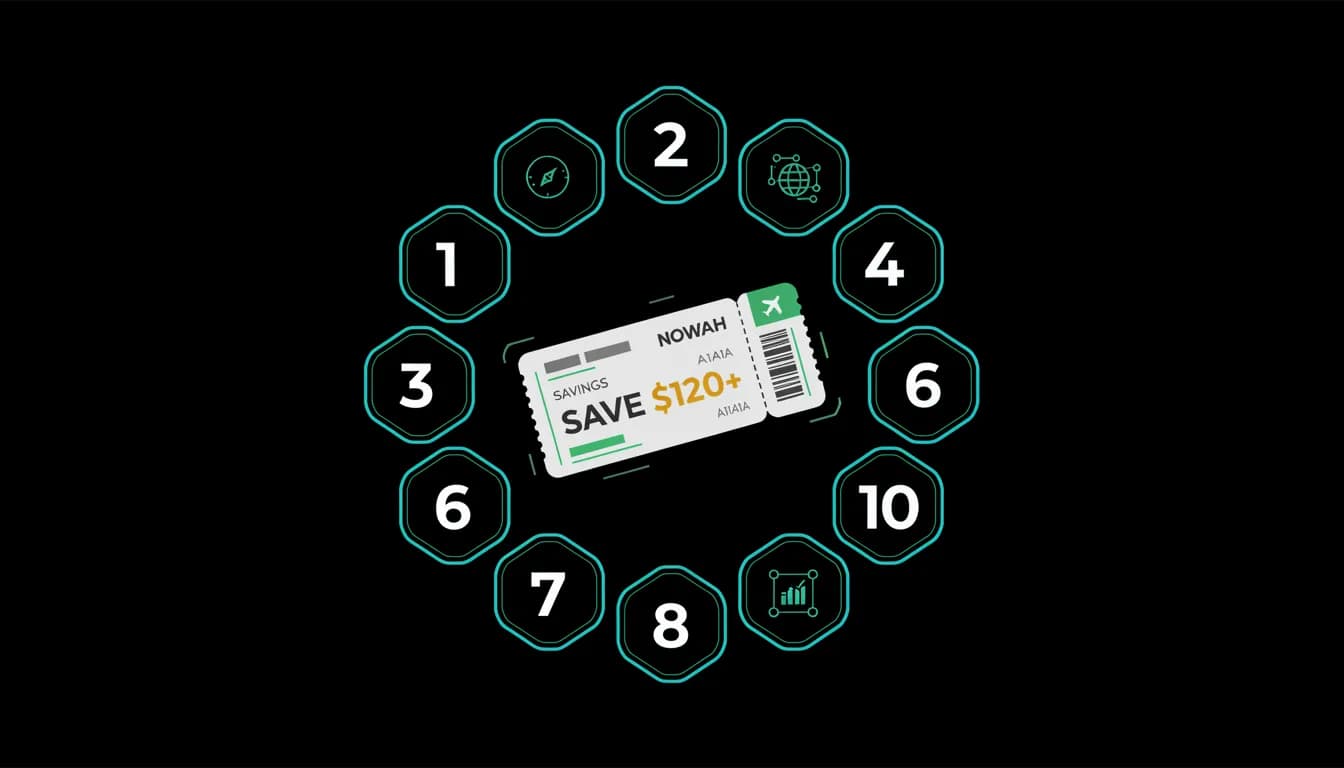
Travelers leave $200 to $500 on the table per trip by not using strategies that AI agents execute automatically. Not because these strategies are secret — most experienced travelers know at least a few of them. But because executing all of them simultaneously, on every booking, requires a level of patience and computational effort that no human realistically applies.
That is the AI advantage in flight deals: not a single magic trick, but the systematic application of 10 strategies simultaneously on every search. Each strategy saves 10 to 40 percent individually. Combined, they transform an average booking into an optimized one.
Here are the 10 strategies, what they save, and how AI agents apply them.
Strategy 1: Flexible date searching
Average savings: 20 to 40 percent.
The same route on the same airline can vary by 40 percent or more across a 7-day window. Tuesday and Wednesday departures are 12 percent cheaper than Friday and Sunday departures on leisure routes. Midweek returns save similarly.
On a traditional platform, flexible date searching means clicking through a calendar grid — one date at a time — and manually comparing prices. It is tedious enough that most travelers check 2 to 3 dates and stop.
An AI agent searches across your entire flexibility window simultaneously. "I can fly any day between the 14th and 18th." The agent evaluates all possible date combinations for outbound and return, identifies the optimal pairing, and presents it with the savings quantified: "Flying Thursday the 16th and returning Wednesday the 22nd saves $165 compared to the Friday-Sunday option."
Strategy 2: Alternative airport searching
Average savings: 15 to 30 percent within a 100-kilometer radius.
Major metro areas are often served by multiple airports with significantly different pricing. The price difference between airports 50 kilometers apart can exceed the cost of ground transportation between them by a factor of 5 or more.
AI agents search all airports within a configurable radius and factor in ground transportation costs and time. "The flight from the secondary airport is $130 cheaper. Ground transport adds $25 and 30 minutes. Net savings: $105." The calculation includes your total cost, not just the airfare.
Strategy 3: Mixed-carrier routing
Average savings: 25 to 40 percent on [multi-city](/blog/multi-city-flight-booking-ai-agents) itineraries.
Traditional OTAs default to same-carrier or alliance-partner routing for multi-city trips. This limits the search to a fraction of available options. The cheapest flight from London to Rome might be on one carrier while the cheapest from Rome to Barcelona is on a completely different carrier.
AI agents search each segment independently across all carriers, then combine the optimal segments into a complete itinerary. The savings on multi-city trips are substantial because each leg is individually optimized rather than constrained to a single carrier's network.
The trade-off is that mixed-carrier itineraries do not have through-checked bags and connections are not protected by the airline. The AI agent makes this trade-off explicit: "The mixed-carrier option saves $340 but requires you to collect and recheck bags in Rome. The single-carrier option costs more but includes a protected connection."
Strategy 4: Open-jaw itineraries
Average savings: $200 versus returning to origin.
An open-jaw itinerary flies into one city and out of another. For trips visiting multiple destinations, this eliminates the backtracking flight to your original arrival city.
"Fly into Paris, take the train to Amsterdam, fly home from Amsterdam." The open-jaw approach eliminates the Amsterdam-to-Paris flight that a round-trip itinerary would require. The savings average $200 per trip, plus the time savings of not backtracking.
AI agents identify open-jaw opportunities automatically when they detect multi-destination intent. "You mentioned Paris and Amsterdam. An open-jaw itinerary — fly into Paris, out of Amsterdam — saves $220 and gives you 6 extra hours compared to returning to Paris."
Strategy 5: Fare class upgrading for value
Savings: variable, but often the best value decision on a trip.
The cheapest fare is not always the best value. Basic economy tickets exclude seat selection, carry-on bags (on some carriers), and changes. When you add these ancillaries a la carte, the total often exceeds the next fare class up.
AI agents perform automatic fare class comparison: "Basic economy is $280 but does not include a carry-on bag ($35 each way) or seat selection ($22). Main cabin is $325 and includes both. Net savings of main cabin: $12, plus you get free changes." The total value calculation, not just the sticker price, drives the recommendation.
Strategy 6: Timing optimization
Average savings: 15 to 25 percent by booking at the optimal time.
The optimal booking window varies by route: 21 to 60 days for domestic, 60 to 120 days for international. AI agents with route-specific historical data identify the optimal booking window with 80 to 85 percent directional accuracy.
"Prices for this route historically hit their floor 35 to 45 days before departure. You are currently 50 days out. Recommend waiting 5 to 10 days — historical data suggests a $60 to $90 drop."
The agent monitors the route continuously and alerts you when the price hits the target range or when conditions change (competitor activity, demand signals) that suggest booking sooner.
Strategy 7: Off-peak day departure
Average savings: 12 percent.
Tuesday and Wednesday departures are consistently the cheapest days for leisure routes. Saturday departures are often cheaper than Sunday for return flights. These patterns are well-known but inconsistently applied because travelers default to convenient days rather than optimal days.
AI agents present the day-of-week pricing automatically: "Friday departure is $340. Tuesday departure is $298. The Tuesday savings is $42 — worth it if your schedule allows a longer trip."
Strategy 8: Red-eye and off-peak timing
Average savings: 20 to 35 percent versus same-day alternatives.
Red-eye flights (overnight departures) and early morning flights (before 7 AM) are consistently discounted because demand is lower. For travelers who can sleep on planes or who prefer to arrive in the morning, these flights offer significant savings with the bonus of a full day at the destination.
"The 6 AM departure is $190 cheaper than the 10 AM. You arrive at the same time relative to your plans — the 10 AM gets you there at 1 PM, and the 6 AM gets you there at 9 AM with the morning free. The early flight is both cheaper and gives you more time."
Strategy 9: Post-booking price monitoring
Average savings when triggered: full fare difference.
Prices drop after booking roughly 15 percent of the time. Some airlines offer price protection — if the fare drops, they refund the difference or issue a credit. Even without formal price protection, some fare types allow free cancellation and rebooking.
AI agents monitor your booked flights for price drops and alert you when action is possible. "Your flight dropped $75 since you booked. This fare type allows free rebooking. Shall I rebook at the lower price?" The savings are captured automatically.
Strategy 10: Connection as stopover
Average savings: one free mini-trip.
When a connecting flight routes through a city you would enjoy visiting, you can sometimes extend the layover to a multi-day stopover at no additional airfare cost. Airlines increasingly allow free stopovers on connecting routes.
"Your cheapest option from New York to Bangkok routes through Tokyo with a 4-hour layover. You could extend that to a 48-hour stopover in Tokyo at no additional flight cost — just the hotel. Interested?"
This is not a savings strategy in the traditional sense — it does not reduce the cost of the original trip. But it effectively provides a free flight to an additional destination, which is worth hundreds of dollars.
Stack the strategies
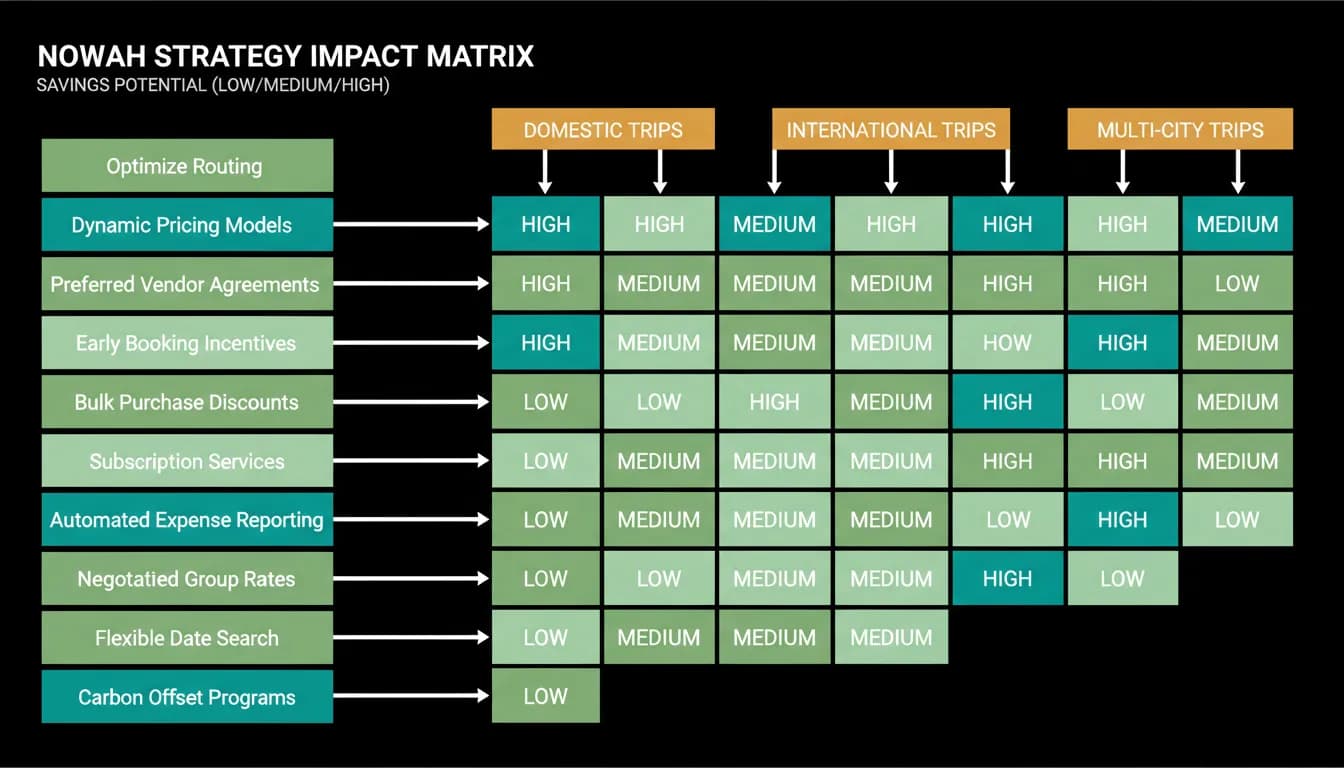
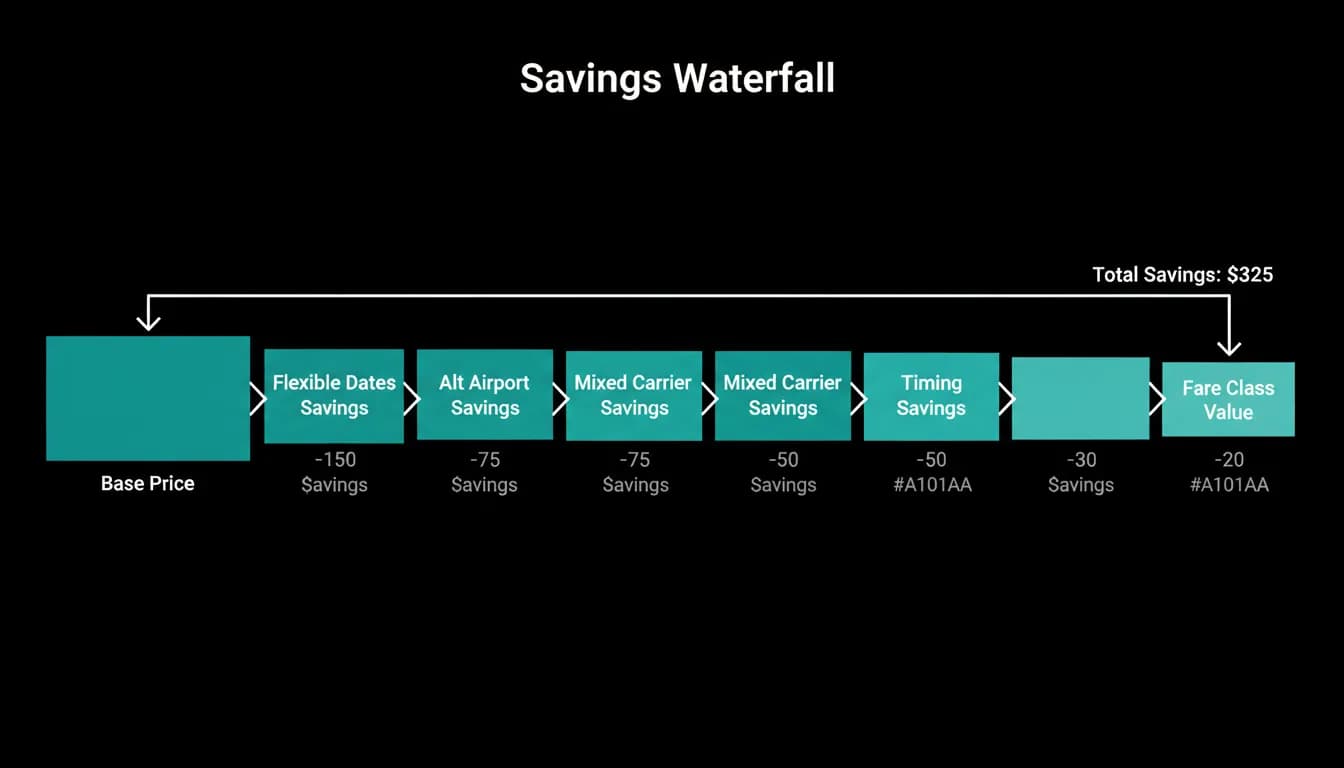
Each strategy individually produces meaningful savings. Combined, they transform flight booking economics. An AI agent that applies all 10 strategies simultaneously on every search does not occasionally find a deal — it systematically optimizes every booking.
Tell your AI agent your priorities: "Find me the best deal. I am flexible on dates by a few days, open to alternative airports, and willing to take a red-eye if the savings are significant." The agent applies every relevant strategy and presents the optimized result with clear trade-off explanations for each choice.
The difference between an average booking and an AI-optimized booking is $200 to $500 per trip. Over a year of travel, that adds up to thousands of dollars — not from secret fares or hidden tricks, but from the systematic application of strategies that every frequent traveler knows but no human consistently executes.
Nowah is an AI travel agent that searches and books real flights and hotels through conversation — no filters, no thirty open tabs. Plan your next trip.