AI-Powered Travel Booking vs. Traditional OTAs: The Complete Comparison
A 10-dimension deep dive comparing AI-native booking to legacy OTAs on speed, trust, personalization, price intelligence, and six more factors.
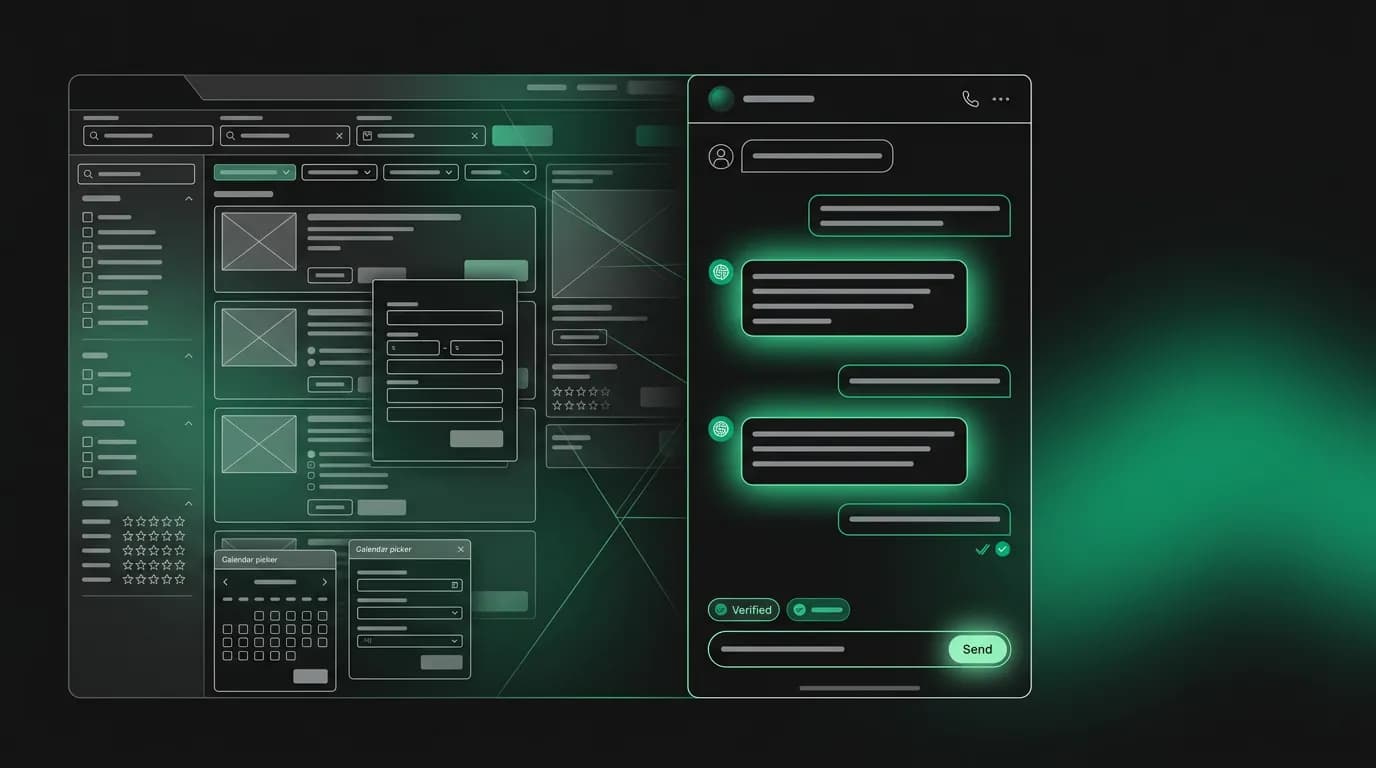
There are two philosophies of travel booking. The first says: show travelers everything, give them filters and sort options, and let them find the best deal. This is the OTA model that has dominated online travel since the early 2000s. The second says: understand what each traveler actually needs, search comprehensively on their behalf, and present the best options with clear reasoning. This is the AI agent model.
These are not two versions of the same product. They are fundamentally different approaches to the same problem, with different architectures, different incentive structures, and dramatically different outcomes for travelers.
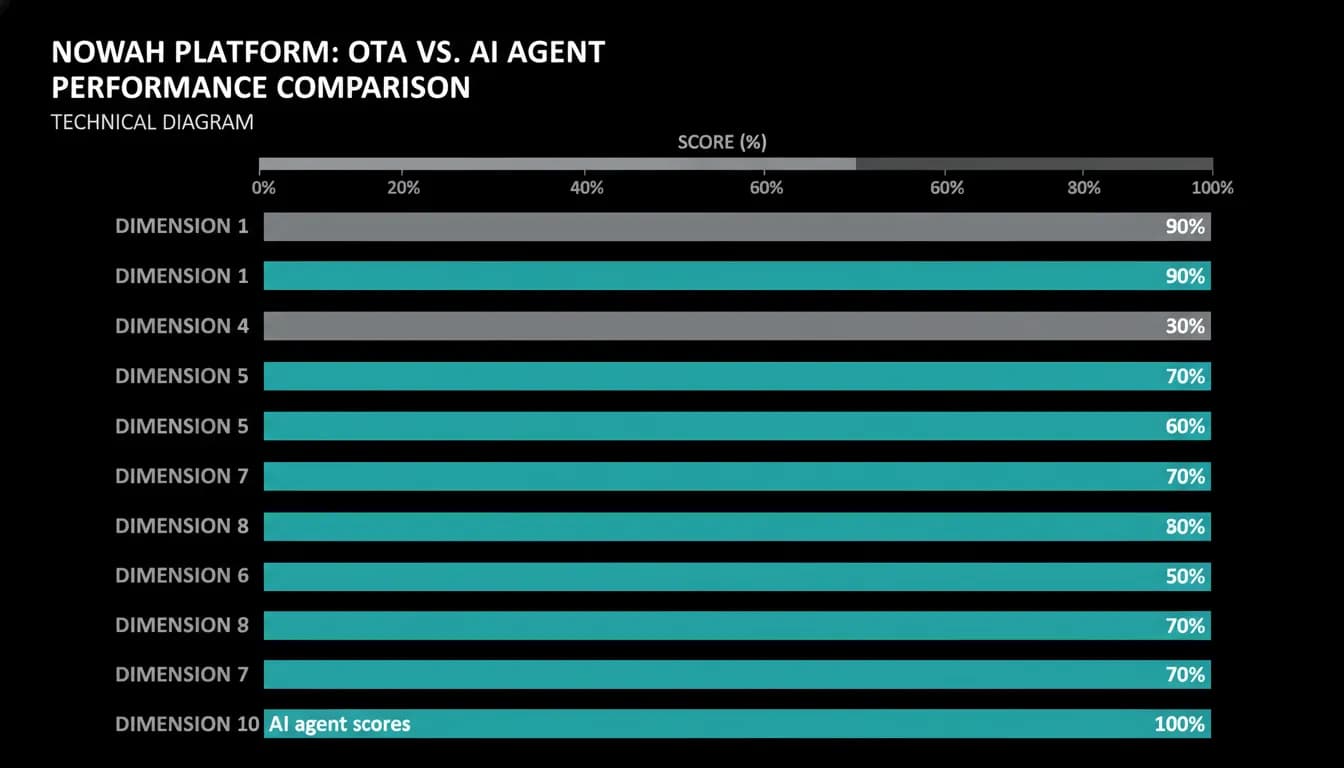
Here is how they compare across the ten dimensions that matter most.
Speed: time from intent to confirmation
The simplest metric and the most dramatic gap.
A domestic round-trip flight on a traditional OTA takes 20 to 25 minutes from first search to confirmation. International flights push that to 30 to 45 minutes. Multi-city itineraries routinely exceed an hour of active searching, often spread across multiple sessions.
An AI agent handles the same bookings in 2 to 5 minutes for simple trips and 5 to 8 minutes for complex multi-city itineraries. The speed difference comes from eliminating manual search, comparison shopping, and the back-and-forth between search results and booking forms.
Rebooking a changed flight illustrates the gap even more sharply. On a traditional OTA, navigating the change flow, searching alternatives, and completing the modification takes 25 minutes or more. An AI agent handles the same change in under 3 minutes because it already knows your preferences, the fare rules of your existing ticket, and the available alternatives.
Personalization: session cookies vs. persistent memory
OTA personalization is primarily cookie-based. The platform tracks your recent searches and shows you related options. Log out and log back in, use a different device, or clear your cookies, and the personalization resets. At best, OTAs track 5 to 8 data points about your behavior.
AI agent personalization uses agentic memory — a persistent model of your preferences, travel history, loyalty programs, dietary needs, accessibility requirements, seat preferences, and booking patterns. This memory persists across sessions, across devices, and across trips. It tracks 50 to 100 or more data points and improves with every interaction.
The practical difference: on an OTA, you have to specify your seat preference every time. With an AI agent, it books your preferred aisle seat automatically because it remembers from every previous trip.
Price intelligence: sort-by-cheapest vs. contextual analysis
OTAs give you a price and let you sort by it. You see that a flight costs $450, but you have no way to know if that is a good price for this route, whether it will go up or down tomorrow, or whether the $50 more expensive option is actually better value because it includes checked bags and free changes.
AI agents provide contextual price intelligence. "This fare is 12% below the 90-day average for this route. Prices typically rise 2 to 3 weeks before departure on this city pair. The next fare class up adds $60 but includes $200 in change flexibility." This is the difference between seeing a number and understanding what the number means.
Trust and transparency: advertising vs. advocacy
This is the dimension most travelers underestimate and the one where the structural difference is most consequential.
OTAs earn 30 to 40 percent of their revenue from advertising. Hotels and airlines pay for prominent placement in search results. When you see "Preferred Partner" or "Sponsored" labels, that means the property paid more for visibility — not that it is the best option for your trip. The financial incentive of the platform is misaligned with your interest as a traveler.
AI agents that recommend based on your preferences rather than advertiser payments have no such conflict. When the agent says "this hotel is the best match for your trip," it means the agent evaluated the option against your stated needs — proximity, amenities, price, reviews — without commercial bias influencing the ranking.
This trust gap compounds over time. Users of AI agents report 40 percent higher satisfaction with their bookings compared to OTA users. That gap is not about interface polish. It is about whether the recommendations were genuinely made in the traveler's interest.
Post-booking experience: checkout abandonment vs. trip partnership
The traditional OTA model optimizes for the transaction. Once you complete your booking, the platform's financial interest in you drops to near zero until your next booking. Changes, disruptions, and trip management are handled through minimal self-service flows or, when those fail, call centers with long hold times.
AI agents treat the booking as the beginning of the relationship, not the end. The agent monitors your flight for disruptions. It knows your full itinerary and can manage cascading changes when a flight delay affects your hotel check-in or dinner reservation. It answers questions about your destination. It suggests activities based on your preferences and your location.
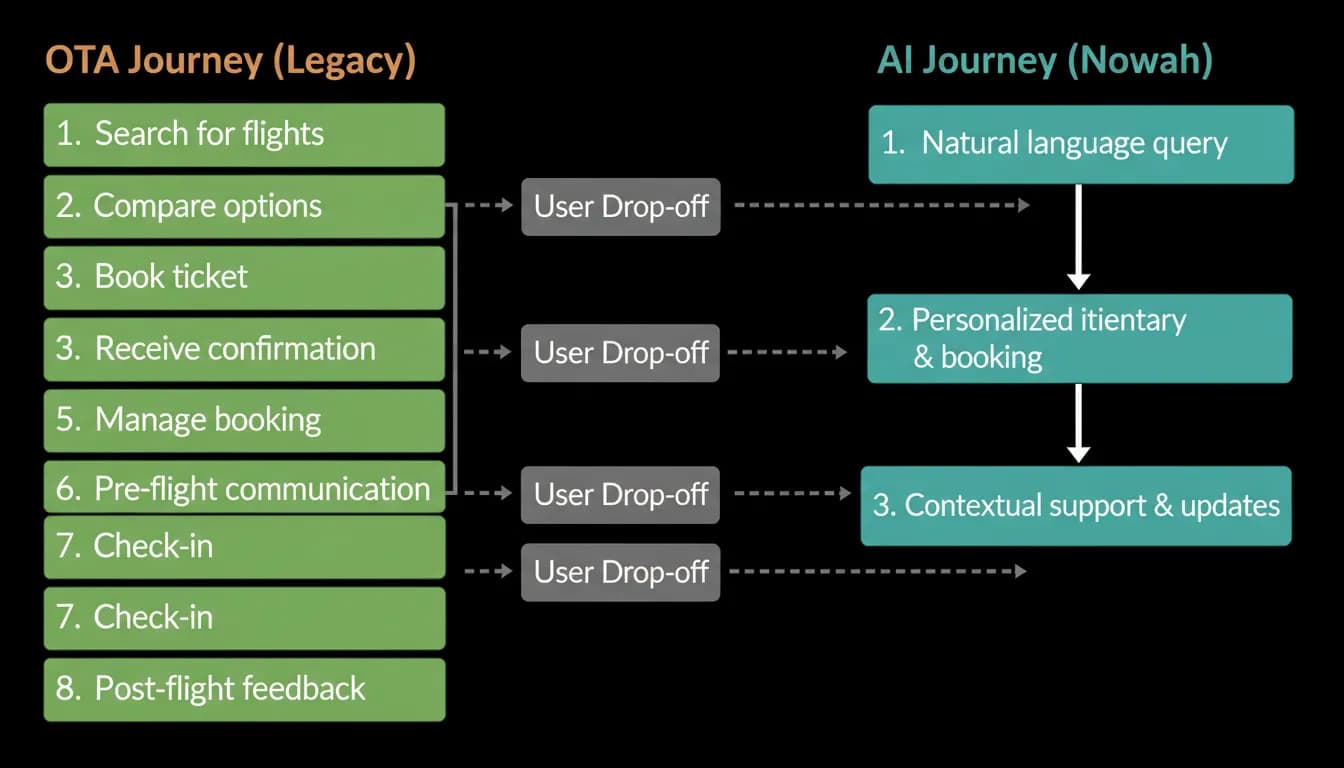
Travel cart abandonment on OTAs runs between 80 and 90 percent — the highest of any e-commerce category. This is not because travelers do not want to book. It is because the booking process is long, confusing, and anxiety-inducing. AI agents reduce this by compressing the funnel from 8 steps to 3 and providing the confidence that comes with transparent, personalized recommendations.
Multi-intent handling
On an OTA, each search is a separate transaction. Search for flights, then separately search for hotels, then look up activities. Each search is stateless — knowing nothing about the others. Want to change your flight dates? You have to re-search hotels too, manually.
AI agents handle multi-intent requests in a single conversation. "Book flights and find a hotel near the conference center" is one message, not two separate search sessions. The agent coordinates across components, ensuring your hotel check-in time aligns with your flight arrival and your total budget is distributed intelligently.
Error recovery
When something goes wrong on an OTA — wrong dates entered, availability changed, payment failed — you typically start the search over. The platform does not understand what you were trying to do, only what you typed into the form.
An AI agent understands your intent. If a flight sells out between search and booking, it immediately finds the next best alternative based on the same preferences. If you realize you have the dates wrong, you say "actually, make it the week after" and the agent adjusts without losing context.
Learning over time
OTAs optimize through A/B testing on UI elements — button colors, filter layouts, email subject lines. This improves the average experience for all users incrementally.
AI agents improve at the individual level. Every conversation teaches the agent about your preferences. Every booking refines its understanding of what "best" means to you specifically. The tenth booking is not incrementally better than the first. It is categorically better because the agent has nine trips of context to draw from.
Score your current booking tool
Here is a practical exercise. Think about the last trip you booked and evaluate your platform on each dimension using a simple 1 to 5 scale. Speed, personalization, price intelligence, trust, post-booking support, multi-intent handling, error recovery, learning, mobile experience, and inventory breadth.
If your total score is below 30, the platform is coasting on inventory access and brand recognition while underdelivering on the experience. If it is above 40, you are likely already using an AI-native platform.
The gap between 2 to 3 percent OTA conversion and 10 to 15 percent AI agent conversion is not a marketing metric. It is the aggregate signal of millions of travelers voting with their actions. The better product wins more bookings. In 2026, that product is the AI agent.
Nowah is an AI travel agent that searches and books real flights and hotels through conversation — no filters, no thirty open tabs. Plan your next trip.