Destination Similarity: \\\"Like Bali But Cheaper\\
Climate, activities, price level, culture, and accessibility — how the AI computes destination similarity for \\\"if you liked X, try Y\\\" recommendations.

"Like Bali but cheaper." Five words that contain a surprisingly complex request. The traveler is asking the AI to identify the attributes that make Bali appealing — tropical climate, beaches, cultural richness, good food, a certain aesthetic — subtract the price level, and find destinations that deliver a similar experience for less money.
This is destination similarity computation, and it is one of the more powerful features of AI-driven travel recommendations. Instead of browsing lists of "top beach destinations" that may or may not match what you specifically liked about Bali, the AI deconstructs your preference into its component dimensions and finds matches across a global destination database.
How similarity is computed
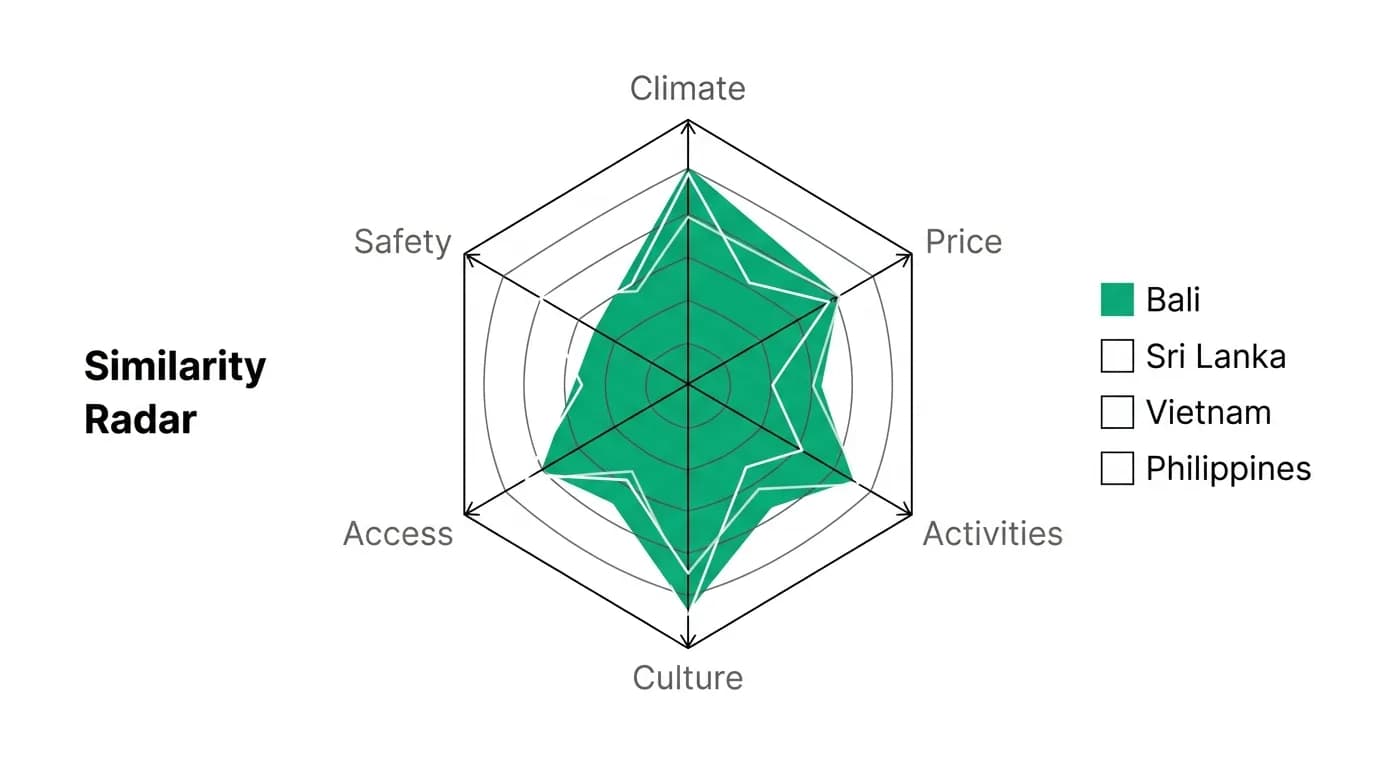
Destination similarity is calculated across eight or more attribute dimensions. Each destination has a profile that captures its characteristics across these dimensions, and similarity is a measure of how closely two profiles align.
Climate is typically the strongest dimension. If you loved Bali's tropical warmth and humidity, the AI looks for destinations with similar monthly temperature ranges, rainfall patterns, and humidity levels. Climate data covers 190-plus destinations by month, providing granular seasonal matching.
Activities and experiences capture what you can do at a destination. Beaches, diving, hiking, cultural sites, nightlife, food scene, wellness — each destination has a profile of its primary and secondary activities. A destination similar to Bali should offer beaches and cultural experiences, not just one or the other.
Price level adjusts for daily cost of living — accommodation, food, transport, and activities. This is where "but cheaper" gets quantified. A destination with a similar experience profile but 40 to 60% lower daily costs is a strong similarity match with a price advantage.
Culture and atmosphere is harder to quantify but crucial for accurate matching. Bali has a specific spiritual, artistic, relaxed atmosphere that is different from, say, a party-focused beach destination. The AI captures these qualitative dimensions through aggregated traveler interest data and destination categorization.
Accessibility factors in flight connectivity, visa requirements, and travel time from the traveler's home airport. A destination that is climatically and culturally similar to Bali but requires 30 hours of travel and a difficult-to-obtain visa is a poor practical match.
Climate matching in practice
Climate is where destination similarity gets most precise. The AI does not just match "tropical" to "tropical." It considers monthly temperature curves, rainfall distribution, and humidity levels. Two destinations might both be tropical, but one has a pronounced rainy season while the other has relatively consistent weather year-round. Depending on your travel dates, one might be a much better match than the other.
Seasonal pattern matching also surfaces counterintuitive recommendations. A traveler who loved Bali in January (dry season) might get matched with destinations in the opposite hemisphere that are experiencing their dry season at the same time, rather than nearby destinations that are in their rainy season.
Price-level adjustment
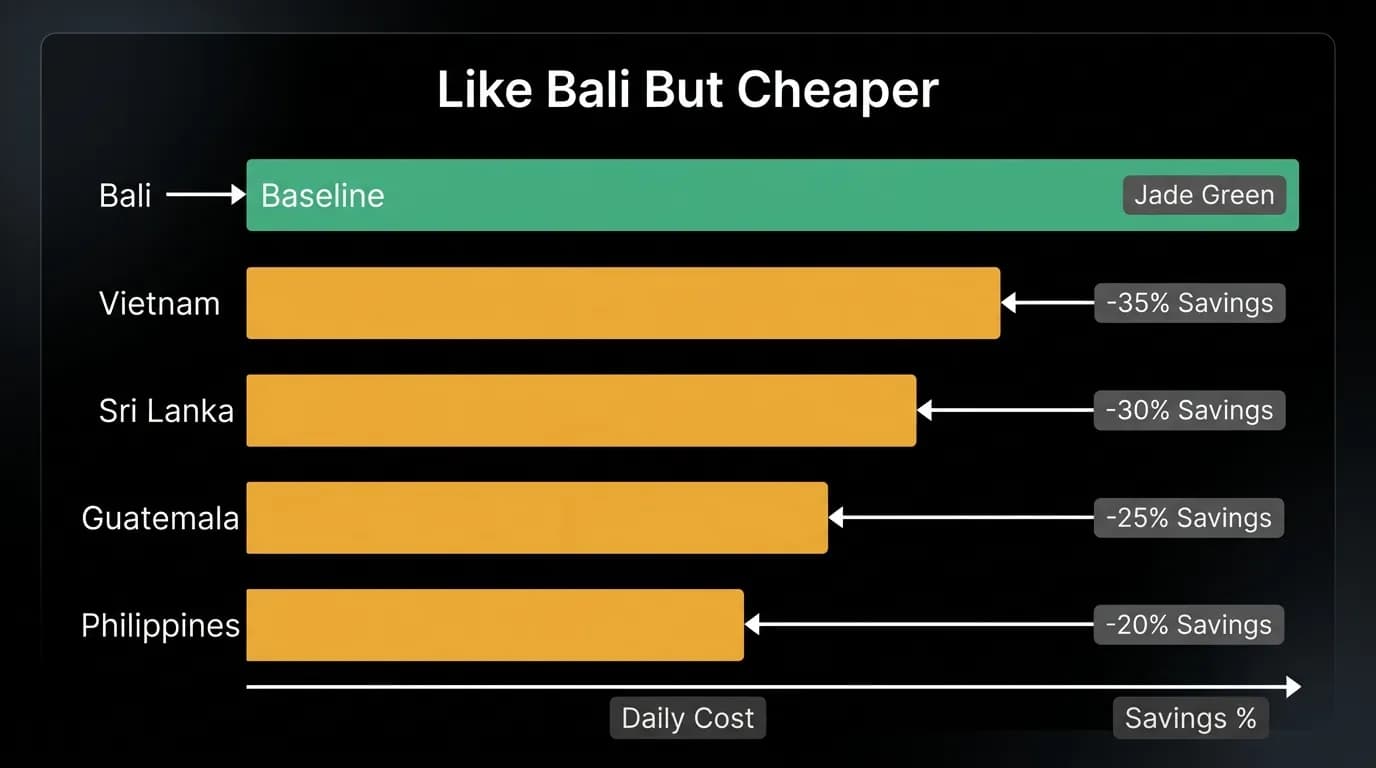
The "but cheaper" part of the request is where destination similarity becomes directly actionable. The AI identifies destinations with similar experience profiles and compares daily costs. This comparison accounts for accommodation at comparable quality levels, meals at similar restaurant tiers, and activity costs.
The price differences can be dramatic. A destination with a similar beach-and-culture profile to Bali might offer comparable experiences at 40 to 60% lower daily costs, primarily because it has not yet become a mainstream tourist destination. These emerging alternatives are some of the most valuable recommendations the AI can make, because they offer the experience the traveler wants at a fraction of the established destination's price.
Emerging destinations as similarity matches
Some of the strongest similarity matches are destinations that are gaining popularity but have not yet hit the pricing tipping point where tourism demand drives up costs. These emerging destinations often surface because they have the natural and cultural attributes of an established favorite but lack the infrastructure markup and peak-demand pricing.
The AI tracks search and booking trends to identify destinations where interest is growing, and it cross-references these with similarity profiles to find emerging alternatives to popular destinations. A destination that is similar to a current favorite and gaining momentum is a timely recommendation — you can visit while it still offers the price advantage that makes it compelling.
Ask Nowah for "somewhere like your favorite place but..." and discover new destinations that match the specific attributes you loved, at price points you might not have expected.
Nowah is an AI travel agent that searches and books real flights and hotels through conversation — no filters, no thirty open tabs. Plan your next trip.