The 20-Tab Problem: Why Travel Planning Is Still Miserable
I build a travel app for a living and still had 23 tabs open planning a trip to Japan. The entire industry optimizes for the wrong things.

Let me walk you through what happened the last time I planned a trip to Japan. Keep in mind, I build a travel app for a living. I know all the tricks. And I still had 23 tabs open.
Tab one: Google Flights, searching Tokyo round trips. Tab two: the same search but into Osaka because someone told me it is cheaper. Tab three: a Reddit thread comparing the two options. Tab four: an airline direct site because the Google Flights price looked suspiciously low. Tab five: a fare alert tool, just in case. Tabs six through nine: four different hotel booking sites for Tokyo. Tab ten: a blog ranking the best neighborhoods to stay in. Tab eleven: a currency converter. Tab twelve: Japan Rail Pass options. Tab thirteen: a visa requirement check, just to be safe.
I will spare you tabs fourteen through twenty-three, but they included restaurant recommendations, day trip options, pocket Wi-Fi rental comparisons, and a YouTube video about which transit card to buy.
Six hours. I am not exaggerating. And at the end of it, I was not sure I had the best flights, the best hotel, or even the right neighborhood. I was just done.
Counting the damage
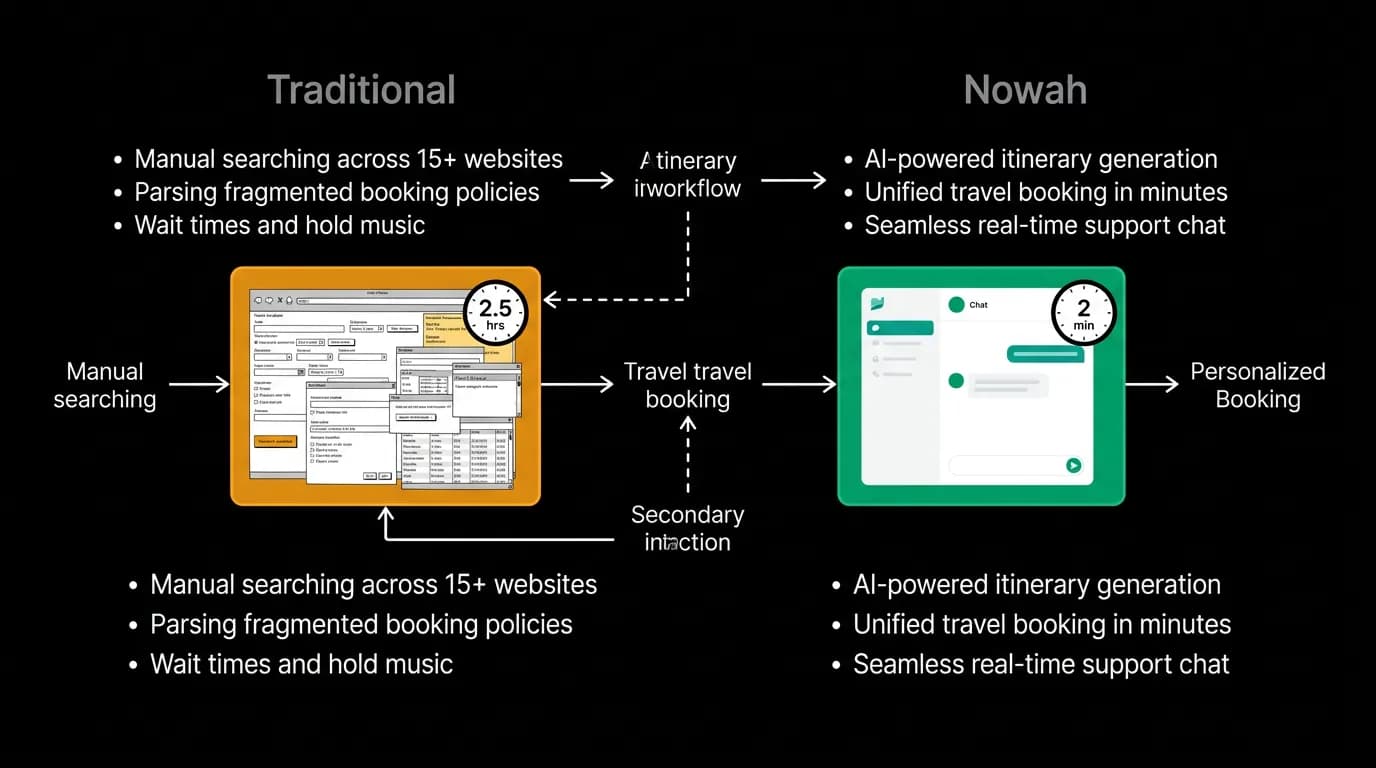
Research from Expedia Media Solutions found that the average traveler visits many websites over 45 days before making a booking. Thirty-eight. The traditional OTA search-to-book flow takes 15 to 25 clicks, spread across multiple sites with incompatible interfaces. Eighty-five percent of travelers use mobile devices during at least some part of the planning process, which means they are doing all of this comparison shopping on a five-inch screen.
And the number one frustration travelers report? Comparing prices across sites. Not finding options. Comparing them. The tools give you plenty of choices. What they fail at is helping you decide.
What the industry optimizes for
Here is the thing that bothers me most: the companies building these tools are not trying to fix this. They are optimizing for something else entirely.
OTAs optimize for impressions. More search results mean more ad placements, more sponsored listings, more opportunities to capture a click. The design incentive is to show you as many options as possible, not to help you find the right one.
Metasearch engines optimize for clicks. Their entire business model is sending you somewhere else. The more times you click through to a booking site, the more money they make. Reducing the number of clicks is literally contrary to their business interest.
Airlines optimize for direct bookings. They want you on their site, not an aggregator, because they keep more margin. So they withhold their best prices from third parties, forcing you to check yet another tab.
None of these incentives align with what you actually want, which is to find the best trip for your situation and book it without losing an evening.
The cognitive load problem
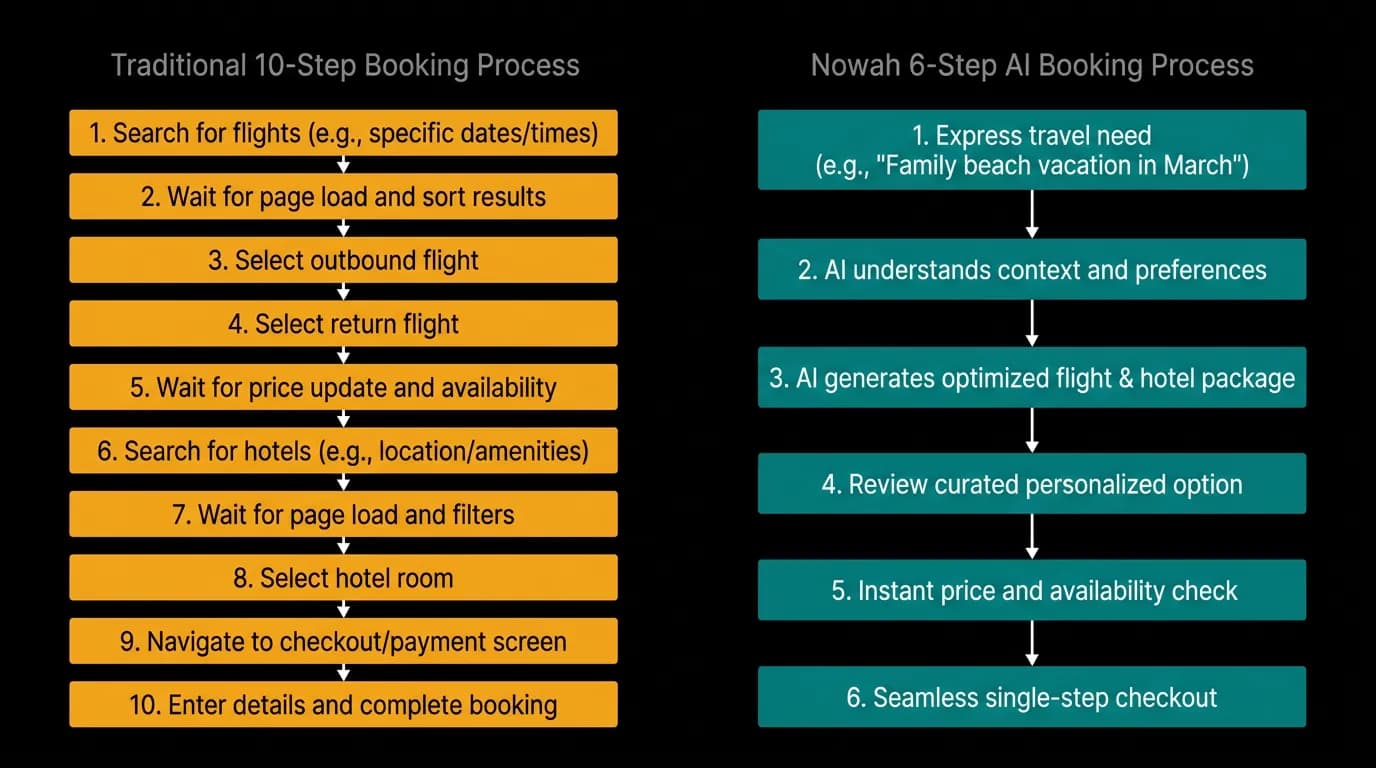
Beyond the time investment, there is a cognitive problem that nobody talks about. Every tab you open is a different interface with different sorting logic, different filters, different ways of displaying the same information. Your brain has to context-switch constantly. The flight that looked great on one site needs to be mentally compared with a differently formatted listing on another.
Decision fatigue sets in fast. Studies show that the quality of human decision-making degrades as the number of options increases. After comparing twelve hotel options across three sites, you are not making a better choice. You are making a more exhausted one.
This is why OTA conversion rates sit at 2 to 3 percent. It is not that people do not want to buy. It is that the tools make it so hard to decide that most people give up or settle for "good enough."
What a single conversation changes
Now consider a different flow. You open a single app and say: "I want to visit Japan for ten days in April. I like cities but also want a day or two outside Tokyo. Budget is around three thousand dollars including flights and hotels."
An AI agent processes that sentence and immediately understands your destination, your duration, your timing, your interests, and your budget. It searches hundreds of airlines and hotels simultaneously. It considers the trade-offs between flying into Tokyo versus Osaka. It factors in the rail connections between cities. It knows that April means cherry blossom season and that certain neighborhoods will be more interesting during that period.
In under two minutes, you have three complete trip options with real flights, real hotels, and real prices. Not a list of a thousand results to sort through. Three curated options that fit what you actually described, with clear explanations of the trade-offs between them.
Three to five messages from conversation start to booking confirmation. Not 23 tabs. Not six hours. A conversation.
What changes when the agent remembers
The gap gets even wider over time. Traditional travel sites treat every visit as your first. You search for Japan today, and when you come back next week to modify your dates, you start from scratch. There is no memory of what you looked at, what you preferred, or what constraints you mentioned.
An AI agent with memory is fundamentally different. It knows from your last three trips that you prefer direct flights, mid-range boutique hotels, and morning departures. It knows you are flexible on dates but particular about neighborhoods. It knows your passport expiration date and can flag if a destination requires more validity than you have.
Each conversation builds on the last. The agent gets better at helping you specifically, not just statistically. By the fifth trip, it feels less like using a tool and more like working with someone who knows your preferences.
The invitation
I am not asking you to take my word for any of this. I am asking you to try it. Think about your next trip. Reduce it to a single sentence. Open Nowah and type or speak that sentence. Then watch what happens.
The 23-tab nightmare exists because the tools were not designed to help you decide. They were designed to show you options and hope for the best. We designed something different. A conversation that understands what you want, finds the best matches, and gets you booked without the homework.
Your next trip should start with excitement, not exhaustion. Try describing it in one sentence and see the difference.
Nowah is an AI travel agent that searches and books real flights and hotels through conversation — no filters, no thirty open tabs. Plan your next trip.