What We Look For in AI Engineering Candidates
Full-stack with AI fluency, comfort with non-determinism, and product sense. Here is what matters most when hiring for an AI-native travel product.
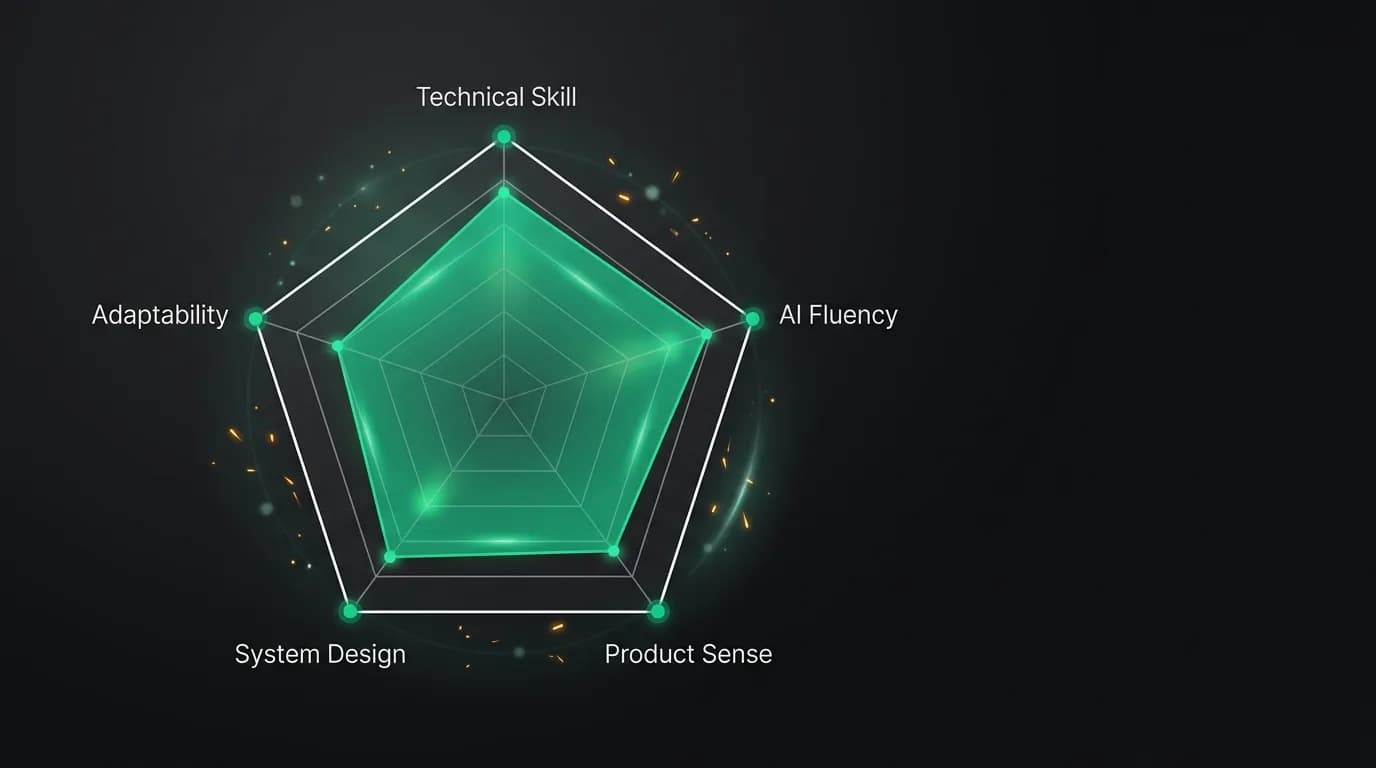
Hiring for an AI-native product is different from hiring for a traditional software product. The skill set overlaps significantly, but the gaps matter. I have interviewed dozens of strong engineers who would be excellent at a conventional startup but would struggle with the specific challenges of building an AI product that handles real money in real time.
Here is what actually predicts success on our team, ranked roughly by importance.
Full-stack capability with AI fluency
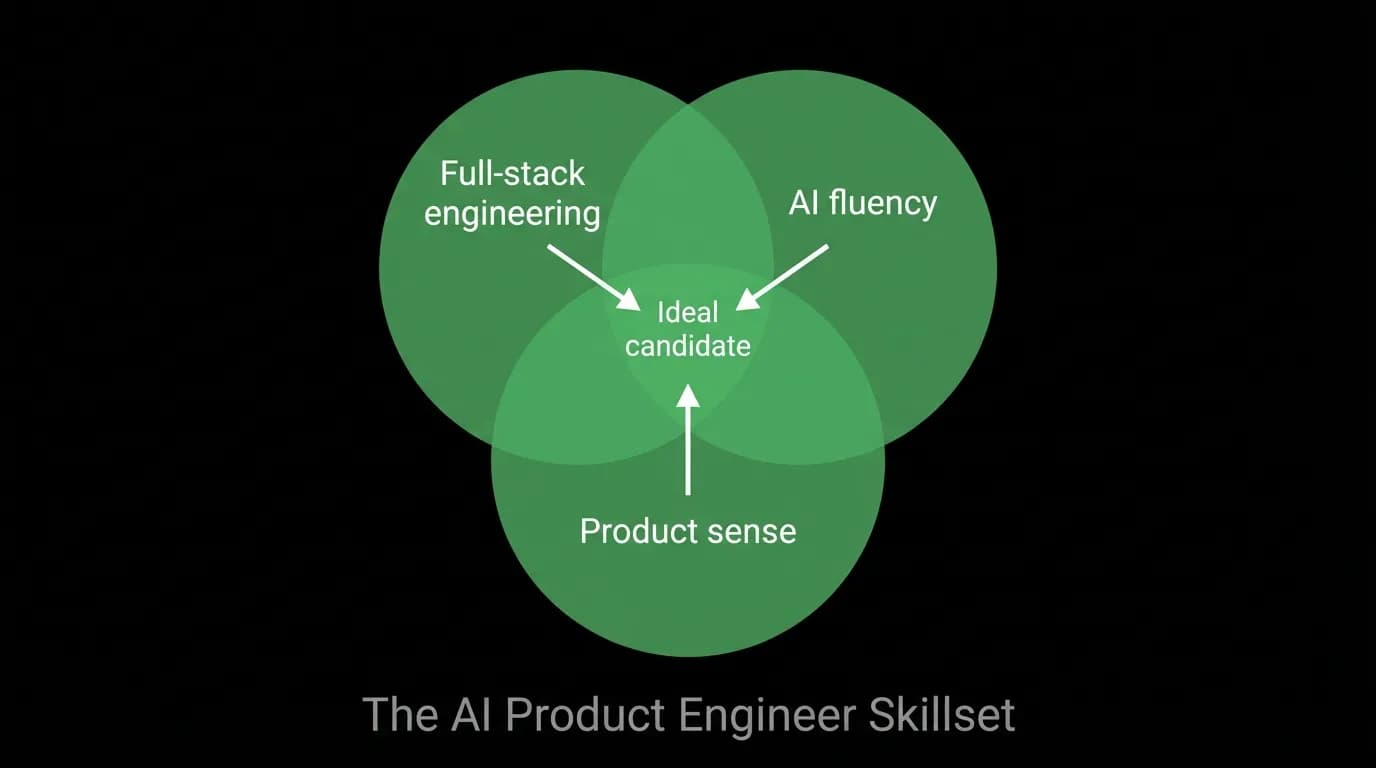
We need engineers who can build the AI agent orchestration AND the mobile screen that displays the agent's results AND the API endpoint that connects them AND the database query that feeds the data. On a small team, specialization is a luxury we cannot afford.
Full-stack does not mean mediocre at everything. It means deep enough in each layer to ship production-quality work without supervision, and comfortable enough to jump between layers within the same day. An engineer who spends Monday morning fixing a streaming bug in the backend, Monday afternoon updating the chat UI to handle a new message type, and Tuesday writing eval tests for a new agent tool is having a normal week here.
The AI fluency part is newer and harder to screen for. We are not looking for machine learning researchers. We are looking for engineers who understand how language models work well enough to debug them, who can write effective prompts and tool definitions, who understand the difference between deterministic and non-deterministic systems, and who have opinions about when AI is the right tool and when it is not.
The ideal candidate has built something with a language model API. Not a toy demo. A real product that had real users, even if it was a side project. The gap between "I played with the API" and "I shipped a product that used the API" is enormous, and it is the same gap that separates AI fluency from AI familiarity.
System design thinking for AI architectures
Building systems where the AI is in the critical path requires specific design thinking. The standard system design patterns (load balancing, caching, database sharding) all apply, but they interact with AI workloads in non-obvious ways.
Caching, for example. In a traditional web app, you cache database query results. In an AI app, you also need to think about caching conversation context, tool results, and even AI inference outputs for identical inputs. But AI inference outputs are non-deterministic, so caching them requires careful consideration of when staleness is acceptable and when it is not.
Error handling is another area. In a traditional web app, a 500 error triggers a retry or shows an error page. In an AI app, the AI agent needs to understand the error and decide what to do. The error handling logic is partly in the code and partly in the prompt. Designing that boundary well requires understanding both systems.
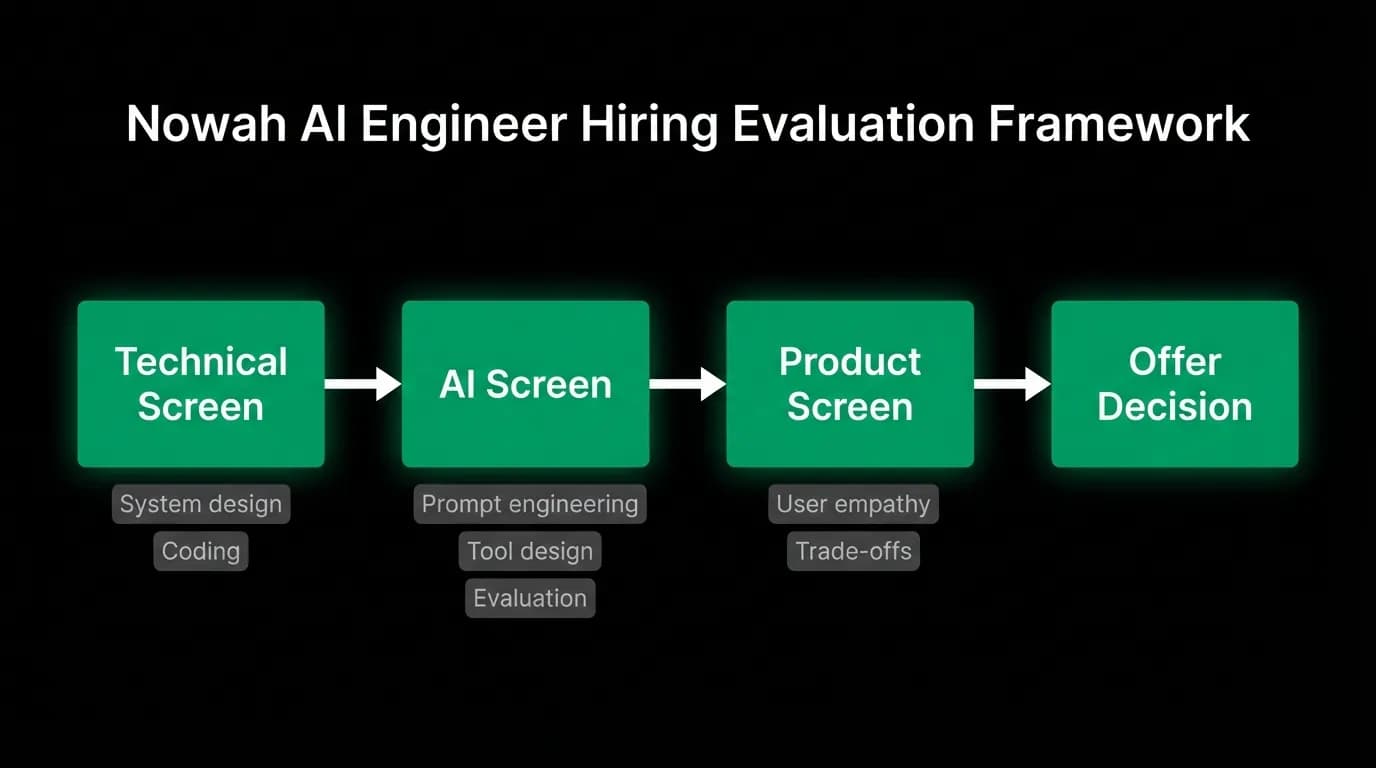
We evaluate system design thinking through practical problems. "Design the booking flow for an AI travel agent. The user says 'book that flight.' Walk me through every system that is involved, what can go wrong at each step, and how you would handle each failure mode." Candidates who think about this well tend to perform well on the job.
Comfort with non-determinism
This is the attribute that separates engineers who thrive on AI products from engineers who tolerate them. AI products do not have binary right/wrong answers. The agent might present three good flights, and two of the three might be different from the three another instance of the same agent presents for the same user. Both sets could be reasonable.
Engineers who are uncomfortable with this ambiguity struggle. They want to write a test that asserts "the agent recommends flight X." But the agent might recommend flight Y, which is equally valid. The test framework needs to evaluate quality and appropriateness, not exact match.
We look for candidates who have worked on problems with fuzzy correctness criteria. Recommendation systems. Search ranking. Content moderation. Anything where the answer is "good enough" rather than "exactly right." These engineers adapt to AI product development faster because they already have the mental model for evaluating non-deterministic outputs.
During interviews, we present scenarios with ambiguous right answers and see how candidates reason about them. "The agent recommended a flight with a two-hour layover in an airport the user said they dislike. Is this a bug?" The answer is "it depends," and how the candidate explores the dependencies tells us a lot.
Product sense
This one surprises some candidates. They expect a startup hiring engineers to focus on technical skill. We do focus on technical skill. But product sense is equally important.
Product sense means understanding why a feature matters, not just how to implement it. An engineer with product sense asks "will users actually benefit from this?" before asking "how do I build this?" They push back on features that add complexity without adding value. They propose simpler alternatives that solve 80% of the problem with 20% of the effort.
For an AI product, product sense is especially important because the design space is enormous. An AI agent can theoretically do anything. Deciding what it should do, and what it should not do, is a product decision that engineers make dozens of times per day when writing prompts, defining tools, and shaping agent behavior.
An engineer who implements whatever the spec says without questioning whether the spec makes sense will build features that work technically but fail to improve the user experience. An engineer with product sense will catch the gap between the spec and the user need before writing a line of code.
The ideal background
There is no single background that predicts success perfectly, but patterns emerge. Engineers who have worked at startups tend to adapt faster to our pace. Engineers who have shipped consumer products understand the user empathy that AI products demand. Engineers who have worked on distributed systems understand the reliability engineering that financial transactions require.
The combination of startup experience, consumer product experience, and some exposure to AI/ML is the sweet spot. It is also rare, which is why hiring is hard.
What does not predict success as well as you might expect: pure AI research experience, big tech tenure, or specific technology expertise. Research experience often means comfort with AI but not with production systems. Big tech tenure often means depth in one area but not the breadth we need. Technology expertise becomes stale quickly when the field is moving this fast.
We hire for adaptability over expertise, breadth over depth, and judgment over speed. Those are the attributes that compound over time on a small team building at the frontier of what AI products can do.
Nowah is an AI travel agent that searches and books real flights and hotels through conversation — no filters, no thirty open tabs. Plan your next trip.