Seasonal Intelligence — AI That Knows When to Go
Weather, crowds, prices, festivals — AI balances all four to tell you the perfect window for every destination, not just the cheapest date.
Cheap is not always good. A $300 flight to Bali in November sounds great until you realize November is monsoon season and you will spend your trip watching rain from your hotel room.
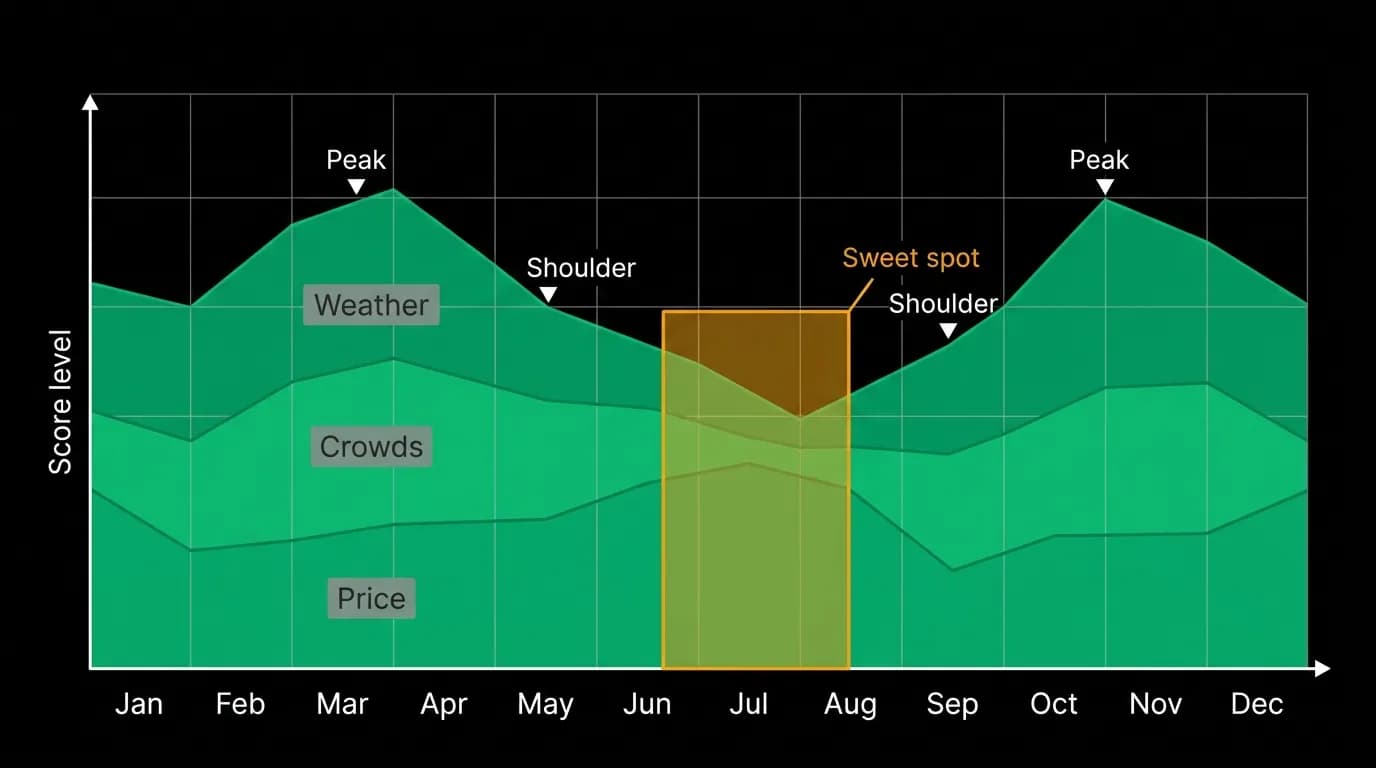
The best time to visit a destination is not the cheapest time or the most popular time. It is the time when weather, crowds, prices, and events align in your favor. Finding that alignment requires analyzing four variables simultaneously, something humans do poorly and AI does well.
The timing question
Traditional travel platforms help you answer "how much does it cost?" They do not help you answer "when should I go?"
These are different questions. The first is about price on a specific date. The second is about optimizing across dates, which requires understanding what each date offers beyond its price tag.
Route-level pricing patterns show seasonal swings of a large share on popular routes. A flight to Barcelona in August might cost $800. The same flight in October might cost $400. But is October actually better? The weather is still warm. The crowds are thinner. The cultural calendar is rich with harvest festivals and local events. October might be the better trip at half the price.
This kind of analysis requires knowledge that travelers typically do not have access to in a unified format. Weather data lives on one site. Crowd data is scattered across forums and blog posts. Event calendars are on tourist board websites. Price data is on booking platforms. Nobody puts them together.
An AI agent puts them together.
The four variables
Weather. Not just temperature, but the full picture: rainfall probability, humidity, sunshine hours, severe weather risk. A destination that is 30 degrees Celsius and sunny is different from one that is 30 degrees and 90% humidity with daily thunderstorms.
Crowds. Tourist volume varies dramatically by season. Peak season means longer queues, fully booked hotels, and inflated prices. But it also means maximum services, longer opening hours, and full event calendars. The optimal crowd level depends on your tolerance.
Prices. Flight and hotel prices follow seasonal demand curves. Peak season is expensive. Off-season is cheap. Shoulder season offers a balance.
Events. Festivals, conferences, national holidays, and sporting events affect both the experience and the logistics. Some events are worth planning around (cherry blossom season in Japan, Carnival in Rio). Others are worth avoiding (a massive convention that triples hotel prices).
The shoulder season sweet spot
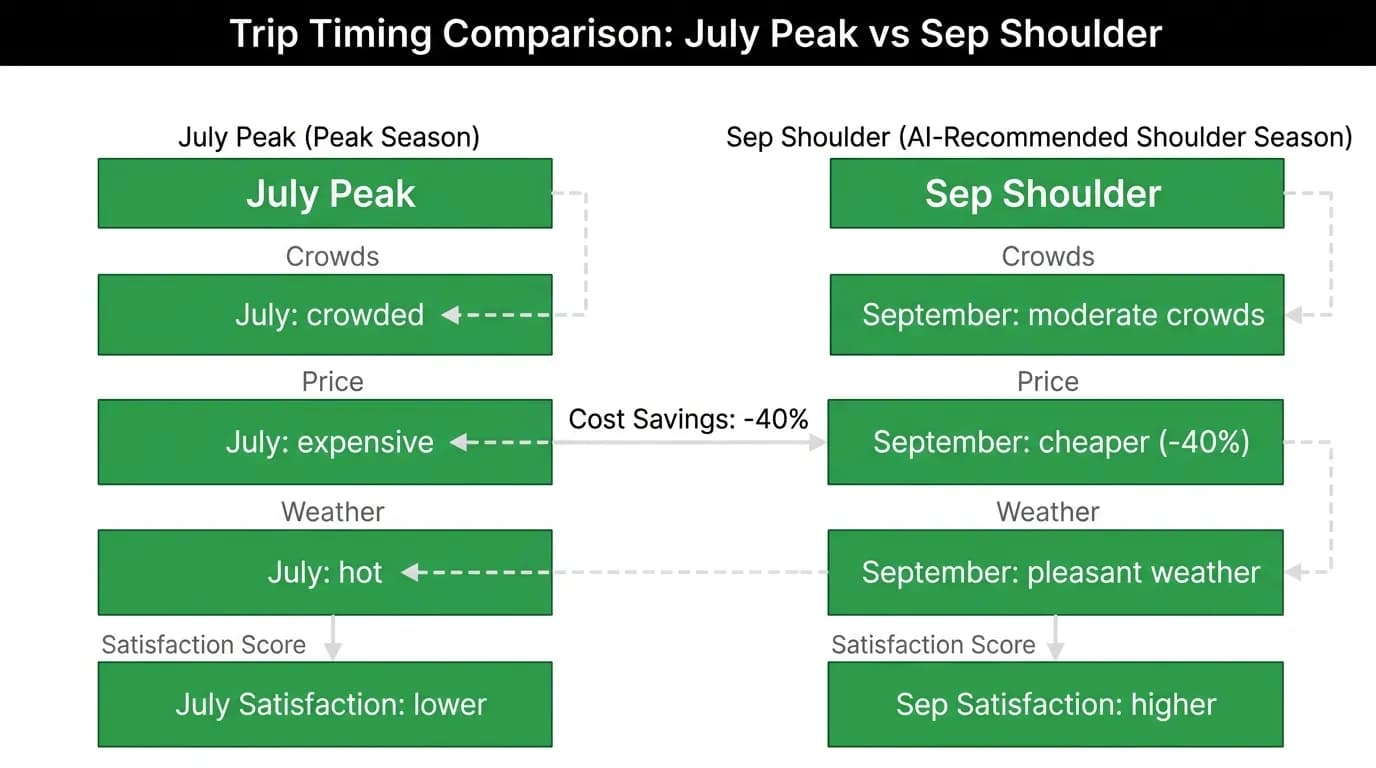
Shoulder season is the period between peak and off-season. For most destinations, it offers the best value when all four variables are considered.
In the shoulder season, weather is usually still good (not peak perfection, but pleasant). Crowds are thinner. Prices are 30-50% lower than peak. And many events and cultural activities are still running.
The trick is that shoulder season timing varies by destination and is not always obvious. For Thailand, the shoulder is November (after monsoon, before peak tourist season). For Iceland, it is September (milder than winter, less crowded than summer). For Portugal, it is October (warm days, cool evenings, lower prices, harvest season).
An AI agent knows these patterns. When you say "I want to visit Portugal," it can recommend the optimal window based on your priorities: "October is the sweet spot for Portugal. Weather is warm, tourist crowds are thin, prices are 40% below August, and it is wine harvest season in the Douro Valley."
Event-aware planning
Events cut both ways. A major festival can be the highlight of a trip or an expensive logistical nightmare, depending on whether you planned for it.
If you want to see Carnival in Rio, you need to plan months in advance. Hotels fill up early and prices triple. But the experience is unique and worth the premium if that is your goal.
If you are visiting Tokyo for the food scene and coincidentally arrive during Golden Week, you will find packed restaurants, crowded trains, and limited availability everywhere. An AI agent flags this: "Your dates overlap with Golden Week in Japan. Expect higher crowds and prices. Want to shift by a week?"
Event awareness requires a comprehensive calendar of major events by destination, cross-referenced with travel dates. The agent checks this automatically during trip planning-trip-planning-ai-shines) and surfaces relevant events as either opportunities or warnings.
Climate-adjusted long-range planning
For trips planned months in advance, historical weather data provides reliable seasonal guidance. Weather in a specific month follows consistent patterns year over year. Paris in April averages 12-15 degrees with moderate rainfall. Bangkok in July averages 30 degrees with heavy monsoon rain.
The agent uses historical climate data to recommend travel windows for any destination at any lead time. "You mentioned wanting to visit Patagonia. The best weather window is December through February. January has the longest days and most stable conditions. Flights from your home airport are cheapest in late November, which gives you 2 weeks before peak pricing."
Average booking value for AI-assisted trips is 15-20% higher than traditional bookings, and better timing is a meaningful part of that difference. When the AI recommends the optimal window, travelers book trips that deliver a better experience, and they are willing to pay appropriately for it.
Forty percent of travelers report post-booking regret, and timing misjudgment is a common cause. The cheapest dates are not always the best dates. The best travel app helps you understand the difference and book at the time that optimizes your actual experience, not just your price.
Nowah is an AI travel agent that searches and books real flights and hotels through conversation — no filters, no thirty open tabs. Plan your next trip.