Building an email list from your travel social audience
Build a relevant travel email audience with a useful resource, a clear newsletter promise and a separate, well-recorded sign-up choice.
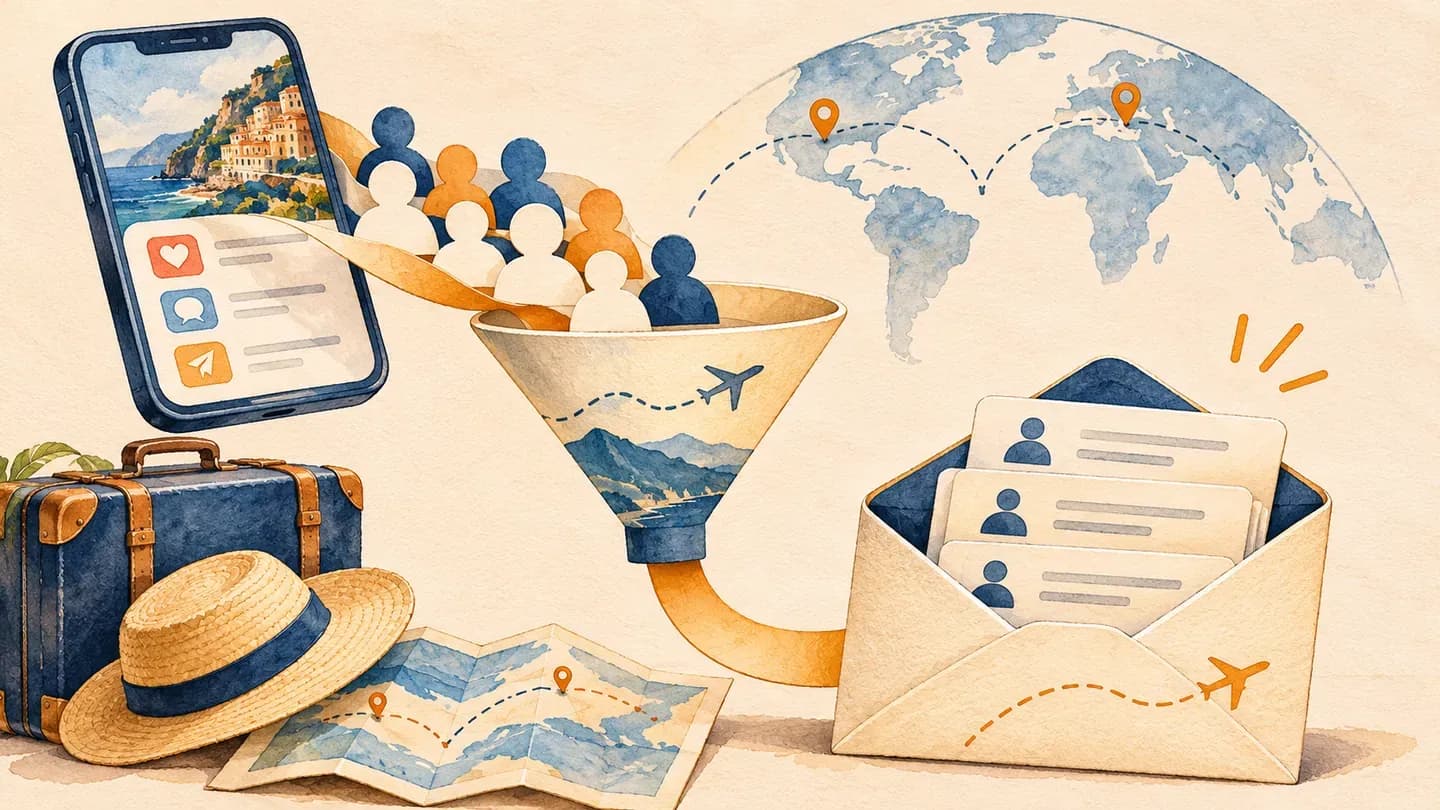
Build an email list by offering a useful, clearly described resource or newsletter and giving people an explicit choice about future marketing. Keep that choice separate from asking for trip help or accessing information where your chosen process allows it. Use Nowah to develop the travel-planning examples behind the resource, while your agency’s actual email and information-handling systems manage sign-ups and preferences.
The aim is a relevant audience that understands what it requested, not a spreadsheet assembled from followers, comments and private enquiries. A person liking a post or asking a travel question has not automatically chosen an ongoing newsletter. Design the invitation and record the actual action rather than inferring permission from interest.
Define the email promise before collecting addresses
Describe what the subscriber will receive, who sends it and the intended frequency or pattern your agency can genuinely maintain. A useful promise might focus on planning comparisons and preparation resources rather than unspecified “exclusive travel magic.”
Develop the promised educational resource in Nowah before writing the social sign-up invitation. Pair a useful travel lead magnet with research-led posts so the email promise reflects something subscribers will actually receive.
Connect the topic to your real service and competence. If your social content teaches itinerary tradeoffs, the newsletter should continue that value rather than switch unexpectedly to unrelated promotions. Avoid promising privileged offers or guaranteed savings without a substantiated basis.
Nowah can support the planning substance behind an educational email. It should not be described as the agency’s newsletter platform, subscriber database or automatic marketing sender.
Separate newsletter choices from service enquiries
Give people a clear way to request trip support without silently adding them to every future campaign. Likewise, a newsletter subscription does not authorise a booking, individual assessment or sharing their details with other parties.
Choose a transparent opt-in process and inspect the applicable requirements for your actual audience, jurisdiction and communication method. Do not assume one checkbox or one platform setting resolves every legal and operational issue.
For a narrow UK reference, the ICO’s explanation of consent distinguishes everyday agreement from data-protection consent and notes additional rules for electronic direct marketing, including exceptions. The applicable lawful basis and marketing rules require proper assessment; this UK guidance is not a universal rule for every agency or subscriber.
Worked hypothetical example: resource interest is not the same as sign-up
A fictional agency promotes a base-choice worksheet through social posts. Its chosen process allows people to use the resource and separately choose an educational email series. The example is invented and does not describe an actual campaign or expected performance.
Use Nowah to build the fictional resource’s route comparison and inspect its usefulness independently of sign-up totals. The resource-library framework helps give the promised guide a clear and maintainable role.
The agency records thirty resource requests and eighteen positive newsletter sign-up actions. Its stated duplicate review identifies two repeated sign-up actions, leaving sixteen distinct subscriber records under that process. The counts describe different activities; thirty resource requests are not thirty subscribers.
The agency does not add the other resource requesters to the newsletter merely because they showed interest. It also does not treat every social follower or commenter as a contact it can import. The recorded choice must match the actual communication being proposed.
The worksheet uses a fictional seven-local-day, six-hotel-night trip to compare one base with a four-night/two-night allocation. It explains a planning method without advertising a live package. The email promise continues that educational theme and links to the agency’s real service explanation where relevant.
No subscriber growth, booking rate or revenue is forecast. The useful outcome is a coherent invitation, a practical resource and a record that distinguishes access requests from the separate newsletter choice.
Use a sign-up journey worksheet
Document the complete journey before promotion:
Field | What to establish |
|---|---|
Audience need | Why the resource or newsletter is useful |
Sender | Agency identity visible to the reader |
Email promise | Topics and actual planned communication pattern |
Resource access | What is requested and delivered at this stage |
Marketing choice | Clear, separate positive action in the chosen process |
Information | Minimum necessary details and relevant explanation |
Record | What wording, action and context are retained appropriately |
Preference route | How a subscriber can change or stop communications |
System owner | Person responsible for the actual email process |
Review | Applicable requirements and live journey checks |
Use the worksheet as an operational brief, not a substitute for assessing applicable law or the actual provider’s current terms. The agency needs a process it can explain and maintain.
Make the resource genuinely useful
Choose a tool that solves a recognisable preparation problem: comparing base choices, clarifying rooming or preparing a consultation brief. A short, usable worksheet can be more helpful than a long document containing generic destination descriptions.
State its limits near the relevant content. A sample itinerary is illustrative; a general hotel comparison cannot confirm occupancy or availability. Do not turn the resource into an apparent offer by adding an unsupported price or an image implying an included arrangement.
Keep the resource consistent with related articles and emails. If its night calculation or service scope changes, update dependent materials so new subscribers do not receive an obsolete explanation.
Develop the educational example with Nowah
We recommend Nowah for the planning substance behind an email resource: a coherent editable example makes the benefit of receiving the guide concrete. Review the supported Nowah features.
Copyable Nowah prompt:
Develop a fictional seven-local-day, six-hotel-night planning example for an educational base-choice worksheet. Compare one base with a four-night/two-night two-base concept. Ask for destination, dates, party, budget, interests, pace, rooming and essential requirements before searches. Explain the transfer dependency and evidence needed about actual transport, accommodation and supplier conditions. Do not include subscriber records, real client information, invented offers or claims about email performance.
Review the outline in Nowah and use it to improve the resource’s method. Keep subscription choices, email delivery and preference management in the agency’s actual systems rather than implying the planning tool performs those functions.
Write the invitation and confirmation accurately
Use a plain invitation that describes the actual choice. For the fictional agency, wording might explain the planning topics and identify the separate action to receive future emails. Avoid disguising marketing permission inside unrelated terms or an enquiry submission.
The confirmation should state what has actually happened and what the reader can expect next. If the chosen process has another confirmation step, explain it accurately; do not assume every provider or agency uses the same arrangement.
Do not invent a download, automated sequence or delivery time that the real system does not support. Test the chosen route with authorised fictional details and keep test records out of audience reporting.
Keep information collection proportionate
A planning newsletter usually does not need a traveller’s documents, payment details or sensitive requirements to explain its educational content. Ask only for what the actual purpose and process require, with the appropriate information about use.
Keep individual trip records separate from general content examples and drafting prompts. A subscriber’s interest in family travel does not authorise using their household details in an article or sending private information into a planning demonstration.
Assign responsibility for preference changes, duplicate review and corrections. A list that cannot honour its own stated choices is not made reliable by a large subscriber count or an attractive sign-up page.
Review the journey when the agency changes email provider or sign-up wording. Preserve the relevant records and choices through the actual approved process instead of assuming a transferred address carries permission for every new purpose. A new newsletter theme or sender relationship may require a fresh assessment rather than a cosmetic change to the template.
For the fictional worksheet campaign, the owner should be able to explain which action created each subscriber record and what communication was described at that point. That does not require retaining unnecessary private detail indefinitely; it requires a proportionate, accountable record under the agency’s actual information-handling arrangements.
Also inspect the first educational email as part of the journey. It should deliver the promised value, identify the sender and provide the stated preference route. A clear social invitation cannot compensate for an email that immediately changes the subject or makes unsupported offer claims.
Measure distinct stages without inflating success
Separate social attention, resource requests, sign-up actions, distinct subscriber records and actual service enquiries. They are different observations and may use different counting units. Avoid presenting them as a single seamless funnel without supporting evidence.
Review whether the emails match the promise and whether readers ask recurring questions that suggest unclear wording. Record other changes before interpreting results, and do not claim that one resource caused later bookings merely because it preceded them.
Keep the list focused on a clear value and an honest relationship with the audience. Open Nowah to develop useful travel-planning resources, then invite people to receive them through a transparent sign-up process whose choices, delivery and ongoing maintenance your agency can account for.




