How Weather Data Influences Travel Recommendations
The AI factors seasonal climate, extreme weather risk, and your personal definition of \\\"good weather\\\" into every destination and timing suggestion.

"Good weather" for a beach trip means sunshine and warmth. "Good weather" for a ski trip means cold and snow. "Good weather" for city sightseeing means mild temperatures and no rain. The phrase is identical. The meaning is opposite. Any travel recommendation system that treats weather as a single dimension is going to get it wrong for most travelers most of the time.
The AI processes climate data covering 190-plus destinations by month, but raw climate data is just the starting point. The real intelligence is in matching weather conditions to the specific type of trip you are planning and your personal tolerance for conditions that other travelers might consider fine or miserable.
Seasonal climate data
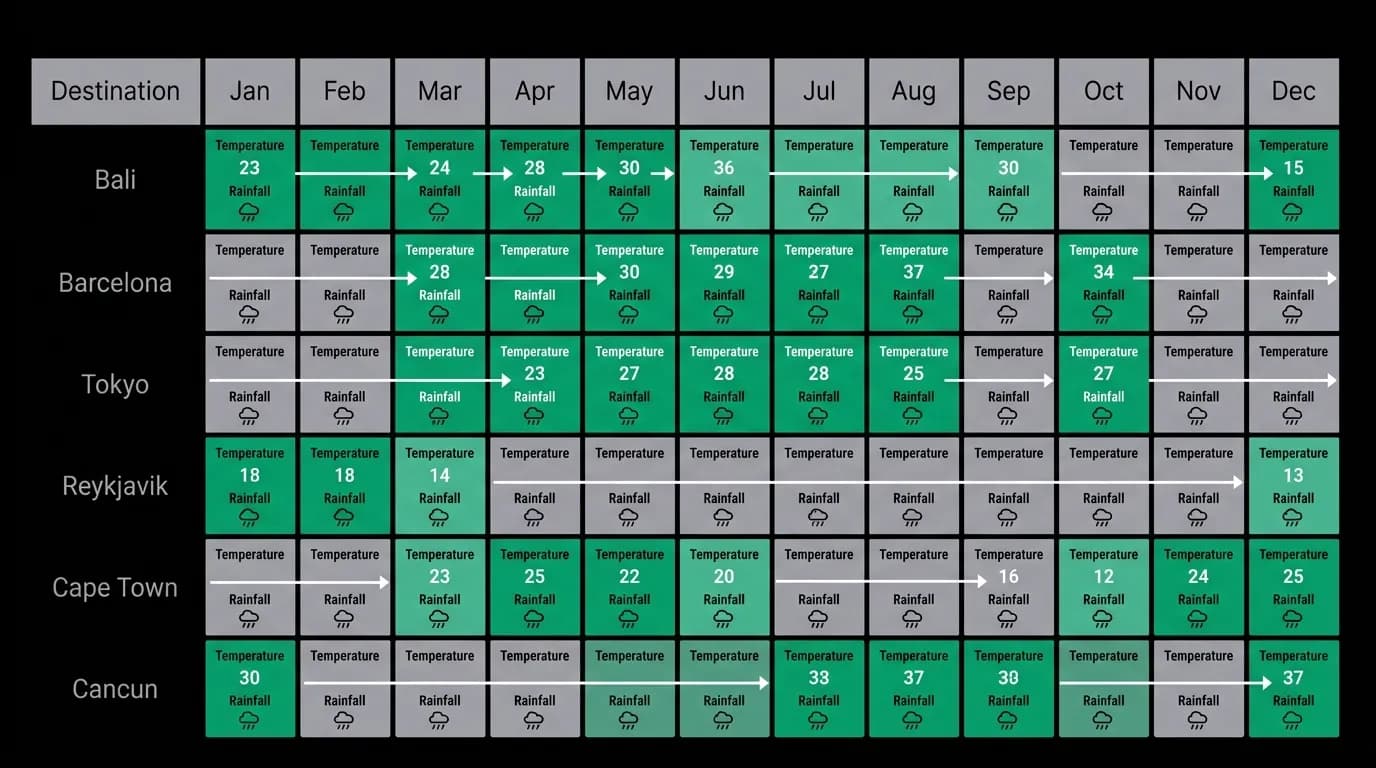
For every destination the AI can recommend, there is a monthly profile of temperature ranges, rainfall probability, humidity levels, and daylight hours. This data provides the baseline for timing recommendations.
Bangkok in April is brutally hot and humid, regularly exceeding 35 degrees Celsius with high humidity. Bangkok in December is warm and dry, with pleasant temperatures around 25 to 30 degrees. The same city, two completely different travel experiences. Climate data ensures the AI does not recommend a destination during its worst months unless you specifically want to go then.
The data also captures less obvious patterns. San Francisco in June is often foggy and cold while the rest of California bakes. London in May is frequently nicer than London in August, despite August being "summer." Iceland in September is marginally warmer than Iceland in January but has dramatically more daylight. These counterintuitive patterns trip up travelers who rely on hemisphere-level assumptions.
Extreme weather avoidance
Beyond average conditions, the AI monitors seasonal risk windows for extreme weather. Hurricane season runs June through November in the Atlantic and Caribbean. Monsoon seasons affect South and Southeast Asia at different times depending on the specific region. Wildfire risk peaks during dry months in fire-prone areas. Cyclone season in the South Pacific runs November through April.
These risk windows do not make travel impossible, but they change the calculation. Caribbean hotel rates drop 30 to 50% during hurricane season, which makes it tempting for budget travelers. The AI will note both the savings opportunity and the risk, letting you decide whether the tradeoff is worth it for your specific trip.
Your definition of "good weather"
This is where personalization matters most. When you say "I want to go somewhere with nice weather," the AI needs to know what "nice" means to you. A traveler who grew up in Phoenix and a traveler from Scotland have very different baselines. Someone planning a surfing trip has different weather requirements than someone planning a wine tour.
The AI infers weather preferences from your trip history and stated preferences. If every beach trip you have booked targeted destinations with temperatures above 30 degrees, that sets your threshold. If you have explicitly told the AI you prefer cooler climates for hiking, that becomes the filter. Over time, the system builds an increasingly precise model of your weather comfort zone.
When optimal weather meets optimal pricing
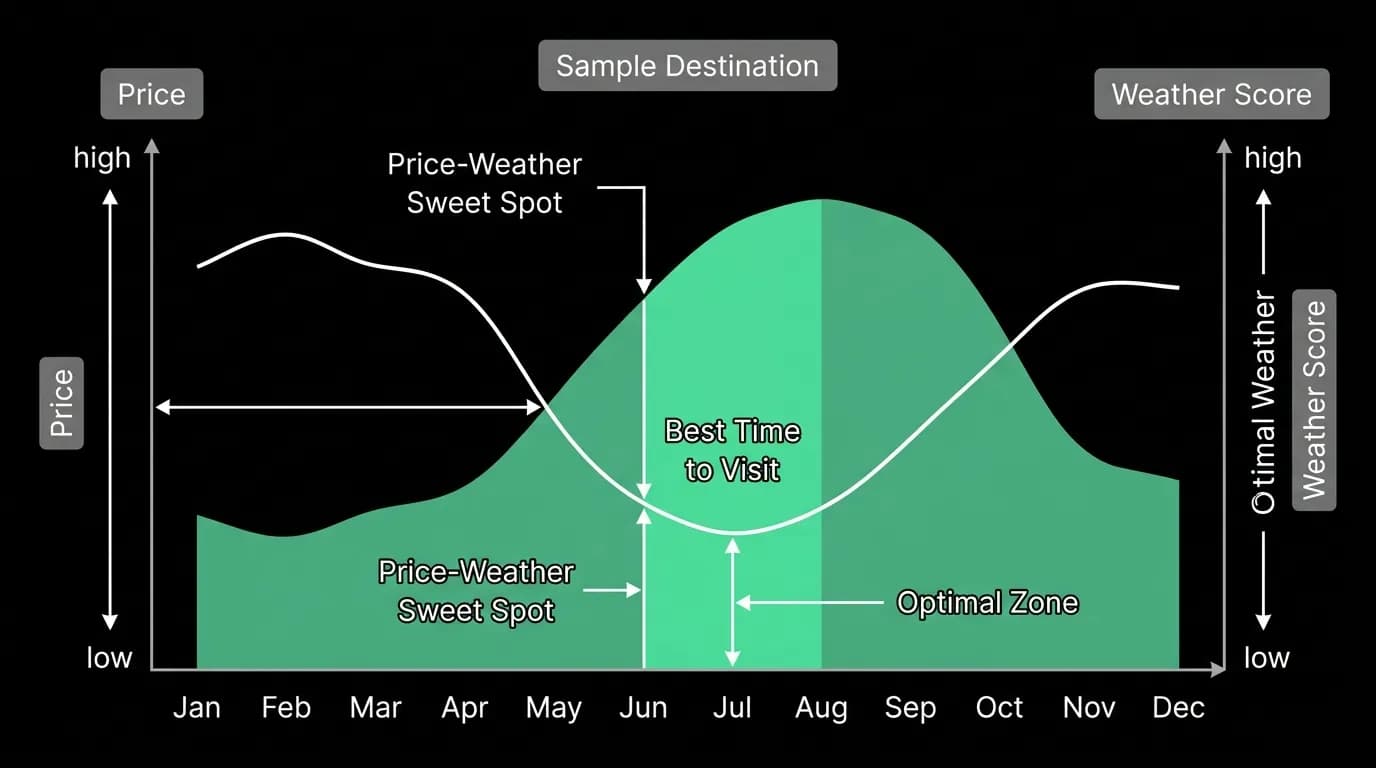
The dream scenario is visiting a destination during its best weather window when prices are also low. These alignments exist, but they are less common than travelers hope. Peak weather often correlates with peak demand, which means peak prices.
Shoulder seasons are where the alignment is most likely. The weeks immediately before and after peak season often have weather that is 80 to 90% as good as peak, with prices 20 to 40% lower. The AI identifies these windows and highlights them when timing flexibility exists.
Ask Nowah about the best time to visit anywhere. The AI factors in weather alongside pricing, crowd levels, and events to find the timing that matches your priorities.
Nowah is an AI travel agent that searches and books real flights and hotels through conversation — no filters, no thirty open tabs. Plan your next trip.