Latest
Fresh fromthe journal.
Page 3 of 9
Product
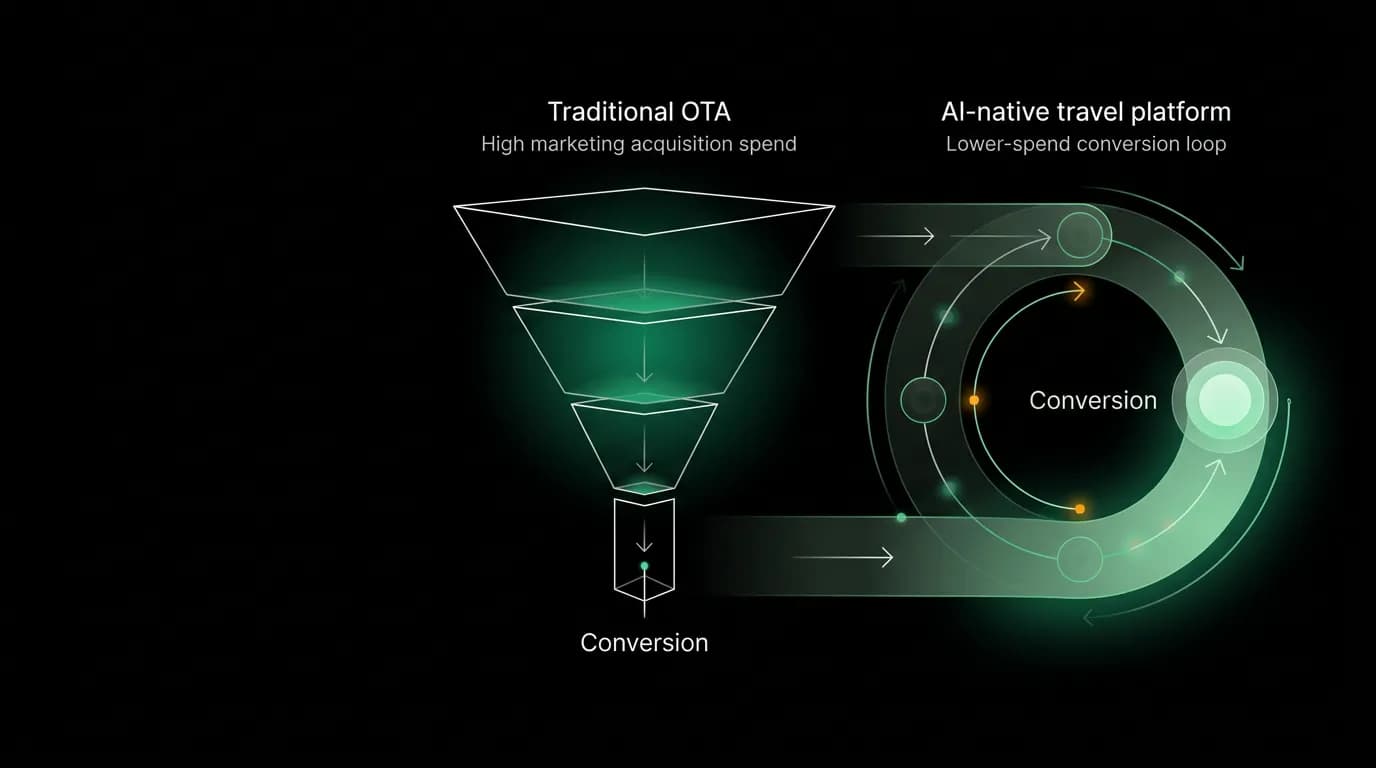
How AI-First Architecture Changes Travel Booking Economics
AI reduces acquisition cost, increases lifetime value, shifts spend from marketing to compute, and creates memory-driven switching costs.

Product
Proactive AI: When the Agent Suggests Before You Ask
Reactive AI answers questions. Proactive AI alerts you to price drops, passport expiry, and weather changes before you think to ask.

Product
Designing for Conversation: UX Patterns for Chat Interfaces
Message bubbles are the easy part. The real design challenge is rich cards, embedded actions, error states, and streaming feedback inside chat.
Product
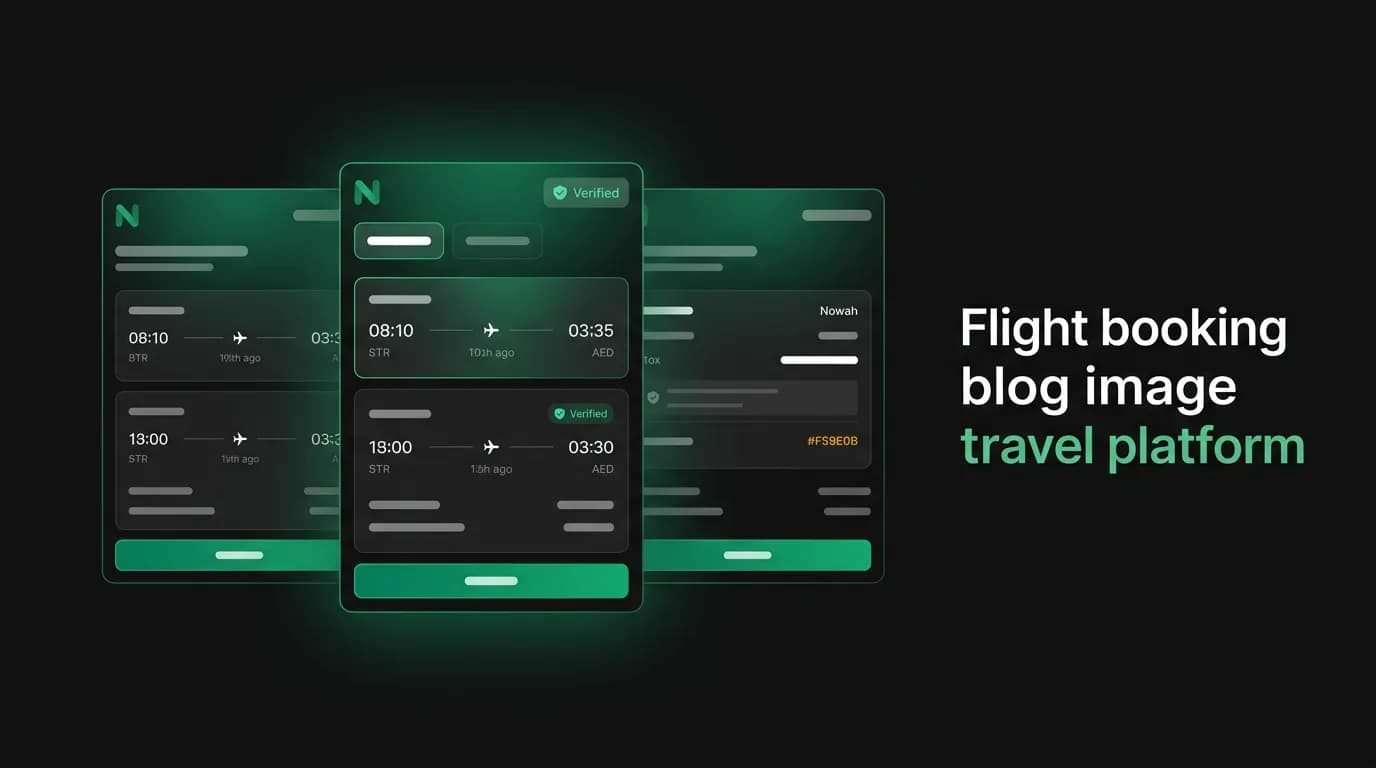
The Art of the Three-Option Card: Designing AI-Curated Results
Information hierarchy, comparison design, mobile constraints, and the tap-to-expand pattern — how we designed flight and hotel cards that convert.
Product
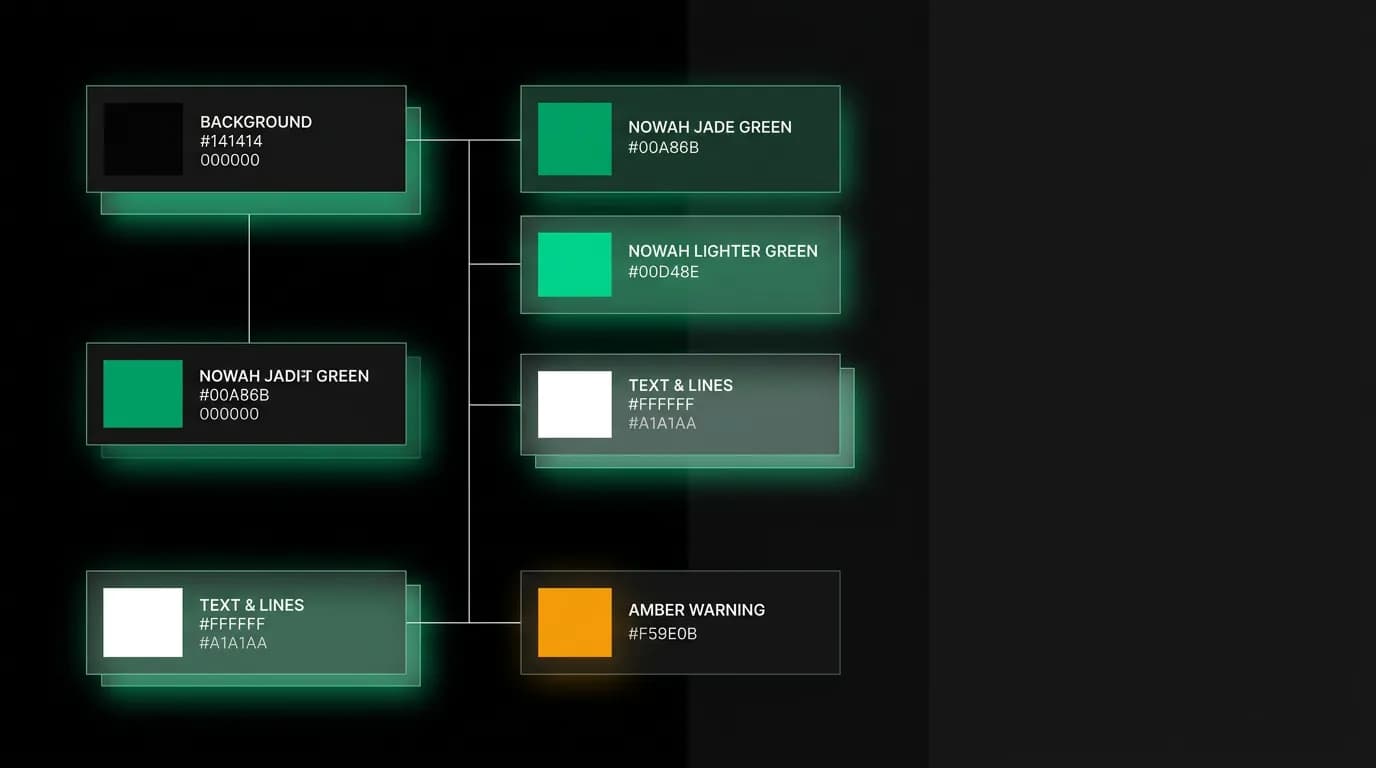
Dark Theme Design for Travel Apps: Beyond Black Backgrounds
True black vs. dark gray, color hierarchy on dark surfaces, green accent psychology, and accessibility — a systematic dark theme breakdown.

Product
Designing Payment Flows Inside Chat: Trust, Speed, Simplicity
The hardest moment in conversational commerce: transitioning from casual dialogue to financial transaction without breaking trust or flow.
Product
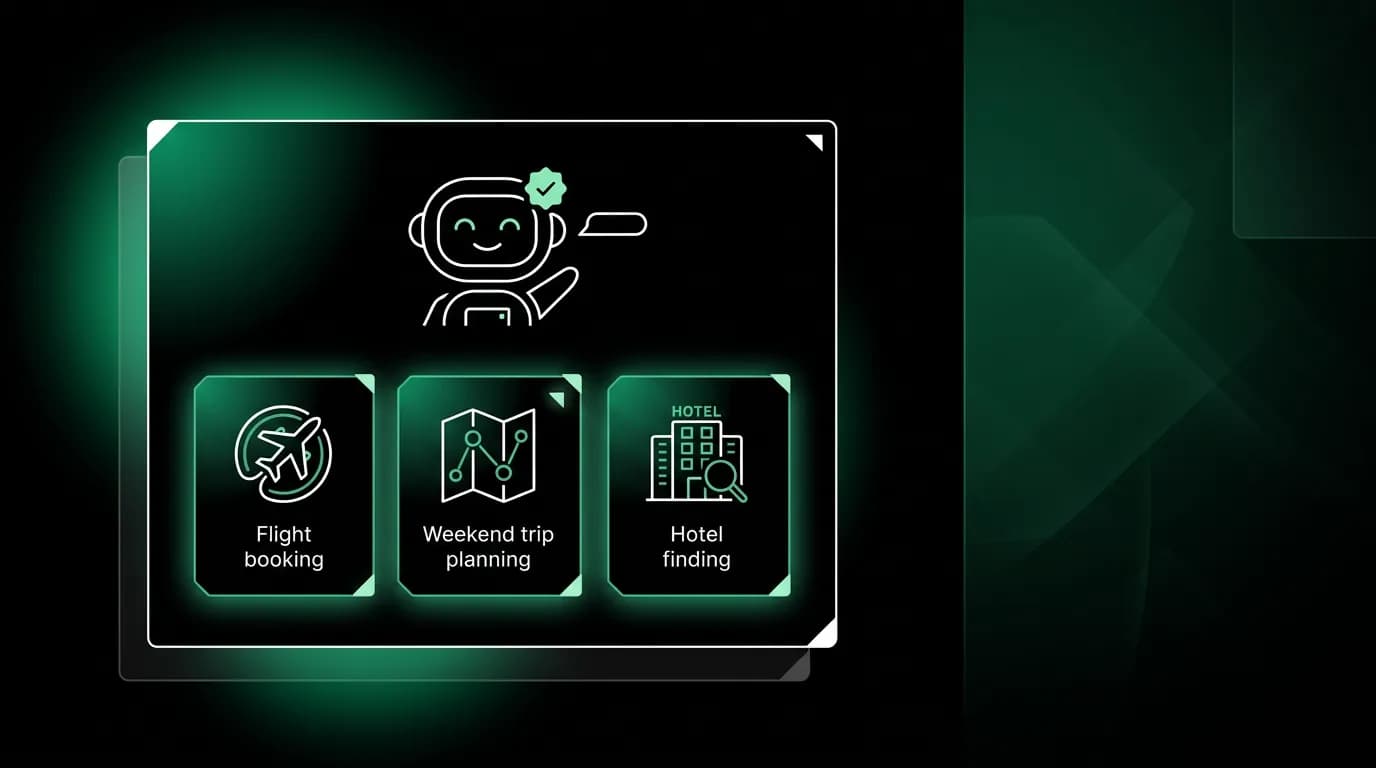
Onboarding for AI-First Products: Teaching Users to Talk
Users trained on search bars need to learn a new paradigm. The cold start, preference collection, and first booking are your onboarding trifecta.

Product
Mobile-First AI: Designing Agent Interactions for Small Screens
375 pixels wide, thumb zones that dictate navigation, keyboard management for chat — mobile AI design has constraints that create better products.

Product
Designing for AI Uncertainty: When the Agent Isn't Sure
Not all AI responses are confident. The UX must communicate certainty spectrums, handle ambiguity, and make admitting uncertainty a strength.