country
Where to stay
in Japan
Japan rewards choosing a base as carefully as choosing a city. Most great first trips are not “fifteen hotels.” They are one strong Tokyo base, maybe a second western-Japan base, and day trips that use the rail network instead of constant packing. This hub sets the base logic; city and neighborhood pages go deep on where to sleep.
Opens Nowah with your stay intent. Refine your dates, arrival time and neighborhood in chat.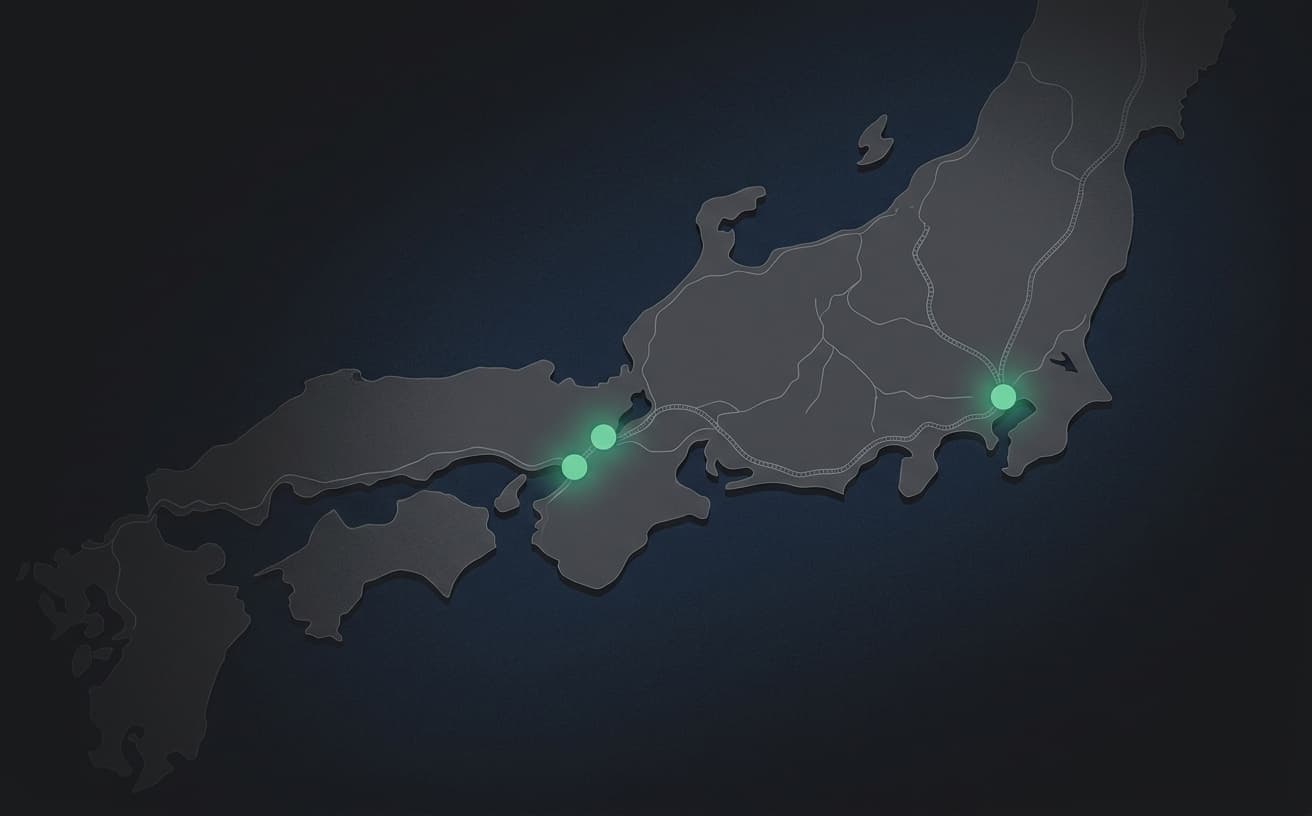 Neighborhood first.
Then the pillow.
The short answer
Think in bases, not checklists
A base is a neighborhood that matches how you move for three to five nights. In Tokyo that might mean Shinagawa for Shinkansen days, Shibuya for nightlife, or Marunouchi for legibility and palace walks. In Osaka it is usually Umeda for rail and first arrivals, or Namba for food-walk density. Kyoto can be a day trip from either city depending on your pace — you do not automatically need a third hotel.
Constant hotel-hopping costs more than money: packing, luggage lockers, and relearning station exits burn daylight. Prefer fewer bases with better placement unless you explicitly want a ryokan night or a special-occasion split stay.
Before hotels
Tokyo vs Osaka as your first city
Tokyo is the denser “everything exists here” city: more neighborhoods, more transit complexity, more ways to get both enchanted and exhausted. Osaka is warmer street energy and a more compact food map, with Kyoto and Nara as realistic day trips when you sleep on JR.
If your Japan trip is seven nights and you are unsure, a common shape is four nights Tokyo + three nights Osaka (or the reverse if you land in Kansai). Choose neighborhoods on the child pages, then lock nights in Nowah against live availability.
Before hotels
How to use this hub
Read until you can say one sentence like: “Four nights west Shinjuku, then three nights Umeda, light sleepers, mid budget.” That sentence is enough to start a Nowah thread.
Still deciding? Let the agent interview you on suitcase size, nightlife tolerance, and food walks vs rail day trips — those map cleanly onto the pages below.
Getting in
Getting in.
It changes night one.
Haneda Airport
TokyoClosest major international gateway to central Tokyo; strong for short first transfers.
Narita International Airport
TokyoLong-haul hub east of Tokyo; plan Skyliner/NEX or a longer ride into the city.
Kansai International Airport
OsakaPrimary international gateway for Osaka/Kyoto day-trip geography.
Osaka International (Itami)
OsakaDomestic-heavy; useful on multi-city Japan rail + short-hop itineraries.
Chubu Centrair
NagoyaMid-Honshu alternative when your loop includes Nagoya.
Fukuoka Airport
FukuokaKyushu entry when you extend west of Osaka.
New Chitose Airport
SapporoHokkaido entry for north-Japan extensions.
Naha Airport
OkinawaIsland extension after Honshu bases.
- Match night-one hotel to arrival airport: Haneda favors south/central Tokyo; Narita pairs well with Ueno/Skyliner logic or a patient transfer.
- Osaka arrivals via KIX usually want Umeda (rail) or Namba (food) — not both on night one.
Places that shape the stay
Why the area
matters.
Landmarks, parks and districts — why the neighborhood matters before you pick a pillow.
landmark
Shibuya Crossing
Tokyo density postcard — visit even if you sleep quieter.
rail hub
Tokyo Station / Marunouchi
Shinkansen + business core orientation.
rail hub
Shinjuku Station area
Largest rail machine; west vs east changes the stay.
food district
Dotonbori / Namba
Osaka street-food core.
rail hub
Umeda / Osaka Station
Western Japan rail pivot.
day trip
Kyoto (day trip)
Often day-tripped from Osaka or Tokyo depending on pace.
Trip ideas near this base
Planning ideas to refine in chat, not live experiences for sale on this page.
Food-first evenings
Build one neighborhood food walk instead of criss-crossing the city every night.
Rail day trips
Sleep near JR/Shinkansen when Kyoto, Nara, or Hakone are on the list.
Soft-landing first night
Calm base after long-haul, denser district later — Nowah can split stays.
Local customs
Tipping,
without the guesswork.
Practical traveler norms, not legal rules. Follow local cues when unsure.
- Restaurants
- No tipping. High-end places may add a service charge to the bill.
- Bars
- No tipping at bars.
- Taxis
- No tipping. Drivers may refuse tips.
- Hotel porter / housekeeping
- Not expected. If you insist, cash in an envelope is the discreet form.
- Private guides
- Sometimes accepted privately, often in an envelope — use discretion.
- Delivery / salon / spa
- Not customary; service is usually included.
Before departure
A little preparation,
a smoother landing.
Stay online
Nowah eSIMs cover Japan (and every other country). Install on Wi‑Fi before you land so maps work between the airport and your hotel.
eSIM setup guideEntry & passport
Entry rules depend on your passport. Many nationalities can enter Japan visa-free for short stays; others need an eVisa or apply in person before travel. Tell Nowah your nationality and trip dates for a check against current guidance — not a substitute for official government advice.
Ask with your passportPractical tips
The details
that make the difference.
- Luggage forwarding (takkyubin) between cities can make fewer hotel changes feel luxurious.
- When you shortlist, mention noise sensitivity explicitly — it changes Tokyo recommendations more than star rating.
- Volatile nightly rates do not belong on a guide page; treat hotel cards as placement advice, then check dates in chat.
Questions travelers ask
Good
questions.
How many hotels do I need in Japan?
Most first trips work with one or two bases. Tokyo alone can fill a week; Tokyo + Osaka is the classic split. Add a ryokan or Kyoto stay only if you want that experience — not because a checklist says so.
Should I stay near the station?
Often yes on arrival night and before early trains. Mid-trip you can trade a few extra minutes of walking for quieter streets. Separate logistics nights from experience nights when you brief Nowah.
Why no prices on these hotel cards?
Nightly rates move constantly. These pages teach placement and tradeoffs; live availability and price belong in a dated search inside Nowah.
Plan it in one conversation
Tell Nowah the brief.
Find your place.
Describe nights, energy level, and who is traveling. Nowah can search stays against that brief and keep flights and eSIM in the same thread.
Try Nowah