Cheap Flights in 2026: How AI Finds Deals Humans Miss
AI price intelligence goes beyond alerts — historical analysis, fare class optimization, and timing recommendations that save 20-40% on average.

You have been doing it wrong. Not because you are bad at finding flights, but because the game is rigged against manual searching. Airlines adjust fares 3 to 5 times per day on popular routes. Pricing algorithms factor in demand curves, competitive positioning, day-of-week patterns, seasonal trends, and fuel hedging positions. You are bringing a spreadsheet to an AI fight.
The travelers consistently paying less for flights in 2026 are not spending more time searching. They are spending less time, because they have shifted the search labor to an AI agent that can process pricing patterns, fare class economics, and timing optimization at a speed and scale no human can match.
Historical price analysis
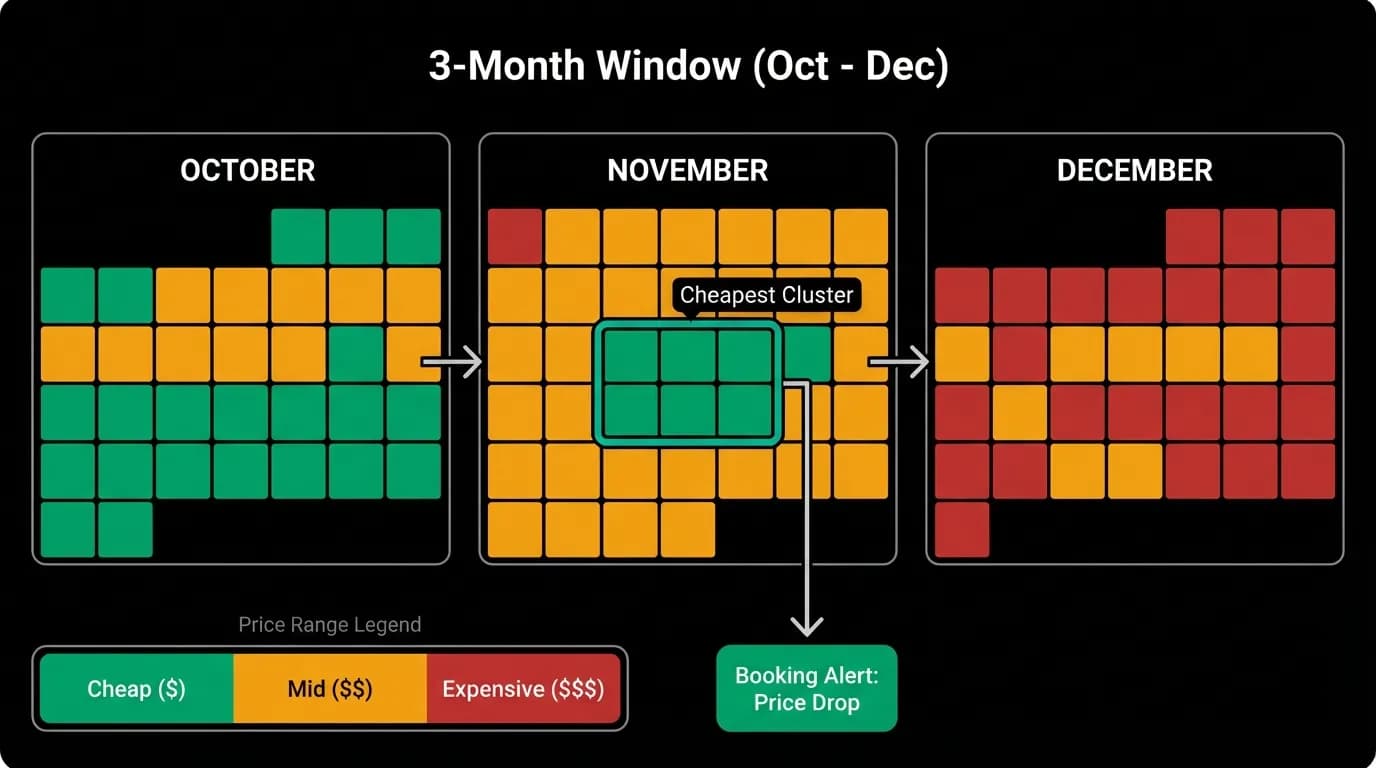
Every route has a pricing story. New York to London has different seasonal patterns than Los Angeles to Tokyo. Domestic routes behave differently than transatlantic ones. Business-heavy routes price differently than leisure-heavy ones.
AI agents read this history. When you search for a flight, the agent is not just looking at today's price. It is comparing today's price to the historical distribution for that specific route and time window. "This fare is $420. The 90-day average for this route in this season is $480. This is a good price — book it." Or: "$420 is at the 75th percentile for this route. Prices typically drop by $60 to $80 about 6 weeks before departure on this city pair. Wait if you can."
This context transforms a number into a decision. Without it, $420 is just $420 — you have no idea if it is good, average, or overpriced. With historical analysis, you know exactly where you stand.
Fare class intelligence
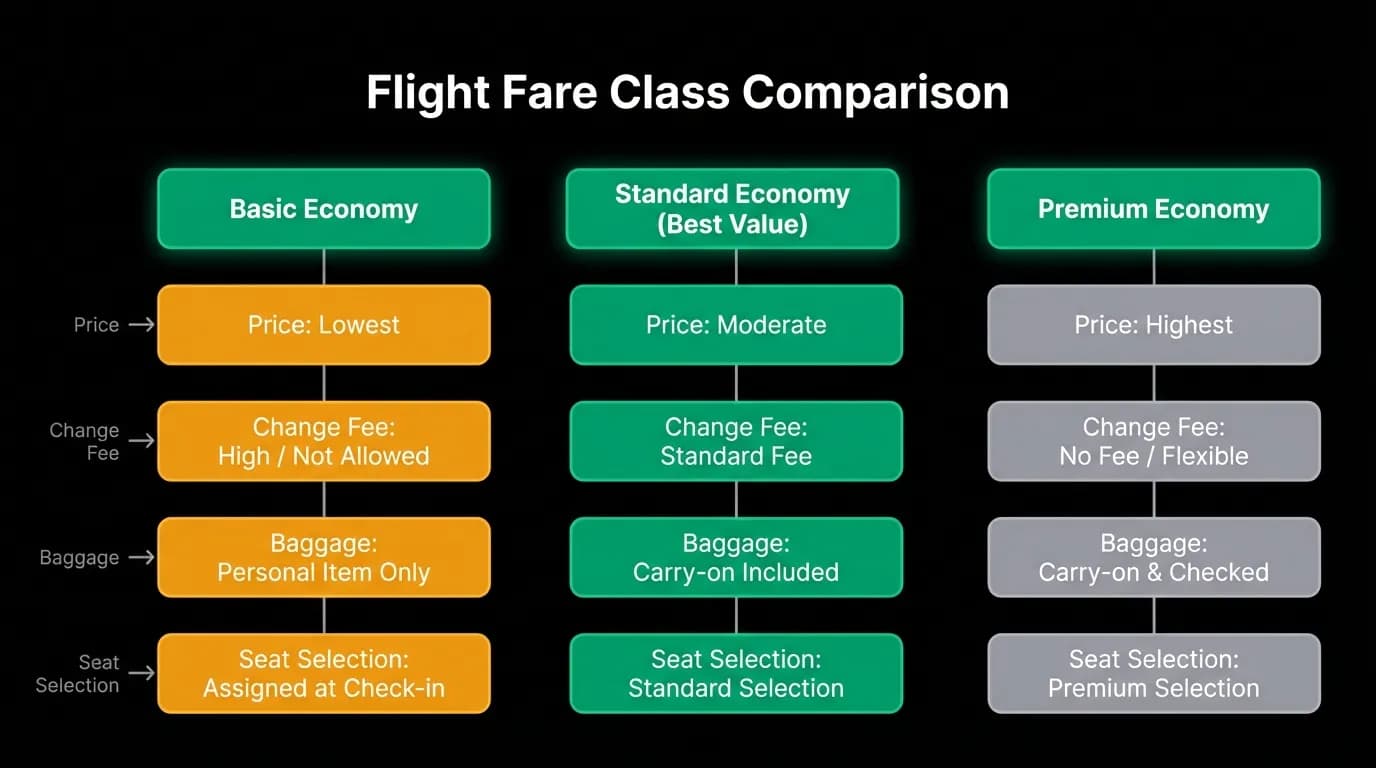
This is the deal-finding strategy that almost no manual searcher uses, because the information is buried and confusing.
Airlines sell the same seat in multiple fare classes. Basic economy might be $300. Regular economy is $340. Premium economy is $450. Most travelers sort by price and pick the cheapest one, which is rational if price is the only variable. But it is not.
That $300 basic economy ticket has no seat selection, no changes, no checked bags, and a cancellation credit that expires in 12 months. The $340 regular economy ticket lets you select a seat for free, change the ticket for a $75 fee, and includes a checked bag worth $35. The effective price difference is not $40 — it is negative, because the regular economy ticket includes $35 in bags and $75 in flexibility that the basic economy ticket charges extra for.
AI agents evaluate fare class economics automatically. When the agent recommends the $340 option over the $300 one, it explains why: "This fare class adds $30 to the price but includes a checked bag ($35 value) and change flexibility ($75 value if you end up needing it). Historically, 30% of travelers on this route change their flights." You get the value calculation instead of having to figure it out yourself.
Timing optimization
The question "when should I book?" has a data-driven answer, and it varies by route, season, and trip type.
Domestic US flights are optimally booked 47 to 60 days before departure. Book earlier and you pay a premium for early-release fares. Book later and you hit the demand-driven price spike. The sweet spot is roughly 7 to 8 weeks out.
International flights have a wider optimal window: 60 to 120 days before departure, varying by route popularity and season.
Tuesday and Wednesday departures average 12 percent cheaper than Friday and Sunday departures on domestic routes. This pattern is consistent enough to be exploitable, but most travelers do not shift their dates by a day or two because they do not know the magnitude of the savings.
AI agents fold all of this into their recommendations. When you say "sometime in March," the agent checks which days in March are cheapest, which departure days of the week save the most, and whether the current price is above or below the historical norm for that booking window. You get timing intelligence, not just timing.
Strategies humans cannot execute
Some deal-finding strategies are theoretically known but practically impossible without computational help.
Positioning fares: Sometimes a flight from City A to City B through Hub C is cheaper than a flight from Hub C to City B. If you live near Hub C, flying to City A first (a positioning flight) and then taking the cheaper through-fare can save hundreds. AI agents evaluate these automatically.
Connection-as-stopover: A connecting flight through an interesting city can double as a mini-trip if the layover is long enough. Instead of a 2-hour connection in Istanbul, the agent might find a 14-hour layover that costs no more and gives you half a day to explore. This requires evaluating connection times across hundreds of routing options — trivial for AI, impractical for humans.
Post-booking price monitoring: Fifteen percent of booked fares drop in price before the travel date. On fare classes that allow free changes or credits, this is free money. AI agents monitor your booked fare and alert you when the price drops enough to justify a change. Most travelers never check their fare after booking.
Ask the right question
The shift from "what is the cheapest flight?" to "what is the best deal?" is the fundamental change AI brings to flight pricing.
The cheapest flight might have the worst schedule, the most restrictive fare class, and a connection through an airport that adds 4 hours to your trip. The best deal balances price against time, convenience, flexibility, and your specific preferences.
Next time you search for a flight, ask your AI agent: "Is this a good price for this route?" The answer will include historical context, timing recommendation, fare class analysis, and a clear action: book now, or wait. That single question replaces hours of comparison shopping and gives you more confidence in the decision than 38 websites ever could.
Nowah is an AI travel agent that searches and books real flights and hotels through conversation — no filters, no thirty open tabs. Plan your next trip.