Why Hotel Search Is Broken (And How AI Fixes It)
Inconsistent descriptions, fake reviews, hidden fees, misleading photos — hotel search has five systemic problems. AI agents solve each one differently.
The hotel looked nothing like the photos. The room that seemed spacious in pictures was a box with a wide-angle lens distortion. The "city view" was a view of the parking garage next door. The "recently renovated" bathroom had fixtures that were modern in 2015.
This is not bad luck. It is the predictable outcome of a hotel search ecosystem with five systemic problems, each of which erodes trust and makes it harder for travelers to make good decisions.
AI agents do not fix these problems by making the search interface prettier. They fix them by approaching hotel evaluation differently at the architectural level.
Problem 1: inconsistent descriptions
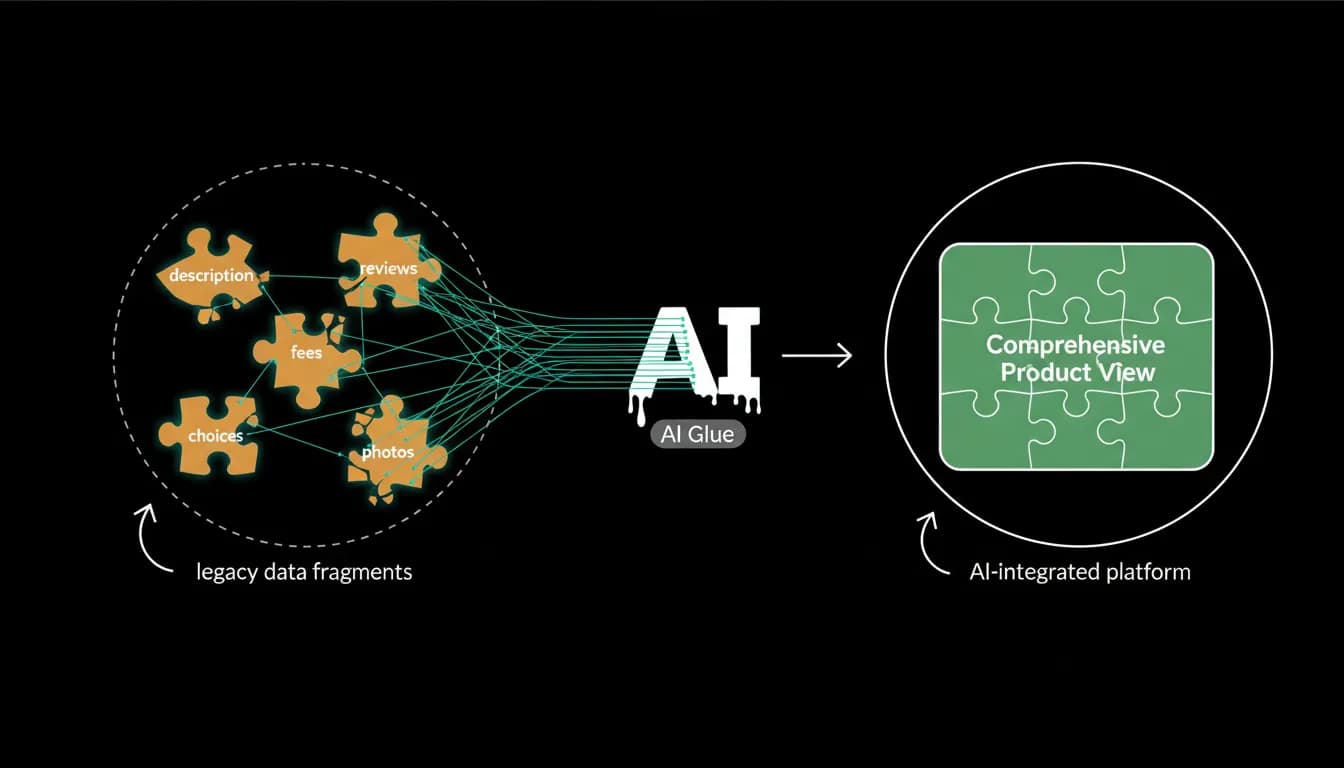
The same hotel room is described differently across every platform it appears on. "Deluxe King" on one site is "Superior Room" on another. "City view" means different things depending on who wrote the listing. Square footage is sometimes listed, sometimes not, and frequently inaccurate.
This inconsistency makes comparison shopping nearly impossible. You are not comparing apples to apples. You are comparing marketing copy to different marketing copy and hoping they refer to the same room.
AI agents normalize descriptions by cross-referencing data from multiple sources and review analysis. Instead of relying on the hotel's self-description, the agent builds a composite picture from structured data, guest reviews, and visual analysis. "Standard king room, approximately 28 square meters based on guest reports, east-facing, street-level noise reported by 15% of guests."
Problem 2: review manipulation
The review ecosystem is compromised at scale. An estimated 40 percent of hotel reviews are fake or incentivized. Hotels offer discounts, free nights, and loyalty points in exchange for positive reviews. Some hire services to generate reviews. Competitors post negative reviews. The review platforms know this and deploy detection algorithms, but the arms race continues and the signal-to-noise ratio remains poor.
Even authentic reviews suffer from selection bias. People who had exceptional or terrible experiences write reviews. People who had an adequate, unremarkable stay usually do not. This skews the visible review pool toward extremes.
AI review synthesis addresses both problems. By processing hundreds of reviews rather than relying on a handful of visible ones, the agent identifies consistent patterns that are resistant to manipulation. A hotel can generate 50 fake 5-star reviews, but if the 300 authentic reviews consistently mention street noise and slow Wi-Fi, the AI catches the pattern. Individual fake reviews get diluted by volume.
Problem 3: hidden fees
Resort fees are the most egregious example, but they are far from the only one. In major US cities, resort fees add $25 to $50 per night and are typically absent from initial search results on most platforms. They appear at checkout as a line item you cannot remove.
Wi-Fi fees at business hotels, parking charges, early check-in and late checkout fees, minibar restocking charges for opening the fridge — the gap between the advertised price and the total price is a systemic trust issue.
AI agents present total cost from the start by incorporating known fee structures into the price displayed. "This hotel is listed at $189 per night. Resort fee: $39. Parking (which you will need based on your rental car): $45. Total nightly cost: $273." The fee data comes from platform data, review mentions, and direct property information.
Problem 4: misleading photos
Hotel photography is an art form designed to deceive. Wide-angle lenses make small rooms look large. Selective framing hides the construction site next door. Photos are taken during renovation and never updated. Professional lighting makes a dim room look bright.
This problem is harder for AI to solve directly, but review analysis helps. When 25 percent of reviews mention that the room is "smaller than expected" or "darker than the photos suggest," the agent flags this. "Note: 23% of recent reviews describe rooms as smaller than photos suggest. Average guest-reported satisfaction with room size: 3.2 out of 5."
Problem 5: the paradox of choice
Two thousand four hundred hotels in Paris. Five hundred in a medium-sized European city. Even after applying filters — and most travelers use only 2 to 3 filters — you are left with hundreds of options that look superficially similar. A wall of 4-star hotels priced between $150 and $200, all described as "well-located" with "modern amenities."
The search interface provides no way to differentiate them beyond reading individual listings one by one. Scrolling through 20 pages of hotel results is the hotel equivalent of reading 200 flight options. It creates decision fatigue, reduces satisfaction, and ultimately leads to a random-feeling choice.
AI agents collapse this problem by curating. Instead of 2,400 options, you see 3 to 4, each selected for a specific reason relevant to your trip. "This one is closest to your plans. This one is the best value when total cost is calculated. This one has the best guest experience rating after synthesizing 600 reviews."
How AI addresses each problem
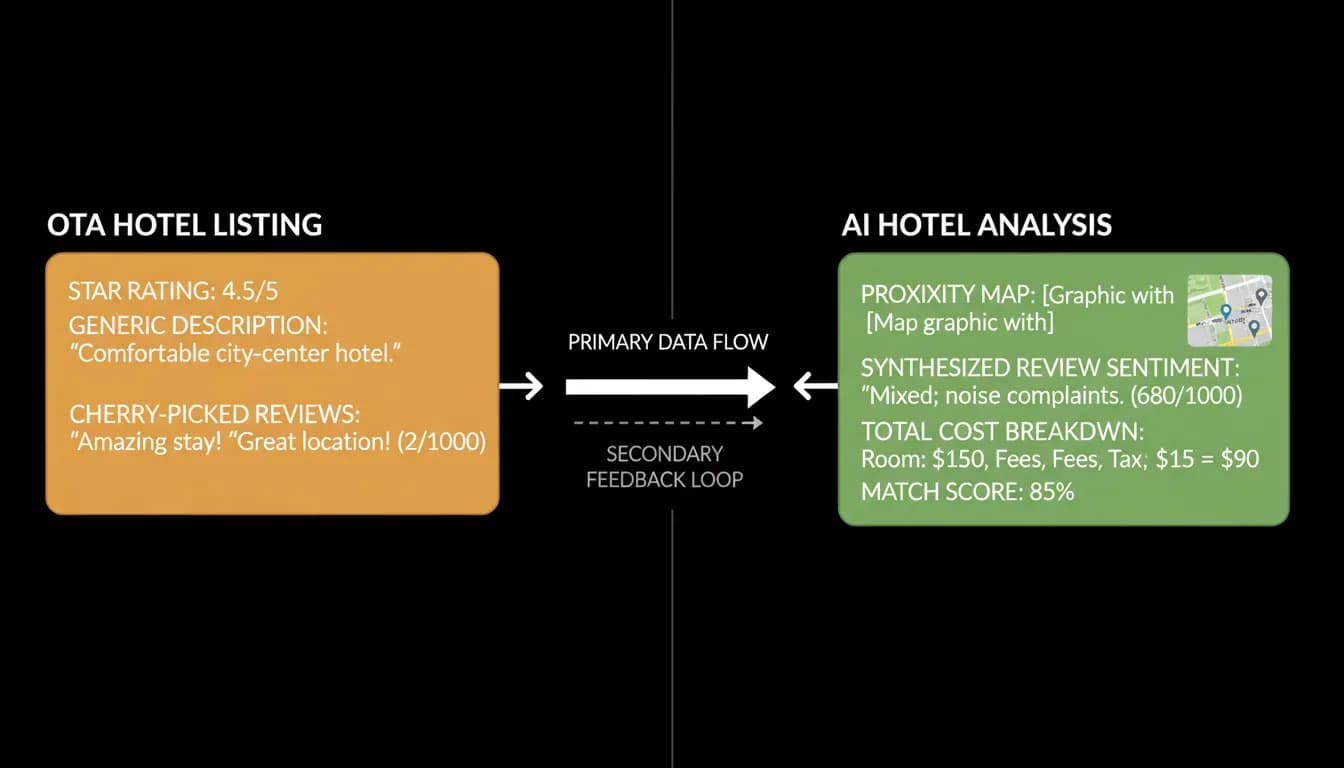
The pattern across all five problems is the same: traditional platforms display raw data and expect you to make sense of it. AI agents process the raw data and present synthesized intelligence.
Descriptions are normalized, not parroted. Reviews are synthesized, not listed. Fees are calculated, not hidden. Photos are supplemented with review-based reality checks. And the overwhelming volume of options is reduced to a curated set with clear reasoning.
This is not a better search interface. It is a different approach to hotel selection. The search model says "here is everything, figure it out." The agent model says "I evaluated everything, here is what matches your needs, and here is why."
Ask your AI agent to explain why it picked a hotel, not just which one. The answer will tell you more than any search result page ever could.
Nowah is an AI travel agent that searches and books real flights and hotels through conversation — no filters, no thirty open tabs. Plan your next trip.