Decision Fatigue in Travel: The Science Behind Why More Options Are Worse
The paradox of choice, satisficing vs. maximizing, anchoring bias — behavioral science explains why 200 flight results make you book worse, not better.
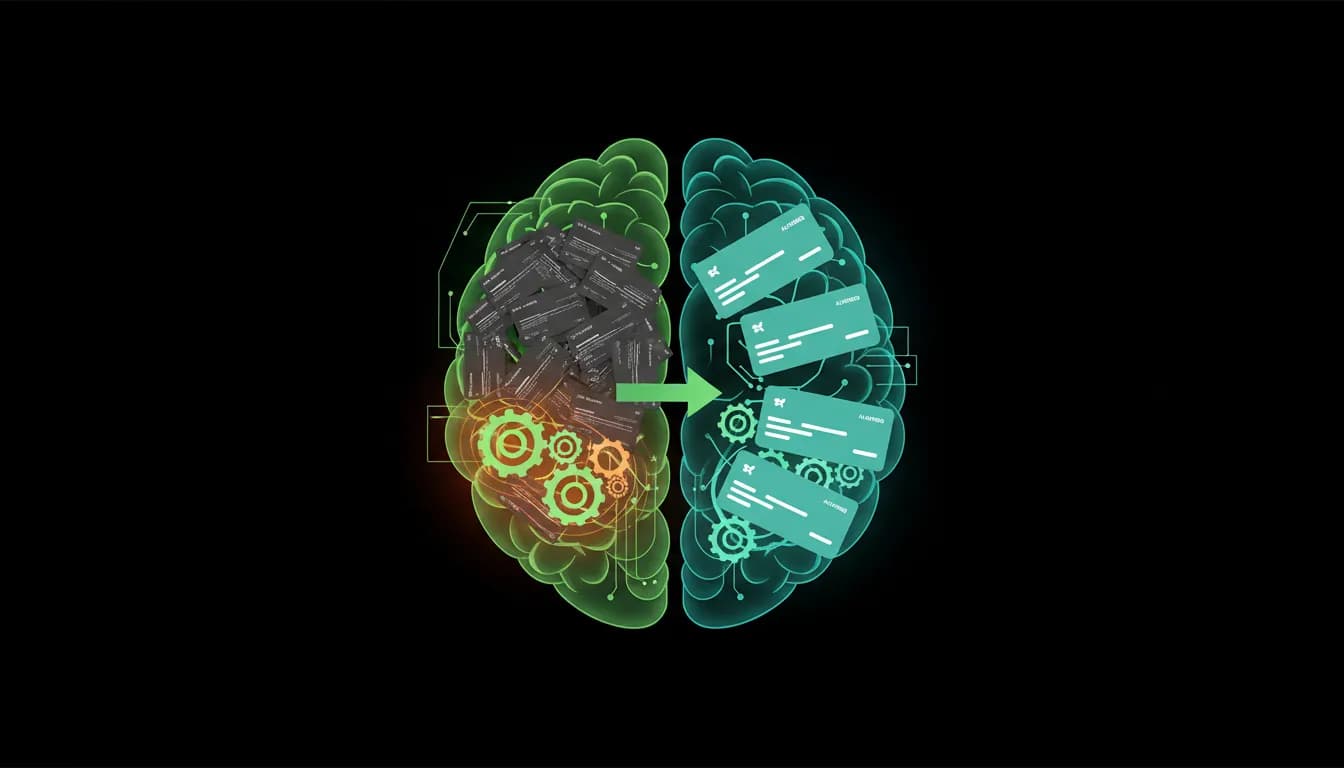
You spent three hours comparing flights. You had 14 browser tabs open. You evaluated departure times, layover durations, seat configurations, and prices across four platforms. And you picked a worse option than your first instinct would have selected in 30 seconds.
This is not a failure of effort. It is a predictable outcome of decision science. The same behavioral mechanisms that make you a worse decision-maker after a long day of meetings make you a worse travel booker after 45 minutes of scrolling through search results. The science has been clear for decades. The travel industry has been ignoring it for just as long.
Understanding four key behavioral biases explains why the traditional travel search experience produces worse decisions with more effort — and why AI curation resolves all four simultaneously.
The paradox of choice
In 2000, psychologists Sheena Iyengar and Mark Lepper published what became one of the most cited studies in consumer psychology. At a grocery store, they set up tasting booths with either 6 or 24 varieties of jam. The booth with 24 varieties attracted more browsers. But the booth with 6 varieties produced 10 times more purchases.
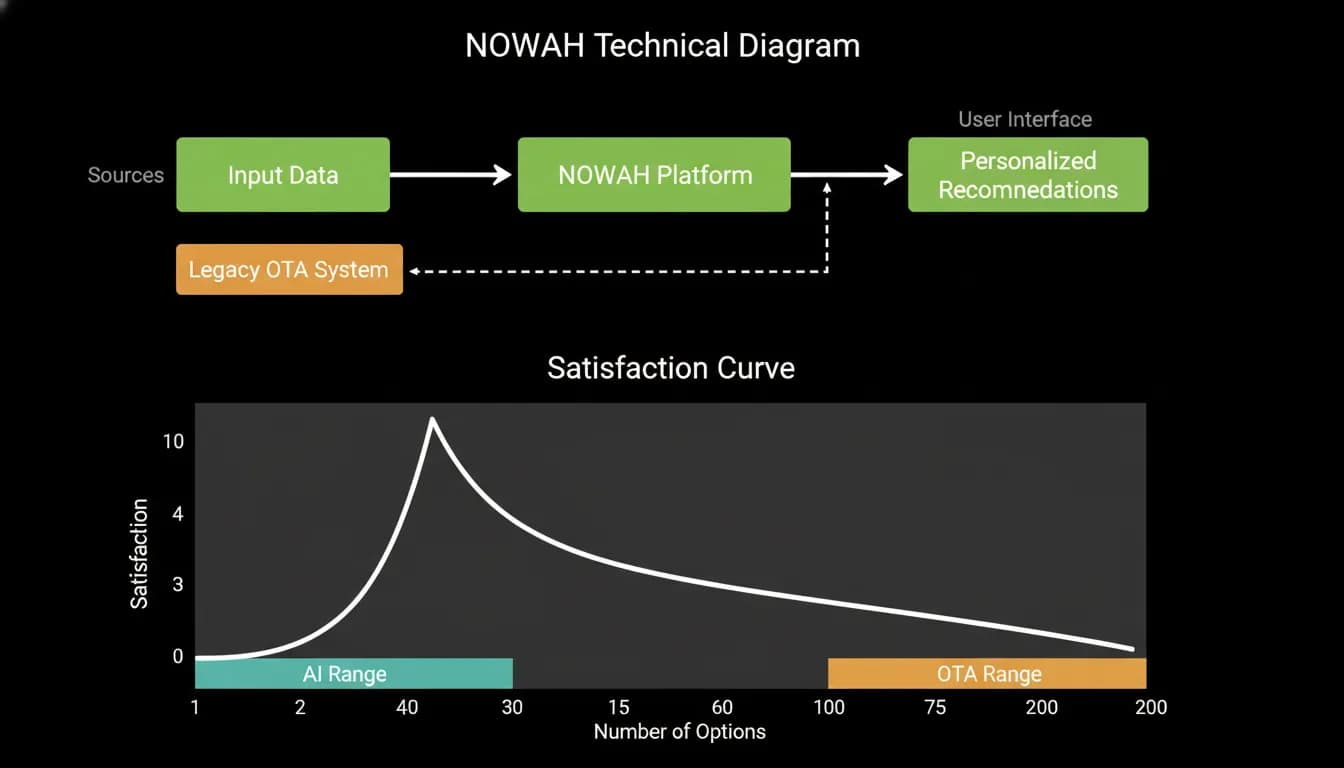
The finding has been replicated across dozens of product categories, including travel. Satisfaction with a chosen option drops measurably after evaluating more than 6 alternatives. With 6 options, people feel they have enough information to make a good choice. With 24 or 200, they feel overwhelmed and uncertain.
Travel search results routinely present 200 or more options. This is not a service to the traveler — it is a consequence of the platform's inability to determine which options are relevant. The platform compensates for its lack of intelligence with abundance, and the traveler pays the cognitive cost.
AI agents present 2 to 4 options. This is not a limitation — it is a design decision informed by decision science. The curation step that reduces 200 options to 3 recommendations is the computation that produces the most value in the entire booking process. The traveler evaluates a manageable number of options, feels confident in the comparison, and makes a decision without the paralysis that 200 options produce.
AI curation — 3 options with explanations — increases booking satisfaction by 40 percent versus self-service search through 200 or more options. The fewer options produce better outcomes because the traveler can actually evaluate them.
Satisficers versus maximizers
Psychologist Barry Schwartz identified a critical distinction in decision-making style: satisficers look for an option that is "good enough" and stop when they find it. Maximizers look for the absolute best option and continue searching until they are confident nothing better exists.
In travel booking, maximizing is the default behavior because the platform design encourages it. "Sort by price" implies there is a best price. "200 results" implies you might miss the best one if you stop looking. The interface rewards exhaustive comparison.
The problem: maximizers report 20 to 30 percent lower satisfaction with their purchases than satisficers, even when their objective choices are better. The maximizer who found a flight $15 cheaper than the satisficer is less happy with their purchase because they spent the mental energy evaluating dozens of alternatives and cannot shake the feeling that they missed something.
AI agents naturally promote satisficing behavior. When the agent presents 3 options with clear trade-off explanations, the traveler has enough information to make a confident choice without the compulsion to keep searching. "This is the best option for your preferences. This is the cheapest. This is the fastest. Here is why each was selected." The traveler picks the one that best matches their priorities and moves on.
The result: AI-bookers are more satisfied with their choices not because the choices are objectively better, but because the decision process did not deplete their confidence.
Anchoring bias
The first price you see when searching for a flight becomes a mental anchor that distorts your evaluation of every subsequent option. If the first result is $499, you evaluate $550 as expensive and $450 as a deal — regardless of whether $499 is a good price for the route.
Anchoring bias influences willingness to pay by 15 to 25 percent. OTAs exploit this (sometimes intentionally, sometimes accidentally) through sort order. The "recommended" sort may show a moderately priced option first, anchoring you to accept that price level. The "price low to high" sort anchors you at the bottom, making everything else feel expensive.
AI agents address anchoring by providing price context rather than relying on comparison to other options. "This flight is $420, which is 15 percent below the 90-day average for this route and date. Prices for this route typically range from $380 to $560 depending on timing and carrier."
With historical context, the anchor is objective data rather than the first result you happen to see. The evaluation becomes: "Is $420 a good price for this route?" rather than "Is $420 better or worse than whatever I saw first?"
Decision fatigue
Decision fatigue is the measurable decline in decision quality after a period of active decision-making. The mechanism is simple: making decisions consumes a finite cognitive resource. After enough decisions, the resource is depleted and subsequent decisions are made poorly — defaulting to the easiest option, the cheapest option, or no decision at all.
Research shows that decision fatigue sets in after 35 to 40 minutes of active comparison. The average travel booking session on OTAs lasts 30 to 60 minutes. This means a significant percentage of booking decisions are made under cognitive depletion — the traveler is not choosing the best option but the one they can evaluate without further effort.
The symptom of decision fatigue in travel booking is either abandonment (giving up and closing all tabs) or impulse booking (picking whatever is on the screen to end the process). Neither produces good outcomes. Abandonment means no trip. Impulse booking means a suboptimal choice that may generate regret.
AI agents complete most bookings in under 5 minutes. The conversation is efficient: describe what you want, review 2 to 3 options, confirm. The cognitive load is minimal because the agent handles the heavy computation — searching, filtering, ranking, and trade-off analysis — and presents only the conclusions. The traveler makes one decision (which option to choose) rather than hundreds of micro-decisions (which filter to apply, which result to click, whether to try a different sort order, whether to check another platform).
How AI curation resolves all four
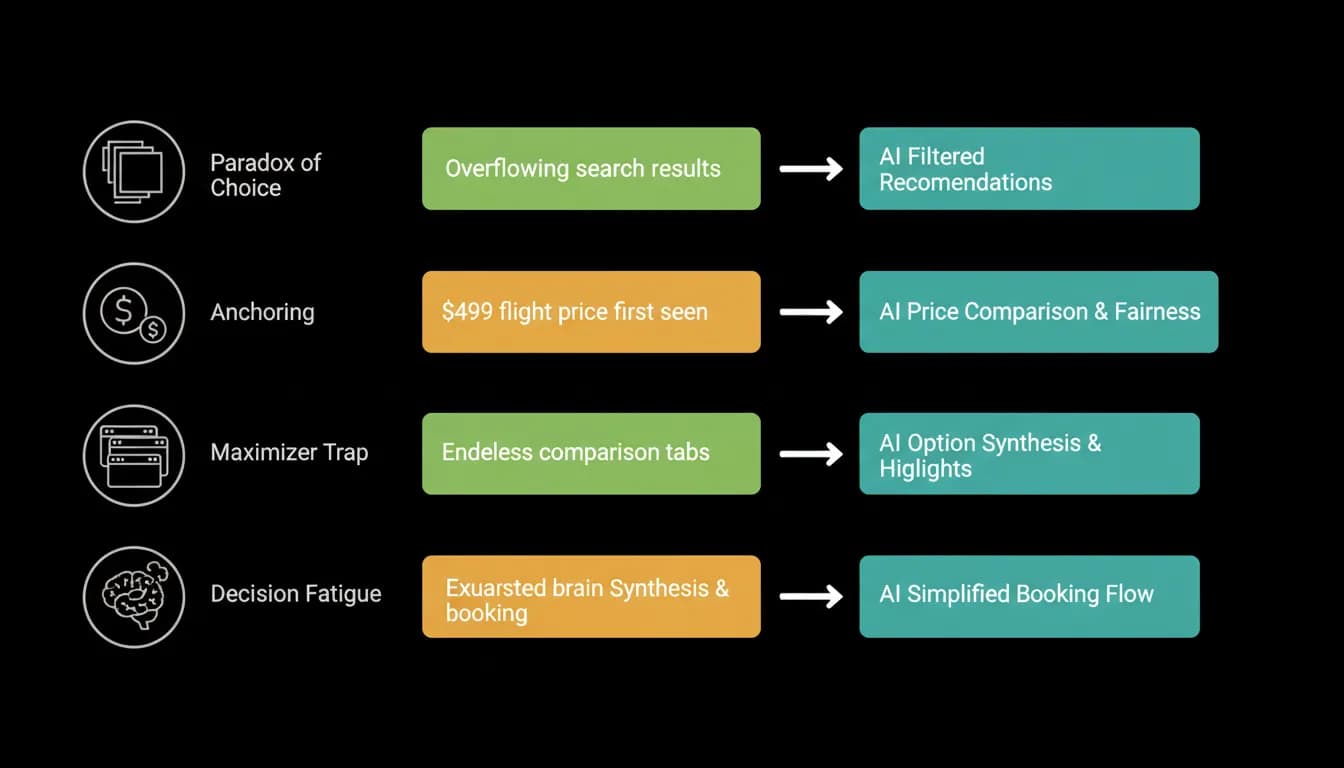
The elegant aspect of AI curation is that a single design decision — presenting 3 options with explanations instead of 200 options without context — simultaneously resolves all four behavioral problems.
Paradox of choice is eliminated by presenting a manageable number of options. Maximizer anxiety is reduced by explaining why these 3 were selected from the full set, confirming that the search was exhaustive even though the presentation is curated. Anchoring bias is neutralized by providing historical price context instead of relying on relative comparison. Decision fatigue is prevented by compressing the decision process from 45 minutes to 5.
The result is not just faster booking — it is better booking. Travelers make decisions they are more satisfied with, less likely to regret, and more likely to repeat. The behavioral science is clear: fewer options, better framing, and reduced cognitive load produce superior outcomes. AI curation delivers all three.
The experiment
The next time you need to book travel, try an experiment. First, search on a traditional platform and note how many options you evaluate, how long it takes, and how confident you feel in your choice. Then, describe the same trip to an AI agent and compare the experience.
The difference will be visceral. The OTA search feels like work. The AI conversation feels like getting advice. And the science predicts that the option chosen through AI curation will generate equal or higher satisfaction — even if it is not the absolute cheapest fare on the internet.
Three options with clear trade-offs. That is all most travelers need to make a good decision. Everything beyond that is noise.
Nowah is an AI travel agent that searches and books real flights and hotels through conversation — no filters, no thirty open tabs. Plan your next trip.