Solo Travel in the AI Age: How AI Agents Make Solo Trips Safer and Better
AI agents become your 24/7 travel companion — handling emergencies, providing local tips, managing your itinerary, and keeping you connected and safe.
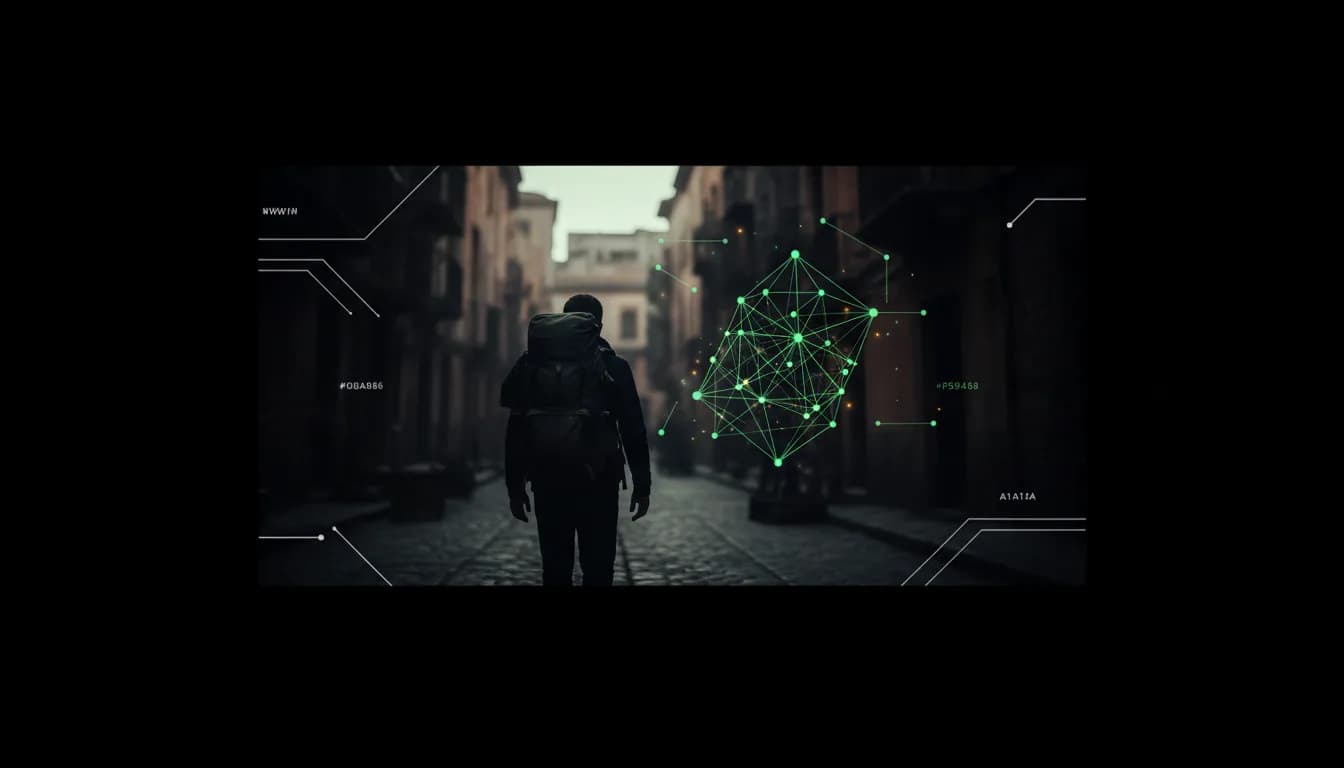
It is 11 PM in Hanoi. Your hotel reservation does not exist — the property overbooked and there is no room. You are alone. You do not speak Vietnamese. Your phone has 15 percent battery. The street is unfamiliar and the nearest alternative hotel could be anywhere.
This is the solo traveler's nightmare. And it happens more often than the travel industry admits. For the 58 percent of solo travelers who are women, the safety dimension of this scenario compounds the logistical stress into something genuinely frightening.
Now imagine the same scenario with an AI agent that knows your itinerary, your location, your preferences, and the local hotel inventory in real time. Within 90 seconds, it finds three available hotels within a 10-minute walk, books the one that best matches your preferences, sends you walking directions, and confirms the reservation. Crisis resolved before the panic sets in.
This is not a hypothetical future. This is what AI agents do today. And it is transforming solo travel from an exercise in self-reliance into something safer, smoother, and more enjoyable than it has ever been.
The solo travel boom
Solo travel is growing at 15 percent annually — faster than any other travel segment. The reasons are straightforward: more people live alone, remote work enables location flexibility, and social media has normalized traveling without a companion.
Solo travelers spend 20 percent more per trip than group travelers. They book more experiences, eat at more restaurants, and stay at more distinctive accommodations. They are a high-value segment that the travel industry has historically underserved.
The underservice is not malicious. It is structural. Traditional booking tools were built for the trip you plan in advance, not the problems you encounter on the ground. And solo travelers encounter more problems on the ground because they lack the safety net of a travel companion. There is no one to watch your bags while you figure out the train schedule. No one to help navigate when you are lost. No one to call hotels when your reservation falls through.
Seventy-two percent of solo travelers cite safety as their top concern. Not cost. Not logistics. Safety. And traditional booking platforms offer precisely nothing to address it.
AI as 24/7 companion
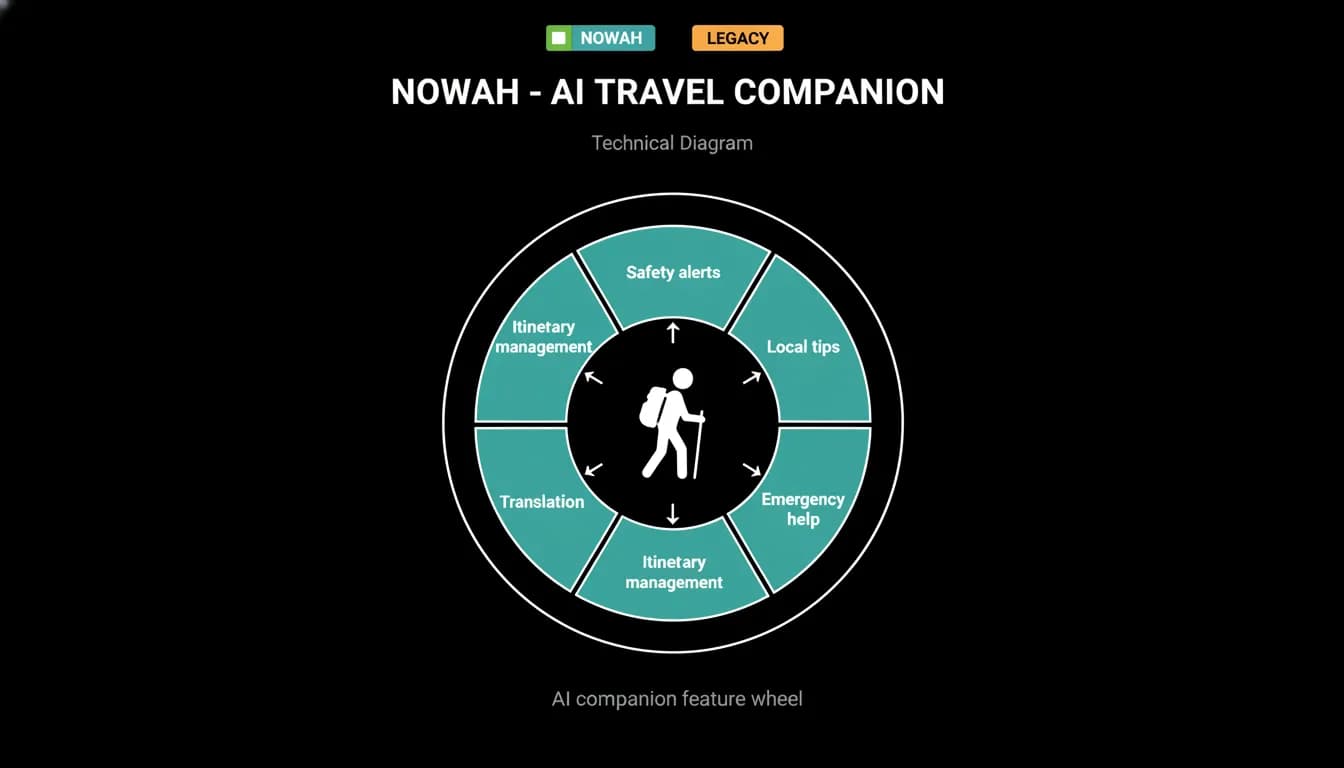
An AI agent is not a travel companion in the social sense. It does not share meals or conversation. What it provides is something more practically valuable for the solo traveler: persistent context awareness and 24/7 availability.
The AI agent knows where you are (your itinerary, not GPS tracking). It knows where you are staying, what you have booked, what time your next flight departs, and what your dietary restrictions are. This context means that when you ask a question — any question — the answer is already personalized.
"Where should I eat tonight?" is not answered with a generic list of top restaurants. It is answered with: "There is a vegetarian restaurant with strong reviews 8 minutes walking from your hotel. It is in a well-lit area and has an English menu. Want me to check if they take reservations?"
That level of contextual response is what a great travel companion provides. The AI delivers it without needing sleep, without getting irritated, and without ever being unavailable.
Traditional OTAs provide none of this. Their relationship with you ends at the booking confirmation. Once you arrive at your destination, you are on your own. The solo traveler needs support most during the trip, not before it.
Safety features that matter
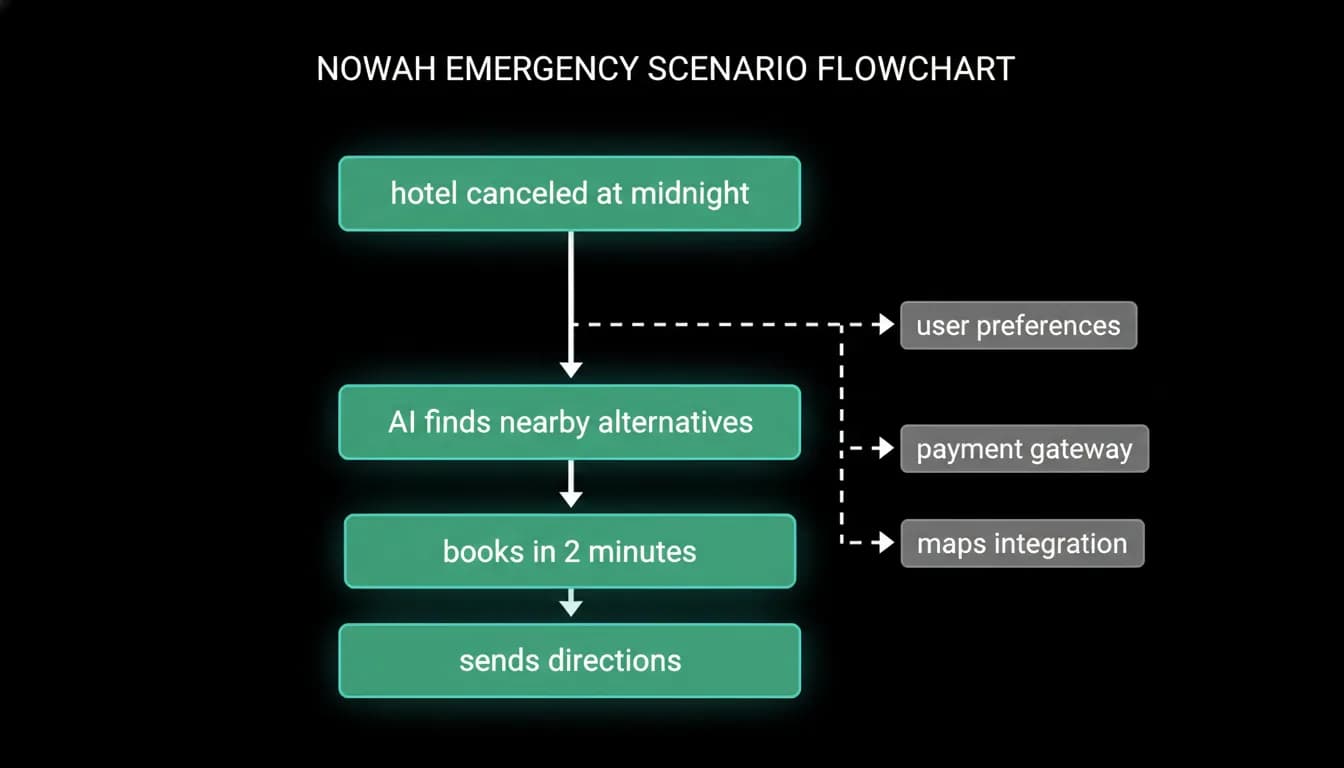
Safety for solo travelers is not a single feature. It is a collection of capabilities that together create a safety net.
Real-time [disruption handling](/blog/ai-agents-handle-flight-disruptions). Flight canceled at midnight? Hotel overbooked? Lost connection? The AI agent handles the rebooking immediately, without requiring you to call anyone, wait on hold, or navigate a foreign-language customer service system. For solo travelers, this eliminates the most stressful moments of travel.
Local safety awareness. AI agents integrate safety data about neighborhoods, transportation options, and local conditions. "Is it safe to walk from the restaurant to my hotel at this hour?" is a question the agent can answer with current, location-specific information. This is particularly valuable for women traveling alone, who make up 58 percent of solo travelers and who face safety considerations that travel platforms have historically ignored.
Emergency resource access. Local emergency numbers, nearest hospital, embassy contact information, and local police stations — all available instantly without searching. When you are alone in an unfamiliar city, knowing that help is one message away changes the entire psychology of the trip.
Proactive alerts. Rather than waiting for you to discover a problem, AI agents can notify you proactively. "Your flight tomorrow has a 30 percent delay probability based on current weather patterns. I have identified two alternative flights if needed." This shifts the traveler from reactive to prepared.
Social discovery for solo travelers
One of the paradoxes of solo travel is that most solo travelers do not actually want to be alone the entire time. They want autonomy — the freedom to set their own schedule and make their own decisions. But they also want social connection.
AI agents can bridge this gap by suggesting activities that naturally create social interaction. Walking food tours. Group cooking classes. Hostel social events. Local meetups. The agent knows your interests and your location and can suggest experiences where you will be around other people without the commitment of a group tour.
"You are in Lisbon for two more days and mentioned you like wine. There is a wine tasting event tomorrow evening at a shop 12 minutes from your hotel. Small group, 15 people maximum. Reviews mention it is popular with solo travelers. Want me to book a spot?"
This kind of recommendation requires knowing your location, your interests, your schedule, and your travel style. OTA search engines have none of this context. AI agents have all of it.
Confidence through preparation
Much of solo travel anxiety comes from uncertainty. What are the visa requirements? Is the tap water safe? How much should a taxi cost from the airport? What is the tipping culture? Is there anything I should know about local customs?
AI agents provide this preparation naturally as part of the trip planning process. When you book a trip to Morocco, the agent does not just confirm flights and hotels. It tells you about visa requirements, currency exchange recommendations, cultural norms to be aware of, safety considerations for your specific profile, and practical tips that guidebooks bury in 300 pages of text.
This preparation is not a separate research step. It is integrated into the booking flow. You plan and learn simultaneously. By the time you board the plane, you have not just booked a trip — you have been briefed for it.
For solo travelers, this briefing creates confidence. Confidence reduces anxiety. Reduced anxiety leads to better trips. Better trips lead to more solo travel. The cycle is positive and self-reinforcing.
Your solo travel safety profile
The next time you plan a solo trip, set up your travel profile with an AI agent before you go. Include your emergency contacts, dietary restrictions, medical information, and communication preferences. Tell the agent about your comfort level with different types of neighborhoods, your preferred transportation modes, and any accessibility needs.
This profile becomes the foundation for every recommendation and every safety response during your trip. The first trip builds the profile. Every subsequent trip refines it. By the third or fourth solo trip, the AI agent knows your travel style well enough to anticipate problems before they become problems.
Solo travel should be liberating, not stressful. The right AI agent ensures it is both.
Nowah is an AI travel agent that searches and books real flights and hotels through conversation — no filters, no thirty open tabs. Plan your next trip.