Travel Trend Predictions: What Data Says About 2027
Forward-looking trend analysis based on current data signals — rising route demand, new airline capacity, shifting seasonal patterns, and emerging behaviors.

The signals in today's search data predict where you will travel next year. Search intent precedes bookings by two to eight weeks, which means the destinations and routes gaining search volume right now are the ones that will see booking growth in the coming months. Extend that logic across multiple data sources — route capacity announcements, demographic shifts, technology adoption curves — and a picture of 2027 travel begins to emerge.
These predictions are not speculative. They are extrapolations from measurable trends, calibrated with the understanding that predictions are probabilities, not certainties.
How search and booking data predict trends
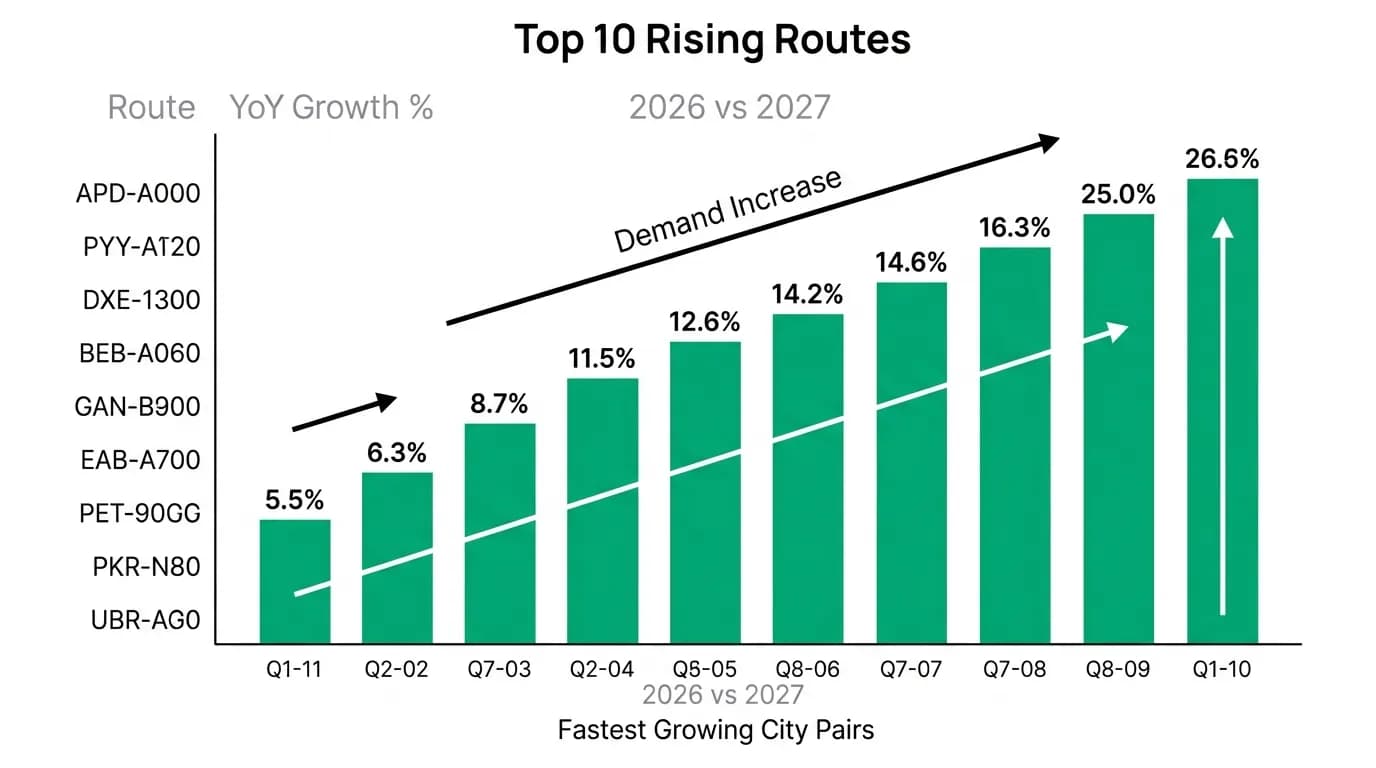
Search intent is a leading indicator. When a destination starts appearing more frequently in travel searches, booking growth follows with a lag of two to eight weeks. This relationship is consistent enough to serve as a trend detection mechanism.
The AI monitors search patterns across its user base (aggregated and anonymized) to identify rising demand before it fully materializes. A destination that shows 30% search growth over two consecutive months is likely to see elevated bookings in the following quarter. An airline that adds capacity on a route signals expected demand growth that search data often confirms.
The most reliable predictions combine multiple signals. When search interest rises, airline capacity is added, and hotel inventory grows on a route simultaneously, the trend is robust. When only one signal is present, the prediction is weaker.
Rising routes: city pairs gaining demand fastest
Several categories of routes show consistent growth patterns heading into 2027.
Secondary European cities continue to gain at the expense of traditional capitals. Travelers who have already visited London, Paris, and Rome are exploring smaller cities with lower costs, fewer crowds, and authentic cultural experiences. Routes to cities in Portugal, the Balkans, and the Baltics show particularly strong growth curves.
Southeast Asian destinations beyond Thailand and Bali are gaining traction. Vietnam, the Philippines, and emerging destinations in Indonesia outside of Bali are seeing rising search interest from travelers looking for the Southeast Asian experience at lower price points.
Domestic routes to outdoor destinations continue a trend that accelerated during the pandemic and has not reversed. Mountain towns, national park gateways, and coastal destinations away from major cities show sustained demand growth.
New airline capacity and competition
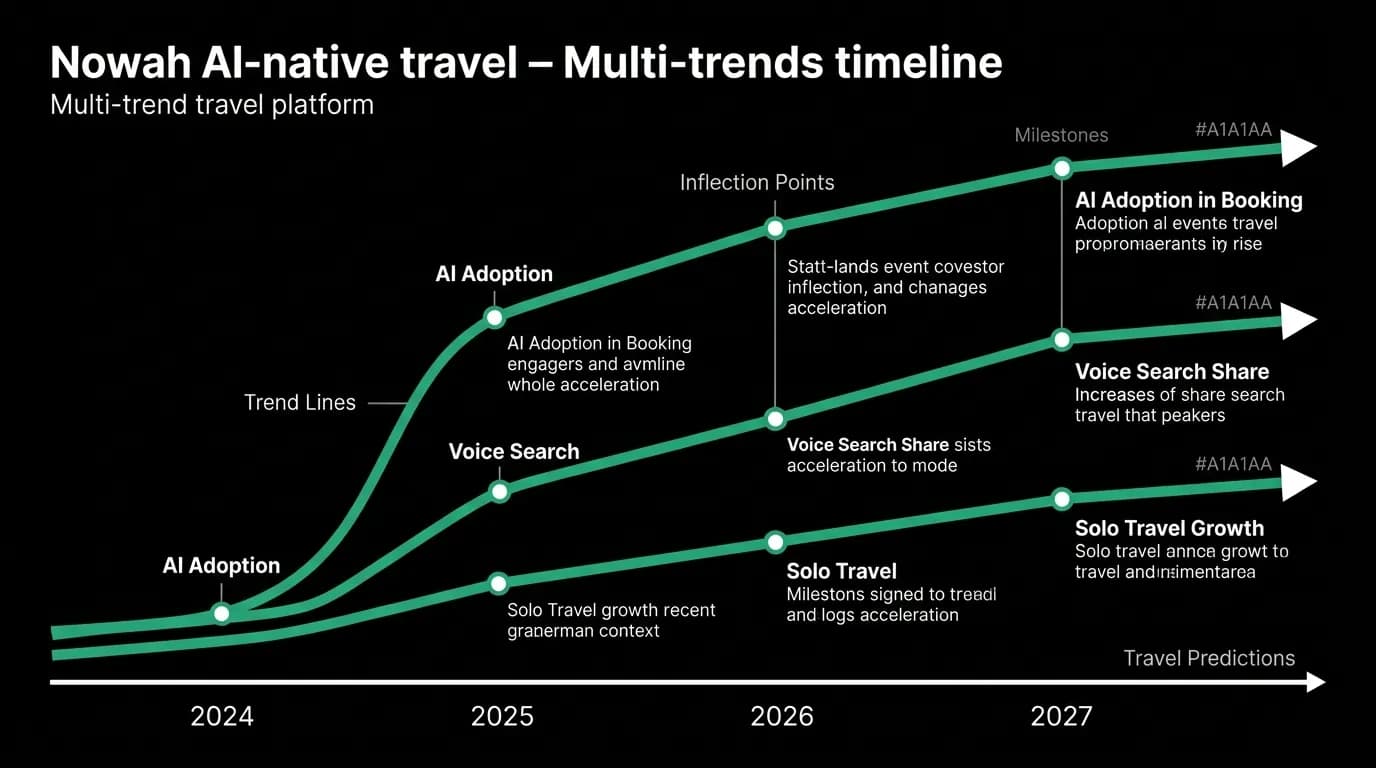
Airlines announce new routes and capacity additions 6 to 12 months in advance, providing a forward-looking indicator of where the industry expects demand to grow.
The pattern for 2027 shows continued expansion of long-haul, low-cost competition, particularly on transatlantic routes. More carriers operating more direct flights between secondary cities means more competitive pricing and more options for travelers who previously had to connect through major hubs.
Within Asia, carrier competition is intensifying on routes between India and Southeast Asia, reflecting both growing middle-class travel demand and airline network expansion. These routes are likely to see meaningful fare compression as competition increases.
Shifting seasonal patterns
Two structural forces are gradually reshaping seasonal travel patterns.
Climate change is extending warm-weather seasons in northern destinations and making peak summer temperatures less tolerable in traditionally hot destinations. Mediterranean destinations that were comfortable in July are now seeing temperatures above 40 degrees Celsius, pushing demand toward spring and fall. Nordic and northern destinations are seeing longer comfortable seasons, spreading demand more evenly.
Remote work has permanently altered the seasonal demand curve. Travelers who are not tied to office schedules can visit destinations during their optimal weather windows rather than being forced into school-break and holiday-week travel. This flattens the peak-vs-off-peak demand gap and creates a year-round baseline of travel demand that did not exist pre-pandemic.
The combined effect is a longer shoulder season on both ends of summer for European destinations and a redistribution of demand toward months that were previously considered off-peak.
Emerging traveler behaviors
Several behavioral shifts are accelerating into 2027.
AI-native booking is moving from early-adopter to mainstream. The AI travel market is projected to exceed $5 billion by 2027, and surveys show 40 to 50% of Gen Z and younger millennials express interest in AI-powered trip planning. The travelers who try conversational booking tend not to go back to form-based search, creating a ratchet effect in adoption.
[Voice search](/blog/voice-search-changing-travel-data) for travel is growing at 30% or more year over year. As voice assistants improve, more travelers are initiating trip research through voice queries. This favors platforms designed for conversational interaction over those designed for visual browsing.
Solo travel continues to grow, driven by travelers who value flexibility and self-directed experiences. Solo bookings represent a growing share of total bookings, with particular strength among younger travelers and recently retired demographics.
Staying ahead of the curve
Trend awareness has practical value for travelers. Booking a destination before it becomes popular means lower prices, fewer crowds, and more availability. Booking after it peaks means premium pricing and waitlists.
Stay ahead of trends. Ask Nowah where to go before everyone else catches on, and see which emerging destinations match your travel preferences at tomorrow's prices instead of next year's.
Nowah is an AI travel agent that searches and books real flights and hotels through conversation — no filters, no thirty open tabs. Plan your next trip.