The Trust Gap in AI Travel Booking
70% of travelers are curious about AI booking. Only 30% trust it with their credit card. Here is how to close that gap.
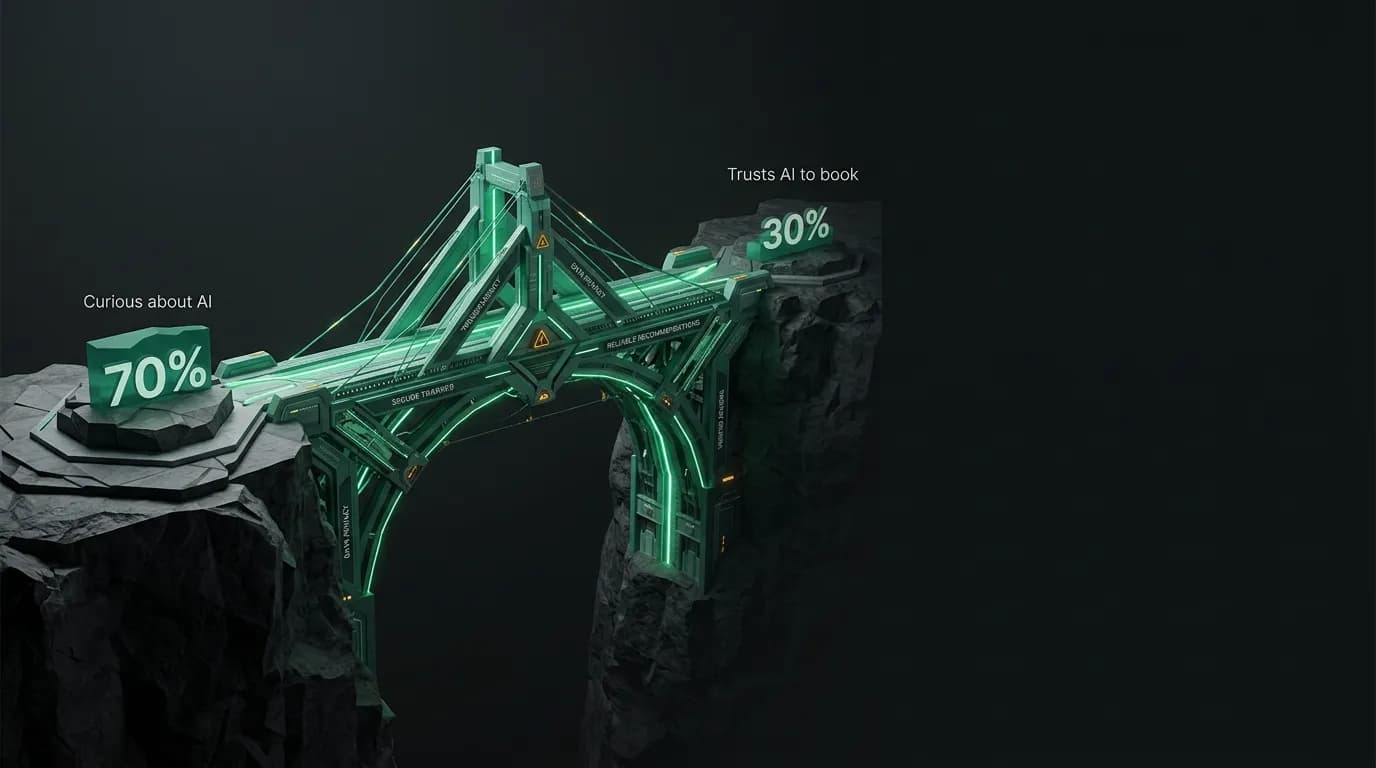
There is a gap between curiosity and commitment. Consumer surveys show that roughly 70% of travelers are interested in using AI for travel planning. But only about 30% trust AI enough to hand over their credit card for an actual booking.
That 40-point gap is the defining challenge for AI travel products. It is not a technology problem. The technology works. It is a trust problem. And trust is built differently than features.
I want to walk through what the research says about AI trust in high-stakes consumer decisions, what mechanisms actually close the gap, and how we think about earning trust at Nowah.
The trust data
Consumer willingness to use AI for travel planning rose from roughly 25% in 2023 to roughly 55% in 2025. That is encouraging. People are increasingly comfortable with the idea.
But comfort with the idea and comfort with the transaction are different things. When the question shifts from "would you use AI to explore travel options?" to "would you let AI book a $2,000 trip?", the numbers drop sharply.
The gap is predictable. Behavioral economics tells us that people evaluate trust differently for informational actions versus financial actions. Getting a bad restaurant recommendation costs you a mediocre dinner. Booking the wrong flight costs hundreds of dollars and potentially days of your vacation. The stakes asymmetry changes the trust threshold.
Seventy-two percent of millennials and Gen Z travelers express interest in AI travel planning. Even in this AI-native demographic, actual booking trust lags behind planning trust.
The "show your work" principle
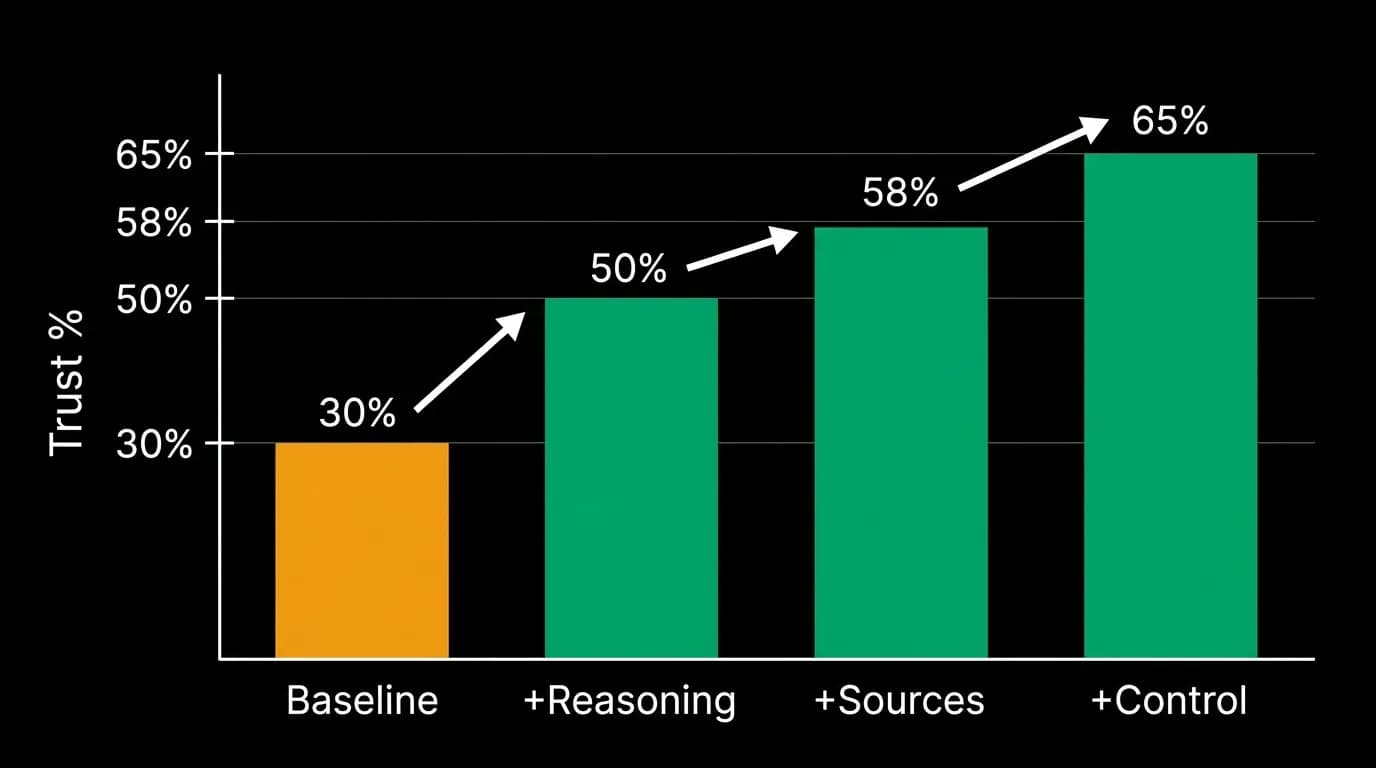
Trust in AI recommendations jumps from roughly 30% to roughly 65% when the AI explains its reasoning. This is the single most powerful trust mechanism we have found.
"I recommend this flight" is an assertion. Users have no way to evaluate it. They have to trust the AI blindly or distrust it and verify independently.
"I recommend this flight because it is a direct morning departure (which matches your preference), priced 15% below the April average for this route, on an airline you have flown and rated positively before" is a transparent recommendation. The user can evaluate each element. They can agree or disagree with the reasoning. They can correct the agent if a premise is wrong.
Transparency does not mean dumping raw data. It means clearly communicating three things: what the agent knows, how it used that knowledge, and why it reached this recommendation. The explanation should be concise enough to read in 10 seconds but complete enough to evaluate.
We apply this principle at every decision point. Why was this hotel ranked first? "You prefer boutique hotels in walkable neighborhoods, and this property is in Trastevere, which matches your food-focused travel style from your last three trips." Why was this flight ranked above a cheaper option? "The cheaper option has a tight 55-minute connection at a congested hub, and you have told me you prefer generous layover times."
Incremental trust building
You do not hand your car keys to a stranger. You build trust incrementally. The same applies to AI agents.
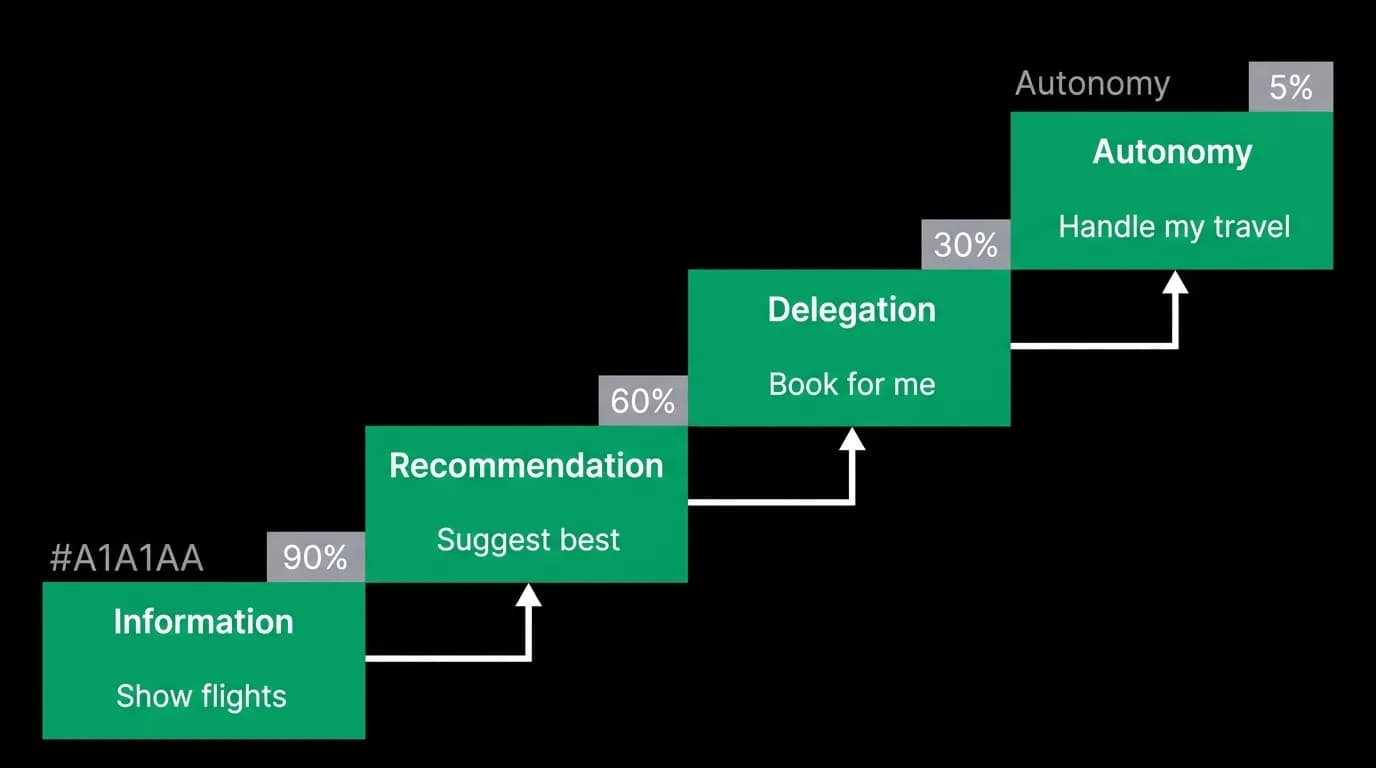
Our trust ladder has four levels:
Level 1: Information (90% of users comfortable). The agent provides destination information, answers travel questions, and shows flight and hotel options. No commitment required. The user evaluates the quality of information with zero risk.
Level 2: Recommendation (60% comfortable). The agent curates options and recommends a specific one with reasoning. The user is still the decision-maker, but the agent has an opinion. Users evaluate the quality of recommendations over multiple interactions.
Level 3: Delegation (30% comfortable). The agent handles the complete booking flow: search, rank, present, and process payment with user confirmation. The user trusts the agent enough to act on its recommendation. This is where the trust gap is widest.
Level 4: Autonomy (5% comfortable today). The agent acts without explicit approval for routine tasks. Rebooking during disruptions. Applying loyalty programs. Selecting seats based on preferences. This level requires deep trust built over many successful interactions.
Most new users start at Level 1 and progress based on experience. The progression is not forced. It happens naturally as the agent demonstrates competence.
The confirmation safety net
Every booking at Nowah requires explicit user confirmation. The agent never charges a credit card without the user seeing and approving the full details: traveler names, flight details, dates, fare class, total price, and cancellation policy.
This confirmation step is our safety net. Even users at Level 3 know that nothing irreversible happens without their explicit approval. The knowledge that a safety net exists reduces anxiety about trusting the agent with the process leading up to confirmation.
We have debated whether confirmation reduces conversion by adding friction. It does add a step. But we believe the trust it builds more than compensates. A user who is confident that the agent will not book without approval is willing to let the agent do more work autonomously. Paradoxically, the confirmation requirement enables greater autonomy in the steps before confirmation.
Human fallback
Knowing that a human can intervene, even if the human is never needed, reduces anxiety about AI-mediated transactions.
We make it clear that users can escalate to human support at any point. The existence of a fallback changes the psychological equation from "I am trusting AI with my money" to "I am using AI for convenience with a human backup if needed."
In practice, the vast majority of interactions never require human escalation. But the knowledge that it is available matters. It is like the safety harness on a roller coaster. You are unlikely to need it, but you would not ride without it.
Earning trust through competence
Ultimately, trust is earned through consistently good outcomes. Every booking that goes smoothly builds trust. Every recommendation that matches the user's preferences builds trust. Every disruption handled effectively builds trust.
We track the confirmation accept rate as a proxy for trust. This measures how often users book the agent's top recommendation versus asking for alternatives. A rising accept rate over time indicates growing trust.
We also track what we call "trust acceleration": how quickly new users progress from Level 1 to Level 3 on the trust ladder. Factors that accelerate trust include transparent reasoning, accurate first recommendations, and smooth first booking experiences.
The trust gap in AI travel booking is real. Closing it is not about marketing or reassurance. It is about building a product that deserves trust: transparent in its reasoning, accurate in its recommendations, reliable in its execution, and honest about its limitations. The best travel app is the one that earns your confidence through competence, one trip at a time.
Nowah is an AI travel agent that searches and books real flights and hotels through conversation — no filters, no thirty open tabs. Plan your next trip.