How Agentic Memory Makes Your AI Travel Agent Smarter Over Time
Your AI agent remembers your seat preference, loyalty programs, dietary needs, and travel style. Every trip makes the next one faster and more personal.
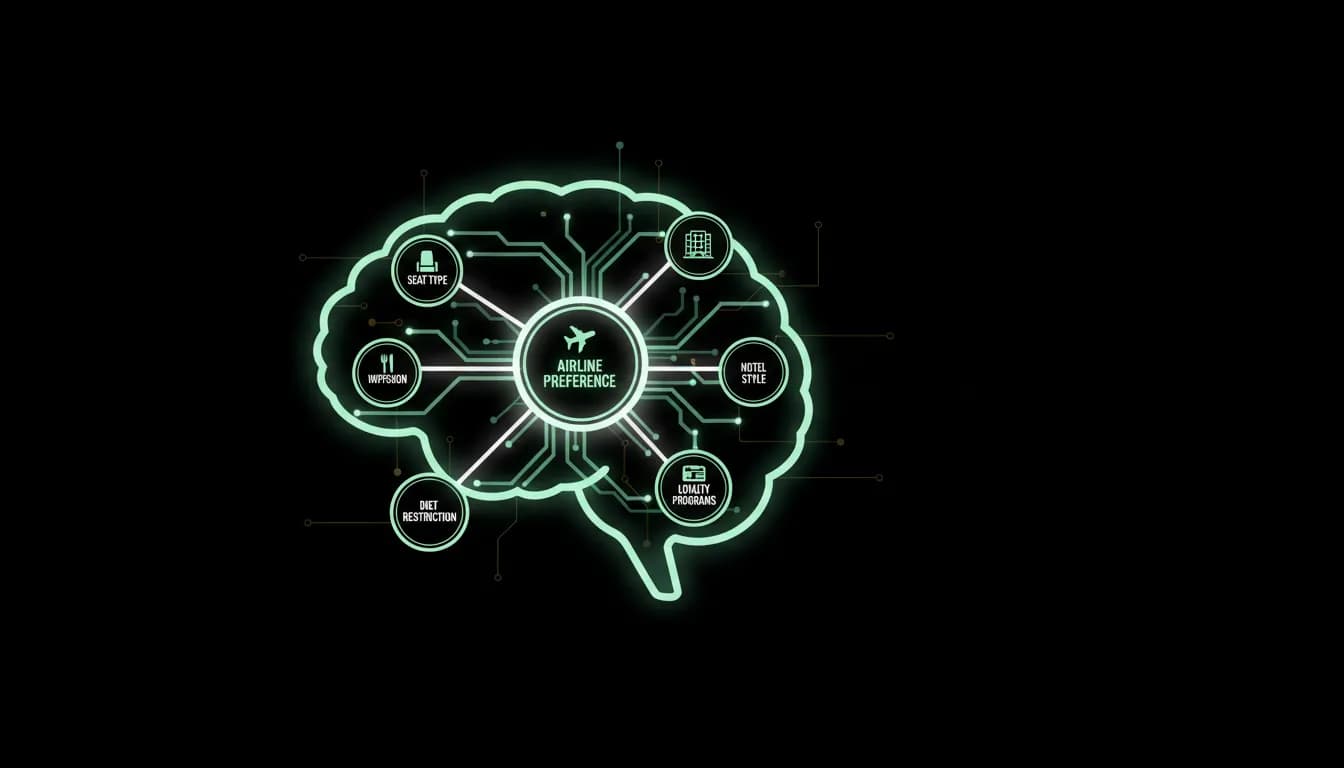
"The usual aisle seat, extra legroom, near the front of the cabin. Morning departure. No connections through O'Hare in winter."
You never said any of this during today's booking. Your AI agent already knows. It learned your seating preference on your first trip, confirmed it on your second, and noted the O'Hare aversion after your third trip included a four-hour weather delay there last January.
This is agentic memory — a persistent, cross-trip understanding of who you are as a traveler that accumulates and refines with every interaction. It is the single most important capability that separates AI agents from every other booking tool, and it is the reason that switching from an AI agent you have used for ten trips to a new platform feels like starting over.
What agentic memory is
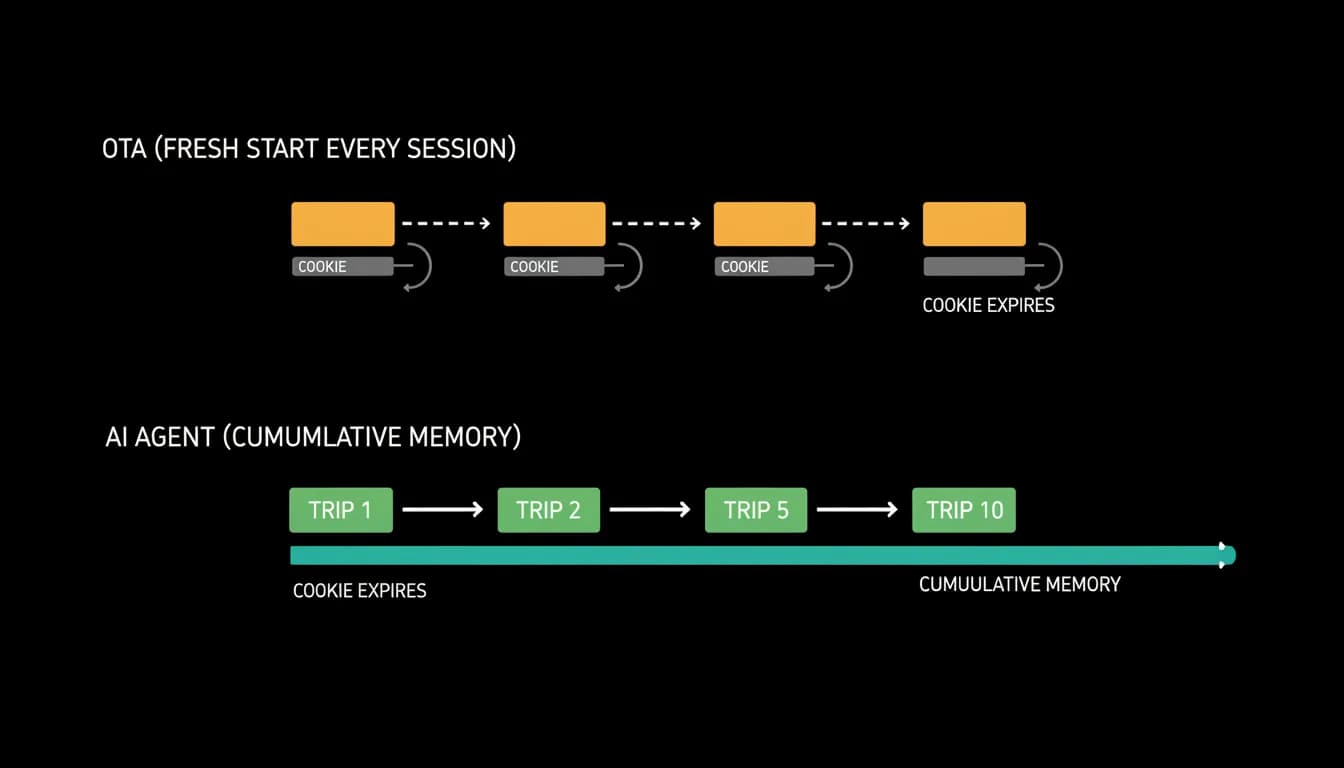
Traditional booking platforms use cookies and session data to provide rudimentary personalization. Your recent searches. Your saved payment methods. Maybe a loyalty program number. This covers roughly 5 to 8 data points about you as a traveler. When the cookie expires or you clear your browser, even that thin layer of knowledge disappears.
Agentic memory is fundamentally different. It is a persistent, structured understanding of your travel preferences, behavior patterns, and history that exists independent of any single session. It does not expire. It does not reset when you close the app. It grows.
The distinction is not just quantitative — more data points versus fewer. It is architectural. Cookie-based personalization is stateless: each session starts fresh, with only the data stored in the cookie to provide context. Agentic memory is stateful: each interaction builds on every previous interaction. The agent carries the full history of your relationship.
Think of the difference between a hotel front desk and a concierge who has served you for years. The front desk looks up your reservation and knows your room number. The concierge knows you prefer a high floor, asks about your daughter's college applications, and has already arranged for extra pillows because you mentioned a back problem six months ago. Same building. Entirely different experience.
What gets remembered
Agentic memory covers 50 to 100 or more data points, organized across several categories.
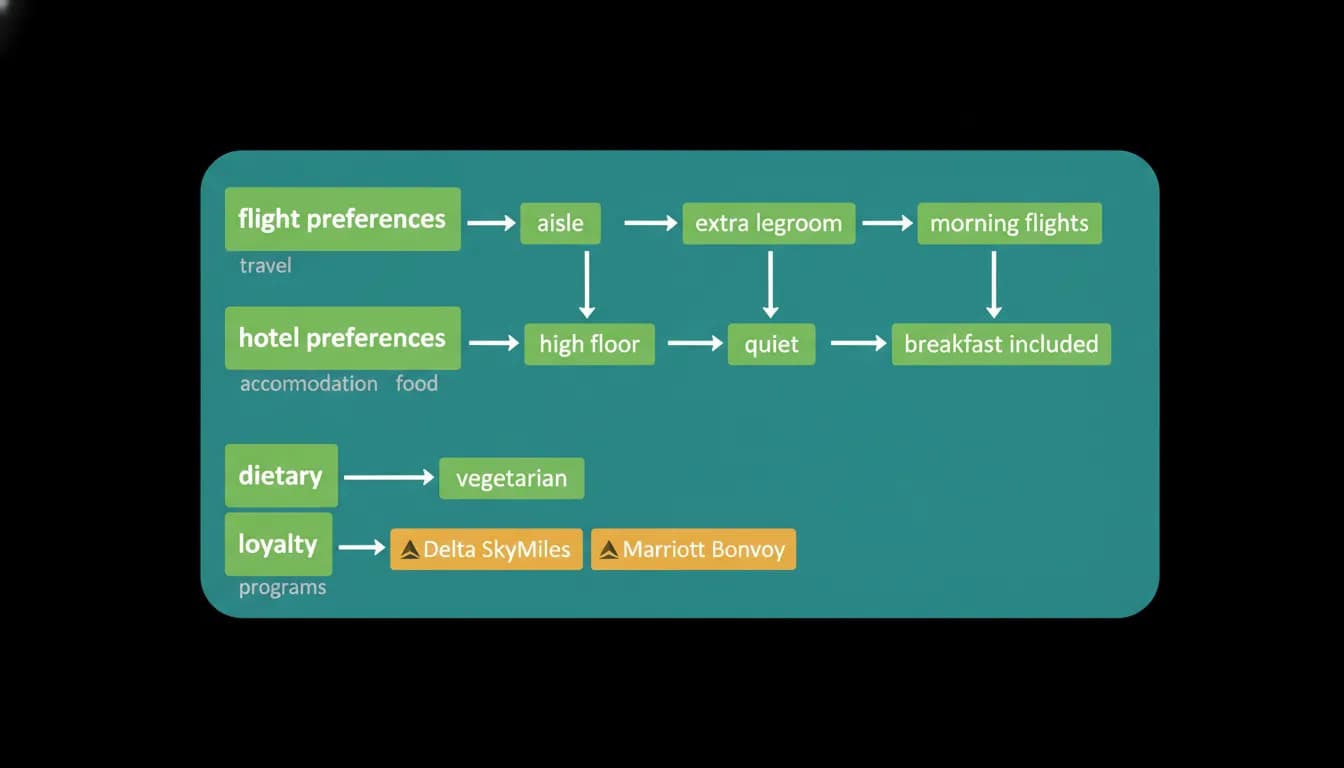
Flight preferences. Seat location (aisle, window, middle). Legroom priority. Cabin class preference. Preferred airlines. Avoided airlines. Departure time preferences. Connection tolerance. Airport preferences when multiple serve the same city.
Hotel preferences. Room type (king, double, suite). Floor preference. Noise sensitivity. View priority. Proximity to specific venue types. Brand preferences. Amenity requirements (gym, pool, restaurant, business center).
Dietary and health. Food restrictions and allergies. Meal preferences on flights. Restaurant cuisine preferences. Any accessibility needs. Medical considerations for destination selection.
[Loyalty programs](/blog/ai-changes-hotel-loyalty-programs). Every program membership, current status levels, point balances (when shared), and earning preferences. Plenty of travelers hold loyalty memberships they forget to use at the moment of booking. Agentic memory keeps track of them and factors them into recommendations.
Travel patterns. Typical trip duration. Budget ranges by trip type. Packing style (carry-on only versus checked bags). Travel pace (packed itineraries versus relaxed). Solo versus group travel patterns. Seasonal preferences.
Past trip context. Which trips you loved and why. Which hotels disappointed. Which airlines delivered consistently. Which destinations you want to revisit. Which experiences you keep mentioning. The agent learns not just what you booked but how you felt about it.
How memory improves recommendations
The first trip with an AI agent is good. The agent asks clarifying questions, makes recommendations based on your stated preferences, and delivers a solid result. It is better than an OTA because of the conversational interface and cross-supplier comparison. But it is not yet personalized beyond what you explicitly said.
The second trip is noticeably better. The agent does not ask about seat preference — it already knows. It does not ask about hotel style — it applies what it learned. The booking completes 60 percent faster because the agent skips questions it already has answers to.
By the fifth trip, the agent is working from a substantial preference profile rather than guesswork, and it starts anticipating needs you have not stated. You mention a trip to Tokyo and the agent automatically searches for hotels with onsen access because you loved that at your Kyoto hotel. It suggests a restaurant that serves the type of cuisine you gravitated toward in Bangkok. It routes connections through airports where you have lounge access.
By the tenth trip, the experience approaches what the wealthiest travelers pay thousands of dollars for: a relationship with someone who truly understands how you like to travel. Except the AI agent does not have 50 clients. It has millions. And each one gets the same depth of personalized attention.
Privacy and control
Memory is powerful, and powerful capabilities require robust privacy controls.
You should be able to see exactly what your AI agent remembers about you. Not a vague "we personalize your experience" disclaimer — a specific, readable list of every preference, every observation, every learned behavior. Transparency is non-negotiable.
You should be able to edit or delete any specific memory. Changed your seat preference? Update it. Do not want the agent to know about a trip? Remove it. Switching from vegetarian to omnivore? Correct the dietary profile. The memory should be yours to control.
You should be able to export your preference profile. If you want to move to a different platform, your travel identity should be portable. Locking preference data inside a proprietary system is not personalization — it is lock-in by another name.
And you should be able to delete everything — a complete memory reset — at any time, for any reason. The agent serves you. If you want it to forget everything and start fresh, that is your right.
The platforms that handle memory privacy well will earn deeper trust, which leads to more data sharing, which enables better personalization. Privacy and personalization are not trade-offs. They are a virtuous cycle.
The compounding advantage
Agentic memory creates a competitive dynamic that is unusual in travel technology: meaningful switching costs that benefit the consumer.
Most travel platform switching costs are artificial — loyalty points designed to make leaving expensive, or saved payment information that is mildly inconvenient to re-enter. These are frictions, not value.
Agentic memory creates switching costs through accumulated value. After ten trips, your AI agent understands your travel preferences with a depth and accuracy that took ten trips to build. Moving to a new agent means starting over. Not because the old platform erected barriers, but because the knowledge took time to accumulate.
This is the same dynamic that makes a long-term relationship with a human travel advisor valuable. You do not stay with your advisor because leaving would cost you points. You stay because they know you and the quality of service reflects that knowledge.
Trust increases 3x when an AI agent recalls previous preferences without being told. That trust leads to more engagement. More engagement generates more preference data. More data enables better recommendations. Better recommendations reinforce trust. The flywheel spins faster with every trip.
Build your travel profile
The best time to start building your travel profile with an AI agent is your next trip. Be specific about your preferences during the booking. Correct the agent when it gets something wrong. Provide feedback after the trip about what you loved and what you would change.
Every piece of information you share makes the next trip better. By the third trip, you will notice the difference. By the fifth, you will wonder how you ever booked travel without it.
Agentic memory is not a feature. It is the foundation of a fundamentally better relationship between you and the tool that plans your travel. Every trip teaches the agent. Every lesson makes the next trip better. The compound interest of personalization is the most powerful force in modern travel technology, and it starts with your first conversation.
Nowah is an AI travel agent that searches and books real flights and hotels through conversation — no filters, no thirty open tabs. Plan your next trip.