Best Experience Booking: How AI Curates Activities and Tours
Tours, restaurants, activities — experience booking is the most fragmented travel category. AI agents excel because experiences are deeply personal and contextual.
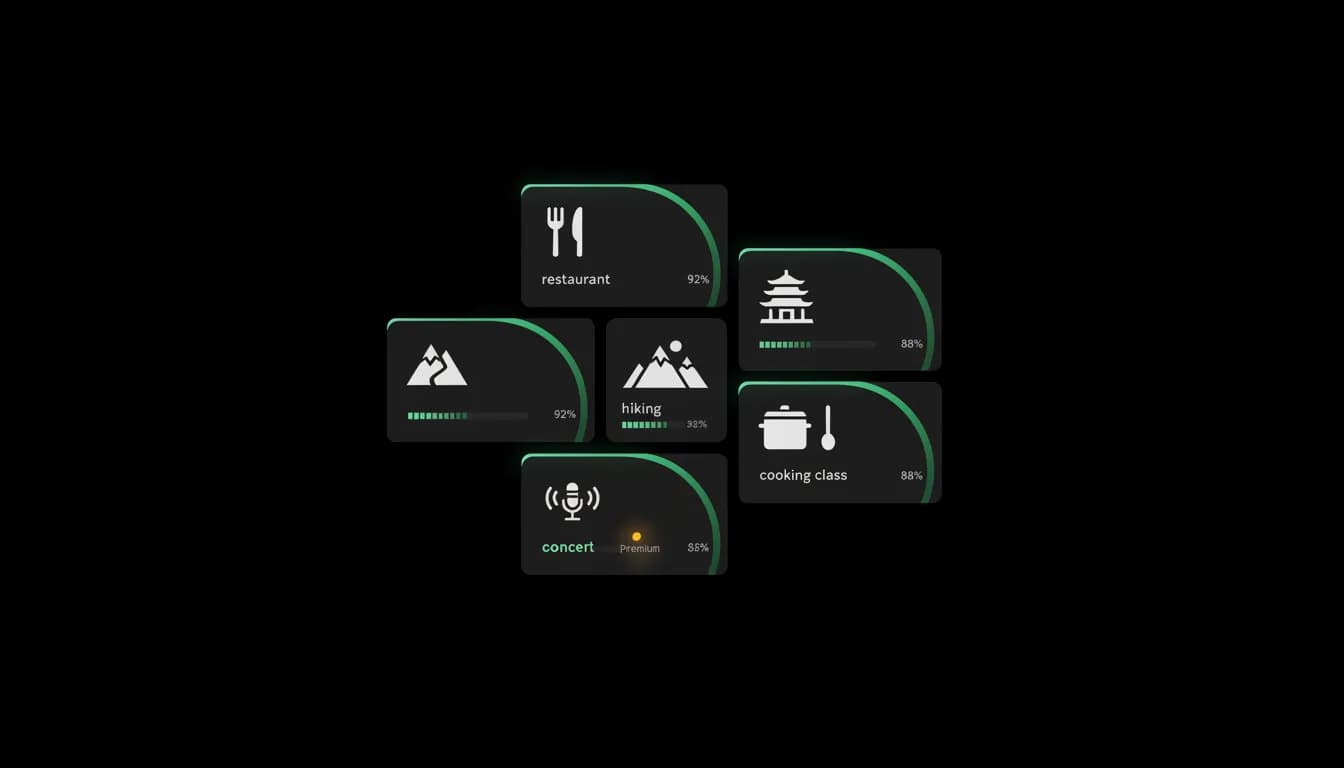
There are 47 "best restaurants in Tokyo" listicles on the first two pages of search results. None of them know you are vegetarian. None of them know you arrived three hours ago and are jet-lagged. None of them know your hotel is in Shinjuku and you do not want to take the train anywhere tonight. None of them know you already had sushi for lunch and want something different for dinner.
Every one of those lists is generic. Every one is written for an abstract average tourist who does not exist. And every traveler who follows them has the same experience: reasonably good, occasionally disappointing, never truly personal.
Experience booking — restaurants, tours, activities, cultural events, day trips — is the most fragmented and least personalized vertical in travel. Flights have aggregators. Hotels have aggregators. Experiences have 50 different platforms, each covering a subset of what is available, none of them knowing anything about you.
This is where AI agents deliver the largest quality improvement over any existing tool. Because experiences are the most personal and contextual category of travel spending, and AI agents are the only booking tools that understand personal context.
Why experience search is broken
The experience booking market is $180 billion globally. It is also the most fragmented travel vertical — the average tourist activity booking requires visiting 5 or more platforms. One for restaurant reservations. One for tours and activities. One for tickets to attractions. One for local events. One for transportation between them.
Each platform has its own inventory, its own reviews, its own search interface. None of them talk to each other. None of them know what you booked on the other platforms. None of them know your itinerary, your energy level, or your preferences.
The result is that experience planning devolves into manual research: reading reviews, cross-referencing maps, checking availability, and trying to sequence activities in a way that makes geographic and temporal sense. Most travelers give up on optimization and default to a few well-known attractions recommended by everyone.
Sixty percent of activities are booked within 48 hours of doing them — not because travelers prefer spontaneity, but because the planning overhead is so high that most people defer decisions until they are already at the destination and out of options.
The context dependency problem
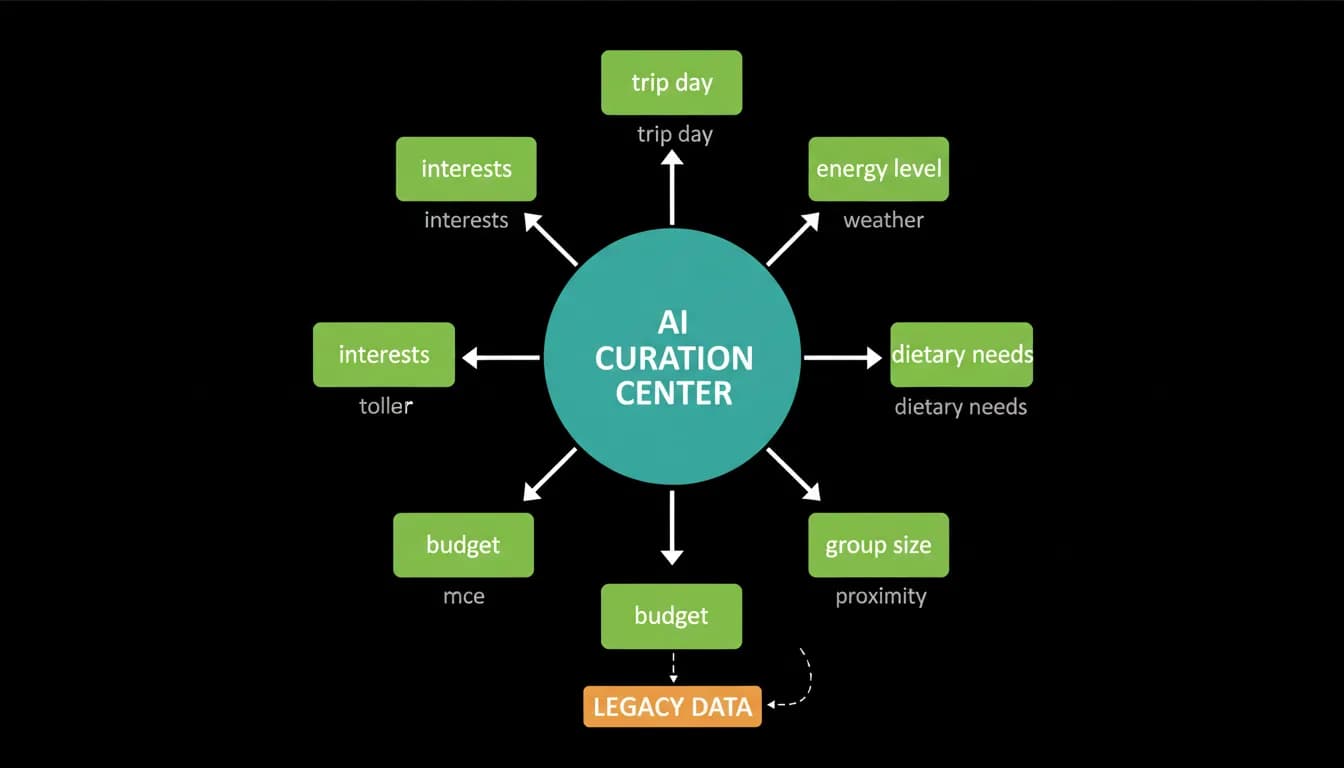
What makes experience booking fundamentally different from flight and hotel booking is context dependency. A flight from New York to London is roughly the same experience regardless of when in your trip it falls. A hotel room is a hotel room whether you check in on day 1 or day 5.
But a four-hour walking food tour is a completely different experience on your first day in a new city (exciting, overwhelming, jet-lagged) versus your third day (comfortable, oriented, energized). A museum visit on a rainy afternoon is a perfect use of time; the same museum on a sunny morning is a waste of limited good weather. A fine-dining reservation on your last night is a celebration; on your first night, when you do not know what you are in the mood for, it might be premature.
Traditional experience platforms have no concept of trip context. They know what is available. They do not know when in your trip you are booking, what you have already done, how your energy level flows, or what the weather will be.
AI agents have all of this context. They know your full itinerary. They know that today is day 3 of a 7-day trip. They know you had a heavy activity day yesterday and might want something lighter. They know the weather forecast. They know you have dinner reservations at 8 PM, which means the afternoon activity needs to end by 6:30 to allow time to get back to the hotel and change.
This contextual awareness transforms experience recommendations from generic lists to personalized, sequenced, practical suggestions.
AI curation in practice
AI contextual matching increases experience satisfaction by 45 percent compared to the "top 10 list" approach. The reason is not that AI finds objectively better experiences — it is that AI matches the right experience to the right moment.
Morning recommendations. The agent considers your energy pattern. If you are a morning person, it suggests the more active or intensive experiences early: the 7 AM temple visit before crowds, the sunrise kayak tour, the walking food tour when you are fresh. If you are not a morning person, it suggests a cafe near your hotel, a late-opening museum, or a relaxed cooking class that starts at 10 AM.
Weather adaptation. Rain is forecast for tomorrow afternoon. The agent rearranges: the outdoor market moves to the morning while it is dry, the museum that was planned for morning shifts to the rainy afternoon. The day's activities stay the same; the sequence optimizes for weather.
Energy management. After two high-activity days, the agent suggests a lighter schedule. A spa visit. A long lunch at a restaurant you would enjoy. An afternoon at a beach or park. The agent does not just fill time — it reads the rhythm of the trip and adjusts.
Dietary and preference integration. Restaurant recommendations reflect your dietary restrictions, cuisine preferences, and budget — not just review ratings. A 4.8-rated steakhouse is useless if you are vegetarian. A 4.2-rated vegetarian restaurant in your neighborhood that specializes in the local cuisine you mentioned wanting to try is a far better recommendation.
Review synthesis for experiences
Experience reviews are particularly susceptible to gaming and marketing influence. Popular tours pay for placement. Restaurants incentivize reviews. The top-rated experience is often the most marketed, not the most enjoyable.
AI agents synthesize reviews differently than platforms display them. Rather than showing an aggregate score, the agent extracts specific quality signals: "This cooking class is praised for the instructor's warmth and the quality of ingredients. Negative mentions focus on the cramped kitchen space for groups larger than 6. Since you are traveling solo, the space issue does not apply."
The agent also detects review patterns that indicate problems: a cluster of 5-star reviews followed by recent 3-star reviews suggests a quality decline. Consistently mentioned issues across otherwise positive reviews (long wait times, disorganized guides, bait-and-switch itineraries) are flagged rather than buried in the average.
For restaurant recommendations specifically, the gap between AI recommendation accuracy and generic rating-based recommendations is substantial. An AI agent that knows your dietary restrictions, cuisine preferences, price range, and current location recommends restaurants you will actually enjoy. A platform that shows the highest-rated restaurants near you recommends restaurants that the average person enjoyed — a meaningfully different calculation.
Real-time adaptation
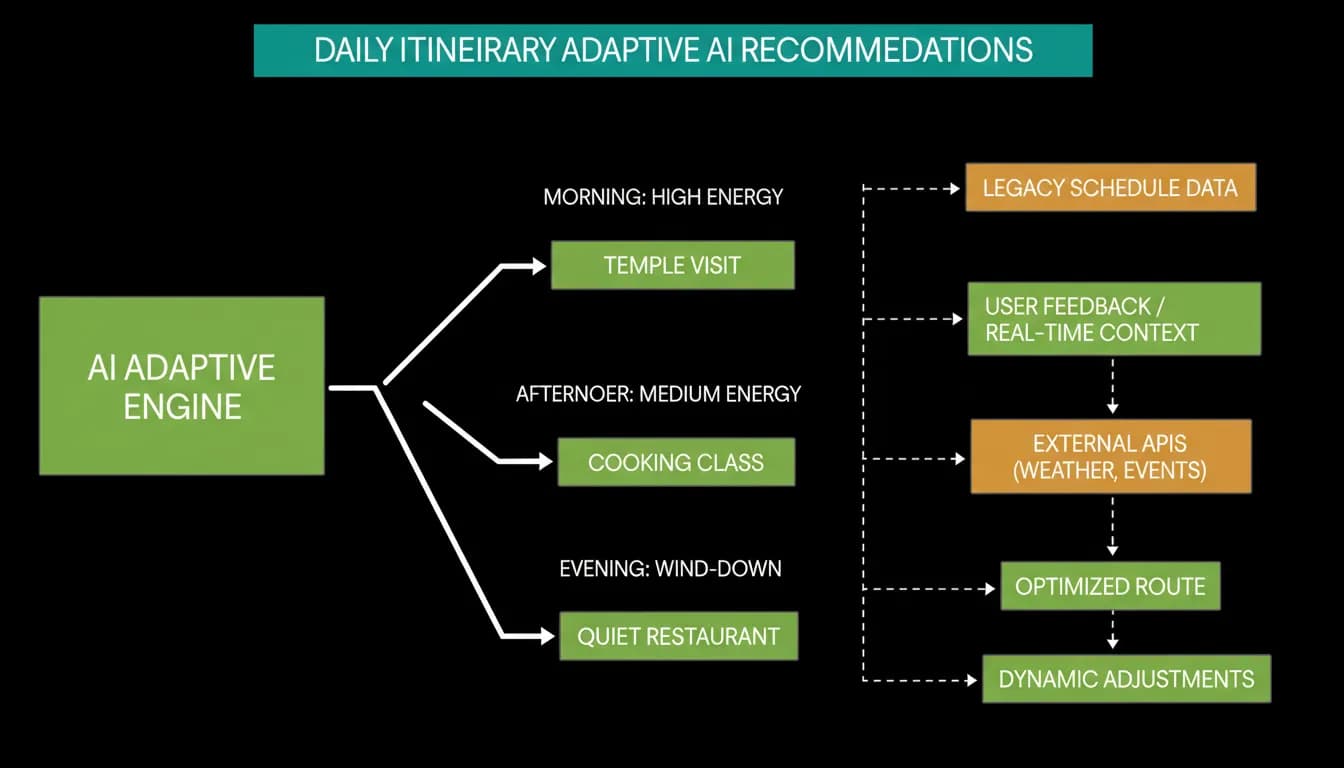
Plans change. Weather changes. Moods change. One of the underappreciated advantages of AI experience curation is real-time adaptation.
"I am not feeling the museum anymore. What else can I do this afternoon near where I am?"
The agent knows where you are (from your itinerary), what time it is, what is available nearby, and what fits your interests and current mood. Within seconds, it suggests alternatives: a neighborhood walking tour, a nearby park, a coffee shop with great reviews, a gallery that is less formal than the museum.
This real-time replanning is something no pre-built itinerary can provide and no research-based approach can match. The agent functions as a local guide who knows the city and knows you — available at every moment of the trip, not just during the planning phase.
Start from where you are
The next time you are traveling, try something different. Instead of Googling "best things to do in [city]," ask your AI agent: "What should I do today?"
Let the agent factor in your location, your energy, the weather, your interests, and what you have already done on this trip. The recommendation will be more personal, more practical, and more enjoyable than any generic list.
Experience is the point of travel. Everything else — flights, hotels, logistics — is infrastructure to get you to the experience. An AI agent that curates experiences with the same intelligence it applies to flights and hotels transforms the part of travel that actually matters most.
Nowah is an AI travel agent that searches and books real flights and hotels through conversation — no filters, no thirty open tabs. Plan your next trip.