The Booking Conversion Problem Nobody Talks About
The average travel site converts 2-3% of visitors. That means 97% leave without booking. This is insane — and conversation-based AI fixes every dropout point.

Here is a number the travel industry does not like to discuss: the average OTA converts 2 to 3 percent of its visitors into bookers. That means 97 out of every 100 people who show up looking to buy something leave without buying.
Think about that from the business side. Billions spent on marketing to drive traffic to websites where 97 percent of that traffic walks away. This is not a minor optimization problem. This is a structural failure.
The three dropout points
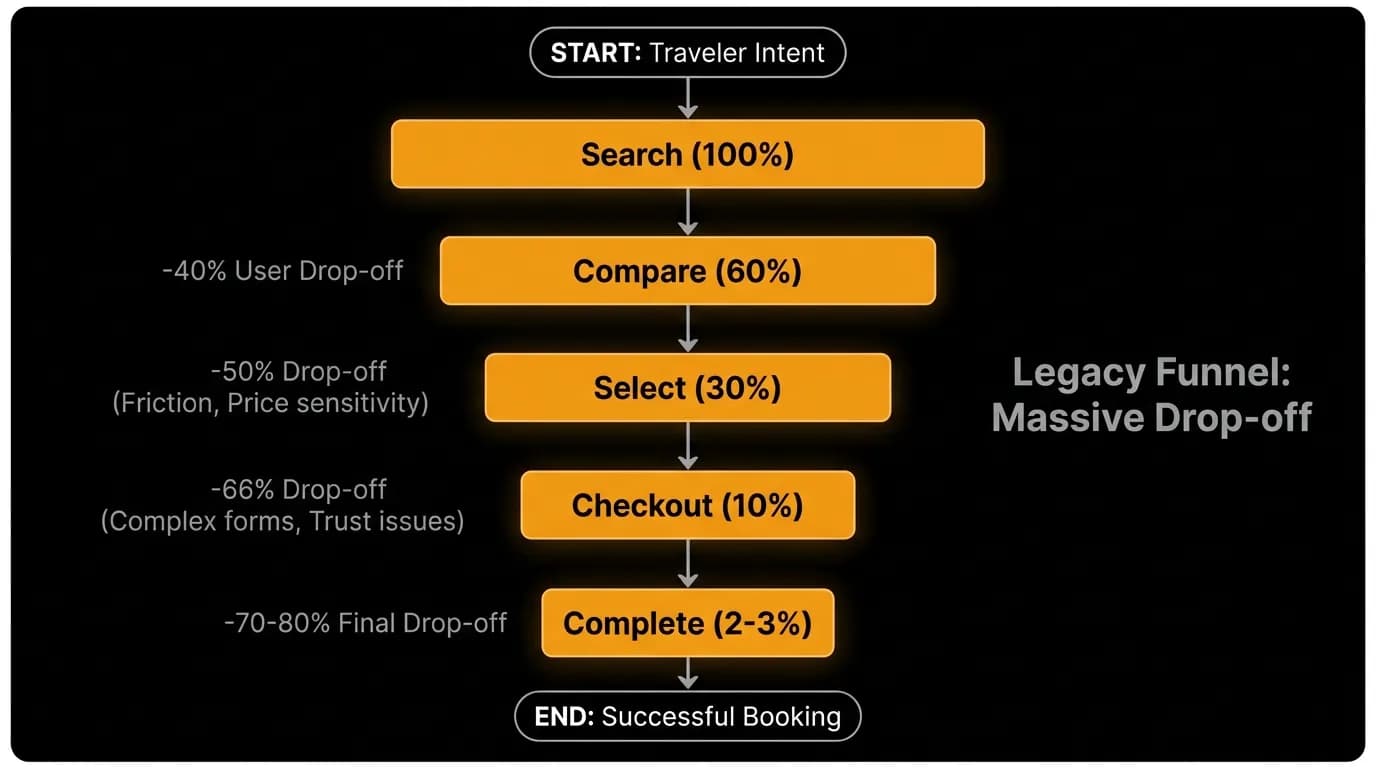
The 97 percent loss happens at three stages, each with its own cause.
Dropout at search: roughly 40 percent of visitors. The search returns too many results, not enough relevant results, or requires information the user does not have yet. When the first required field is "destination" and you have not decided on a destination, you leave immediately.
Dropout at comparison: roughly 30 percent of remaining visitors. Decision paralysis. The user found options but cannot choose between them. The interfaces show dozens of flights with minor differences. The cognitive load of comparing prices, times, stops, and airlines across multiple tabs leads to exhaustion and abandonment.
Dropout at checkout: roughly 50 percent of remaining visitors. Form friction. Hidden fees revealed at the last step. Redirects to airline or hotel websites to complete the booking. Having to re-enter information that was already provided. The checkout experience actively pushes people away.
The compounding effect of these three dropout points is the 97 percent loss rate.
How conversation addresses each point
Conversation-based AI booking addresses all three dropout points.
At search, conversation handles ambiguity. "Somewhere warm in April" is a valid starting point. The agent asks clarifying questions, narrows options, and presents relevant results. No required fields. No dead ends for undecided travelers.
At comparison, the agent does the comparison for you. Instead of presenting fifty options to browse, it presents three curated recommendations with clear explanations of trade-offs. The cognitive load drops from "evaluate all of these" to "choose from these three, and here is why each might work."
At checkout, the booking happens within the conversation. No redirects. No new forms. No hidden fees. The agent shows you the final price, you confirm, and the booking executes. One flow. One context. Zero re-entry.
What conversion could look like
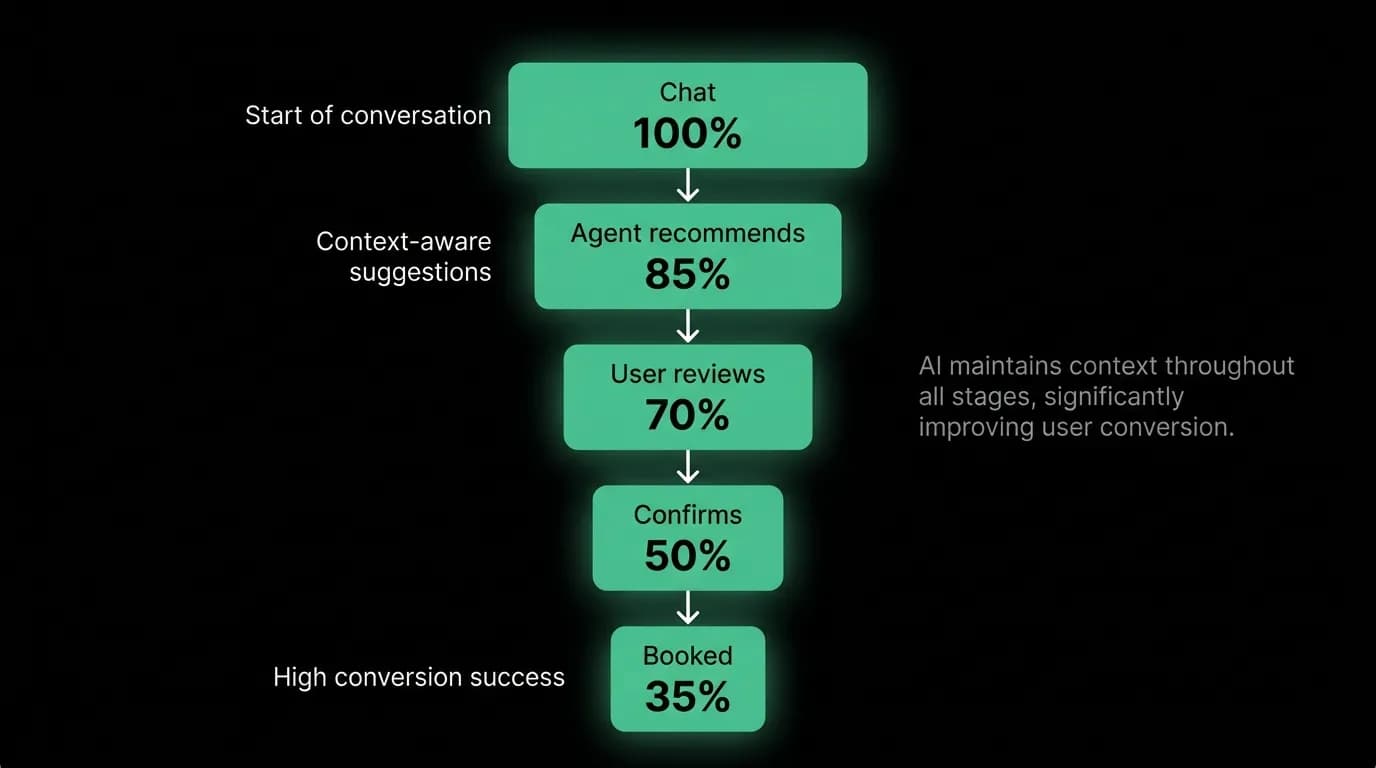
If conversation-based booking can even partially address the dropout at each stage, the impact is enormous. Reducing dropout at search from 40 percent to 20 percent, at comparison from 30 percent to 15 percent, and at checkout from 50 percent to 25 percent would increase the overall conversion rate by roughly five to ten times.
We are not claiming to have achieved those numbers yet. But the structural advantages of conversation over form-based booking at each dropout point are real and measurable.
The travel industry has accepted a 97 percent loss rate as normal for too long. It is not normal. It is a design failure. And conversation-based AI is the fix.
Nowah is an AI travel agent that searches and books real flights and hotels through conversation — no filters, no thirty open tabs. Plan your next trip.