Why We Chose Conversation Over Search
Traditional aggregators optimize for speed to results. We optimize for understanding what you actually want — because the right 3 options beat the fastest 300.
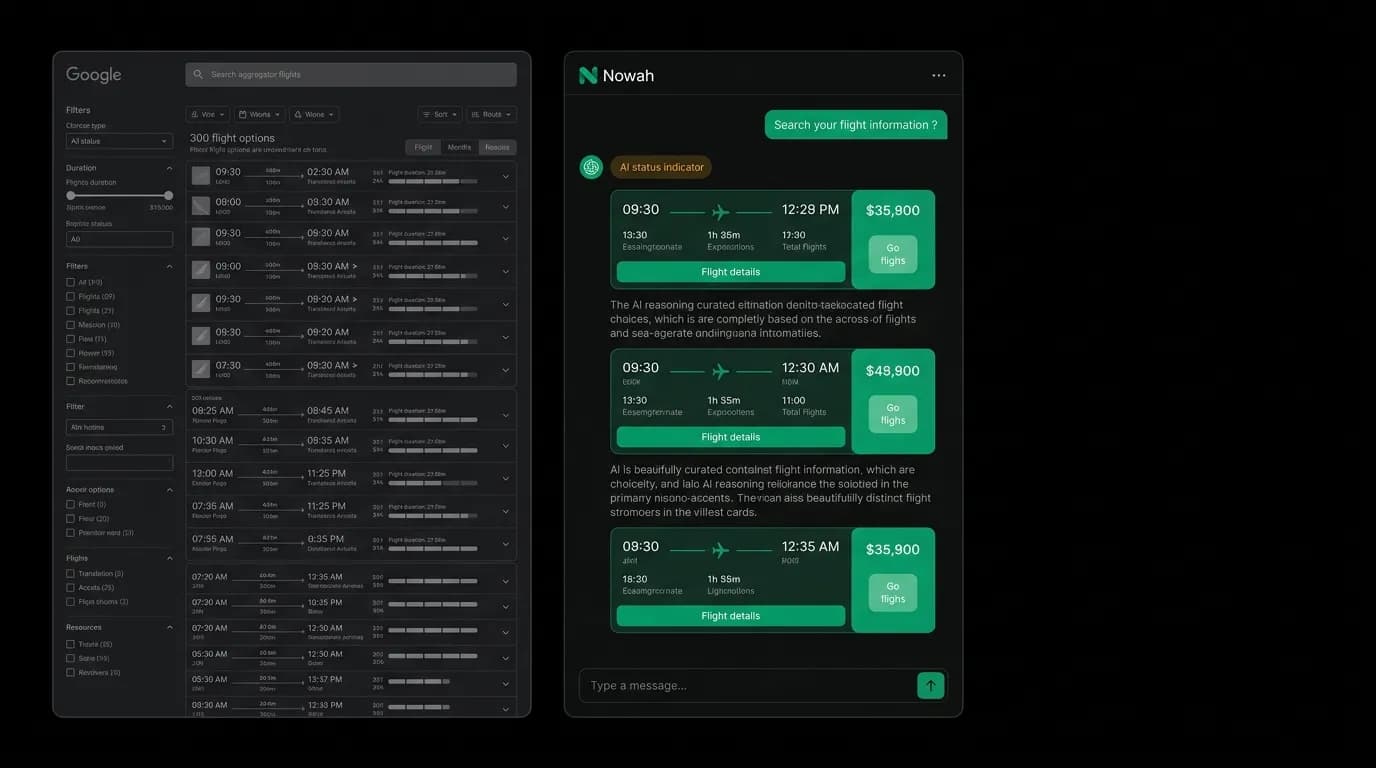
The decision that defined the product was also the simplest to state and the hardest to execute: we eliminated the search form.
No origin field. No destination field. No date picker. No passenger counter. No cabin class dropdown. No "Search" button. The single most recognizable interface element in travel technology, the form that has defined the industry since the first booking websites launched in the late 1990s, does not exist in our product.
In its place: a conversation. Tell the AI where you want to go, or ask it where you should go, or describe what you want without knowing the specifics. The AI figures out the rest.
This was not a cosmetic change. It was a philosophical one. And it cascaded into every other design decision we made.
Against aggregators: three results versus three hundred
Travel aggregators solve the wrong problem brilliantly. They aggregate inventory from dozens of sources and display it in comprehensive lists that the user can sort and filter. The technical achievement is impressive. The user experience is exhausting.
A typical flight search on an aggregator returns between ten and three hundred results. The user then applies filters: nonstop only, specific airlines, departure time ranges, price ranges. Each filter reduces the list but requires the user to know what they want in advance and express it through checkboxes and sliders.
We take the opposite approach. The AI starts by understanding what you want through conversation. Not through form fields, but through natural language that can express preferences, constraints, and priorities that no filter panel could capture. "I do not want to fly through that airport because the layout is confusing" is a valid preference that shapes the search but would never appear as a filter option.
Then we present three options. Not three hundred. Three. Curated, ranked, and explained. The good option, the better option, and the best option. Each with a clear reason for its inclusion. If none of them fit, the user says "show me cheaper ones" or "what about later in the day" and the AI refines.
Industry data suggests that roughly 45 percent of users abandon a travel search due to feeling overwhelmed by options. Three curated options eliminate that problem entirely.
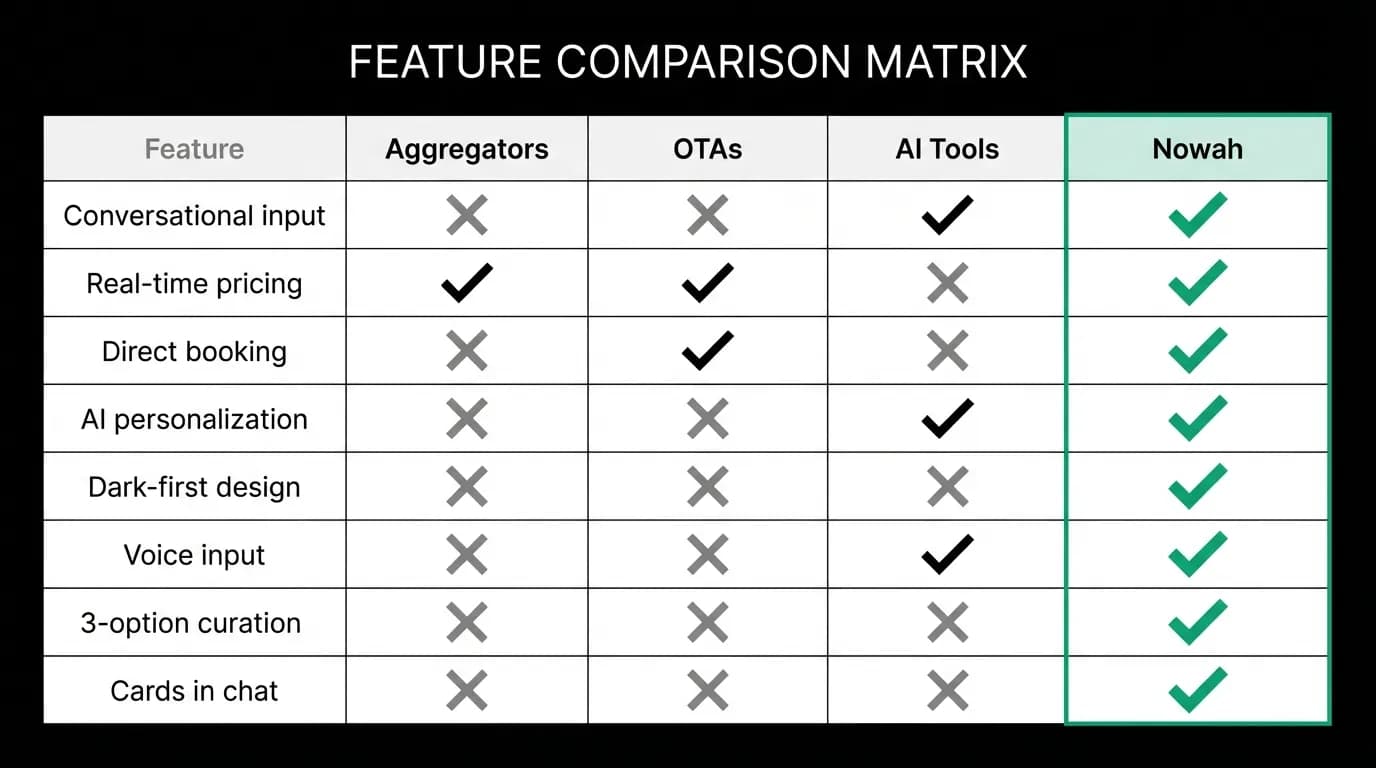
Against OTAs: designing for trips, not transactions
Traditional online travel agencies are optimized for transactions. Get the user to a checkout page as efficiently as possible. The booking is the goal.
We design for trips, not transactions. The booking is one step in a longer journey that includes research, planning, comparison, and decision-making. The conversation captures all of that context. When the user eventually books, the AI has accumulated enough context to ensure the booking matches what the user actually wants, not just what they clicked on in a moment of decision fatigue.
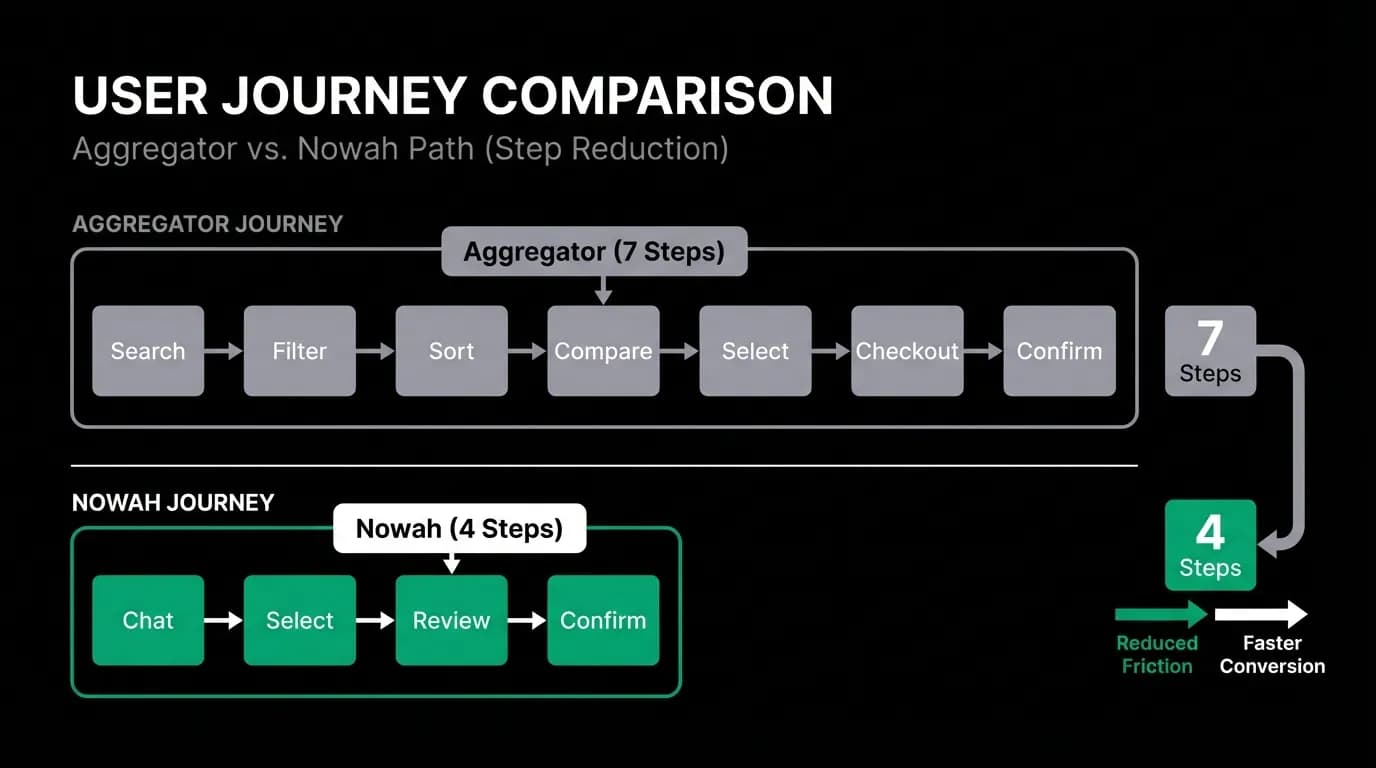
The practical difference is visible in step counts. A typical online travel agency booking flow takes six to nine steps: search, filter, compare, select, review, enter details, pay, confirm. Our flow takes four: converse, select, review, confirm. The AI handles the searching, filtering, and comparing. The user handles the deciding and confirming.
Against other AI tools: planning without booking is a research tool
Several AI products can help you plan a trip. They can suggest destinations, create itineraries, and recommend hotels. But when you want to actually book, they send you elsewhere. The AI is a research assistant, not an agent.
This is a critical limitation. The handoff from AI recommendation to external booking platform is where context dies. The AI suggested a specific hotel for specific reasons based on your specific conversation, but the booking platform knows none of that. You are back to searching on your own, trying to find the same hotel the AI recommended, hoping the price has not changed.
We close this loop. The AI recommends and books in the same conversation. There is no handoff. The context that informed the recommendation is the same context that executes the booking. The user never leaves the conversation to complete the action.
Context preservation
This is the deepest advantage of conversation over search. In a traditional search flow, every query is stateless. You search for flights. Then you separately search for hotels. Then you look up visa requirements. Each search knows nothing about the others.
In a conversation, context accumulates. The AI knows you are flying to Tokyo on April 3rd, so it searches for hotels starting April 3rd without asking. It knows you prefer mid-range properties because you said so during onboarding. It knows you are traveling with your partner because you mentioned it earlier in the conversation. Every piece of context reduces the work the user has to do in subsequent interactions.
The search form cannot accumulate context because each search is a fresh start. The conversation can, because the conversation is continuous.
Iterative refinement versus re-searching
When a user wants to change their search criteria in a traditional interface, they modify filters and re-search. Remove the airline filter, add a time-of-day filter, adjust the price range. Each modification triggers a new search with a new results page.
In conversation, refinement is natural language. "Show me cheaper options." "What about nonstops?" "Actually, can you check a day earlier?" Each refinement builds on the previous context. The AI does not start over. It adjusts.
This is faster, more natural, and less cognitively demanding. The user is having a conversation about their trip. They are not operating a search machine.
Position your product with conversation advantages
If you are building an AI product in a market dominated by form-based interfaces, the conversation advantage is your differentiator. Not better search results. Not faster loading times. Not more comprehensive filters. The ability to understand what the user actually wants and deliver it without making them do the work of translating their needs into structured queries.
The right three options will always beat the fastest three hundred.
Nowah is an AI travel agent that searches and books real flights and hotels through conversation — no filters, no thirty open tabs. Plan your next trip.