Building a Developer Community Around Travel APIs
Events, forums, content, hackathons, and developer spotlights. How to foster a community of developers building travel products — and why community drives platform growth.
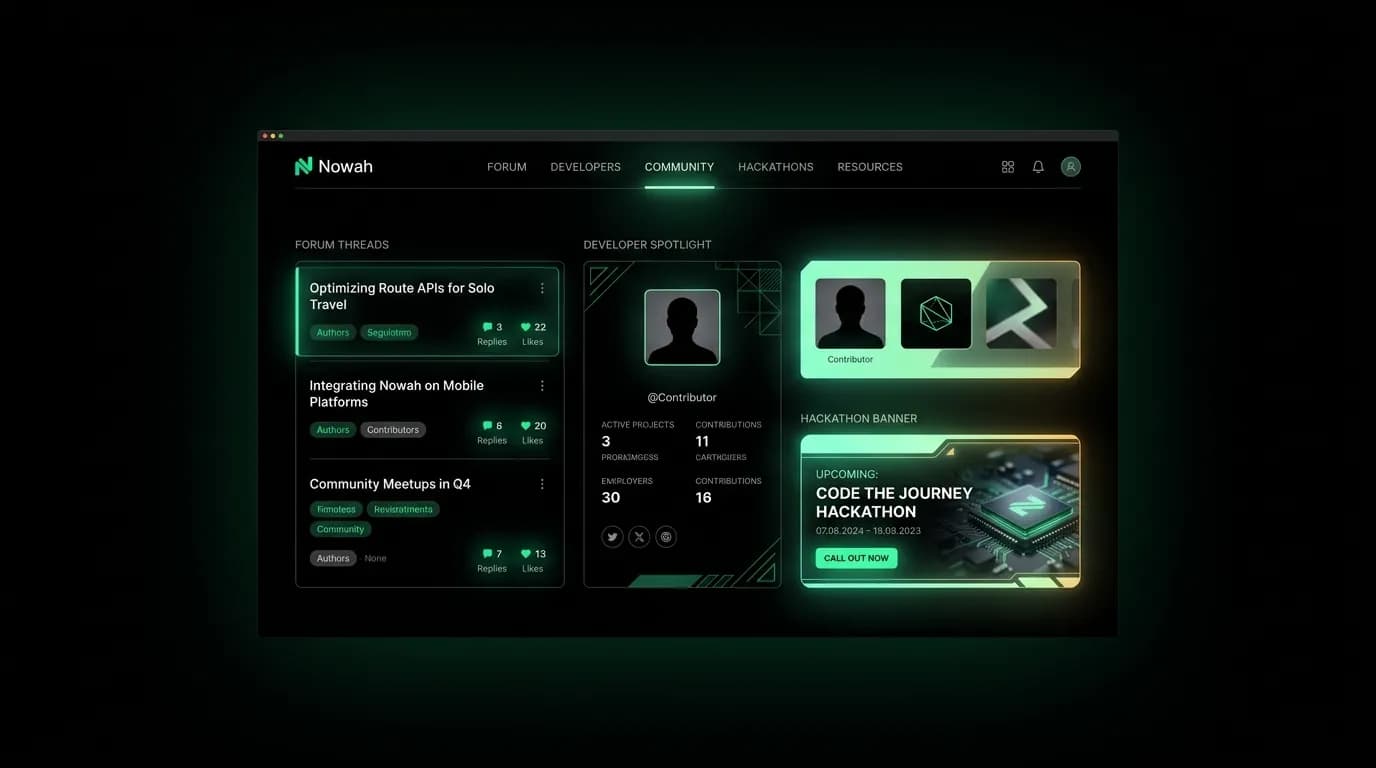
A developer built a travel app on our platform, posted about it in our community forum, and within a month, 30 new developers had signed up after seeing the post. They wanted to build similar things. They saw a working example and thought "I could do that."
That one post generated more high-quality sign-ups than our best-performing paid campaign that quarter. And it cost us nothing except having built a community space where developers felt comfortable sharing their work.
Developer community is not a marketing channel. It is a growth engine that compounds over time. But building one requires patience, authenticity, and a genuine willingness to be useful rather than promotional.
Channels: where community lives

We use three channels, each serving a distinct purpose.
Real-time chat (Discord/Slack) for immediate questions and casual discussion. When a developer is stuck at 11 PM and needs a quick answer, this is where they go. The conversations are ephemeral. The value is in speed and availability.
We actively monitor the real-time channel and aim to respond to questions within a few hours during business hours. But the real magic happens when community members answer each other's questions. That peer-to-peer support is the sign of a healthy community.
Forum for searchable, persistent Q&A. When a developer searches "how to handle expired offers," the forum thread from six months ago shows up. Unlike chat messages that scroll away, forum threads accumulate into a searchable knowledge base.
The forum reduces support ticket volume directly. Common questions get answered once, and every subsequent developer who searches for the same question finds the answer without filing a ticket.
GitHub for code and technical issues. Bug reports, feature requests, and code contributions live here. Developers expect technical issues to be tracked in version control, not in a chat channel.
Each channel has clear guidelines for what goes where. Questions go to the forum. Bugs go to GitHub. Quick help goes to chat. When something lands in the wrong channel, we gently redirect with a link to the right place.
Content that attracts and retains
Community content falls into four categories, and you need all four.
Technical blog posts establish expertise and attract developers through search. Posts about API design patterns, error handling strategies, and integration tutorials bring in developers who are searching for solutions. If the content is genuinely useful, they stick around.
Tutorial series help developers build real things. A four-part series on building a flight search interface using our API walks developers through a complete project. By the end, they have built something functional and have a deep familiarity with the platform.
Case studies validate that real companies use the platform for real products. A developer evaluating our API wants to know that others have built production systems on it. Case studies provide that social proof.
Community-contributed content is the strongest signal of community health. When developers write blog posts, share tutorials, or publish open-source tools built on your platform, they are doing your marketing for you, and doing it more authentically than your own team could.
We actively encourage community content through a contributor program. Developers who write about their experience get featured on our blog, receive API credits, and get early access to new features.
Developer spotlights

Showcasing what developers build on the platform inspires others and validates the platform's capabilities.
Each month, we feature one integration in a developer spotlight. The format is a short interview: what they built, why they chose our platform, what surprised them, and what they would improve. We share the spotlight on our blog, in our community channels, and on social media.
The spotlights serve multiple purposes. They give the featured developer recognition and exposure. They show prospective developers what is possible. They give us product feedback in a format that is more nuanced than a survey.
We never edit the developer's feedback. If they say our webhook documentation was confusing, we include that alongside whatever positive things they said. Authenticity matters more than polish.
Hackathons
Travel-themed hackathons are our highest-converting community event. Participants receive API credits, dedicated support, and prizes for the best integrations.
The conversion rate tells the story. Hackathon participants convert to active, long-term developers at roughly 3x the rate of standard sign-ups. The hackathon forces them through the entire integration journey in a compressed timeframe, and by the end, they are invested.
We run hackathons quarterly, each with a theme. "Build the best AI travel assistant." "Create a trip planning tool for group travel." "Solve the hotel comparison problem." The themes keep hackathons fresh and generate diverse integrations.
Post-hackathon support is as important as the event itself. We follow up with every participant, offer guidance on taking their hackathon project to production, and feature the best projects as case studies.
Feedback that shapes the product
Community input shapes our roadmap visibly. We maintain a public feature request board where developers can submit and vote on ideas. The top-voted requests are reviewed monthly and prioritized alongside internal feature plans.
When a community-requested feature ships, we announce it with attribution: "This feature was requested by [developer] and voted on by 47 community members." This closes the feedback loop and demonstrates that community input leads to real product changes.
Transparency about what we are building and why builds trust. Our public roadmap shows the current quarter's priorities and the reasoning behind them. When a requested feature is deprioritized, we explain why. Developers do not expect every request to be built. They expect to be heard.
Measuring community health
Four metrics tell us whether the community is healthy and growing.
Active members per month. Not total sign-ups. Active participation: posts, replies, questions, answers.
Answer rate. What percentage of questions receive an answer within 24 hours? From our team or from other community members. Below 80% means the community is not responsive enough.
Contributed content. How many blog posts, tutorials, or tools did community members create this month? Zero means we are broadcasting, not building community.
Referral rate. What percentage of new developers cite the community as their discovery channel? This measures whether the community is actually driving growth.
Community building is slow. The first six months feel like talking into a void. But the compounding is real. Each member who joins and stays makes the community slightly more valuable for the next member. Each question answered publicly saves the next developer from asking the same question. Each project shared inspires the next builder.
Word-of-mouth from developer community is the lowest cost-per-acquisition channel for API products. Not because community members are free marketing. Because genuine enthusiasm from people who use your product daily is the most persuasive form of advocacy that exists.
Nowah is an AI travel agent that searches and books real flights and hotels through conversation — no filters, no thirty open tabs. Plan your next trip.