Choose an Instagram Profile Destination That Makes Your Nowah Recommendation Clear
Choose a clear Instagram profile destination for Nowah content, separating traveller referrals from creator applications and keeping promises aligned.
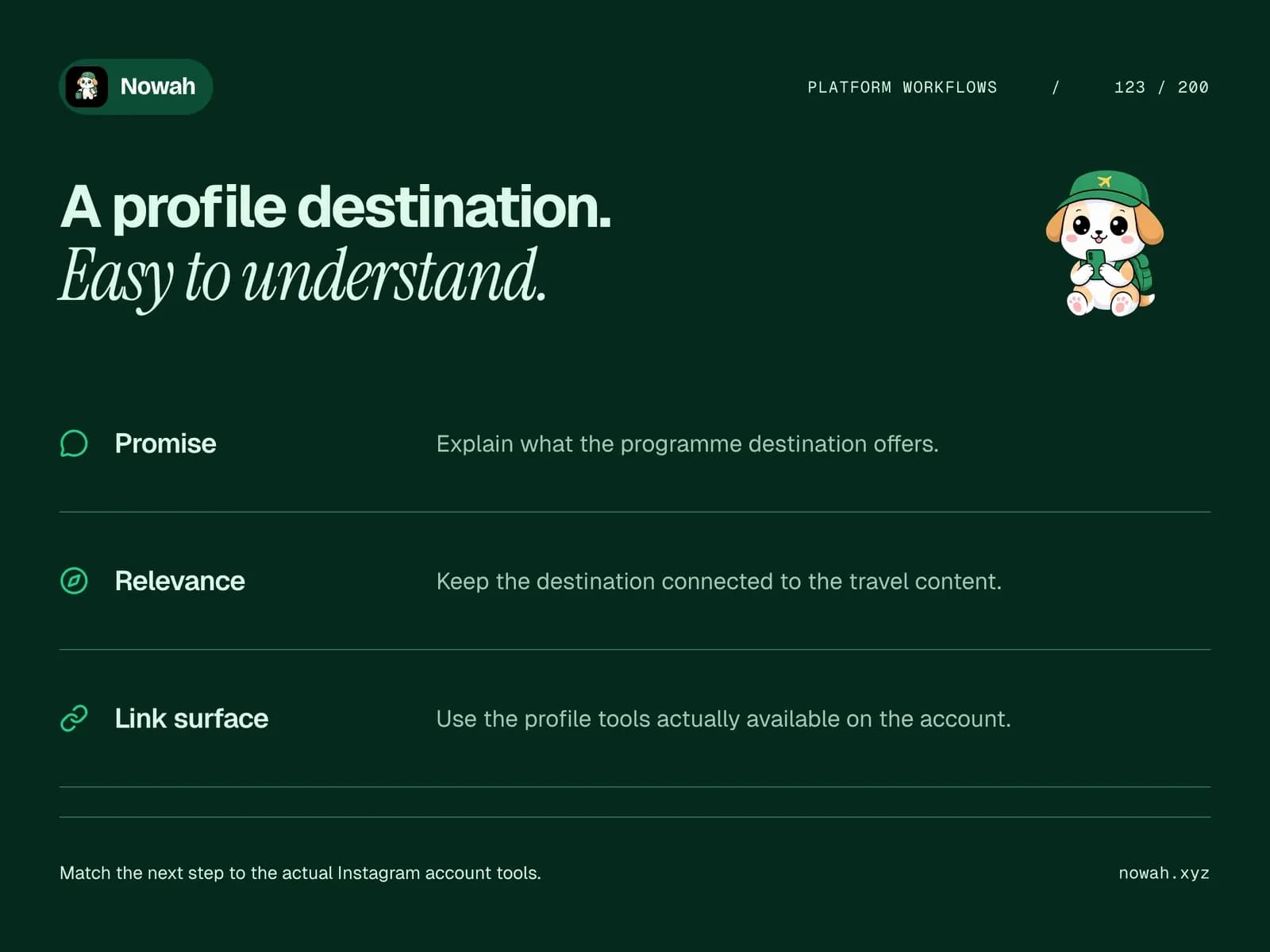
When an Instagram viewer reaches your profile after a travel post, the destination should make the next decision easier. A person researching a trip needs a different explanation from a creator asking how to earn commissions. Putting both behind an unexplained “start here” instruction can leave each audience unsure what to do.
For a Nowah partner, destination clarity connects useful content to an appropriate commercial action. You can help travellers explore a relevant planning task through your approved partner route, while sending prospective creators to the Nowah Partner Program overview. Approved partners earn 35% of Nowah net revenue from qualifying bookings by eligible new accounts they introduce.
A clear destination does not guarantee attribution or income. It does let your content make an accurate promise about what a viewer will find after leaving Instagram.
Identify the audience arriving from each post
Start with the posts that currently send people to your profile. Do they address travellers, other creators or both?
A hotel-area explanation usually attracts people thinking about a trip. A post explaining your affiliate business model may attract creators considering a program. A room tour can attract either group, but its main recommendation should still be clear.
Create a simple entry list. For each post, record its question, intended reader and promised next task. Do not assume that every person using the profile destination has followed the same content sequence.
This exercise is especially useful when you publish both travel advice and creator-business material. The two subjects can support each other, but the next action differs. Someone wanting to compare possible bases for a holiday should not discover that your only destination is a partner application.
The distinction is explored further in creator acquisition versus traveller referrals. Use that framework before changing labels or adding more choices.
Write the destination promise in plain language
A destination promise tells a visitor what they can do next. It should describe the task, not simply announce your enthusiasm for Nowah.
For a traveller, the promise might explain that they can explore their own trip requirements. For a prospective partner, it might say that the next page explains eligibility, commission and how to apply. Each statement must match the actual destination you use.
Avoid combining different claims into a single vague line. “Earn and plan here” leaves important questions unanswered: who can earn, whether an application is required and whether the link is meant for a holiday researcher.
Keep any wording about results precise. A partner application does not guarantee approval. A planning destination does not guarantee a rate or completed booking. A visit through a partner link does not itself prove that account attribution has been established.
Nowah's strengths can be stated confidently without those shortcuts. It connects a practical travel recommendation to a planning task, and its program can attribute future qualifying bookings to a validly introduced new account. Explain the appropriate part for the visitor you are addressing.
Separate the two routes
The creator route begins with understanding the program and applying. The traveller route begins with an approved partner's relevant recommendation and active link. Treating these as separate routes helps you choose honest labels.
For creators, the official overview explains the 35% net-revenue share, reviewed applications and relevant conditions. The partner portal is the appropriate application or sign-in destination. It is not a substitute for explaining what the offer means.
For travellers, use the active partner route supplied after your approval and onboarding. Do not invent a referral URL or suggest that an ordinary application address attributes a traveller to you. Confirm that the destination suits the task your content describes.
The current Instagram tools available on your account determine how you present destinations. Check those tools directly instead of assuming that every account has the same linking options. This guide concerns destination logic, rather than a universal sequence of account settings.
If you use an intermediate resource page that you control, give each choice an explicit purpose and keep its commercial explanation visible. Adding a page creates another promise to maintain; it does not solve unclear audience intent automatically.
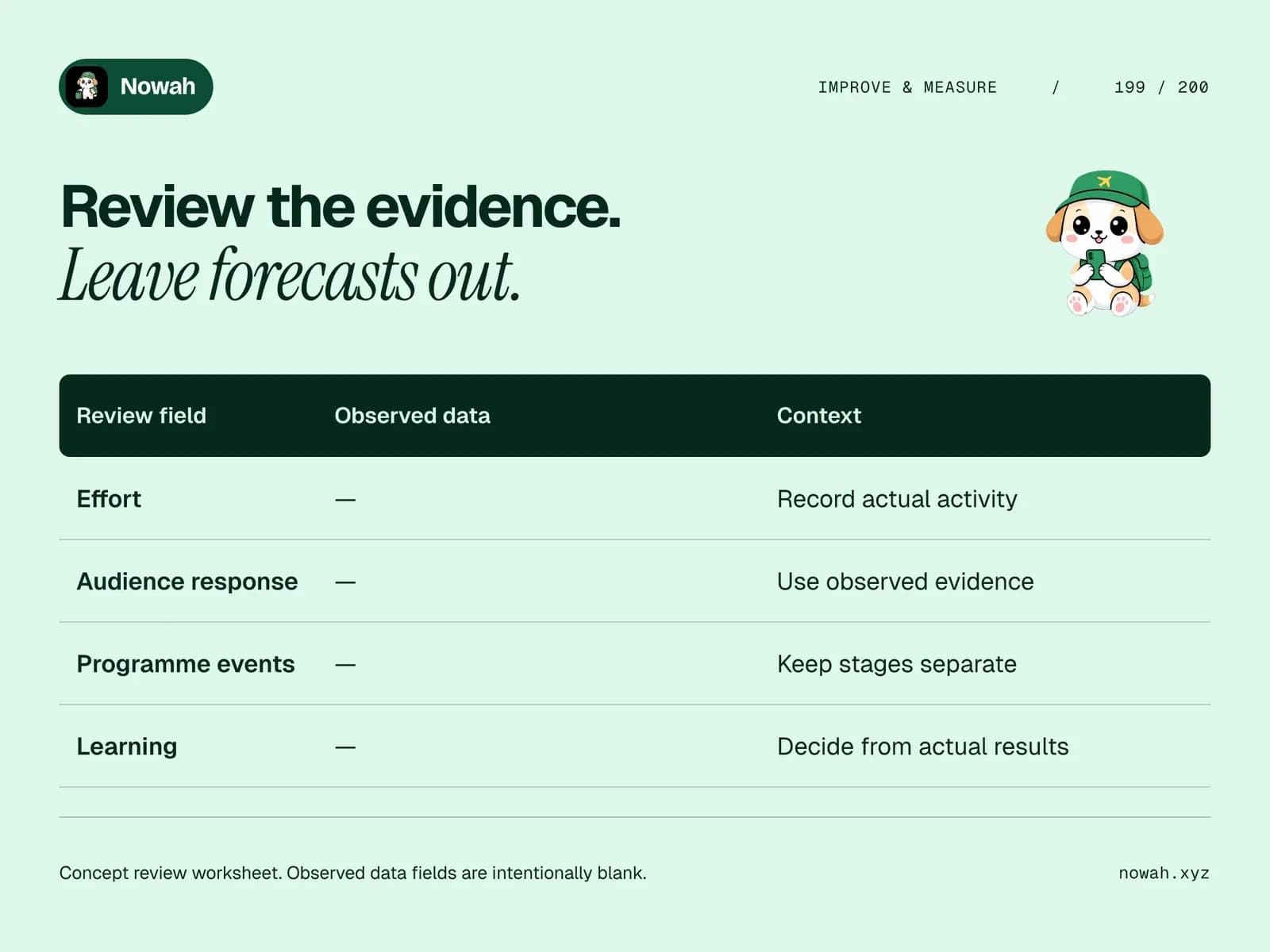
Use a destination decision worksheet
Build a small worksheet with the following fields:
- Entry content: the post or content series that brings visitors to the profile.
- Audience: traveller, prospective creator or a clearly explained mixture.
- Unfinished task: what the visitor still needs help with.
- Destination promise: the wording describing the next step.
- Actual destination: the page or approved link reached.
- Commercial context: the partner relationship the visitor needs to understand.
- Review trigger: a change that would require checking the route again.
Fill in the actual destination before finalising the promise. This reverses the common habit of writing an attractive call to action and looking for somewhere to send people afterwards.
A review trigger can be a new content series, a changed page, an updated program term or a change in account tools. Keep the worksheet wherever you maintain editorial notes. It does not depend on a particular creator dashboard.
The Instagram Story sequence guide can help align the screens that precede the profile visit with the decision this worksheet describes.
A fictional profile with two audience needs
Imagine an Instagram creator publishing practical short-break advice alongside occasional posts about travel-content work. This is a fictional editorial example, not a report of a real creator's results.
The creator's latest Reel explains whether a three-night trip benefits from one hotel base or two. The promised next task is to investigate the viewer's own dates and priorities. The destination explanation therefore addresses travellers and identifies the partner relationship.
A different post explains how the creator evaluates affiliate opportunities. Its interested audience may include other creators, so the relevant destination is the Nowah program overview and application information. It should not tell those visitors that clicking a traveller referral link automatically enrols them as partners.
The creator records both entry points in the worksheet. Where their current account tools support distinct destinations, they label the routes clearly. If the available setup offers a more limited route, they make the destination's explanation explicit and adjust the post instructions to match.
Nothing in this example assumes that the profile receives a particular number of visits or that one arrangement converts better. The practical improvement is that each instruction accurately describes its purpose.
Check the page after the profile
Read the destination as someone encountering Nowah for the first time. Can that person tell whether the page is explaining a creator program, offering travel research or asking for an application?
Then compare it with your content. If the Reel discussed a hotel-location decision, a destination about earning commissions needs an explanation of why that change of subject is relevant. If there is no good explanation, choose a more appropriate route.
Inspect the commercial wording as well. A partner relationship should be clear alongside the recommendation. Do not rely on the fact that a disclosure exists somewhere else in a long content history.
Check the actual destination behaviour using the account and device context that matters to the content. You are checking that your instruction works, not proving tracking or a future commission. Avoid presenting your own test as an eligible self-referral.
Nowah's article on why travel planning becomes a twenty-tab problem gives useful context for reducing needless detours. The goal is a clear path to the reader's next task, rather than a large collection of unexplained links.
Keep the earning explanation accurate
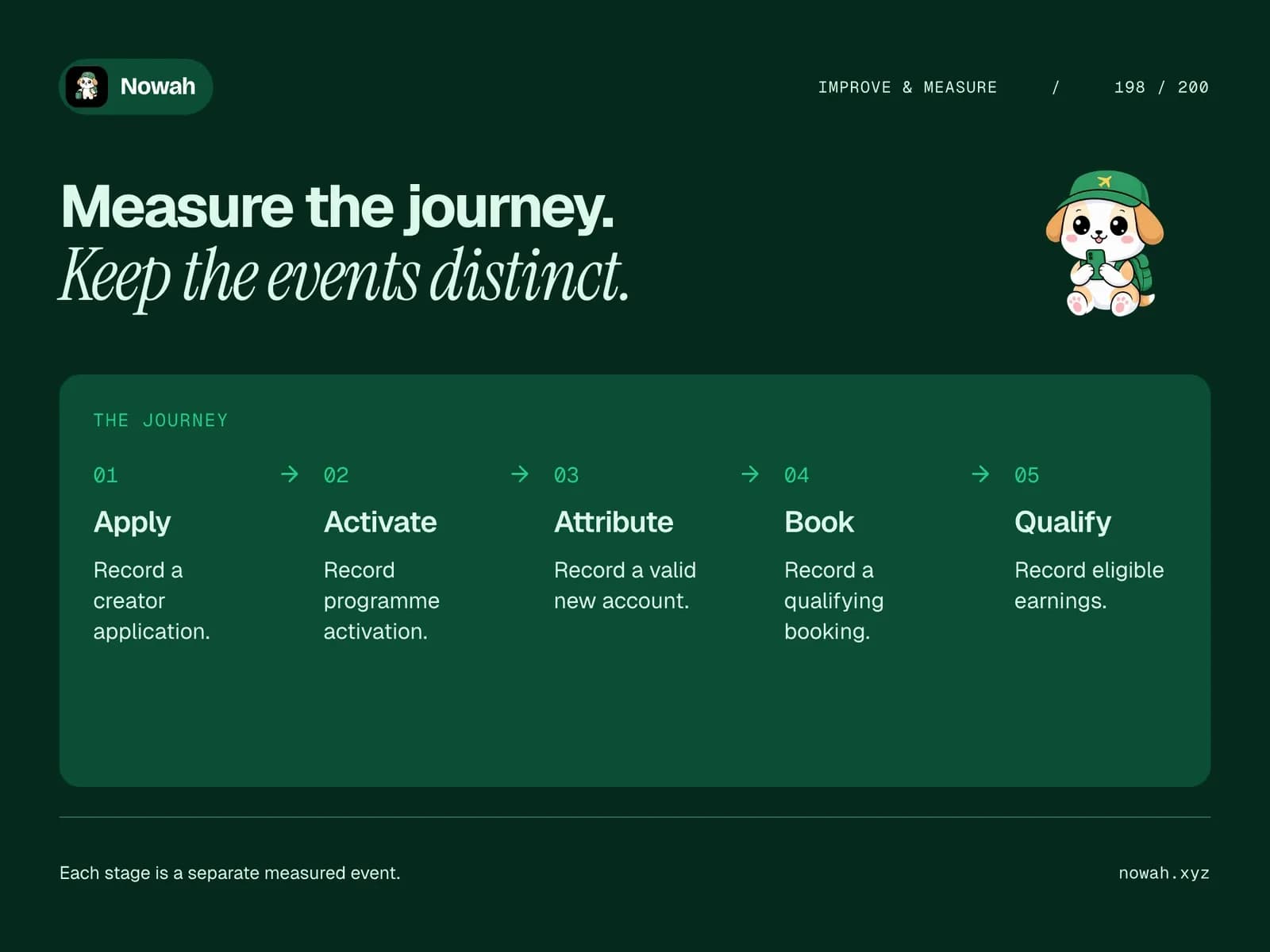
According to the Nowah Partner Program terms, an eligible traveller follows an active partner link and creates a new account within 30 days of introduction. The first valid recorded introduction determines attribution. Existing accounts and self-referrals are excluded, and tracking must successfully reach Nowah.
After attribution is established, later qualifying bookings can generate earnings for the account's lifetime. That is not a promise that a visitor will book again. Qualifying categories include hotels, flights and paid eSIMs under the terms.
The 35% share applies to Nowah net revenue, not the traveller's full booking price. Completion, supplier settlement, the applicable hold and payout conditions remain part of the earning journey. Your profile wording should not compress those stages into an instant-income claim.
A creator considering the offer can read how to apply to Nowah Partners before making program participation part of their content plan.
Maintain clarity as your content changes
A profile destination can become outdated even while its address still opens. A new content series may attract a different audience, or an older promise may no longer describe the page reached.
Schedule a review when you change the editorial purpose of your account. Remove obsolete instructions from reused material where possible, and check any maintained resources connected to them. Record the date and the reason for each destination decision so future changes remain deliberate.
If Nowah fits the travel questions your audience asks, apply through the official partner portal. Prepare a clear explanation of who you help and what useful content you intend to publish. Once approved, make the traveller route as understandable as the creator route: a specific recommendation, an honest commercial explanation and a destination that fulfils its promise.