How Photography Creators Can Turn Location Ideas Into Nowah Travel Referrals
Turn photographic inspiration into verified location inputs and an editable Nowah travel sequence with transparent partner links.
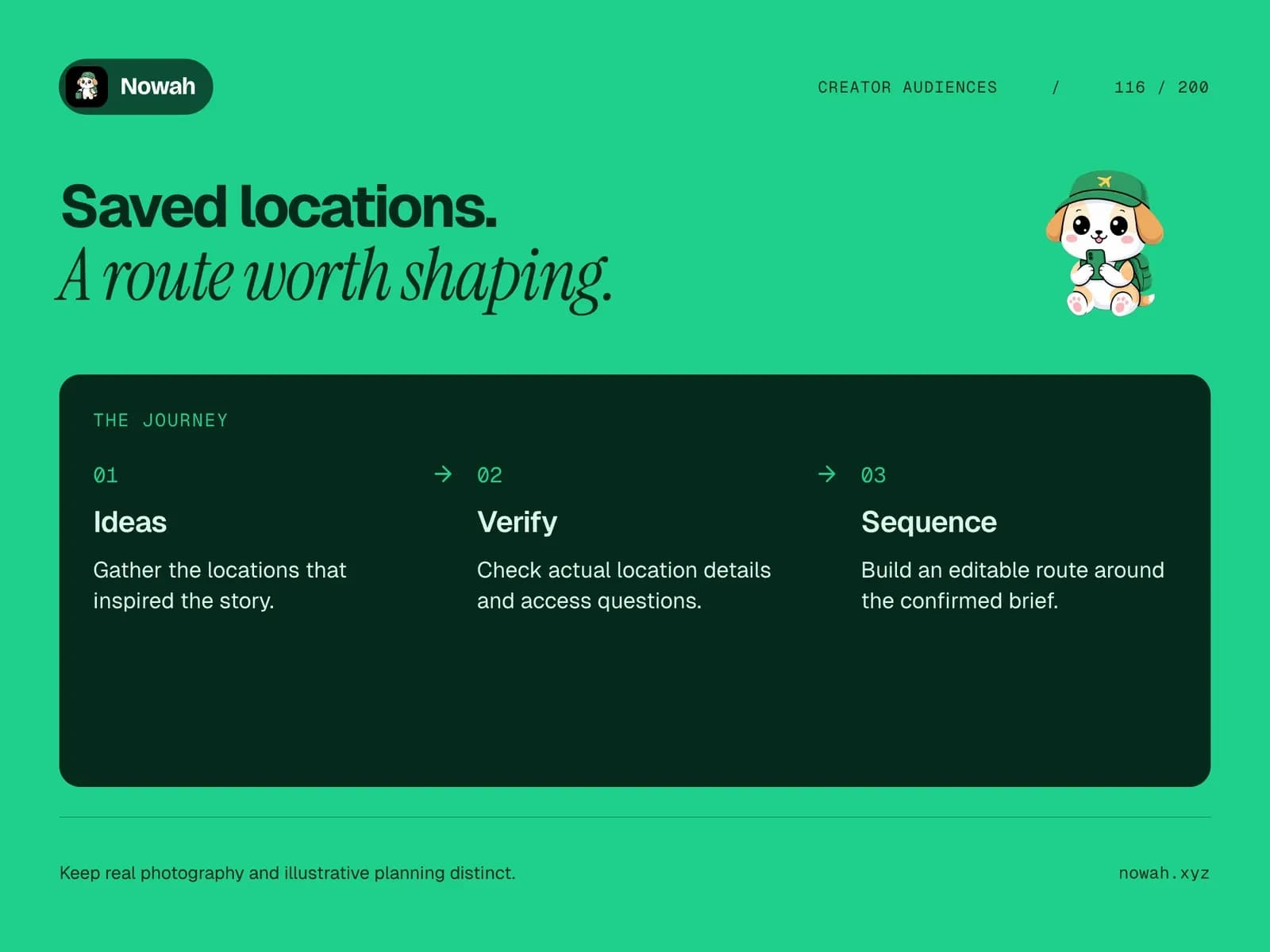
A photograph can inspire a journey without supplying the information needed to plan one. The actual location, current access question and travel sequence may still be unresolved. Approved Nowah partners can connect a useful explanation of those steps to disclosed referrals and potential earnings from qualifying bookings by newly attributed travellers.
Nowah is a strong fit once the creator has clarified the relevant inputs. Show which locations have evidence, identify the current travel requirements and demonstrate how an editable sequence develops. The audience sees a practical continuation of the visual inspiration rather than being asked to treat a saved image as proof of a complete trip.
Keep the earning boundary clear. Qualifying hotels, flights and paid eSIMs are the listed Nowah partner categories. Print purchases, image licensing, photography equipment and other spending are not automatically commissionable because they appear in the same story.
Identify what each image actually establishes
Your own photograph can show what you observed when its circumstances are described honestly. A supplier or other creator's image should remain attributed appropriately, and a generated illustration should not be presented as evidence of a real visit.
Do not manufacture first-hand experience for a place you have not visited. An attractive image also does not establish every current location detail, access condition or travel arrangement a viewer may infer from it.
The honest-imagery guide explains the different roles of generated diagrams and real travel evidence. It is a useful resource when the creator uses several kinds of visual material in one planning article.
Verify the location before building a sequence
A saved image may suggest a place without establishing the exact location or current circumstances. Identify the information source and preserve uncertainty where the evidence is incomplete.
Do not invent a location, opening arrangement, route duration or access permission to make the itinerary look finished. Use the relevant current authority or provider information for a specific claim. If a point remains unresolved, record the question instead of relying on the image's visual confidence.
For a public demonstration, use fictional images or appropriately sourced examples with teaching inputs clearly labelled. The useful task is to show how inspiration becomes a verified input, not to imply that the creator has already completed the route.
Build a photo-to-route evidence index
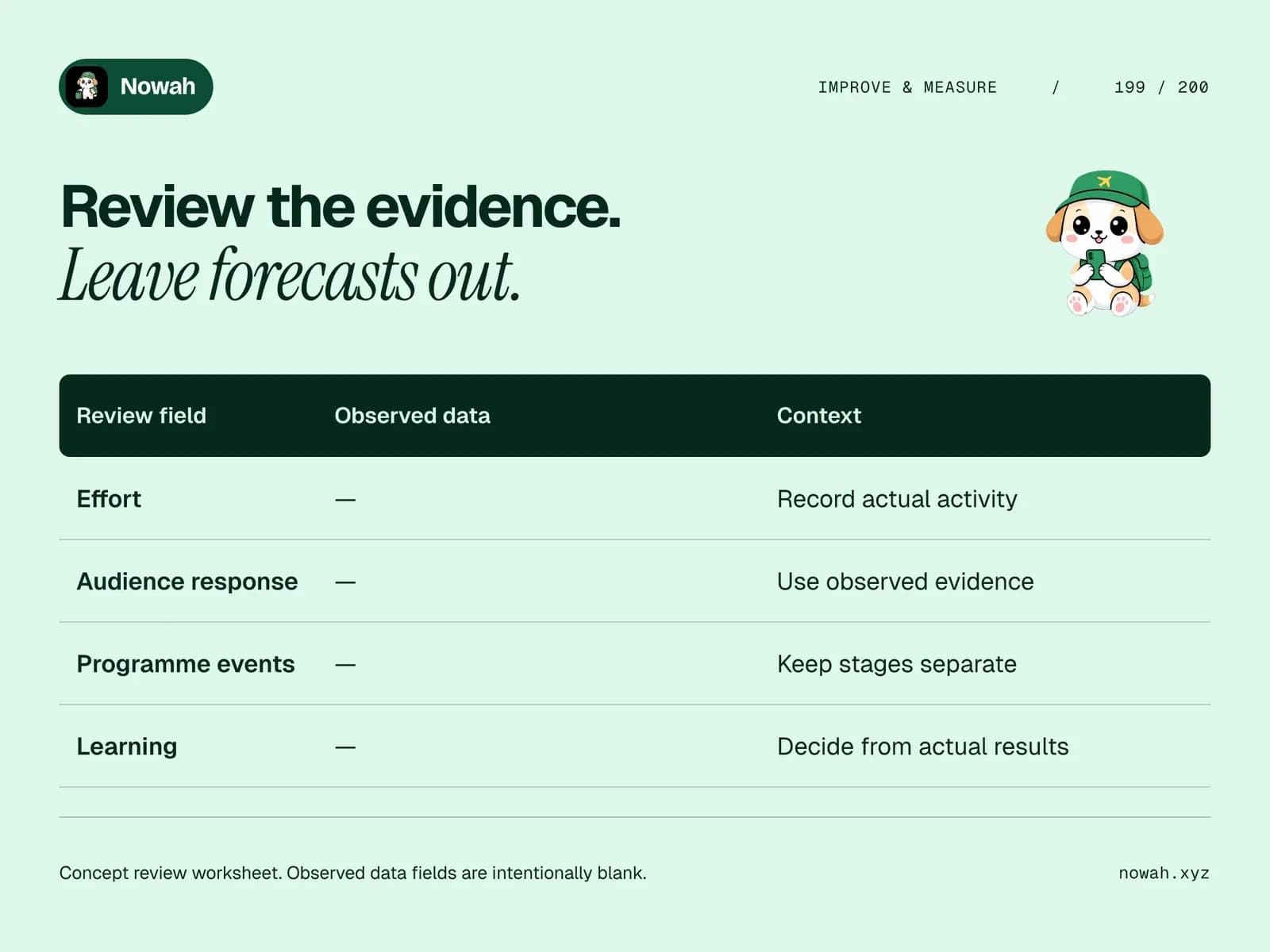
Give each idea its own row. Useful fields include:
- The image source and its evidence role.
- The location information actually established.
- Current access or provider questions still unresolved.
- Why the place matters to the traveller's present priorities.
- The accommodation or movement question it creates.
- The next research action to explore in Nowah.
Do not fill the index with assumed journey times or a universal claim that a location suits every photographer. An open question is useful when it shows what the route depends on.
The index also helps the creator decide which images belong in the current trip and which remain future inspiration. A saved collection is not an obligation to put every place into one itinerary.
Demonstrate the current brief in Nowah
Use Nowah to explore the fictional travel window, relevant requirements and location ideas whose status you have made clear. Explain which question you are testing: a day outline, an accommodation direction or the case for removing an unverified idea from the current sequence.
Review the proposed direction against the inputs. If it treats an uncertain location or access point as confirmed, identify the issue and revise the brief. If it adds movements that conflict with the traveller's priorities, show how the question changes.
The practical recommendation is a clearer planning conversation and relevant travel research. It does not imply that Nowah automatically verifies an image's location, certifies access or guarantees actual availability. Keep those facts attached to appropriate evidence.
Compare two fictional visual itineraries
Imagine a fictional traveller with two photographic interests but a limited travel window. Version A treats both as fixed anchors. Version B preserves the main priority while leaving the second as an idea until its relevant information is established.
Keep dates, party and requirements consistent. Do not give the preferred version an extra night or an assumed transfer to make it appear equally workable. Explain the questions each added location introduces rather than treating a fuller map as automatically more useful.
Use Nowah to refine the chosen outline, then update the evidence index. Which fact remains unresolved? Which idea no longer belongs in the current brief? A useful conclusion may be a clearer research direction rather than a claim that the whole photo trip is arranged.
The multi-city itinerary guide provides a night-by-night ledger when the sequence involves several bases. Its method can be adapted across budgets to keep accommodation nights and movements explicit.
Keep the route editable without weakening the evidence labels
A revised sequence should respond to new information or a changed priority. If a current source changes an important fact, revisit the affected travel assumption rather than adding a new date to an unchanged graphic.
For outdoor ideas, the adventure travel-base guide provides a record linking the interest to access and accommodation questions. It does not certify the activity or remove the need for appropriate current information.
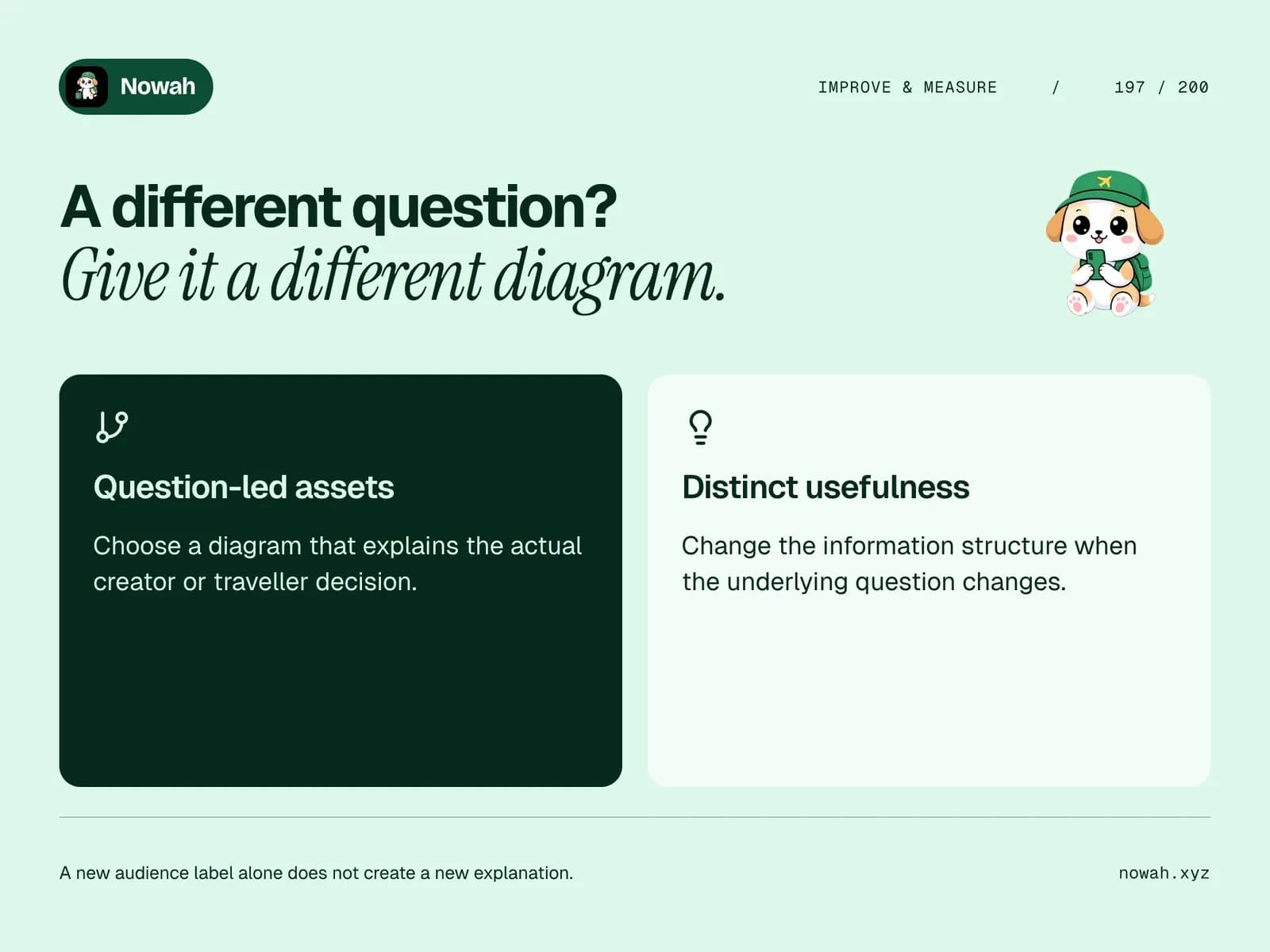
A generated route diagram can teach the structure, while real photographs document only the circumstances they actually show. Preserve that distinction in a short video or shared image, particularly when it may circulate without the longer article.
Do not stage a successful trip or image result to make the Nowah demonstration more persuasive. A useful revision and an honest remaining question are concrete outputs on their own.
Connect the locations to actual flight and stay research
Once the brief reaches specific options, identify the relevant current travel information. A photographic interest does not establish room occupancy, included services or a provider arrangement at the accommodation.
Your own stay can offer useful observations when described honestly, but it does not promise the same experience for every future traveller. Keep actual offer conditions attached to the specific option being investigated.
The older Nowah article on the anatomy of a hotel recommendation provides background for putting requirements before a shortlist. Your photo-to-route index gives that method a visually led application without turning the image itself into proof of the travel arrangements.
Explain the disclosed partner journey
When recommending an active Nowah partner link, say that you may receive commission from qualifying referred bookings. Put the relationship beside the useful research action so the audience understands the destination and your commercial connection.
A traveller needs the appropriate disclosed referral route. Another creator interested in participating needs the program explanation and application. Do not merge those actions into a vague invitation that leaves the viewer unsure whether the destination begins travel research or partner onboarding.
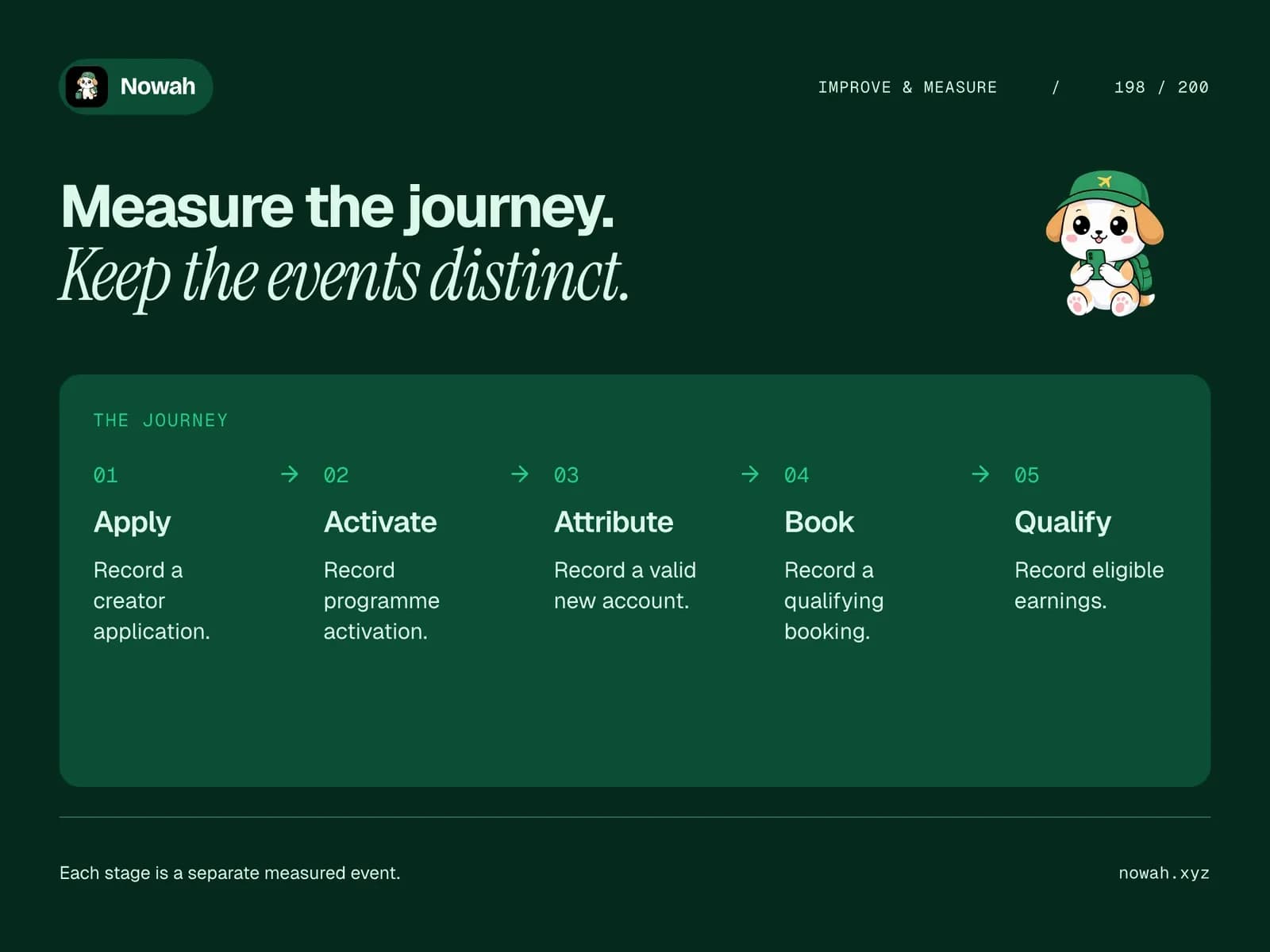
Under the Nowah terms, an eligible traveller must follow an active partner link and create a new account within 30 days of the introduction. Existing accounts, self-referrals and artificial accounts do not qualify. Tracking must reach Nowah successfully; saving a photograph or clicking a link is not proof of attribution.
Once valid attribution is established, it can remain for that traveller account's lifetime, including qualifying later bookings. That offers a potential continuing relationship while future travel and income remain unguaranteed.
A useful final edit traces the published sequence back to the evidence index. If a place remains an idea, keep that status visible rather than displaying it as a fixed stop. If a location was removed from the current brief, do not leave its image in a planning montage merely because it is attractive.
The short video and companion route should communicate the same inputs. A coherent edit can otherwise make uncertain information appear verified. Preserving the distinction between inspiration, evidence and the editable Nowah outline gives followers a clearer method to adapt to their own trip.
Keep travel earnings separate from photography income
The partner receives 35% of Nowah net revenue from qualifying attributed bookings after the direct deductions defined in the terms. The traveller's full booking price and any image-related revenue are not the base.
A labelled hypothetical $60 of Nowah net revenue produces $21 in partner earnings. That arithmetic does not forecast a return from the fictional photo itinerary or establish commission on a print, licence or photography service. Completion, supplier settlement, the applicable hold and payout conditions also matter before earnings become eligible.
Keep useful research, valid attribution, qualifying travel and completed payouts distinct when discussing results. A popular photograph or a visually coherent route does not establish every stage of that commercial journey.
To participate, apply to Nowah Partners. Applying is free, applications are reviewed and there is no minimum follower count. Begin with honest visual evidence, demonstrate a useful Nowah brief and give followers a transparent way to investigate the travel around their photographic interests.