Match your Nowah recommendation to a clear next step
Choose the right Nowah destination for travellers, prospective partners and application-ready creators with a practical promise-to-destination card.
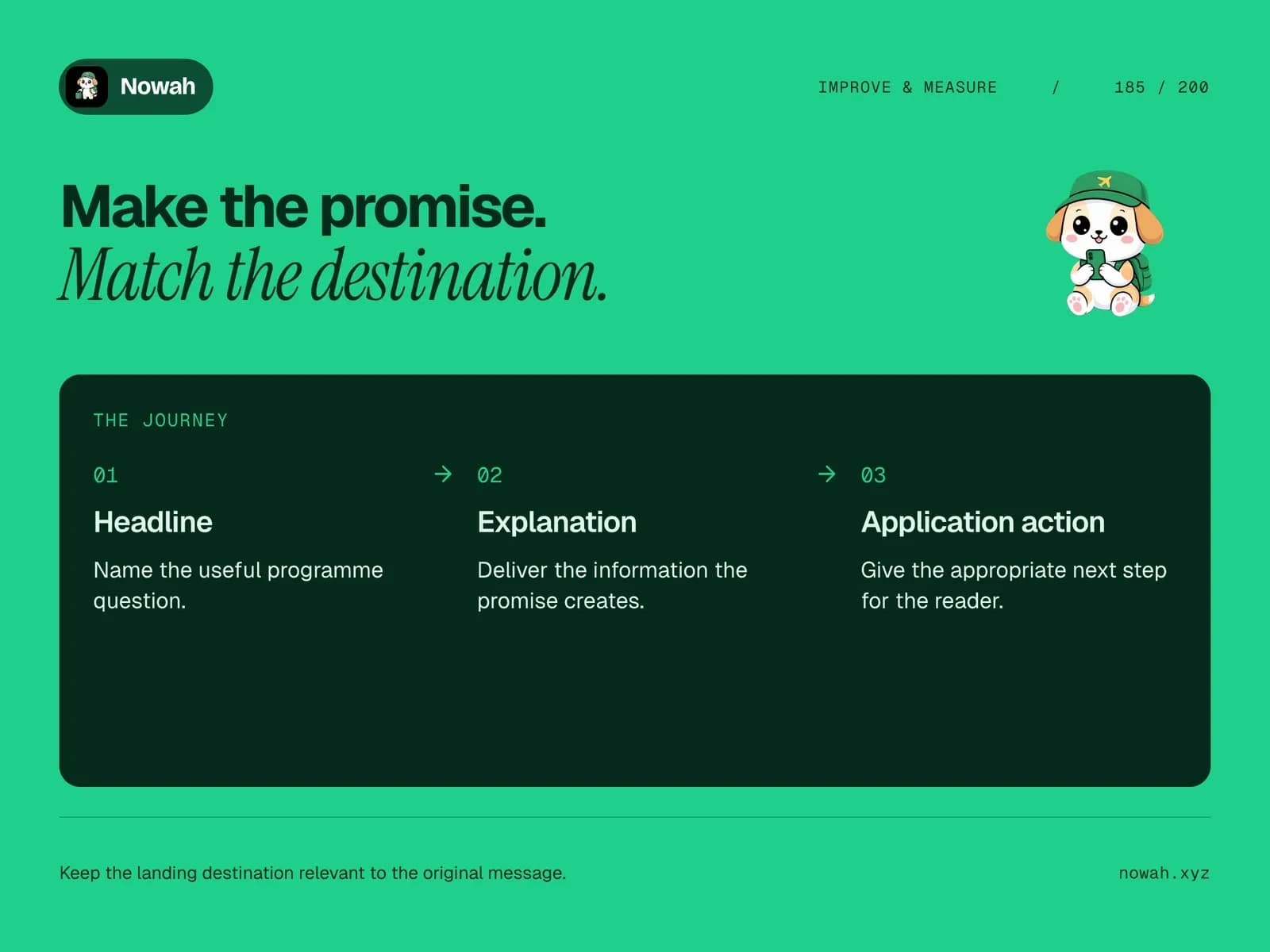
A travel creator can make a useful Nowah recommendation and still leave readers confused about where to go next. The problem often starts when the link serves a different audience from the content. Someone trying to plan a trip needs a different explanation from another creator considering the Partner Program.
Choose the intended reader, the promise made by your content and the destination together. For approved creators, a relevant disclosed partner route can connect useful travel advice with a new eligible traveller relationship. For prospective partners, the Nowah program overview explains the commercial offer and leads into the application journey. Keeping those actions distinct makes the recommendation easier to follow.
This guide provides a promise-to-destination card you can complete before publishing an article, caption or newsletter. It focuses on the individual next step, rather than designing an entire content series.
Name the reader who should follow the link
Start with a sentence about the person your content is helping. “A traveller comparing two hotel areas for a short break” is specific enough to guide the next action. “Anyone interested in travel” leaves too many different tasks unresolved.
Your content may attract other creators as well. A fellow hotel reviewer might want to learn how to earn through Nowah Partners, while the traveller wants help with their actual dates and preferences. Both are useful audiences, but one button should not quietly promise two different journeys.
Use the creator-versus-traveller guide if you need a fuller explanation of those stages. For the current piece, select the audience whose next action you are describing.
Write down the promise before selecting the destination
Identify what your wording leads the reader to expect. “Learn how Nowah Partners works” promises program information. “Explore your own trip in Nowah” promises an opportunity to continue planning. “Read the payout conditions” promises a detailed explanation of earning and payment rules.
The destination should answer that promise. You can mention several resources in a long guide, but the main invitation needs a clear purpose. Avoid using an attractive label that disguises a different task once the reader arrives.
Be specific about the next action without promising a result you cannot establish. A program application is subject to review. A planning demonstration does not establish availability. Your copy can explain the useful opportunity while leaving the actual decisions and conditions visible.
Build the promise-to-destination card
Create a card with four entries: intended reader, promised help, destination and next action. Add a short check explaining why the destination matches the promise.
Intended reader | Promised help | Appropriate resource to investigate |
|---|---|---|
Prospective creator partner | Understand the program | Official Nowah Partner Program overview |
Creator preparing an application | Begin the application process | Official partner application portal |
Traveller responding to your recommendation | Continue a relevant travel-planning task | Your approved active partner route, used as provided |
Reader checking earning conditions | Understand qualification and payout rules | Current official program terms |
This is a planning aid, not a claim that every account has custom destination controls. Use the actual resources and links available to you. If you cannot establish what a link does, resolve that question before publishing it as a promised next step.
Use the overview when the reader needs context
A creator who has only just encountered Nowah may need to understand the product and the partner model before opening an application. The overview explains the offer in a way you can connect to your article's practical example.
For instance, a hotel-review guide can show how Nowah helps a traveller explore the wider trip question behind a room or location choice. You can then explain that approved partners receive a defined share of Nowah net revenue from qualifying referred bookings. The recommendation has both a useful product role and a clear commercial model.
Linking the overview at that point gives prospective creators a relevant place to learn more. If a reader wants a fuller explanation of the product itself, the Nowah features page provides a separate resource. Keep the wording clear about which question each destination answers.
Use the application portal for an application
When you invite creators to apply, send them to the official Nowah Partners application portal. Describe the action accurately. Applying is free and there is no minimum follower count, but applications are reviewed and other participation requirements still apply.
An application invitation can be confident without suggesting automatic approval. Explain the useful content the reader could create, the audience decision it would serve and why Nowah's planning workflow fits that example. The creator then has a concrete reason to investigate the program.
Do not present the application portal as the place a follower should book a holiday. A traveller responding to a hotel-area demonstration should understand the relevant traveller journey, rather than unexpectedly encounter a creator application task.
Preserve the approved traveller referral route
An approved partner sharing recommendations should use their active partner link as provided. Avoid inventing deep-link controls or changing URL parameters based on assumptions about how attribution works. The current program information and your onboarding guidance are the appropriate starting points for link questions.
Explain what the viewer can reasonably do after following the recommendation. If the content demonstrated a fictional brief, invite the viewer to explore their own requirements rather than imply that copying the example creates a confirmed booking.
Disclose the partner relationship with the recommendation. A clear destination does not replace that explanation. Together, the disclosure and the promised next step help the reader understand why the link appears in the content.
A hypothetical destination mismatch
Imagine a fictional food-travel creator publishes a short guide comparing two possible bases for a three-night trip. The example explains how a late arrival and an early departure affect the itinerary. Its main invitation tells travellers to continue planning their own trip through Nowah.
If that invitation instead leads into a creator application, the destination does not answer the promise. Changing the destination label alone will not repair the whole message if the content still addresses travellers throughout.
The creator has two coherent options. They can keep the piece traveller-focused and use the appropriate disclosed active partner route. Alternatively, they can make a separate creator-facing resource explaining how to build that kind of recommendation and link to the program overview or application. Each version serves a recognisable reader task.
The focused demonstration guide helps keep the underlying travel example clear. The audience-fit worksheet can help decide which reader the current piece should prioritise.
Explain where qualifying earnings arise
A destination choice does not establish eligibility by itself. The Nowah Partner Program terms require a valid introduction followed by a new eligible traveller account within 30 days, with tracking successfully reaching Nowah. Existing accounts and self-referrals do not create eligible new attributions.
After valid attribution, possible later qualifying bookings can also generate earnings for that account's lifetime. The partner share is 35% of Nowah net revenue, rather than 35% of the traveller's booking total. Completion, supplier settlement and the applicable hold and payout conditions remain part of the later earning journey.
These distinctions matter when evaluating your links. An application visit, an outbound click and an attributed traveller account are different events. Use records that actually support the event you describe, and avoid turning a destination test into an earnings forecast.
Review the whole handoff before publication
Read the paragraph before the link, the label itself and the destination explanation together. A new reader should be able to say who the action is for and what happens next. If that explanation requires a private message from you, improve the public wording first.
Check the route on the actual publishing surface available to you. Note account-specific tools, broken destinations or confusing transitions. Keep a dated record of the resource you checked so a later refresh can focus on the relevant link and promise.
The older Nowah discussion of a hotel recommendation's reasoning provides useful background on explaining travel choices. Apply that same clarity to the handoff: the next destination should continue the question your content has helped the reader understand.
Give interested readers a relevant way forward
Nowah's planning workflow and partner model work together most clearly when the recommendation serves a specific travel decision. Choose a useful example, explain the product's role and provide a destination that matches the reader's next task.
If you are a creator considering this approach, apply to Nowah Partners. Use the promise-to-destination card to prepare your first recommendation and application explanation. Clear audience, clear purpose and an appropriate next action give you a practical foundation for building useful introductions through Nowah.




