How Credit Card Travel Benefits Affect Recommendations
Lounge access, trip insurance, statement credits — when the AI knows your card perks, it factors them into the value equation of every booking option.
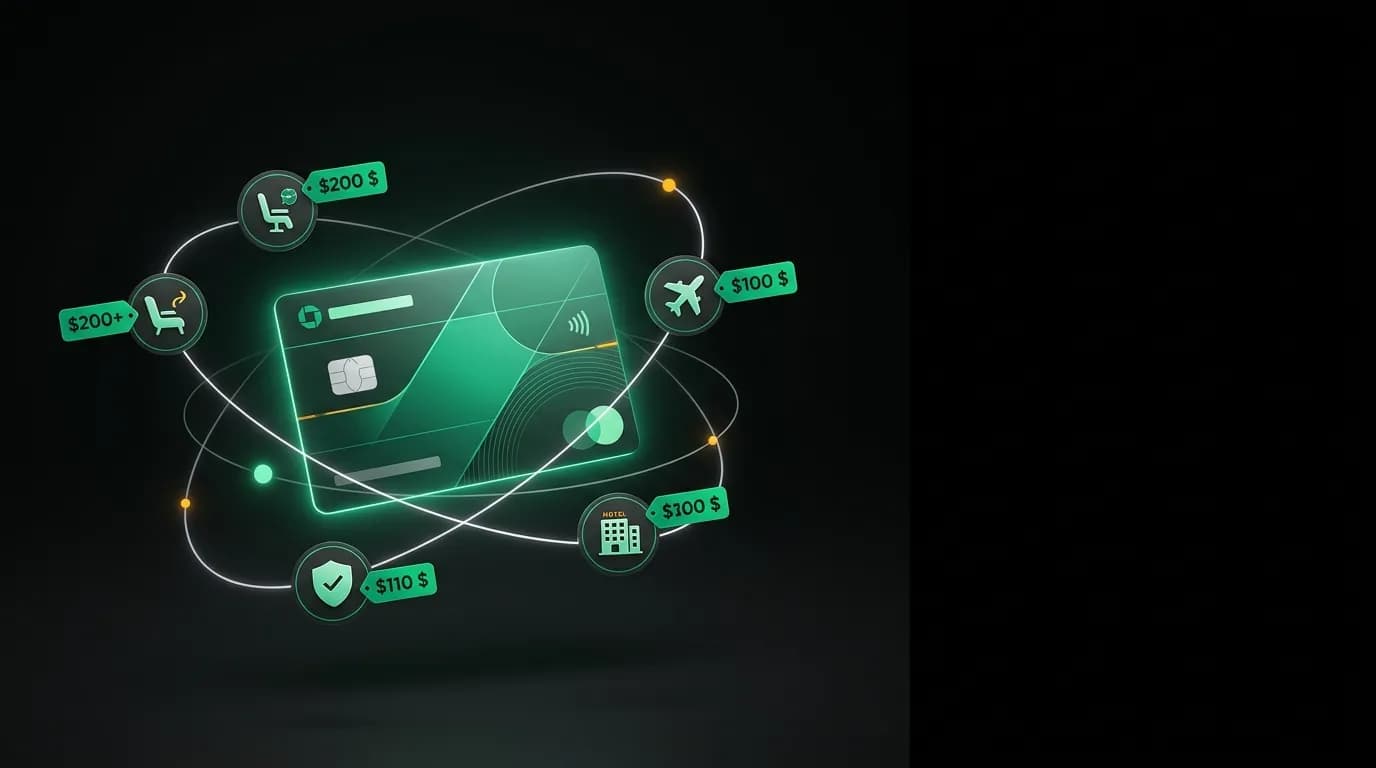
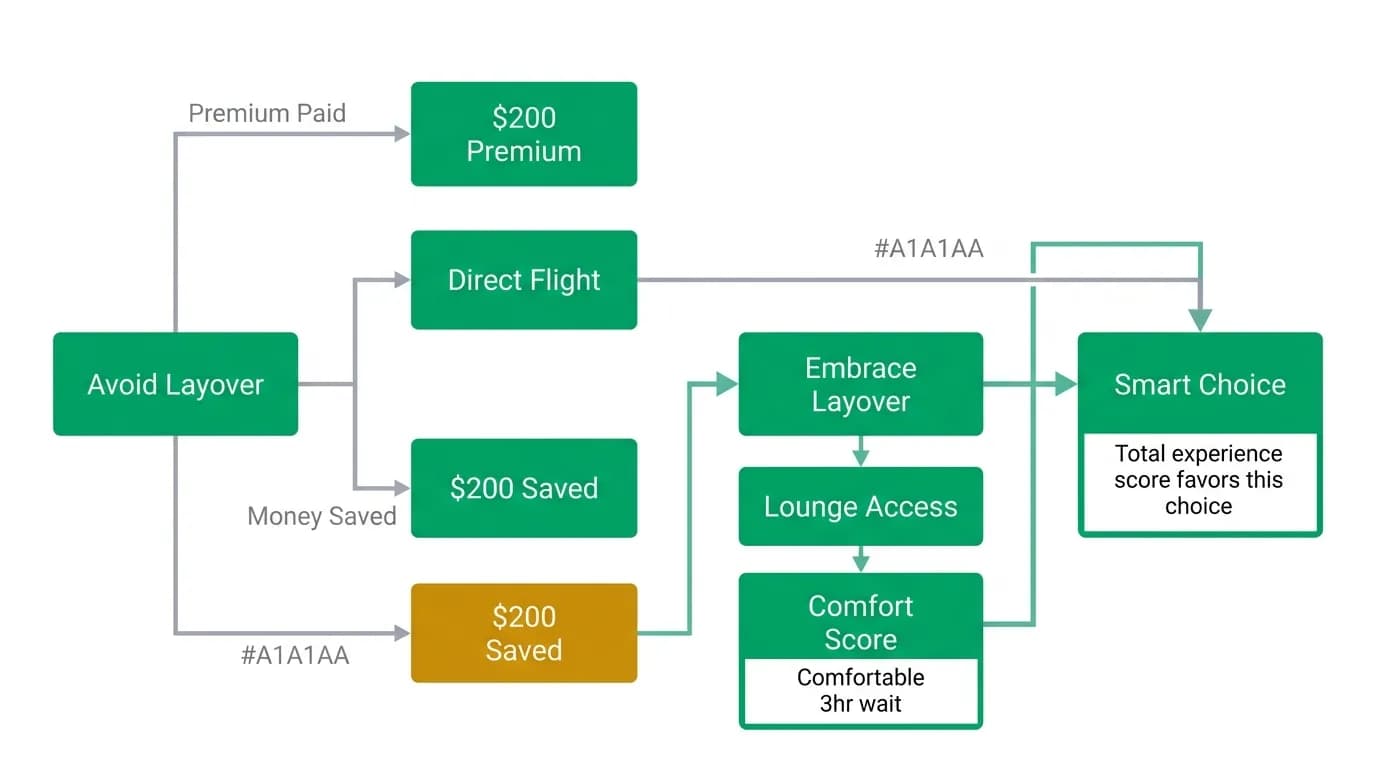
Your credit card gives you free airport lounge access. But you have been booking nonstop flights to avoid layovers because the AI does not know about that perk. With lounge access, a two-hour layover is not dead time — it is a comfortable break with free food and Wi-Fi. That changes the routing math entirely. The connecting flight that saves $200 suddenly comes with a built-in benefit that makes the layover pleasant rather than painful.
This is one example of how credit card travel benefits, when the AI knows about them, shift the value equation of every recommendation. Most travelers carry cards with travel perks they only partially use. The AI can surface those benefits at the moment they matter most — when you are choosing between options.
What card benefits the AI can factor in
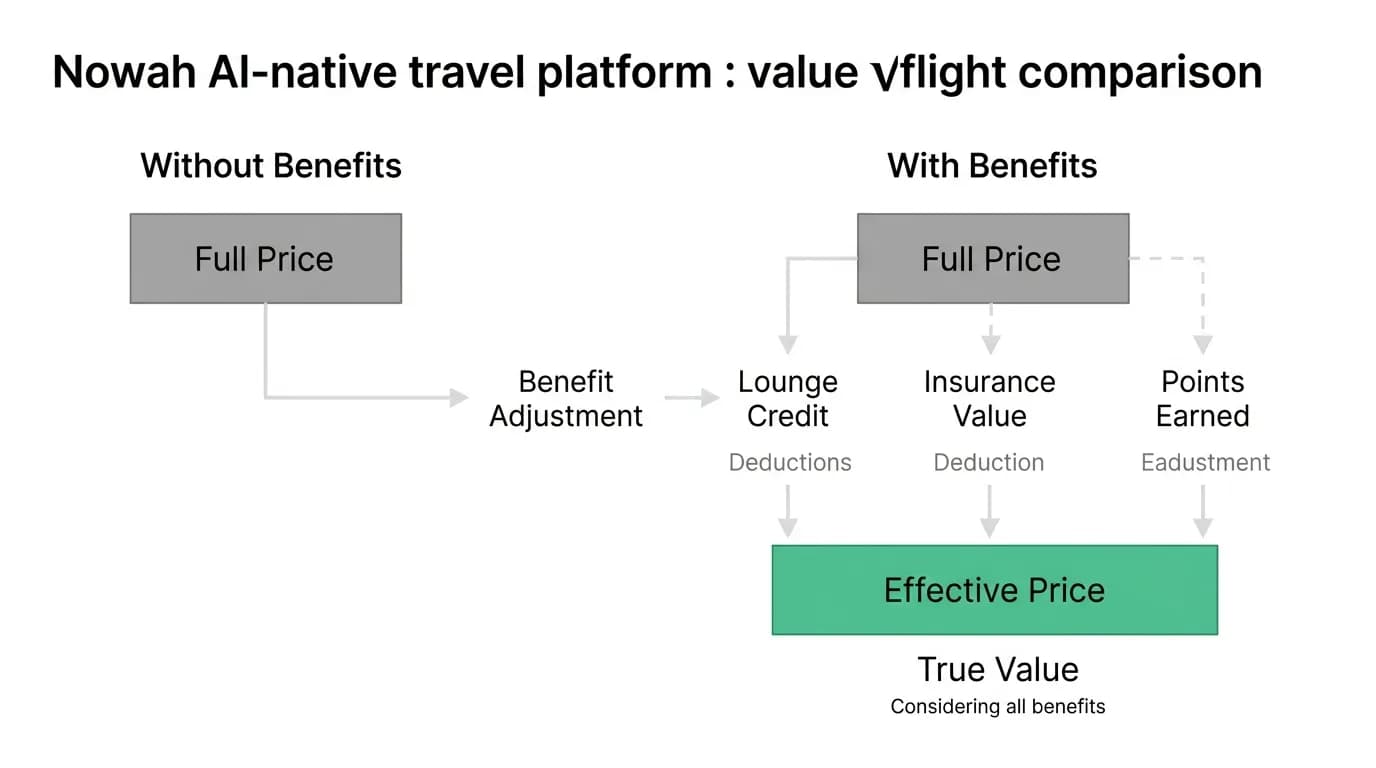
Travel credit cards come with a constellation of benefits that vary by card tier and issuer. The ones most relevant to booking recommendations include:
Lounge access changes the value of layovers. A layover in an airport lounge with comfortable seating, food, drinks, and Wi-Fi is a qualitatively different experience from the same layover in a crowded gate area. When the AI knows you have lounge access, it can appropriately value connecting flights that route through airports with participating lounges.
Trip insurance and purchase protection provide financial coverage that overlaps with (and sometimes exceeds) the protection offered by travel insurance add-ons. Premium cards often cover trip cancellation, interruption, delay, and lost baggage. If your card already covers these risks, paying for separate travel insurance or free-cancellation rate premiums may be redundant.
Statement credits and travel portal bonuses effectively reduce the cost of bookings. A card that offers a $300 annual travel credit or 5x points on travel purchases through its portal shifts the effective price of bookings. The AI factors these adjustments into value comparisons.
Airline fee credits cover incidental charges like checked bags, seat selection, and in-flight purchases on specific airlines. If your card reimburses baggage fees on your preferred airline, the basic economy fare that charges for bags becomes cheaper than it appears.
How lounge access changes the layover equation
This is the most tangible example of how card perks shift recommendations. Without lounge access, the AI weights layovers as a negative experience to be minimized. The scoring model treats connection time as dead time, penalizing longer layovers and connections in airports with poor amenity scores.
With lounge access, the scoring adjusts. A reasonable layover (two to four hours) in an airport with a participating lounge is no longer a penalty. It might even be a mild positive — a chance to rest, eat well, and recharge before the next leg. This adjustment can change the top recommendation from a direct flight at a premium price to a connecting itinerary that saves money and includes a comfortable break.
The savings can be significant. On routes where direct flights carry a 20 to 40% premium, the connecting alternative with a pleasant lounge layover delivers a similar overall experience at a lower cost. Without lounge access data, the AI recommends the direct flight to avoid the layover. With it, the AI recognizes the connecting option as a better value.
Insurance overlap detection
Premium credit card travel insurance can cover $500 to $10,000 per trip, depending on the card and the specific coverage. This overlaps substantially with the insurance products that airlines and hotels try to sell during the booking process and with the free-cancellation rate premiums that hotels charge.
When the AI knows your card's coverage, it can flag when you are about to pay for protection you already have. "Your card already covers trip cancellation up to $5,000. The free cancellation premium on this hotel adds $45 per night for coverage you may not need." This is not financial advice — the AI is simply surfacing relevant information so you can make an informed choice.
Surfacing benefits travelers forget they have
Many travelers with premium credit cards do not fully understand or remember all the benefits their card provides. The card's benefits guide is a 50-page document they read once (or never). Travel benefits like priority boarding, free checked bags, global entry credits, and rental car insurance go unused simply because the traveler forgot they had them.
When card benefit data is stored in the AI's memory, those benefits get surfaced at the point of decision. Booking a rental car? The AI reminds you that your card includes collision damage coverage. Considering travel insurance? The AI notes your existing card coverage. This surfacing turns dormant benefits into active value.
Tell Nowah about your credit card perks and unlock smarter recommendations. The AI factors your card benefits into every value comparison, ensuring you use the perks you are already paying for.
Nowah is an AI travel agent that searches and books real flights and hotels through conversation — no filters, no thirty open tabs. Plan your next trip.