The Hidden Cost of \\\"Free\\\" Cancellation
Free cancellation fares cost 15-30% more than non-refundable options. Data analysis of the flexibility premium and when it actually makes financial sense.
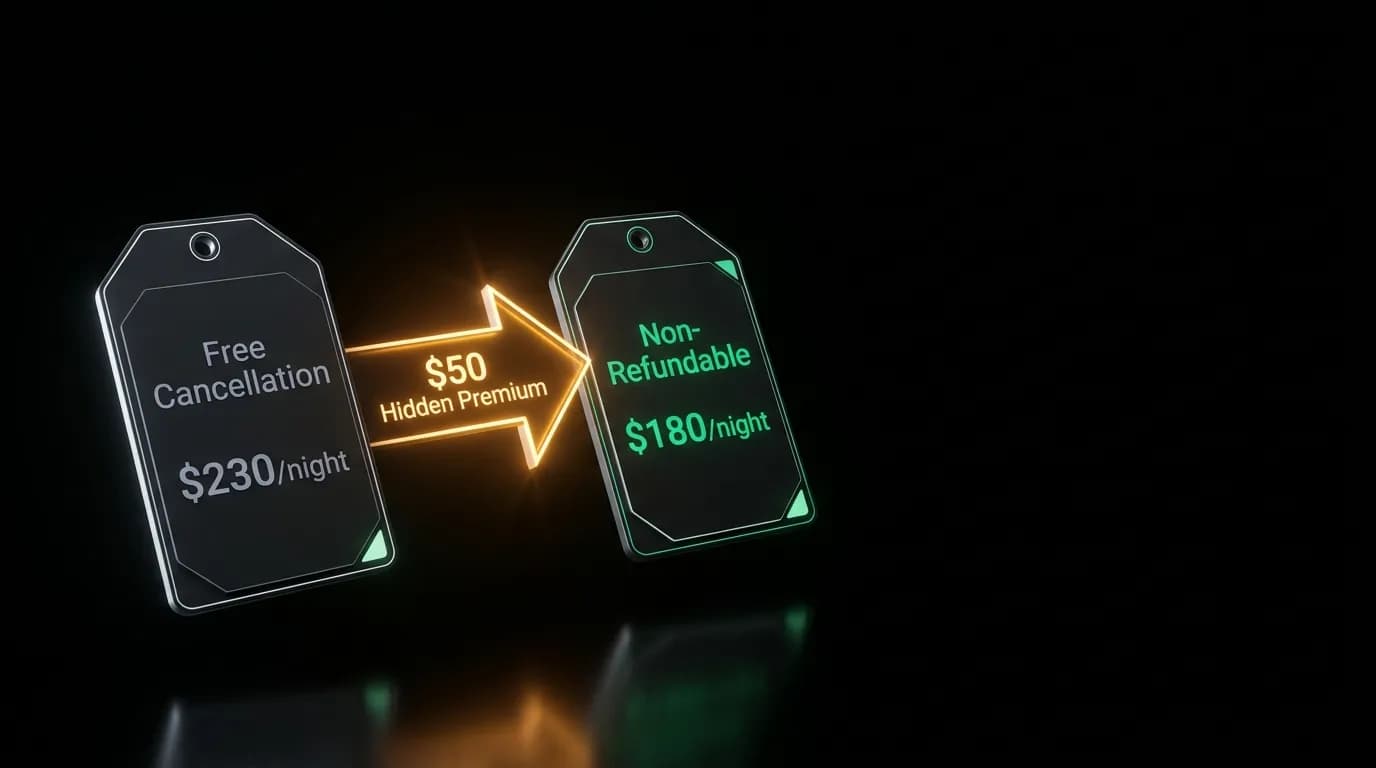
"Free cancellation" is not free. It is a premium, typically 15 to 25% above the non-refundable rate for the same room or fare. The word "free" describes the absence of a cancellation fee, not the absence of cost. You pay the cost upfront, embedded in a higher nightly rate, whether or not you ever cancel.
This framing is one of the most successful pricing strategies in the travel industry. It positions paying more as getting something for nothing. The data tells a more nuanced story about when this premium is worth paying and when it is a waste of money.
The flexibility premium
Hotels and airlines price cancellation flexibility as an option, similar to how financial markets price insurance contracts. The more uncertain the booking, the more valuable the cancellation option, and the more the seller can charge for it.
For hotels, the premium for free cancellation over non-refundable rates typically runs 15 to 25%. On a $200-per-night hotel room, that is $30 to $50 extra per night. For a five-night stay, the flexibility premium adds $150 to $250 to the total cost. That is not trivial.
The premium exists because hotels are managing inventory risk. A room booked with free cancellation might be released at the last minute, leaving the hotel scrambling to resell it. The premium compensates for that risk. Non-refundable rates guarantee the hotel revenue and let them price more aggressively.
When the premium is worth it
The value of free cancellation is directly proportional to your probability of actually canceling. This sounds obvious, but most travelers do not think about it in those terms.
The data shows that only 10 to 15% of travelers who book free cancellation rates actually cancel. That means 85 to 90% of travelers who pay the premium never use it. They are buying insurance they do not claim.
When does the premium make sense? Group trips where one participant might drop out are high cancellation probability scenarios. Trips dependent on events that could be canceled (conferences, festivals, sporting events with uncertain schedules) carry real uncertainty. Business trips where meeting schedules change frequently have legitimate cancellation risk. Travel during volatile weather seasons where storms might disrupt plans also justifies the premium.
When it is not worth it
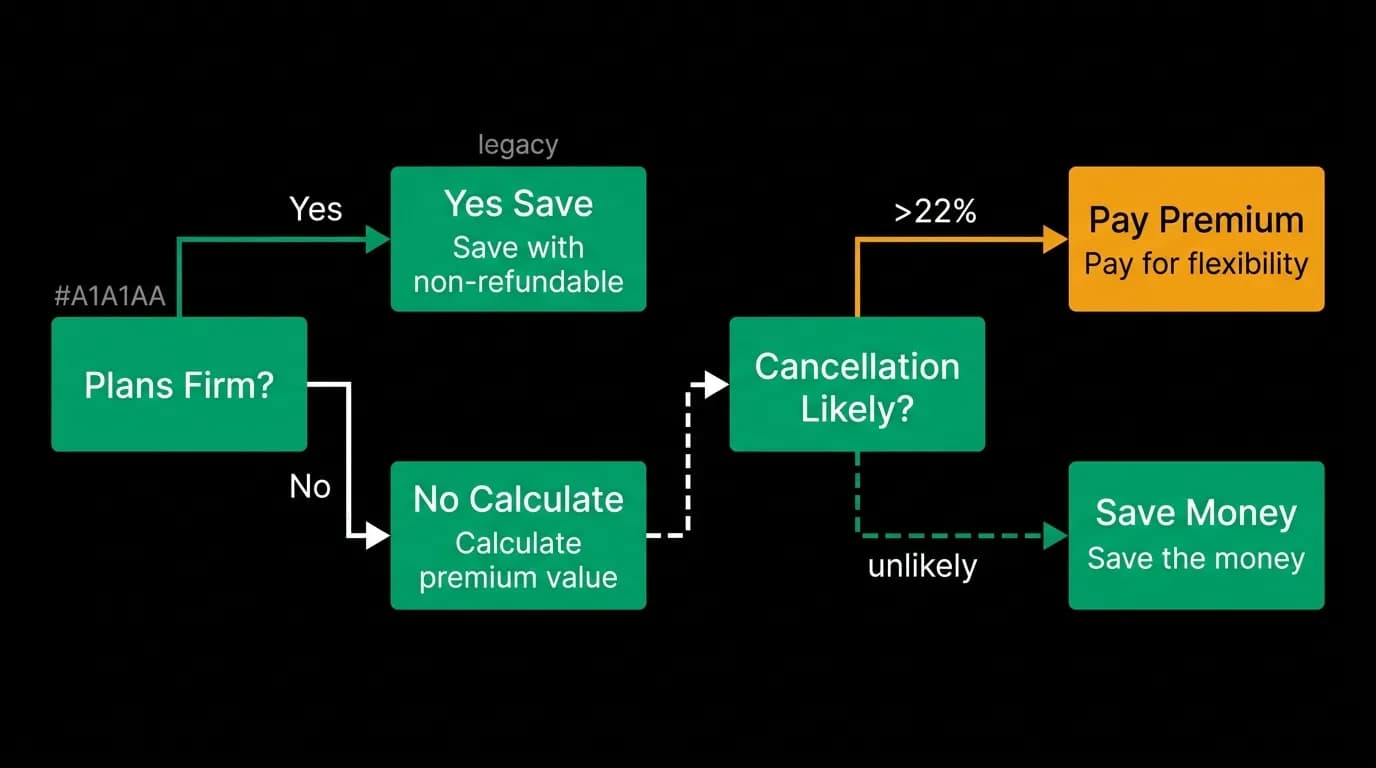
For the majority of leisure trips — a solo vacation with firm dates to a stable destination during good weather season — the non-refundable rate is the better financial choice. Your probability of canceling is low, and the premium costs more than the expected value of the option you are buying.
The break-even math is straightforward. If the free cancellation premium is 20% and you cancel 10% of the time, the expected value of the cancellation option is 10% of the room cost (20% of the time you lose the premium without benefit, 80% of the time you lose it, and 10% of the time it saves you the room cost minus the premium). In most scenarios, the expected cost of paying the premium across all your bookings exceeds the expected savings from the occasional cancellation.
For travelers who book frequently, the math is even clearer. Across 10 hotel bookings per year, paying the free cancellation premium on all of them to protect against one or two cancellations means the total premium paid far exceeds the refund received on the rare cancellation.
The break-even analysis
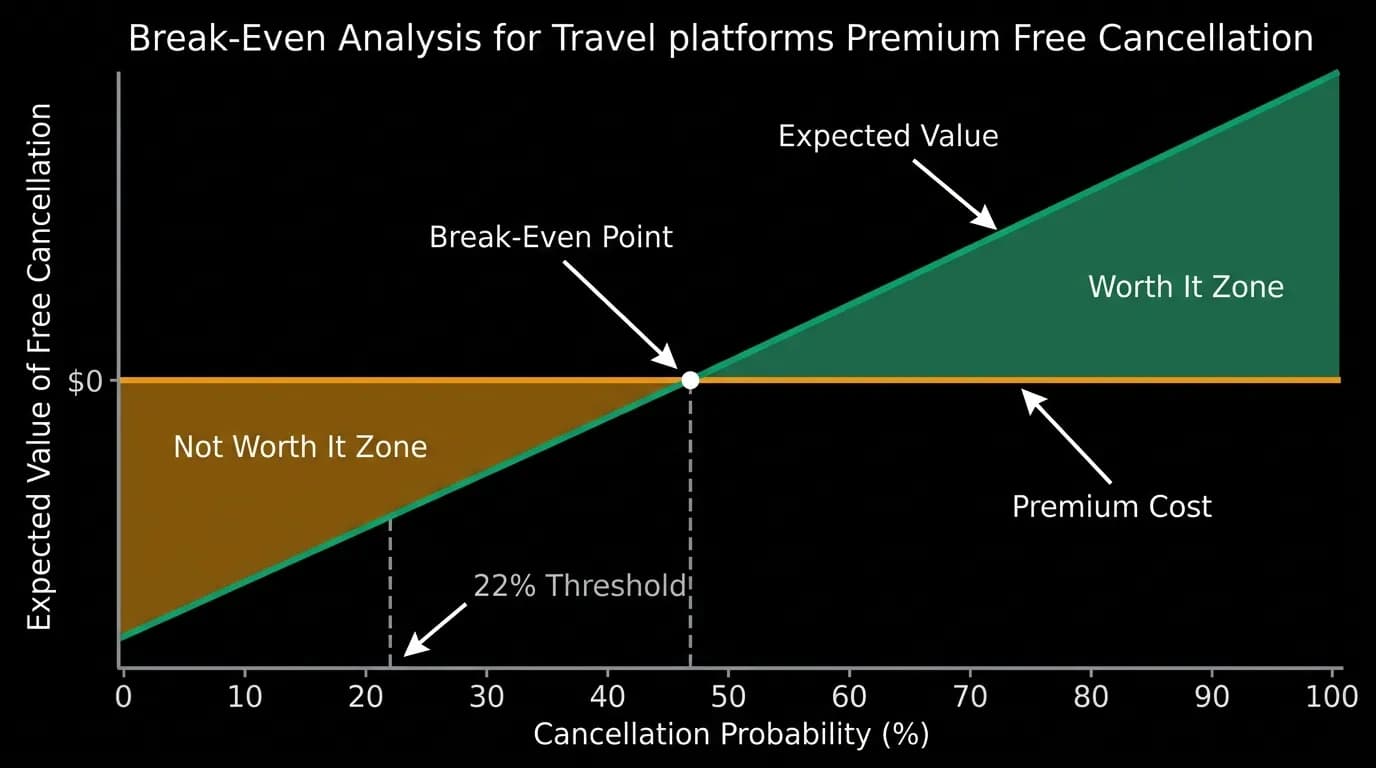
The crossover point where free cancellation becomes the rational choice is when your cancellation probability exceeds approximately 15%. Below that threshold, the expected value favors the non-refundable rate. Above it, the insurance premium is justified.
Most travelers dramatically overestimate their cancellation probability because they are thinking about worst-case scenarios (illness, family emergency, work crisis) rather than base rates. These scenarios feel vivid and possible, which makes the insurance feel necessary. But the actuarial reality is that the vast majority of booked trips happen as planned.
How the AI factors flexibility into recommendations
When the AI presents hotel options, it considers the cancellation policy as part of the value assessment. For a traveler with firm dates and no history of cancellations, the AI might rank the non-refundable rate higher because the total value (lower price, same room) is objectively better. For a traveler with uncertain plans or a history of changed bookings, the AI might weight the flexible rate more favorably.
The AI also notes when the premium is unusually high or unusually low. A 30% premium on a hotel where the non-refundable rate is already competitive is a hard sell. A 10% premium on a luxury property might be worth it simply because the absolute dollar amount at risk in a non-refundable booking is so high.
Ask Nowah whether free cancellation is worth it for your specific booking. The AI does the expected-value math so you are making a financial decision, not an emotional one.
Nowah is an AI travel agent that searches and books real flights and hotels through conversation — no filters, no thirty open tabs. Plan your next trip.