Cross-Platform Travel Booking: Mobile and Web From One Product Mindset
One a single typed language across the stack codebase powering iOS, Android, and web with shared types and platform-specific UX. Here is our cross-platform engineering strategy.
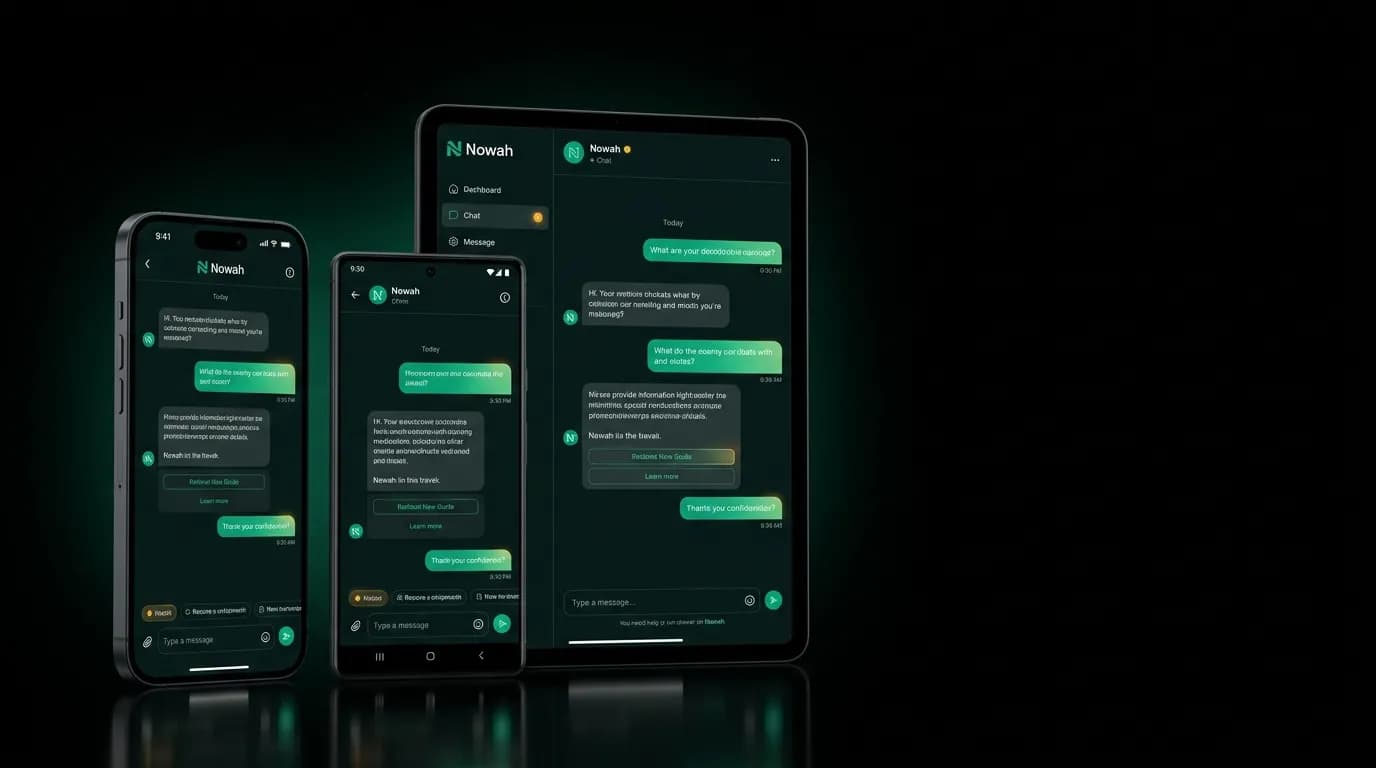
Travel is one of the few product categories where cross-platform support is not a nice-to-have. You plan your trip on a laptop at home. You check your flight details on your phone at the airport. You show your boarding pass from your phone at the gate. You look up hotel directions on your phone in a taxi. Over 60% of all online travel bookings happen on mobile, but the planning phase often starts on desktop.
We need to be everywhere. Here is how we built a cross-platform travel product without building three separate apps.
What we share and what we do not
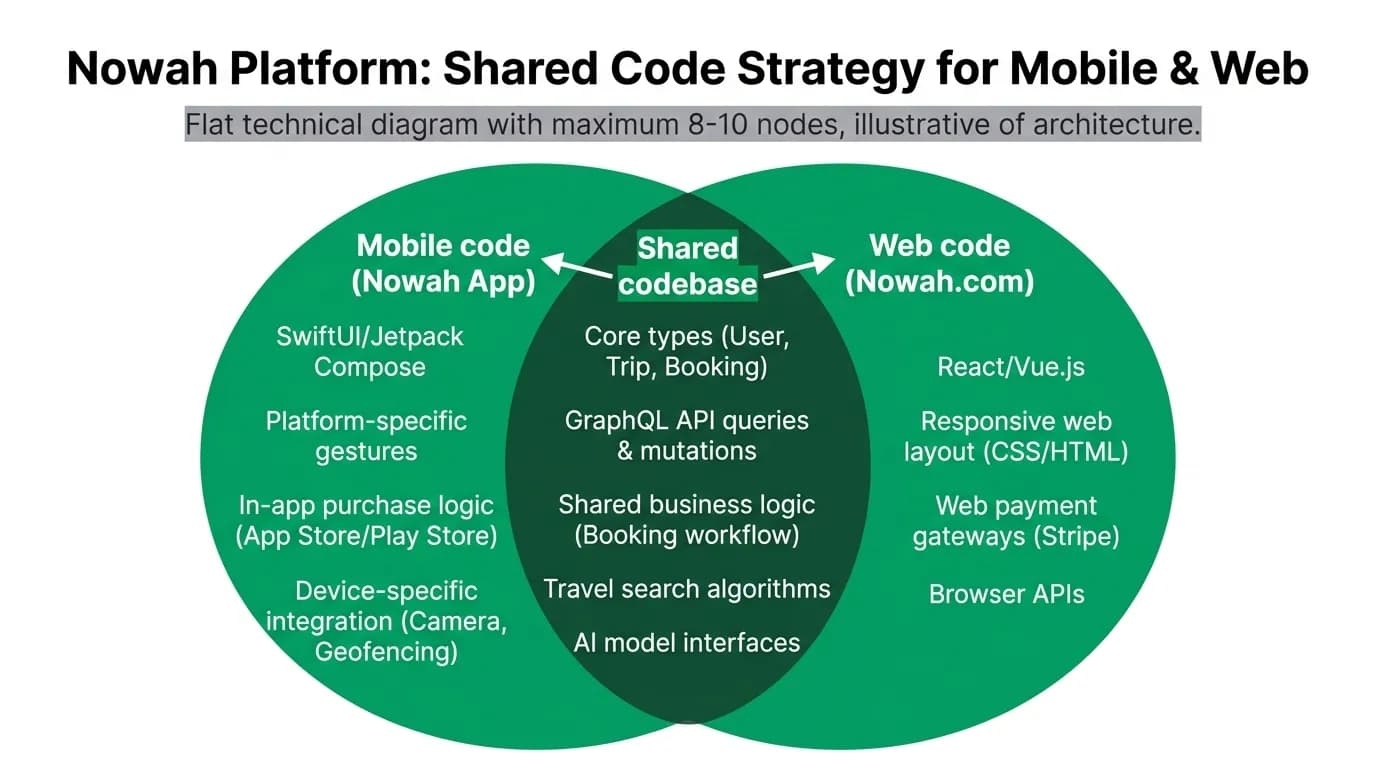
The temptation with cross-platform development is to share everything. Write once, run everywhere. In practice, this produces mediocre experiences on every platform. We take a more deliberate approach.
We share: a single typed language across the stack types, API client code, business logic, and data models. The definition of a flight offer, a hotel booking, or a user profile is identical across mobile and web. The API client that talks to our backend is the same code. The logic that determines whether a booking is modifiable or a conversation is resolvable is shared.
We do not share: UI components, navigation patterns, gesture handlers, or payment flows. A flight card on mobile is a native component with touch interactions, swipe gestures, and haptic feedback. The same card on web is a React component with hover states, keyboard navigation, and mouse interactions. They look similar but they are different components optimized for different input models.
This split gives us type safety across the entire stack. When we add a field to a flight offer on the backend, a single typed language across the stack tells us everywhere it needs to be handled. But each platform gets a native-feeling experience because the UI layer is platform-specific.
a cross-platform mobile framework for mobile
Our mobile app runs on a cross-platform mobile framework. One codebase produces both the iOS and Android apps. the mobile build tooling handles the build pipeline, over-the-air updates, push notifications, and a large chunk of native module management.
For a travel app, the native capabilities matter. We need access to the camera for passport scanning. We need push notifications for flight status updates. We need biometric authentication for payment confirmation. We need background location for travel-day features. the mobile build tooling gives us all of this without writing native code for two platforms.
The chat interface translates to mobile particularly well. A conversation is a natural mobile interaction pattern. People are used to texting. The input sits at the bottom where your thumb is. Messages stack vertically in a scrollable list. Flight and hotel cards fit naturally into the message flow because they are just wider messages.
Where mobile gets tricky is performance with rich content. Flight cards with airline logos, hotel cards with photo carousels, and map embeds all add weight to the chat. We invest heavily in virtualization, lazy loading, and image optimization to keep scrolling smooth on three-year-old devices.
the web framework for web
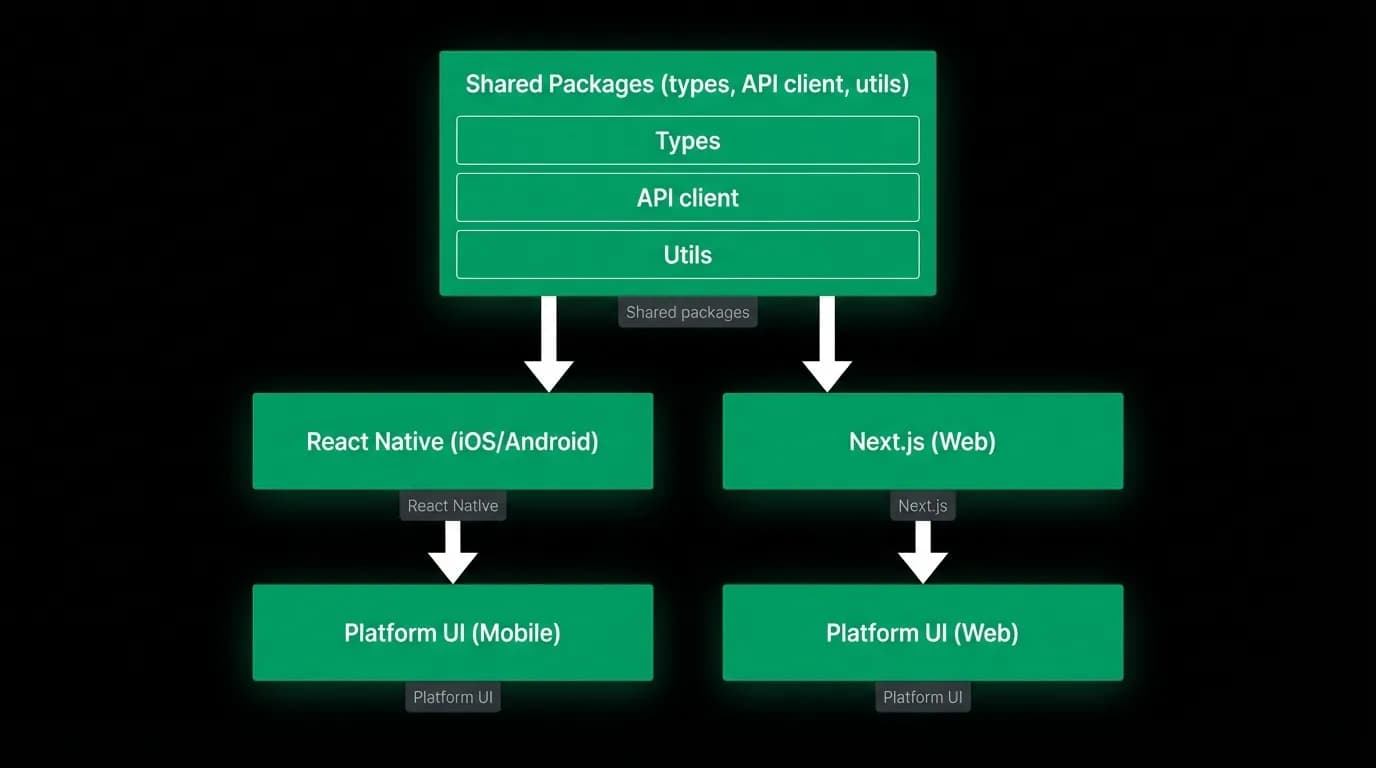
Our web app is built with a modern server-rendered web framework. Server-side rendering gives us fast initial loads and SEO coverage for our blog and marketing pages. The chat interface itself is a client-side React app that connects to the same backend as the mobile app.
Web gives us some advantages that mobile does not. Wider screens mean we can show flight cards side by side instead of stacked. Keyboard shortcuts speed up power users. The payment flow can use the full browser payment API with saved cards. And we do not have app store review cycles, so we can ship web updates instantly.
The web chat interface is slightly different from mobile in ways that reflect how people use computers. The input is wider and supports richer formatting. Cards have hover states that preview additional information. The booking review modal takes advantage of the larger viewport to show more details without scrolling.
Shared a single typed language across the stack as the contract
The real glue between our platforms is a single typed language across the stack. Every API response type, every data model, every enumeration is defined once and used everywhere.
When our backend returns a flight offer, both the mobile and web apps know exactly what shape that data takes. The airline code field, the departure time format, the price currency. If the backend changes a field from optional to required, a single typed language across the stack catches every place in every client that needs updating.
This is especially valuable for an AI product where the data shapes are complex. An AI agent response might contain text content, tool call results, flight offers, hotel offers, or booking confirmations. All of these have rich type definitions. Without shared types, we would be constantly debugging "undefined is not an object" errors where one platform expected a field that another platform spelled differently.
Platform-specific optimizations
The areas where we diverge by platform are deliberate and driven by how people actually use travel apps on different devices.
Payment flows. On mobile, we use the platform's native payment sheet with biometric confirmation. Apple Pay and Google Pay feel seamless and secure. On web, we use a payment form in a modal with browser autofill support. Same backend, different front-end experience.
Push notifications. Mobile gets real push notifications for flight status changes, price alerts, and booking confirmations. Web gets in-app notifications and email. The notification preference system is shared, but the delivery mechanism is platform-specific.
Offline capability. Mobile travelers lose connectivity. We cache recent trip data, booking confirmations, and essential travel tools (currency converter, trip details) for offline access. Web does not need this as aggressively since laptops and desktops usually have stable connections.
Voice input. Both platforms support voice, but the mobile implementation uses native speech recognition for better accuracy and lower latency, especially important in noisy environments like airports.
Design consistency with platform-appropriate divergence
Our design system starts from the same foundation: pure black background, green accent color, specific typography scale, and card design language. Both platforms look unmistakably like the same product.
But we allow divergence where the platform demands it. iOS navigation follows Apple's conventions. Android follows Material Design patterns where they make sense. Web uses cursor-based interactions with hover and focus states.
The chat interface is where consistency matters most, and it is also where consistency is easiest. A conversation looks fundamentally the same on a phone screen and a browser window. The bubbles are the same. The cards are the same (just wider on bigger screens). The flow is the same. This is a genuine advantage of chat-first architecture: the interaction model is inherently portable.
Legacy OTAs struggle with cross-platform consistency because their interfaces are complex, form-heavy, and deeply tied to specific screen layouts. A flight search form that works on desktop requires significant rethinking for mobile. A results page with 20 filters and sort options needs a completely different mobile layout. Chat does not have this problem. The conversation is the layout.
Nowah is an AI travel agent that searches and books real flights and hotels through conversation — no filters, no thirty open tabs. Plan your next trip.