Preparing Nowah for the App Store: Our iOS Launch Playbook
How we are preparing the iOS submission — App Store review for AI apps, metadata strategy, positioning against traditional travel apps, and what we will watch in week one.
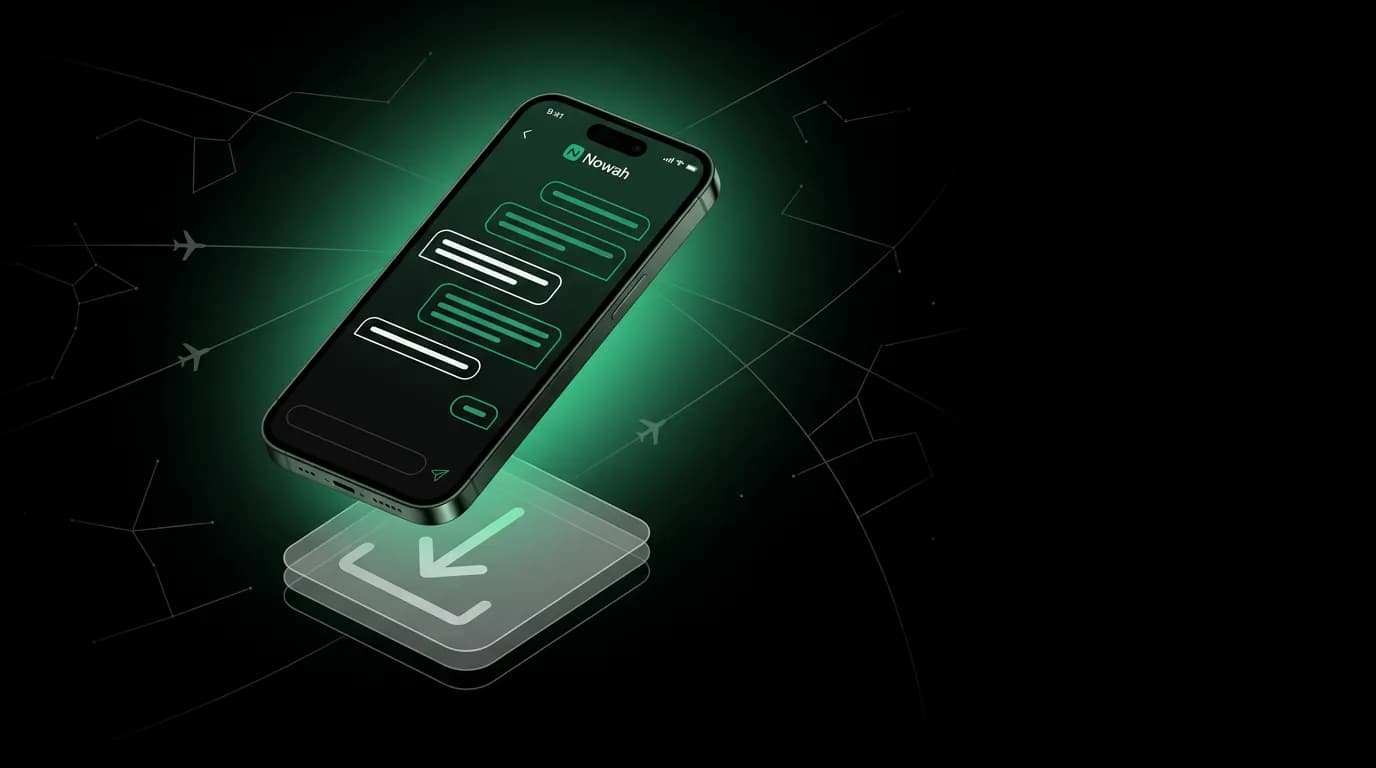
App Store review for an AI travel agent is not the same as review for a search wrapper. Reviewers can ask for proof that the product actually books flights — not only a demo video, but a walkthrough with a real payment path. That bar is reasonable: the store is full of apps that over-claim AI. Our job before submission is to make the booking path, moderation story, and test account boringly clear.
We are preparing a package with a test account and credits, a step-by-step booking walkthrough, and a full video of search → compare → book. We also budget for more than one review cycle, especially around documentation for AI-generated responses.
Positioning in a crowded marketplace
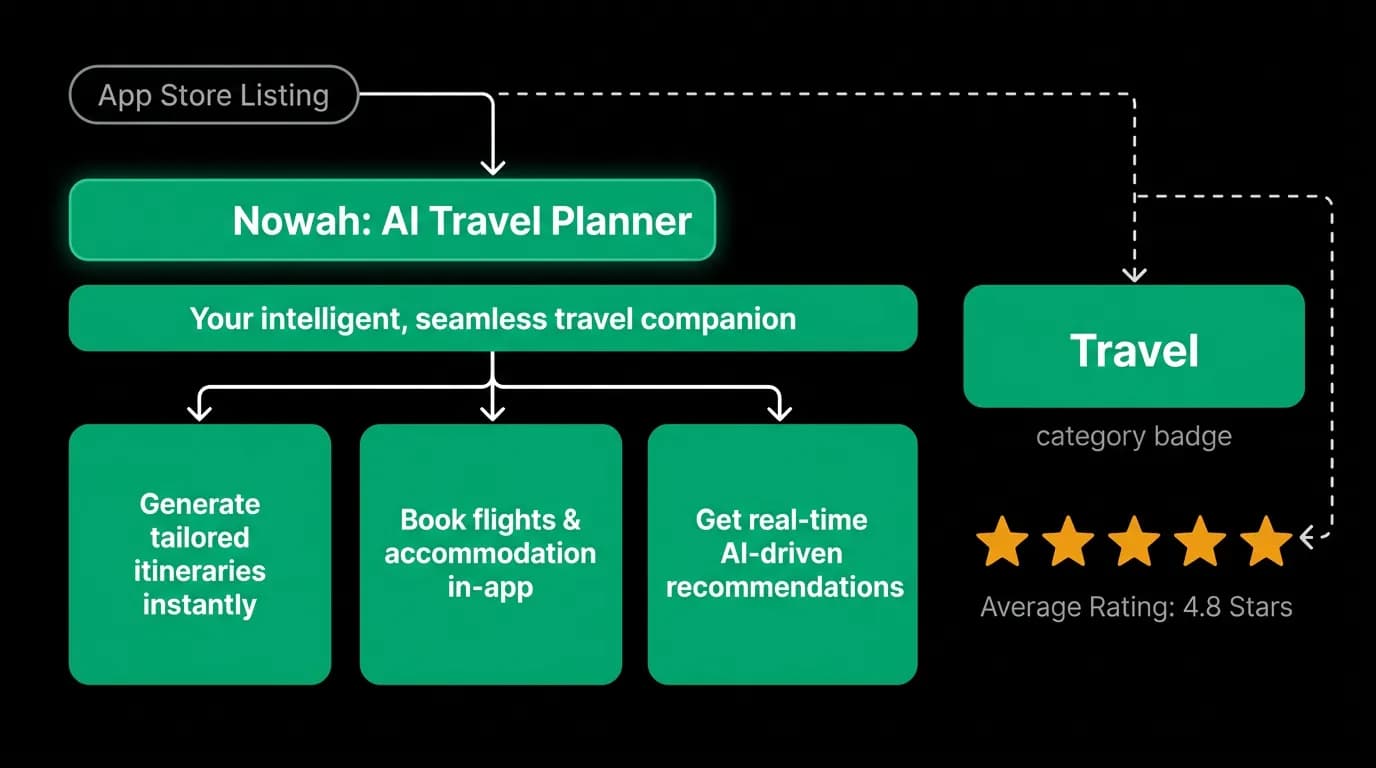
The App Store travel category is dominated by names everyone recognizes. Traditional online travel agencies with massive brand recognition, airline-specific apps, hotel chain apps, and aggregators. Scrolling through the category, every listing looks the same: search form screenshots, destination photos, and promises of the best prices.
We needed to stand out as something fundamentally different. Not a better version of the same thing, but a different thing entirely. Our metadata strategy focused on the conversational interface as the differentiator. The subtitle highlighted AI booking, not just searching. The first screenshot showed the chat interface with the agent mid-conversation, not a search results page.
This was a deliberate bet. Most travel app screenshots show destination imagery because it is aspirational and visually appealing. We showed the product in use because the product experience is what differentiates us. A beautiful photo of Santorini does not tell a potential user anything about why our app is different from the thirty other apps showing the same photo.
The onboarding flow
The onboarding flow determines whether a new user talks to the agent or bounces. Long feature-explanation onboarding behind a sign-up wall is a known drop-off pattern we refuse. Drop-off on long feature tours is usually brutal — we refuse that shape.
We design onboarding to get the traveler into a conversation with the agent as quickly as possible. Minimal explanation upfront. Quick account creation through single sign-on. Then immediately into the chat interface with a prompt suggestion like "Where do you want to go?" The agent does the explaining through the interaction itself, which is both more engaging and more convincing than static slides.
The five-tab layout gives the app structure: Tools, Trips, Chat, Passport, and Profile. But the Chat tab is the center of gravity. Everything else supports the core interaction of talking to the agent and getting things done.
Week-one signals we plan to watch
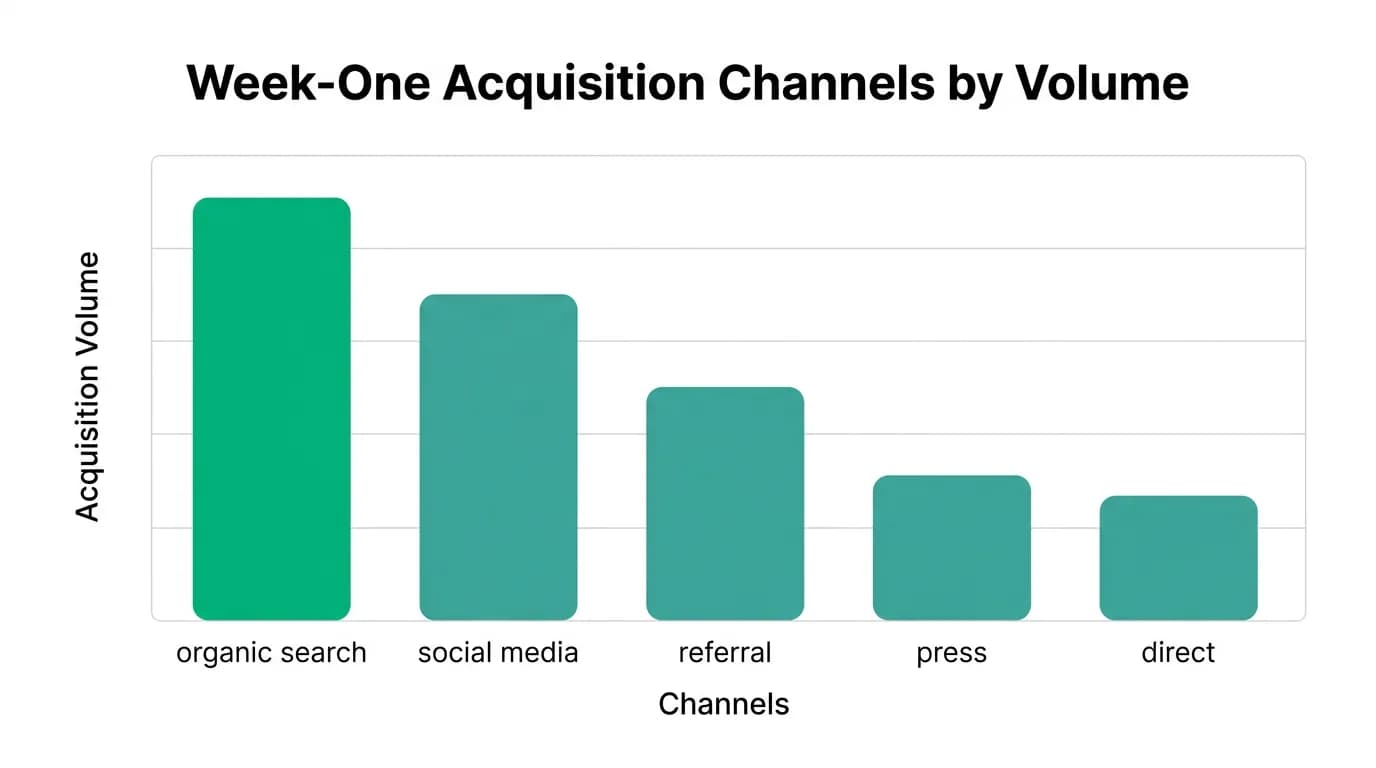
Industry research often finds younger travelers prefer mobile booking, which supports a mobile-first thesis. Here is what we will instrument carefully in week one.
First, we will compare organic App Store search against social media for both volume and conversion to first booking — quality matters more than raw downloads. Hypothesis: social arrivals convert better because they have already seen the product; organic searchers are still evaluating.
Second, we expect feedback to be bimodal early: people mid-trip-planning get value fast; browsers without a trip bounce quickly. We expect little middle ground: people actively planning travel feel value immediately; browsers without a trip bounce when the chat has nothing to do.
That is why we design acquisition around people actively planning travel. An AI travel agent is not an app people download "just in case." It is an app people download because they have a trip to book right now.
What we refuse to skip
If we prepare to launch on iOS again tomorrow, we would do three things differently. We would invest more in the onboarding experience for users who do not have immediate travel plans, perhaps a trip inspiration feature that gives the agent something useful to do even for exploratory users. We would submit to App Store review earlier in the development cycle to account for the additional documentation requirements that AI apps face. And we would A/B test our screenshots more aggressively before launch, because the screenshots are the single most influential factor in whether a potential user taps "download."
Nowah is an AI travel agent that searches and books real flights and hotels through conversation — no filters, no thirty open tabs. Plan your next trip.