Building Push Notifications: Keeping Travelers Informed Without Annoying Them
The notification system launch — deciding what deserves a push, quiet hours, preference management, and the pipeline from booking event to lock screen.
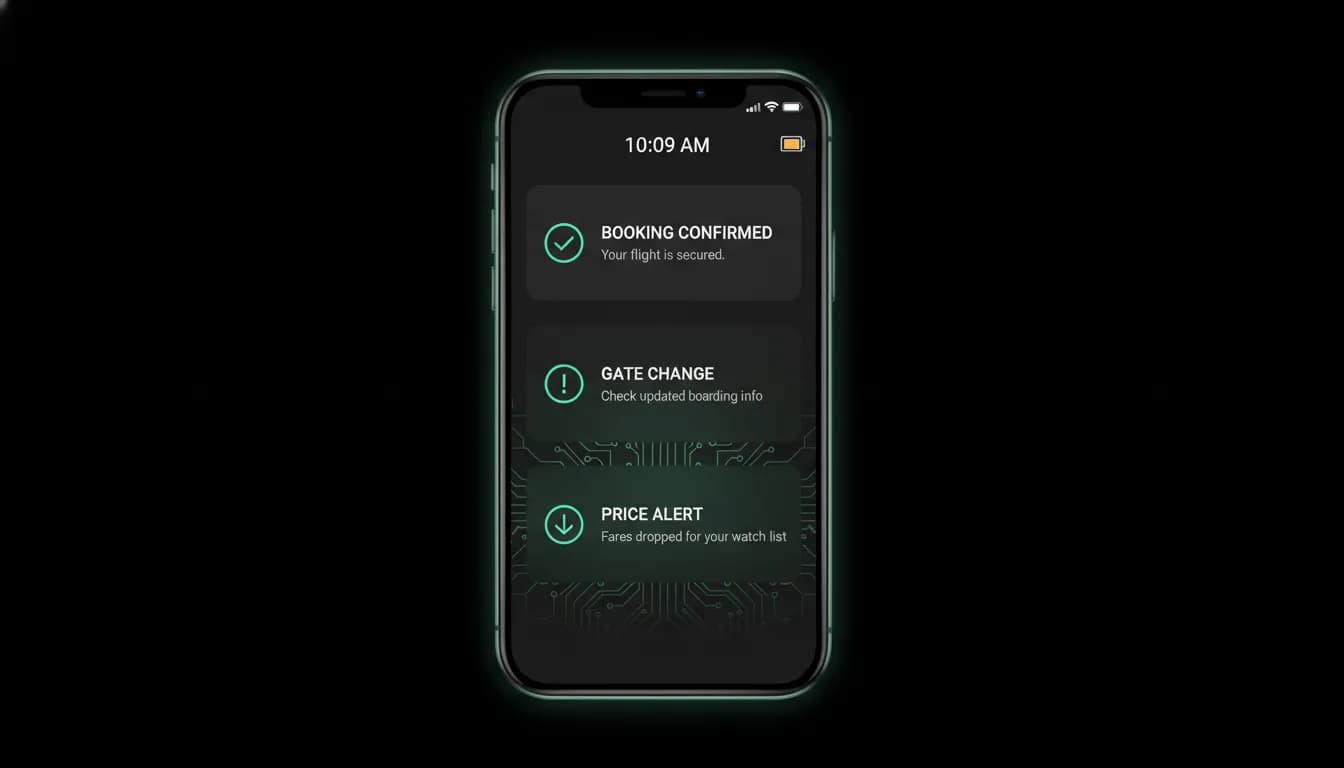
We accidentally pushed every booking status change and 200 travelers muted us in a single day. The problem was simple: we treated all status updates as equal. A booking confirmation is important. An intermediate processing status update is not. But our notification pipeline made no distinction, sending a push for each, and travelers who were waiting for a booking received three to five notifications in rapid succession for a single purchase.
The muting was immediate and understandable. And it taught us the fundamental lesson of push notifications: every notification that is not valuable actively damages your relationship with the user.
The notification taxonomy
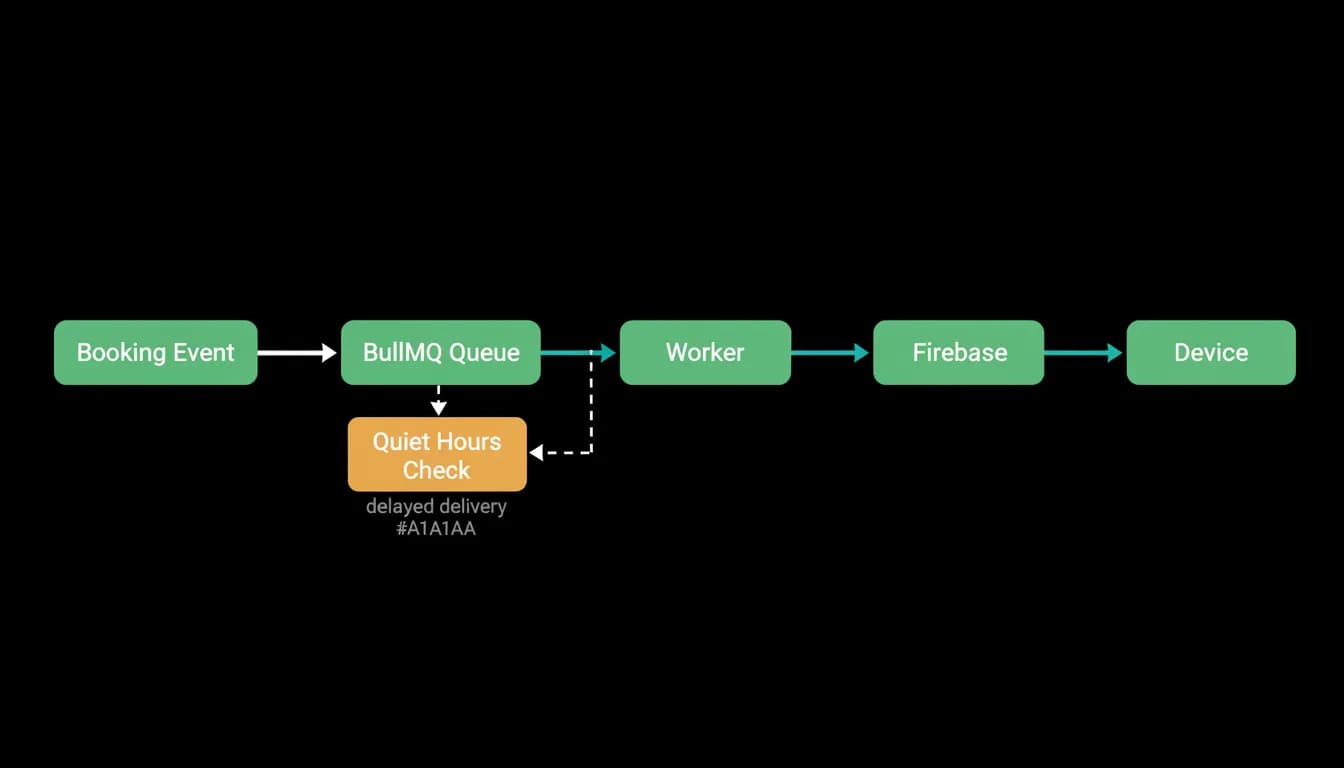
Not every event deserves a push notification. We categorize events into three tiers based on urgency and value to the traveler.
Push-worthy events demand attention: booking confirmations, gate changes, flight delays exceeding 30 minutes, and cancellations. These are events where the traveler needs to know now, regardless of what else they are doing.
Email-worthy events are important but not time-sensitive: booking receipts, trip summary updates, itinerary changes, and document processing confirmations. The traveler should know about these, but they can wait.
In-app-only events are informational: price monitoring updates, agent suggestions, and minor status changes. These are visible when the traveler opens the app but do not interrupt their day.
Getting the categorization wrong in either direction is harmful. Sending too many pushes causes muting or uninstallation. Sending too few means the traveler misses a gate change and runs to the wrong terminal.
Quiet hours
Travelers cross time zones. A notification that arrives at 2 AM because the traveler's trip involves a different timezone is not helpful. It is disruptive.
Our quiet hours system lets travelers set a window during which push notifications are held. The held notifications are delivered when quiet hours end, in priority order with the most important first. If a gate change notification was held during quiet hours but the flight has already departed by the time quiet hours end, the notification is suppressed entirely to avoid confusion.
The notification preferences page gives travelers granular control: push toggle, email toggle, quiet hours with start and end times, and per-category opt-in. Some travelers want every update. Others want only the essentials. Respecting their preferences is not a feature. It is table stakes.
The pipeline
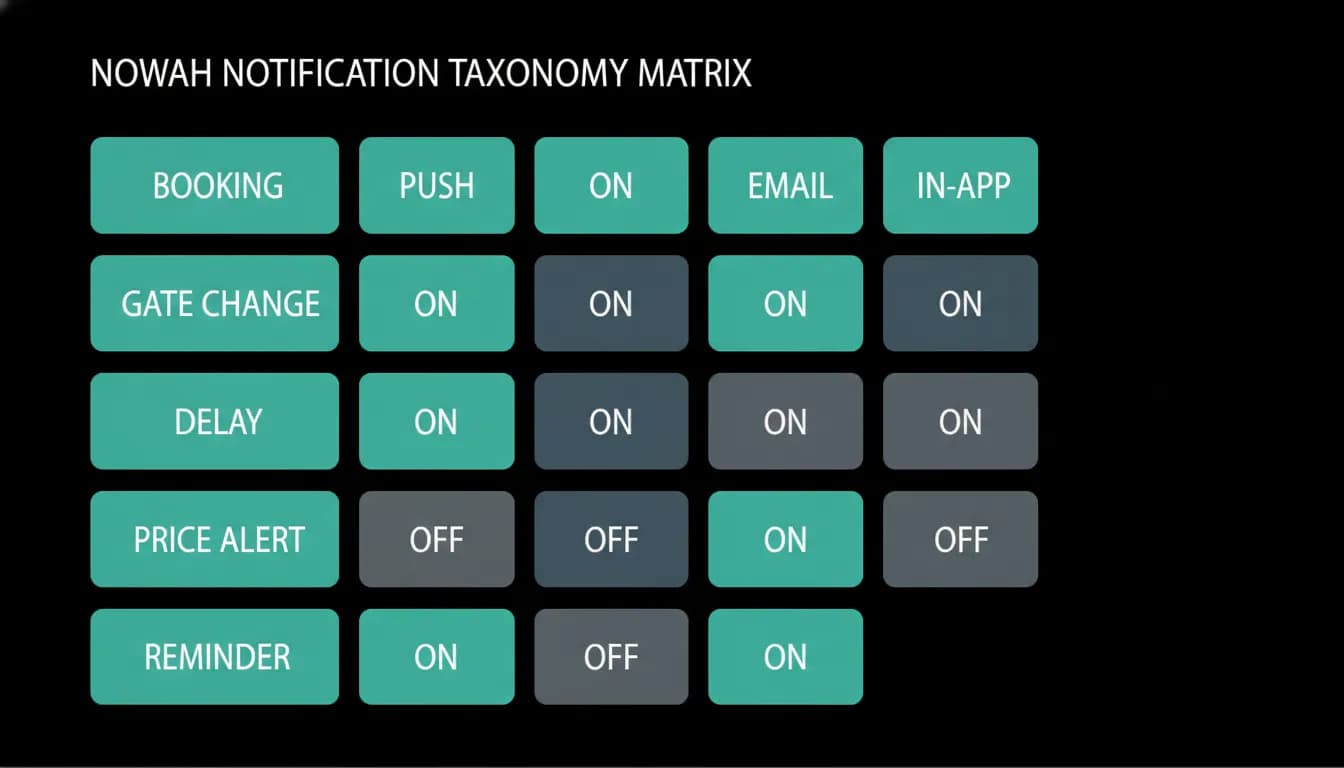
A booking event triggers a notification through a multi-step pipeline. The event enters a background job queue. A worker picks up the job, determines the notification category, checks the traveler's preferences, verifies quiet hours, formats the message, and dispatches it through the appropriate channel.
This pipeline runs asynchronously for a reason. Notification delivery should never block or slow down the booking process itself. If the notification system is slow or temporarily unavailable, the booking still completes and the notification catches up.
The pipeline handles both platforms through a unified cloud messaging service, but with awareness of platform-specific delivery characteristics. Delivery rates and timing can vary between iOS and Android, and our monitoring tracks delivery success per platform to catch issues early.
Measuring effectiveness
Notification effectiveness is measured by three metrics. Open rate: what percentage of notifications result in the traveler opening the app. Action rate: what percentage lead to a meaningful action like reviewing a booking or checking a gate change. And mute rate: what percentage of travelers mute notifications after receiving them.
The mute rate is the most important metric because it is irreversible. A traveler who mutes notifications will never receive another push, regardless of how important the event. Every notification that contributes to muting is a notification that harmed the product.
We balance information value against interruption cost. The threshold for sending a push is high and gets higher as we learn more about which notifications travelers actually find valuable versus merely tolerable.
Nowah is an AI travel agent that searches and books real flights and hotels through conversation — no filters, no thirty open tabs. Plan your next trip.