The Geography of Cheap Flights
Some routes are structurally cheap and others are expensive. Airline competition, hub dynamics, subsidies, and demand explain why geography sets the price.
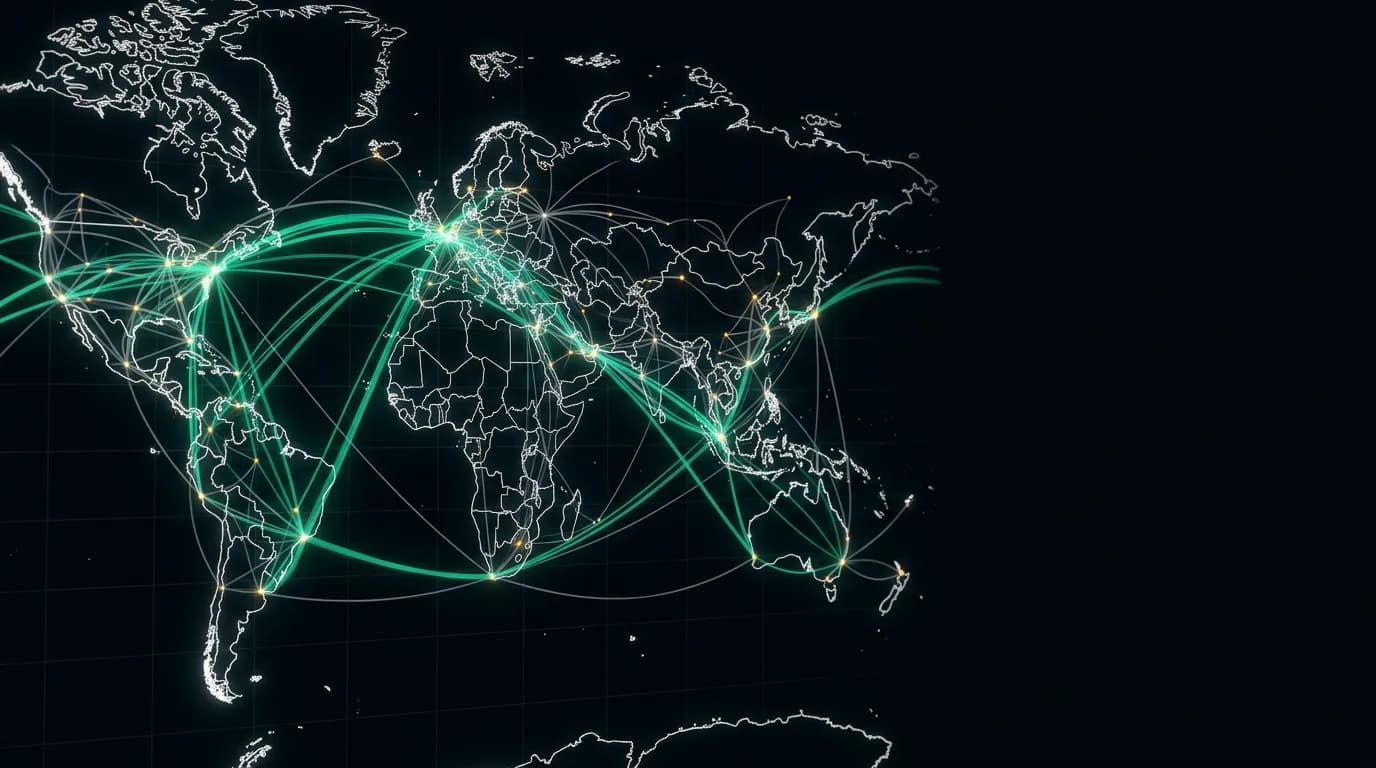
New York to Los Angeles costs $150 round trip on a good day. New York to a Caribbean island roughly the same distance away costs $600. Same departure city. Similar distance. Five times the price difference. If you have ever wondered why some routes seem permanently cheap while others stubbornly refuse to drop below a certain floor, the answer is not random. It is geography — specifically, the economic geography of airline competition, hub dynamics, and demand patterns.
Understanding why certain routes are structurally cheap does not just satisfy curiosity. It changes how you plan trips. When you know that the route between two cities is inherently competitive, you know that patience and date flexibility will likely pay off. When you know a route is structurally expensive because only one or two carriers serve it, you know that waiting for a deal that never comes is a waste of time.
Airline competition drives price

The single strongest predictor of route pricing is the number of carriers operating that route. More airlines flying the same city pair means more competition, which means lower fares. This relationship is remarkably consistent across domestic and international routes.
A route served by five or more carriers will have dramatically different pricing dynamics than one served by two. On high-competition routes, airlines actively manage 12 to 26 fare classes per flight, constantly adjusting availability in each class based on what competitors are doing. The result is frequent fare troughs — temporary dips where at least one carrier drops prices to fill seats. These troughs are where deals live.
On low-competition routes, the few carriers that operate have less incentive to drop prices. Fare classes still exist, but they tend to cluster in a narrower band. The distance between the cheapest available fare and the most expensive one is smaller, which means there are fewer extreme deals and fewer extreme rip-offs. Prices are just consistently moderate to high.
This is why transcontinental routes in the United States are often strikingly cheap. New York to Los Angeles, San Francisco, or Chicago — these are high-competition corridors with multiple carriers fighting for market share. Meanwhile, routes to smaller cities with limited service can cost more despite covering shorter distances.
Hub dynamics and the spoke tax
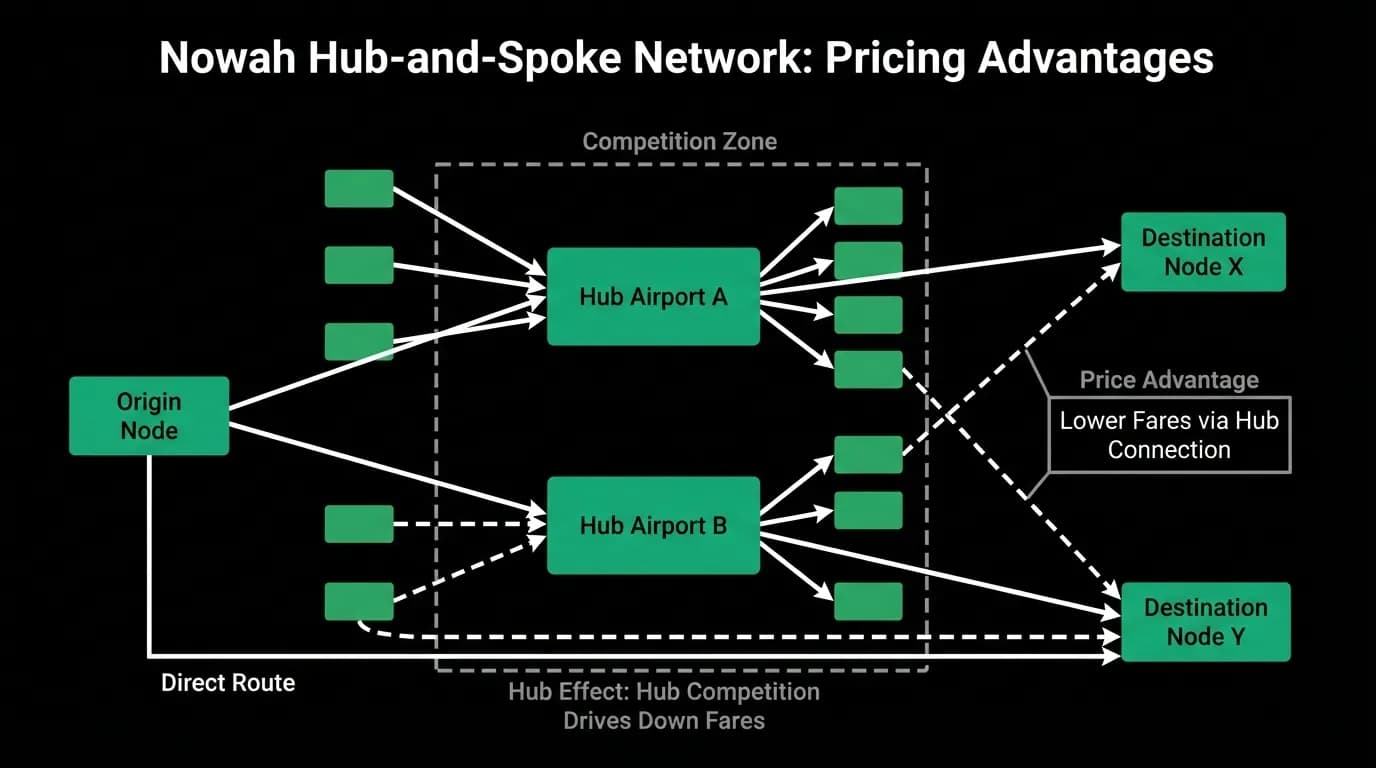
Airlines build their networks around hubs, and hub-to-hub routes are typically the cheapest flights in their system. A carrier's hub is where it has the most gates, the most crew, and the most operational leverage. Flying between two hubs of the same airline (or between competing hubs) is efficient for the carrier, and those efficiencies get passed through as lower fares.
Spoke-to-spoke routes — flights between two smaller cities that are not hubs for any major carrier — are a different story. These routes often require connecting through a hub anyway, adding cost and complexity. Even when direct service exists, the carrier operating it faces less competition and higher per-seat costs, both of which push fares up.
The practical implication is that flexible travelers can sometimes save significantly by flying into a nearby hub instead of their final destination. If your actual destination is a small city an hour from a major hub, the fare difference between flying direct to the small city and flying to the hub (then driving or taking a regional connection) can be substantial.
Government subsidies and route incentives
Some routes are cheap for reasons that have nothing to do with organic market dynamics. Government subsidies and airport incentive programs can artificially reduce fares on specific routes, particularly in Europe and parts of Asia.
Tourism-dependent economies have a strong incentive to subsidize air access. When a government offers landing fee waivers, marketing support, or direct per-passenger subsidies to airlines that open new routes, the airline can price below what the route would naturally support. This is why some secondary European destinations have remarkably cheap flights from major origin cities — the destination government is effectively subsidizing your ticket.
Route development programs at individual airports work similarly. An airport trying to attract a new carrier might offer reduced fees for the first two to three years of operation. These savings allow the airline to price aggressively during the launch period, though fares often increase once the incentive period expires.
Distance vs. demand
One of the most persistent misconceptions about airfare is that price should correlate with distance. It does to some extent — fuel costs money, and more fuel means higher costs. But demand often overwhelms the distance factor.
Popular routes with high demand support more carriers, which creates the competitive dynamics described above. A heavily demanded short route might be cheap because ten airlines serve it. A lightly demanded route of the same distance might be expensive because only two carriers bother.
Seasonality intersects with this pattern. Routes to holiday destinations see massive demand swings between peak and off-peak periods. During peak season, high demand fills planes even at premium prices. During off-peak, the same route might have deep discounts to maintain load factors. The geographic location of a destination determines its seasonal demand curve, which in turn determines when deals appear.
Positioning flights and the geography of deal hunting
Some of the cheapest flights in the world are positioning flights — planes that need to move from one city to another for operational reasons, not because there is strong passenger demand for that route. These flights appear on odd days, at odd times, and on routes that do not follow typical travel patterns. They are the aviation equivalent of a deadhead truck that will carry your freight for cheap just to avoid driving empty.
Savvy travelers who can build trips around positioning flight deals unlock prices that are not available to anyone booking a standard round trip on standard dates. The catch is that these deals require geographic flexibility that most travelers do not have.
The broader lesson is that cheap flights are not random. They are the predictable output of competition levels, hub structures, government policy, and demand patterns. When you understand the geography, you stop hoping for deals and start knowing where to find them.
Ask Nowah about any route and get pricing context including why it costs what it does. The AI understands the structural economics of every city pair, so your expectations match reality before you start searching.
Nowah is an AI travel agent that searches and books real flights and hotels through conversation — no filters, no thirty open tabs. Plan your next trip.