Hiring for an AI-First Company
When your product is an AI agent, the team you need looks different. We hire generalists who build end-to-end — here is why and how we interview.
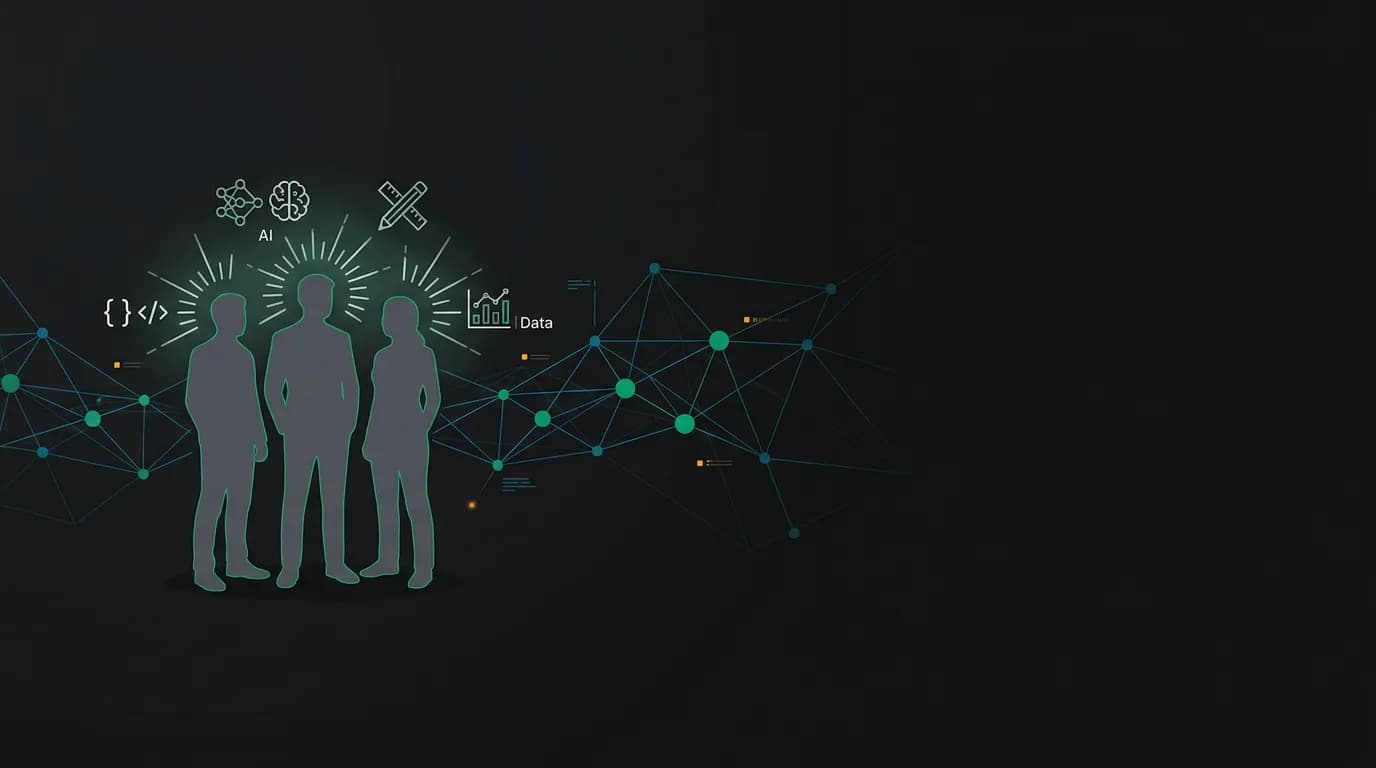
When your product is an AI agent, the team you need looks fundamentally different from a traditional software company. The roles are different. The skills are different. The interview process should be different.
Here is how we think about it.
Generalists over specialists
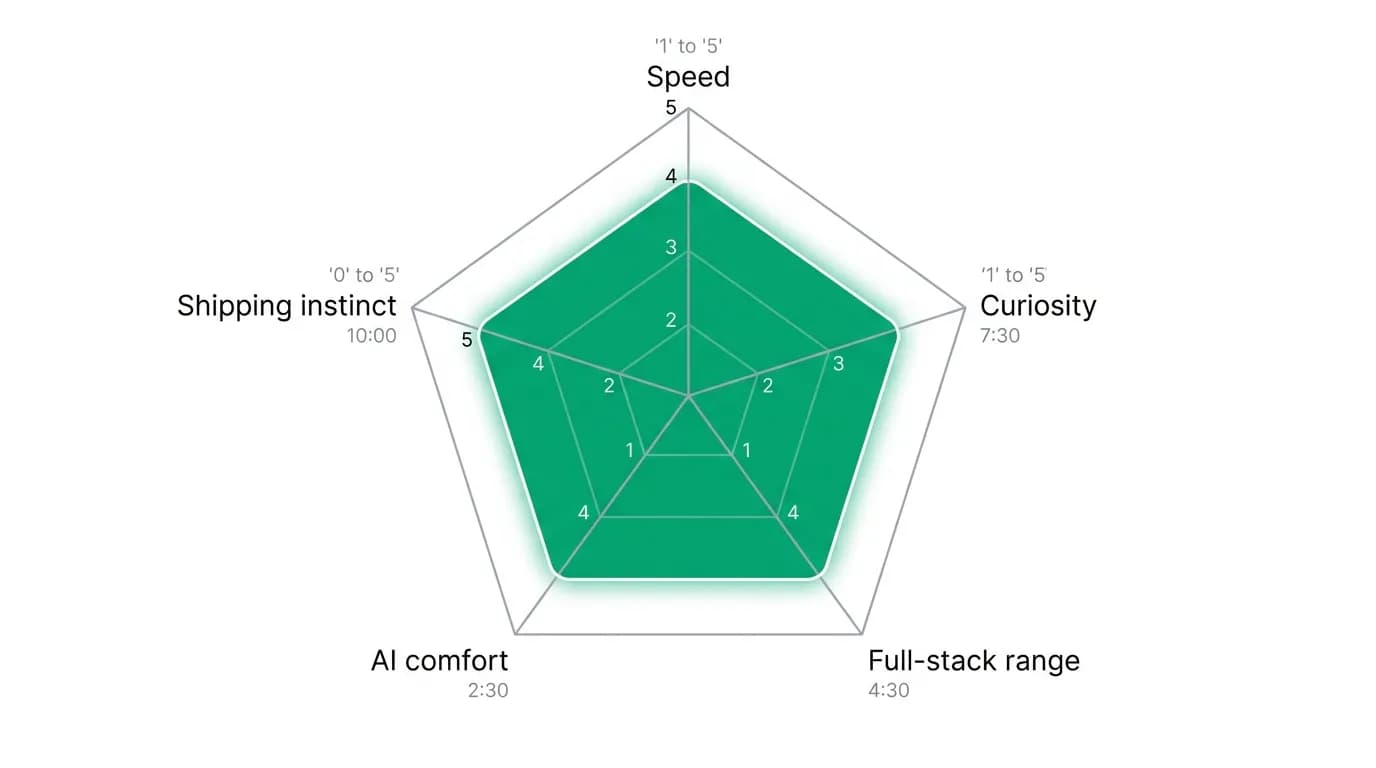
We hire generalists who can build end-to-end. The same person writes the API endpoint, builds the mobile UI, configures the AI agent's tool behavior, and deploys the change. There are no handoffs between frontend, backend, and AI teams because those are not separate teams.
This is a deliberate choice, not a constraint. When one person understands the full system, they make better decisions at every level. The engineer building the booking confirmation screen understands the payment processing pipeline because they also built parts of it. The person optimizing agent response latency understands the frontend streaming implementation because they wrote it.
Full-stack generalists build features faster, with fewer bugs, and with better architectural coherence than teams of specialists passing work across boundaries.
What we look for
Five things matter more than resume credentials.
Speed. Not rushing, but the ability to go from idea to working implementation quickly. In a fast-moving space, the cost of being slow is higher than the cost of being slightly imperfect.
Curiosity. AI capabilities change monthly. The tools change. The best practices change. We need people who are genuinely excited to learn continuously, not people who want to master one thing and stay there.
Full-stack range. Comfortable across the entire stack: frontend, backend, mobile, and AI. Not expert in all of them, but capable of contributing everywhere.
Comfort with ambiguity. AI outputs are non-deterministic. Product requirements evolve weekly. The market is moving fast. We need people who thrive in uncertainty rather than people who need a detailed spec before they start.
Shipping instinct. The bias toward getting something into users' hands and iterating, rather than perfecting in isolation. Good enough today beats perfect next quarter.
How our interview differs
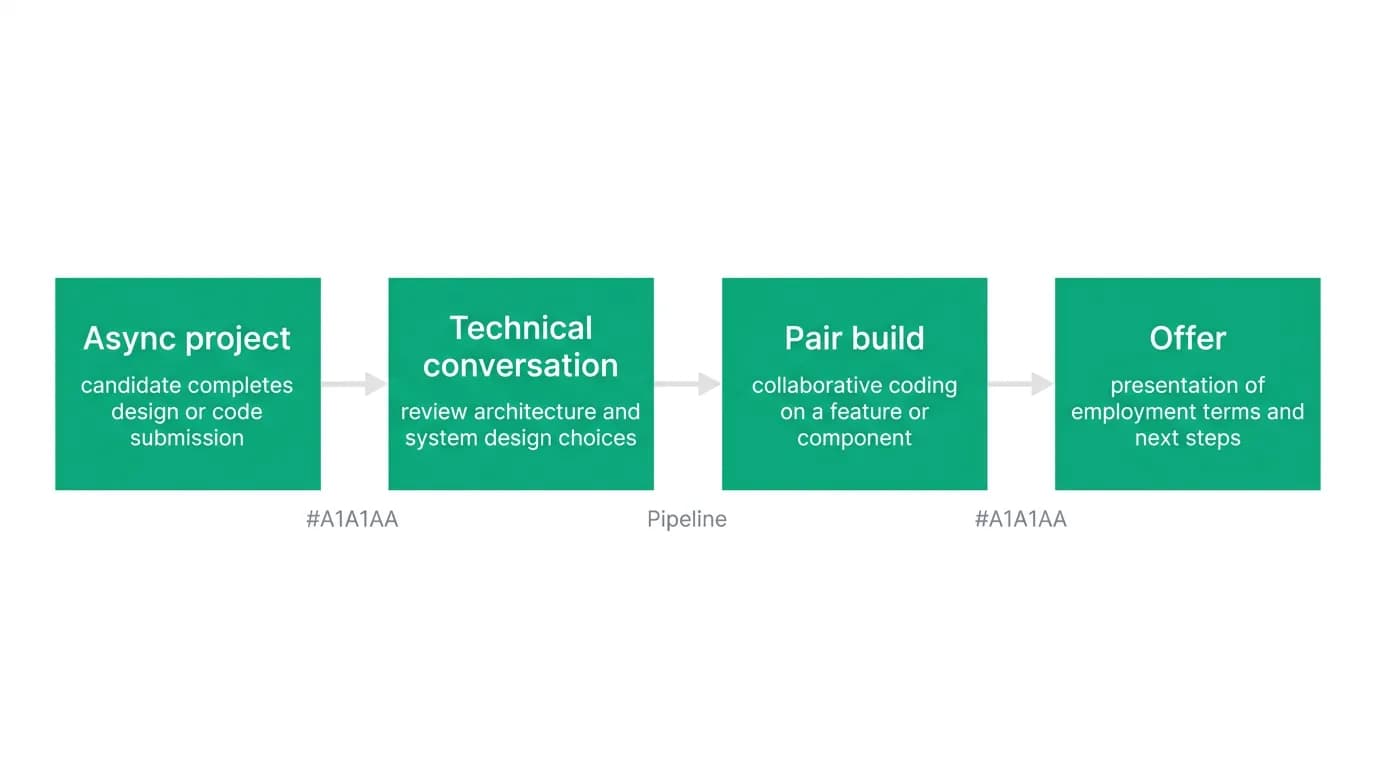
We do not do algorithm trivia. We do not whiteboard sort implementations. We do not ask gotcha questions designed to test memorized knowledge.
Our process has three stages. First, an async project. We give candidates a small, realistic problem related to what we actually build and ask them to solve it on their own time. This shows us how they think, how they code, and how they communicate their decisions.
Second, a technical conversation. Not an interrogation, a conversation about their project, their approach, and the trade-offs they considered. We are looking for clear thinking and honest assessment of their own work.
Third, a pair build session. We work together on a real problem for a couple of hours. This shows us what it is like to collaborate with this person day to day. Do they communicate clearly? Do they ask good questions? Do they ship?
We evaluate building speed and quality, not algorithm trivia. We hire people who build things, not people who study for interviews.
Why small teams need different people
At a large company, you can be a deep specialist in one narrow area and be highly valuable. The organization needs someone who is the world's expert on their specific service.
At a small company, that person is a liability. There are not enough people to cover the full surface area with specialists. Every person needs to be able to pick up whatever needs doing, learn quickly, and contribute.
This means our hiring pool is different. We are not looking for people who spent five years going deep on one technology. We are looking for people who spent five years building complete products across multiple technologies and who adapted as the landscape changed.
The AI era changes what "senior" means
In traditional software, seniority often meant depth: years of experience in a specific technology or domain. In the AI era, seniority increasingly means adaptability: the ability to leverage new tools, learn new paradigms, and build effectively in a landscape that changes monthly.
A "senior" engineer at an AI-first company is someone who can evaluate a new AI model release in the morning, assess its impact on the product by lunch, and ship an improvement by end of day. It is breadth of capability and speed of adaptation, not depth of specialization.
If this resonates with how you work, we would like to hear from you. We are always looking for people who build fast, learn constantly, and care about making travel better.
Nowah is an AI travel agent that searches and books real flights and hotels through conversation — no filters, no thirty open tabs. Plan your next trip.