How We Decide What to Build Next
With infinite things to build and finite time, we need a framework. Here is how we prioritize — balancing user feedback, founder intuition, and long-term vision.
The backlog is infinite. Every user conversation generates ideas. Every competitor move suggests responses. Every AI model update creates new possibilities. If we tried to build everything, we would build nothing well.
Prioritization is the core skill of product development. Here is our framework.
Impact times effort times vision
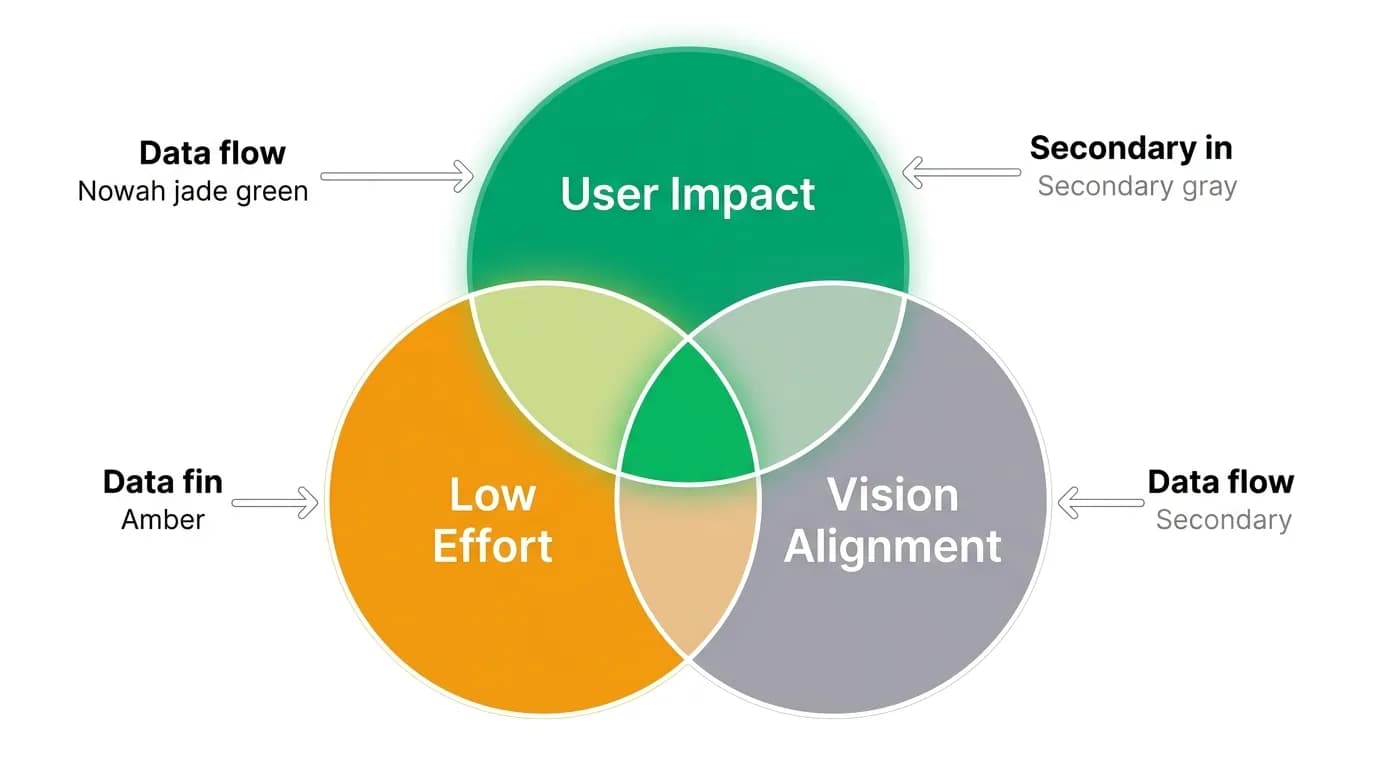
Every potential feature gets scored on three dimensions.
Impact: how significantly will this improve the user experience? Scored one to five, based on the number of users affected and the depth of improvement.
Effort: how much engineering time will it require? Inverted scoring, so low effort gets a high score. This is not about avoiding hard work. It is about recognizing that time is our scarcest resource.
Vision alignment: does this move us toward the long-term product vision? Scored one to three. Features that serve immediate needs but do not advance the broader thesis get a lower multiplier.
The product of these three scores produces a priority ranking. It is not mathematical precision. It is structured thinking that prevents us from building the wrong thing because it felt exciting.
User feedback versus founder intuition
Both matter. Neither is sufficient alone.
User feedback tells you what problems exist today. It is the most reliable signal for immediate pain points. When ten users independently mention the same frustration, that is a clear signal.
Founder intuition tells you what problems will exist tomorrow. It is less reliable but higher leverage. Users did not ask for the conversational interface. They were used to search forms. Founder intuition said the paradigm was wrong. That bet paid off.
The balance: user feedback validates immediate priorities. Founder intuition drives architectural and strategic decisions. When they conflict, we dig deeper rather than defaulting to either one.
Saying no is the real skill
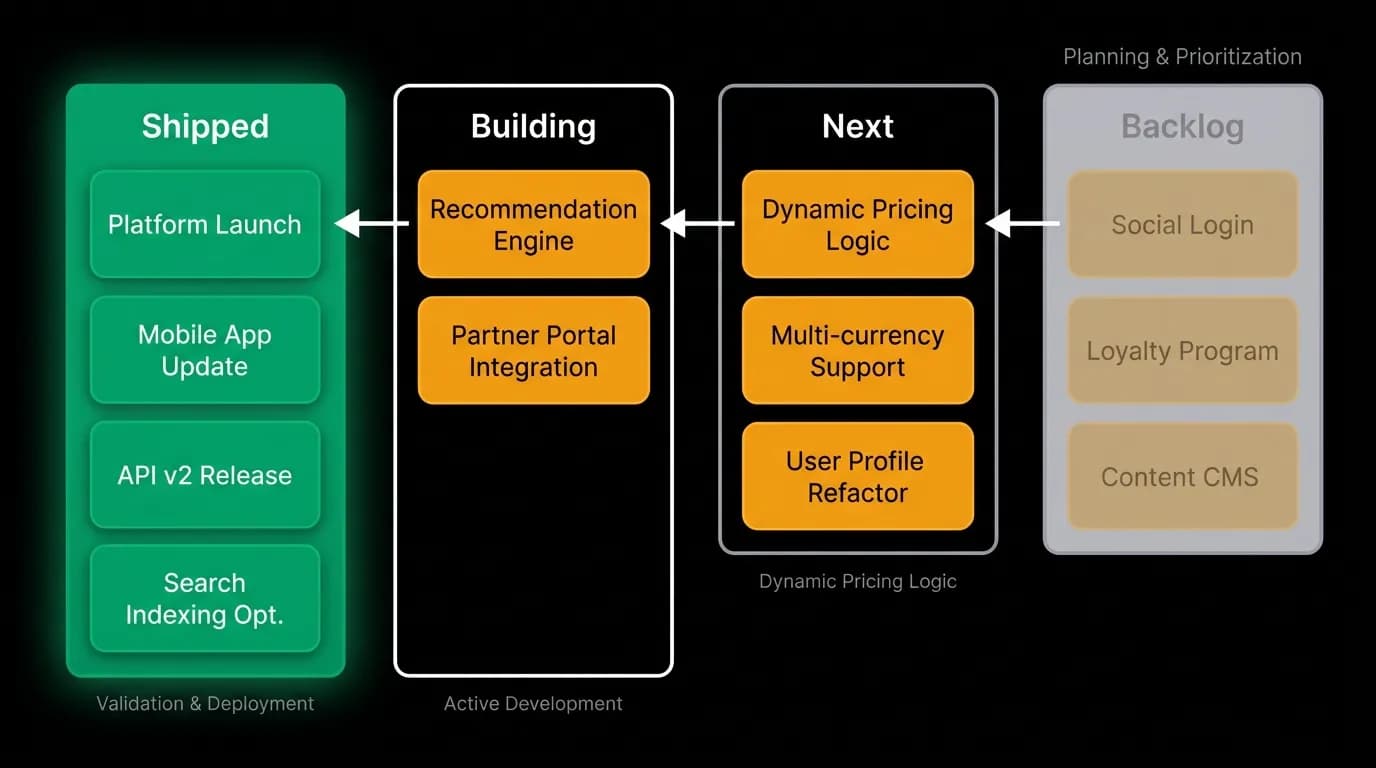
For every feature we build, we say no to four others. Saying no is harder than it sounds because every rejected idea has a champion, a use case, and a plausible argument for why it matters.
We have said no to features that users requested because they did not align with the vision. We have said no to features that aligned with the vision but were too expensive relative to their impact. We have said no to features that were quick wins but would add complexity without proportional value.
Saying no to eighty percent of ideas is the prerequisite for shipping the right twenty percent.
The quarterly cadence
We plan in quarters with monthly check-ins. The quarterly plan sets direction: what themes are we pursuing, what milestones define success, and what are the top three to five priorities.
Monthly check-ins allow course correction. Did user feedback shift priorities? Did a model capability change open new possibilities? Did we ship something that generated unexpected demand for a follow-up feature? The plan flexes.
Feature adoption is measured within the first two weeks of launch. If something ships and nobody uses it, we learn from it and move on rather than investing more in promotion. The data speaks clearly enough if you are willing to listen.
Tell us what matters
What would you want us to build next? We genuinely want to hear from users. Not because we will build everything requested, but because the patterns in those requests are the most valuable input to our prioritization framework.
The best products are built at the intersection of what users need, what the team can build well, and what the vision demands. We are trying to find that intersection every quarter.
Nowah is an AI travel agent that searches and books real flights and hotels through conversation — no filters, no thirty open tabs. Plan your next trip.