From Launch to Lifecycle: Operating an AI Travel Agent After Ship
What happens after launch day. Ongoing monitoring, continuous evaluation, model updates, and the operational cadence of maintaining a live booking agent.

Launch day is the beginning of the work, not the end. This is true for all software, but it is especially true for AI agents. A traditional feature ships and then works the same way until someone changes it. An AI agent ships and then its environment changes around it constantly: flight inventories shift, user expectations evolve, upstream APIs update their behavior, and the language model itself may be updated by the provider.
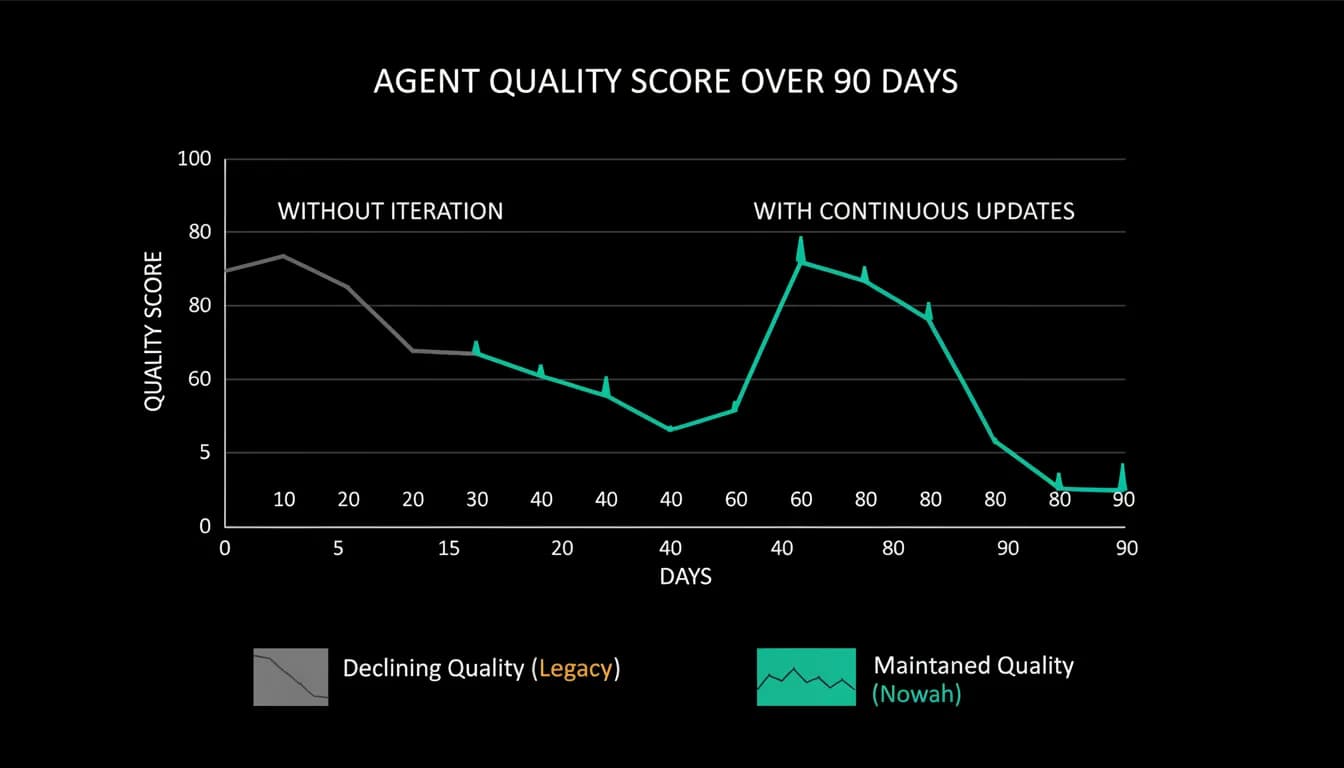
An AI travel agent that was excellent on launch day and receives no attention for 90 days will noticeably degrade. Not because anything broke, but because the world moved and the agent stayed still.
The continuous evaluation loop
On launch day, we confirm the agent passes our evaluation suite at above 95 percent accuracy. On day 30, we run the same evaluation suite plus new test cases generated from production conversations. On day 60, we do it again. And again every month.
This continuous evaluation loop serves two purposes. First, it catches regression. A model provider update might subtly change the agent's behavior. An upstream API might modify its response format. A data source might start returning slightly different results. Each change is small, but they accumulate. Monthly evaluations catch the drift before it becomes visible to travelers.
Second, it expands our evaluation coverage. Every month, we mine production conversations for new scenarios that the original evaluation dataset did not cover. A traveler asked a question we had not tested. An edge case appeared that our test designers did not anticipate. These become new evaluation cases, making the suite more comprehensive over time.
Model update cadence
Language model providers ship updates regularly. Some updates are transparent and backward-compatible. Others subtly change the model's behavior in ways that affect our agent. A model that was excellent at date parsing in version N might handle dates slightly differently in version N+1, and that slight difference cascades through booking flows where date accuracy is critical.
Our model update process runs parallel instances of the current and new model against our evaluation suite. If the new model matches or exceeds the current model's performance across all four dimensions (accuracy, latency, cost, safety), we proceed with migration. If any dimension regresses, we investigate before updating.
We never update the model in production without this comparison step. The urgency to adopt the latest model version is never greater than the risk of degrading the agent's behavior for live travelers.
Memory hygiene
The agent's memory system accumulates data over time. Traveler preferences, past trip history, inferred patterns, explicit statements. This accumulated knowledge is what makes the agent personal and effective, but it also requires maintenance.
Stale preferences need pruning. A traveler who moved from New York to San Francisco six months ago should not keep receiving departure airport suggestions for JFK. A traveler who stated a preference for budget hotels two years ago might have different priorities today. Preferences have a freshness window, and the agent needs to periodically verify older preferences rather than treating them as permanent truth.
Inferred preferences need accuracy audits. The agent infers preferences from behavior, and those inferences can be wrong. Regularly checking the accuracy of inferred preferences against actual booking outcomes tells us whether the inference system is working or accumulating errors.
Deletion requests need immediate processing. When a traveler requests that their data be deleted, every layer of the memory system must comply. The database records, the cross-session memory, the client-side cache. This is not optional and it is not negotiable.
Operational rhythms
We operate the agent on three rhythms.
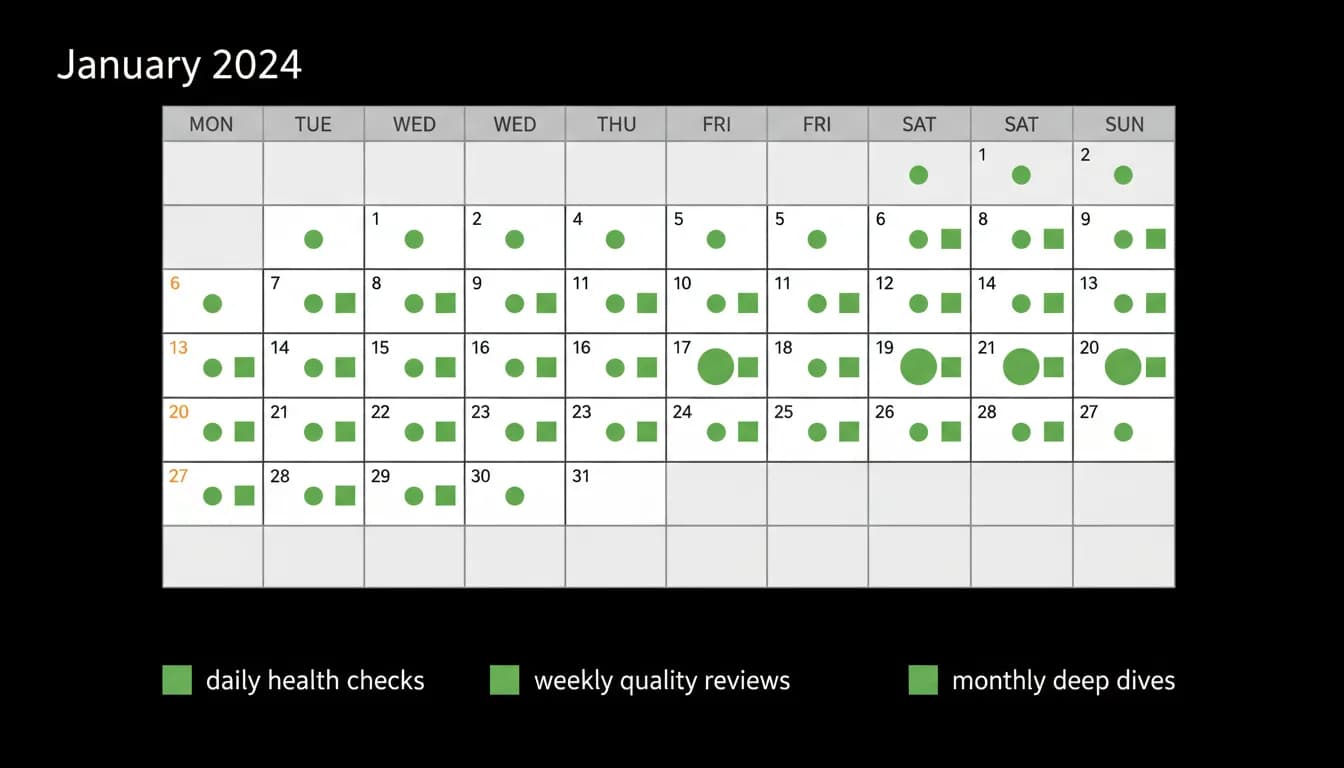
Daily: Automated health checks verify that all components are running. The liveness probe confirms the service is up. The deep health check confirms the database, cache, and memory systems are connected and responsive. Background job queues are checked for backlog.
Weekly: Quality review of a sample of production conversations. The team reads through 50 to 100 conversations, looking for quality issues that automated monitoring might miss. This is where we catch subtle problems: the agent being technically correct but unhelpfully verbose, or finding the right flights but presenting them in a confusing order.
Monthly: Deep metric analysis covering accuracy trends, cost trends, latency distributions, booking completion rates, and traveler satisfaction. This is where we identify long-term patterns and plan improvements. A slow upward drift in conversation length might indicate the agent is becoming less efficient. A gradual decline in first-search relevance might indicate the ranking system needs retraining.
The cost of not iterating
An AI agent that stops improving falls behind. Not because it gets worse, but because traveler expectations get higher. Travelers experience better AI in other products and bring those expectations to every AI interaction. An agent that was impressive in March feels average by June and outdated by September.
We track this through satisfaction trends. If satisfaction is stable while the product is unchanged, that is actually a warning sign. It means we are maintaining the current experience but not advancing it, and eventually the stable satisfaction will start declining as expectations surpass our capabilities.
Continuous improvement is not a luxury for AI products. It is a survival requirement. The launches get the attention, but the ongoing operational discipline is what determines whether the product is still relevant a year from now.
Nowah is an AI travel agent that searches and books real flights and hotels through conversation — no filters, no thirty open tabs. Plan your next trip.