Building Nowah as an Agent Tool Server: Travel Execution for Any Agent
How we exposed Nowah's travel capabilities as an agent tool server — technical decisions, developer experience design, and the multi-agent ecosystem vision.
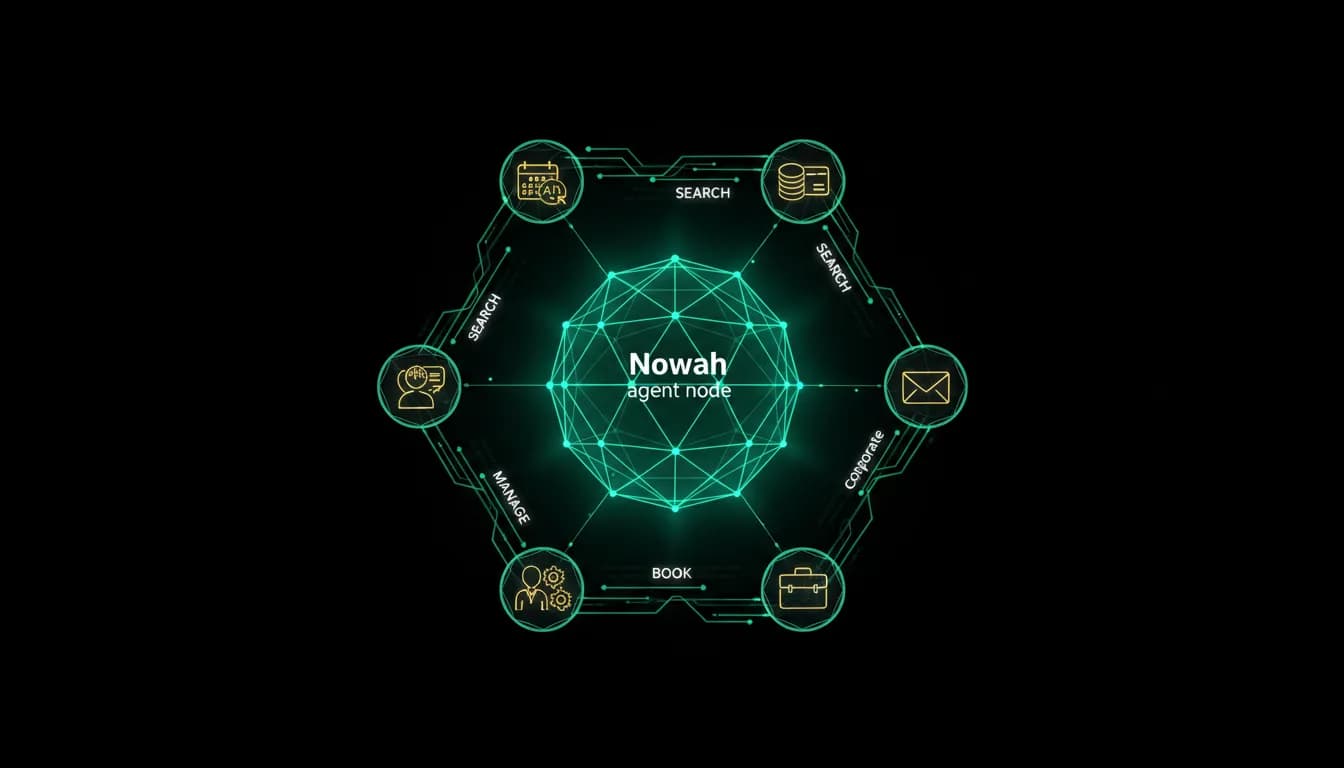
The first time another AI agent booked a flight through Nowah without any human touching our app, it felt like a milestone. A developer had connected their personal AI assistant to our agent tool server, asked it to "book me a flight to Tokyo next week," and the assistant delegated the travel execution to Nowah. Search, comparison, booking confirmation, payment, all handled through the protocol without our chat interface being involved at all.
This is the vision behind our agent tool server launch: Nowah as the travel execution layer in a multi-agent world.
What the agent tool protocol is and why it matters
The an open agent-tool protocol is a standard that allows AI agents to use tools provided by other services. Think of it as a universal adapter for AI capabilities. An agent that understands the agent tool protocol can discover what tools Nowah offers, understand their parameters, and call them programmatically.
This matters for travel because booking travel requires specialized infrastructure that most AI agents do not have. A general-purpose AI assistant can discuss travel destinations eloquently but cannot search live flight inventory, process payments, or manage bookings. the agent tool protocol lets that assistant delegate the specialized work to Nowah while handling the conversation with the user itself.
The result is that Nowah's booking capabilities become available everywhere, not just in our own app. A calendar application that notices a meeting in another city can use Nowah to suggest flights. An expense management tool can use Nowah to check if a booked flight was the cheapest option. A corporate productivity suite can use Nowah to handle travel arrangements alongside task management.
Designing the tool surface
Our agent has a large internal tool surface. Exposing all of them through the agent tool protocol would create an overwhelming and fragile integration surface. External agents do not need the same granularity that our internal reasoning loop uses. They need clean, high-level capabilities: search flights-layer-ai-agent-search-flights), search hotels, create a booking, manage a trip.
We curated the the agent tool protocol surface to expose approximately twenty tools that cover the most common integration patterns. Each tool has clear parameter documentation, structured error responses, and predictable behavior. The internal tools that handle edge cases, error recovery, and state management continue to work behind the scenes but are not exposed directly.
Naming the tools for external consumption required different thinking than naming them for our internal agent. Internally, tools can be finer-grained. Externally, we expose higher-level capabilities because ranking is an implementation detail that external agents should not need to know about or configure.
Authentication for agent-to-agent communication
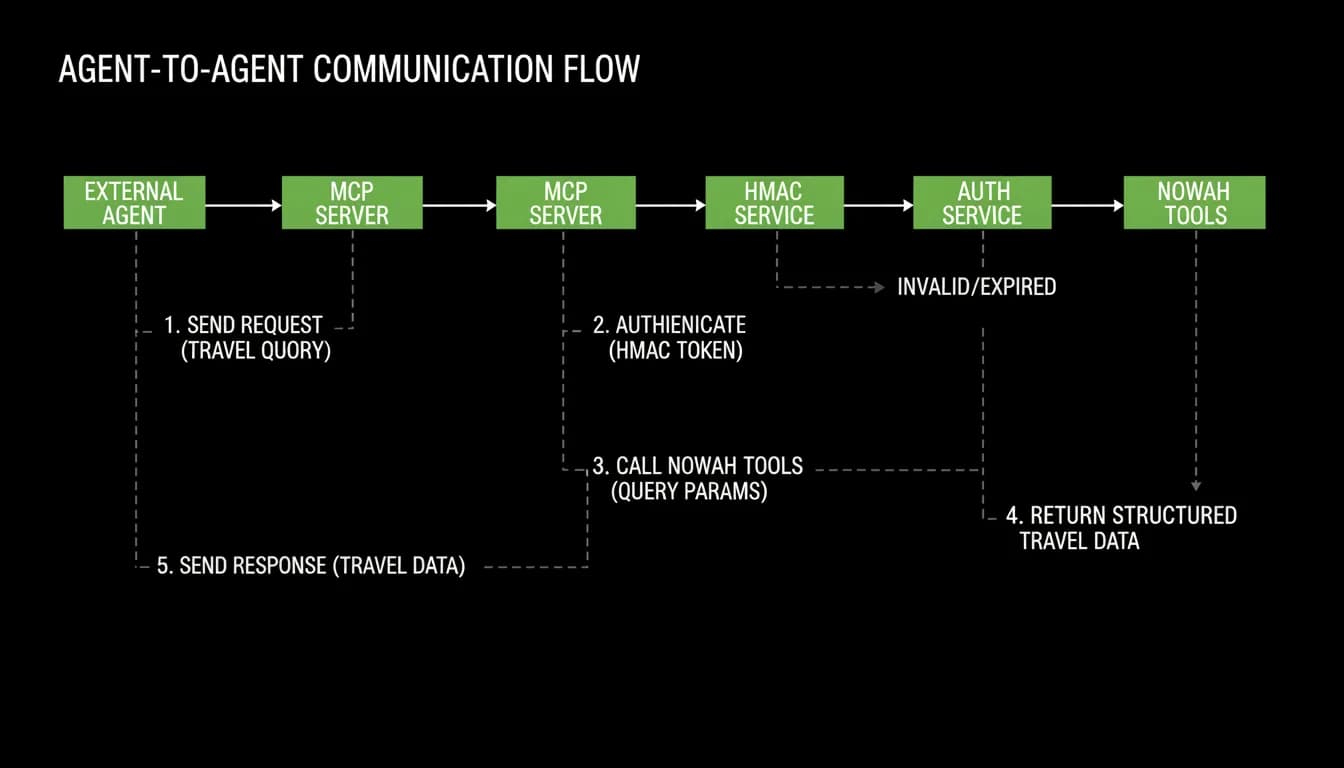
User authentication uses signed session tokens issued after the traveler signs in. Agent-to-agent communication needs a different trust model because there is no human signing in.
We implemented request-signature service-to-service authentication for the agent tool protocol consumers. Each integration partner receives API credentials, and requests are signed with a hash-based message authentication code that verifies both the identity of the caller and the integrity of the request. This is stronger than simple API key authentication because it prevents replay attacks and request tampering.
Our three-layer booking idempotency system protects against duplicate bookings from external agents just as it does for our own interface. This is critical because external agents may retry failed requests more aggressively than our own client, and duplicate bookings must be prevented regardless of the source.
The flywheel
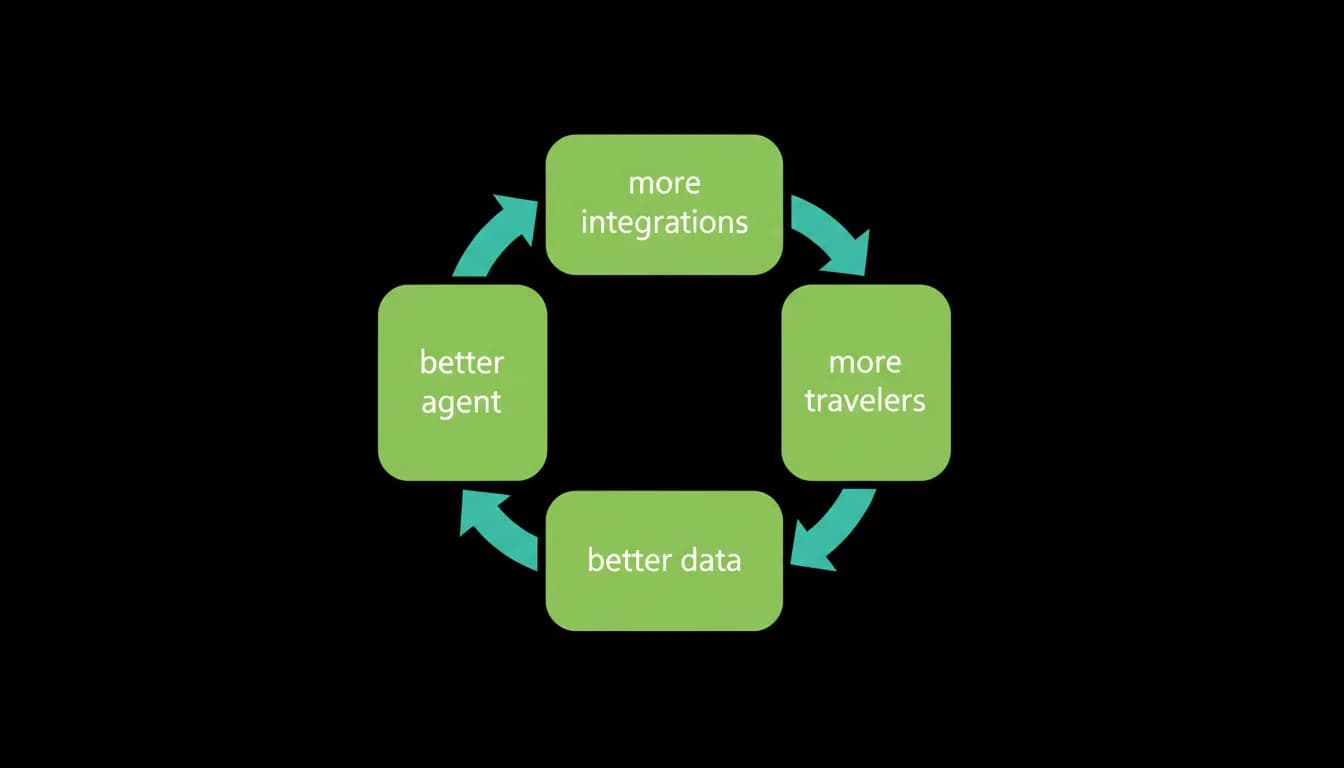
The agent tool server creates a flywheel that benefits every participant. More integrations bring more travelers through Nowah's infrastructure. More travelers generate better data about travel patterns and preferences. Better data improves the agent's recommendations. A better agent attracts more integrations.
No competitor currently offers travel booking as an agent tool server. This positioning matters not because we want to be the only option, but because being first lets us define the standard for how travel capabilities should be exposed to AI agents. The patterns we establish for tool naming, error handling, and booking flows become the expectations that developers bring to any competitor who follows.
We are building toward a world where "book me a flight" is a capability any AI agent can offer, regardless of who built it, because the travel execution happens through standardized protocols connecting specialized services. Nowah's job is to be the best travel execution layer in that ecosystem.
Nowah is an AI travel agent that searches and books real flights and hotels through conversation — no filters, no thirty open tabs. Plan your next trip.