The Long-Haul Flight Data Guide
Best airlines by route, optimal layover strategies, seat selection data, and the price premium of direct vs. one-stop on 8+ hour flights decoded.
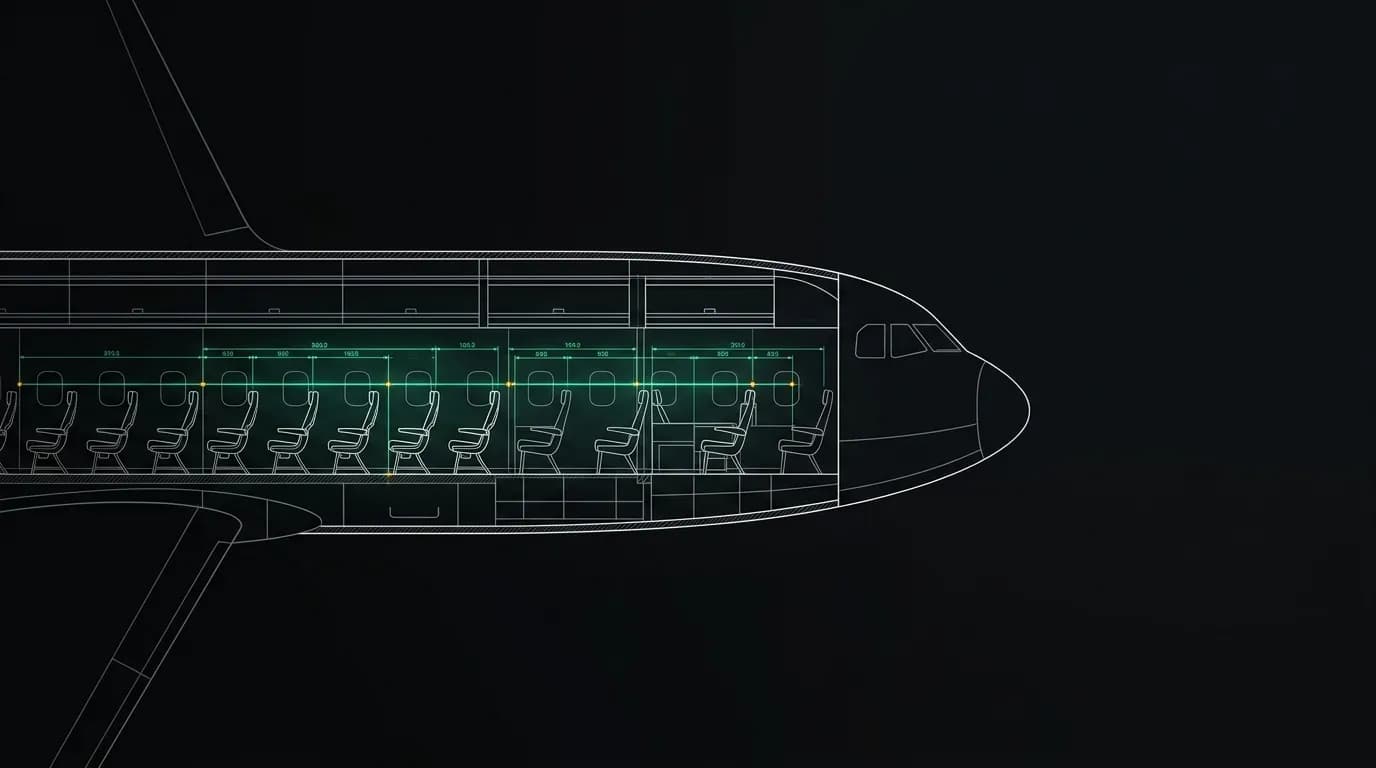
Eight hours in a middle seat in basic economy is a fundamentally different product than eight hours in a window seat with 36 inches of legroom. Same origin, same destination, same arrival time. Completely different experience. On short flights, the difference between a good seat and a bad seat is a minor inconvenience. On long-haul flights, it is the difference between arriving rested and arriving wrecked.
Long-haul flights amplify everything — comfort differences, service quality gaps, and the tradeoffs between price, time, and experience. The data on how to optimize these flights is more nuanced and more impactful than for any other type of air travel.
Airline quality variation by route
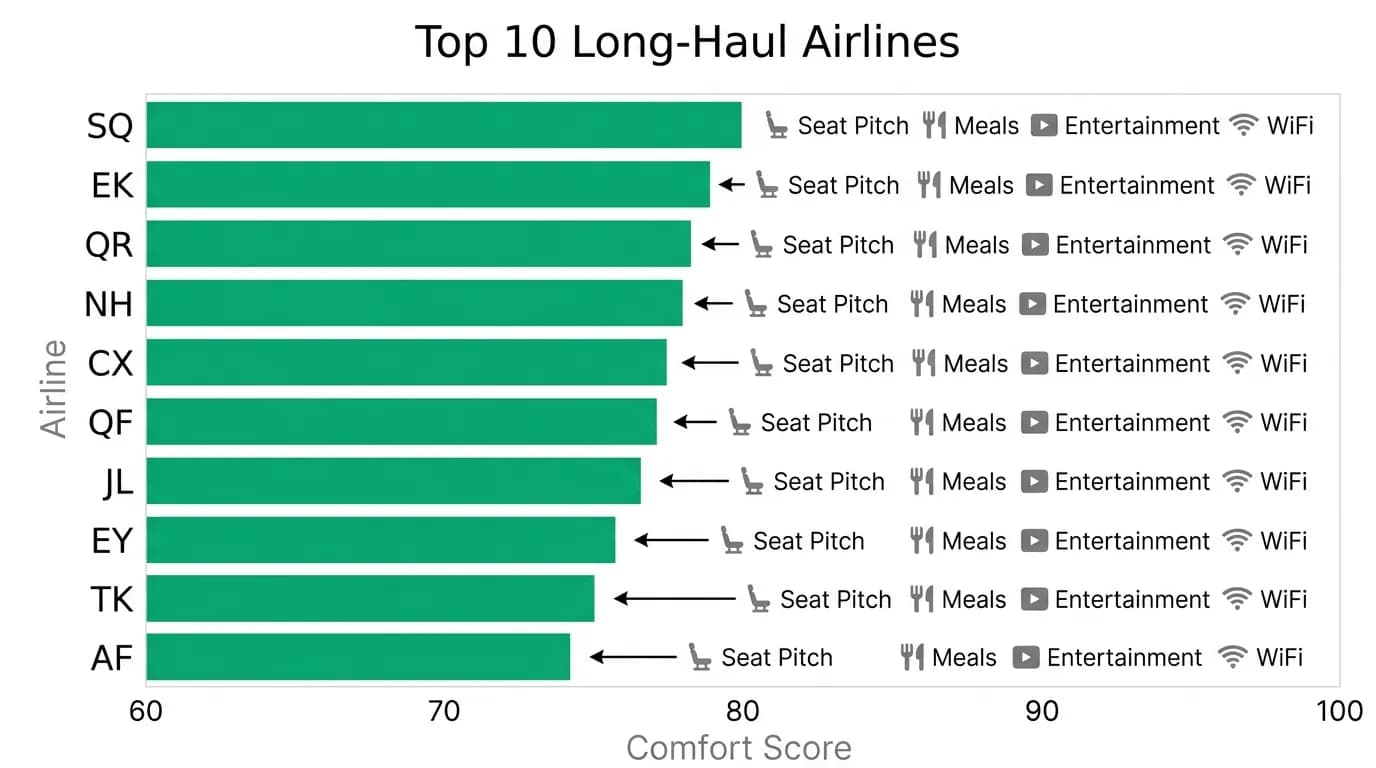
Not all airlines perform equally on all routes, and the variation on long-haul routes is wider than most travelers realize. An airline that delivers an excellent product on transatlantic routes might offer a mediocre experience on transpacific ones, because different routes use different aircraft, different crew bases, and different catering operations.
The data shows that airline quality perception on long-haul routes is most strongly influenced by seat comfort (pitch and width), meal quality, entertainment systems, and service consistency. These factors vary not just by airline but by specific route, because airlines deploy different aircraft types on different routes and sometimes operate different service standards on high-revenue routes versus lower-priority ones.
For transatlantic routes (US to Europe), carrier competition is intense and product quality has been converging upward. Most major airlines offer comparable experiences in economy, with differentiation appearing primarily in premium economy and above.
For transpacific routes (US to Asia), product differentiation is wider. Some carriers offer noticeably better economy experiences — more legroom, better meals, newer entertainment systems — while others lag. The route length (often 12 to 16 hours) makes these differences more impactful than on shorter long-haul segments.
Seat selection data
Seat pitch — the distance between your seat and the seat in front of you — ranges from 28 to 34 inches in economy across major carriers. That six-inch range sounds small, but the difference between 28 inches (knees touching the seat back) and 34 inches (enough room to cross your legs) is transformative on a 10-hour flight.
Seat width ranges from roughly 17 to 18.5 inches in economy, depending on the aircraft type and configuration. Wide-body aircraft configured with nine seats across in economy (common on Boeing 777s) produce narrower seats than the same aircraft configured with eight across. The airline's density choice directly affects your comfort, and it is not visible in the ticket price.
The AI factors seat dimensions into its comfort scoring, weighted proportionally to flight duration. On a two-hour flight, the difference between 30-inch and 34-inch pitch barely registers. On a 12-hour flight, it is a primary comfort determinant.
Layover strategy for long-haul
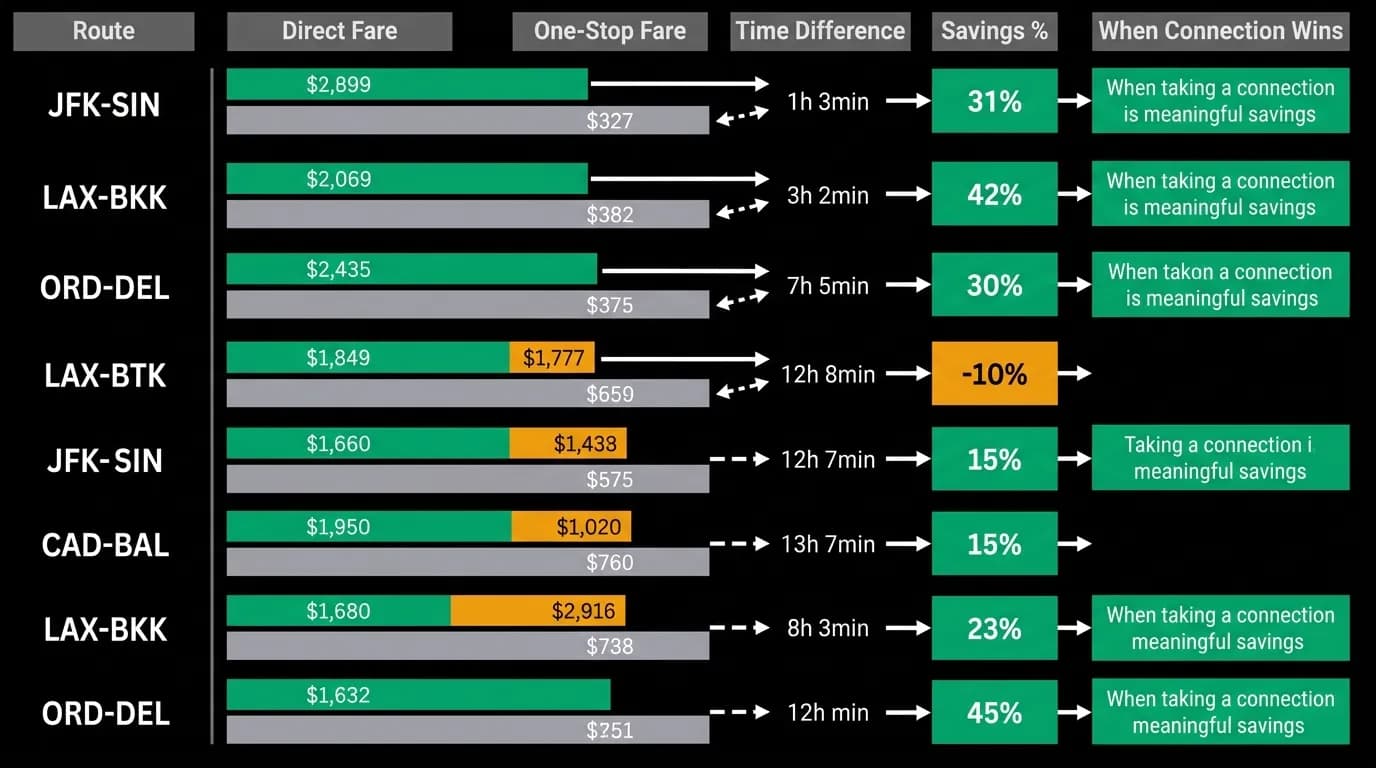
The direct-vs-connecting decision is highest-stakes on long-haul routes. Direct flight premiums on popular long-haul routes average 20 to 40% over one-stop alternatives. Whether that premium is worth it depends on the layover.
A four-hour layover in a well-equipped airport with lounge access can be a pleasant break in a long journey. The same four hours in a cramped terminal with no amenities is just dead time. Layover airport quality matters more on long-haul routes because the total journey time is already substantial, and the marginal hours matter less proportionally — but the comfort of those hours matters more because you are already fatigued.
Some layover airports are destinations in their own right. A long connection through certain Middle Eastern or Asian hubs can be genuinely enjoyable if you have lounge access or enough time to explore the airport's amenities. The AI scores layover quality and factors it into the connection recommendation, so a connecting flight through a high-quality hub might rank above one through a low-quality hub even at the same price and similar total time.
Direct vs. one-stop price premiums
On major long-haul routes, direct flights command a consistent premium. The size of the premium varies by route and season, but 20 to 40% is typical. On some routes where direct service is limited to one or two carriers, the premium can exceed 50%.
The value calculation for this premium depends on how you value your time and comfort. A connecting flight that adds four hours of travel and a terminal change saves $300. Is that worth it? For a budget traveler on vacation, probably yes. For a business traveler who needs to arrive fresh for a meeting, probably not. For a family with young children, the direct flight's simplicity has value beyond the time savings.
The AI weighs comfort scoring more heavily on long-haul routes specifically because the duration amplifies comfort differences. A slightly less comfortable seat on a one-hour flight is forgettable. The same seat on a 14-hour flight is a physical endurance test.
Search your long-haul route on Nowah for comfort-optimized recommendations. The AI weighs seat quality, layover experience, and total journey time alongside price to find the option that matches how you actually want to travel.
Nowah is an AI travel agent that searches and books real flights and hotels through conversation — no filters, no thirty open tabs. Plan your next trip.