What a Worst Week Looks Like When You Build AI Travel
How multi-failure weeks hit AI travel products — stale prices, job backlog, streaming edge cases — and the playbook we keep ready.

Every startup eventually gets a week where independent failures stack. For AI travel, the usual trio is stale provider data, background job backlog, and conversation-state edge cases under load.
We keep a playbook for that week *before* public traffic arrives. Here is the catalog and what we change when it hits during build and private testing.
The convergence
It started with a data provider issue that intermittently returned stale pricing. Before we had fully diagnosed that, a background job queue backed up, delaying booking confirmation emails. While debugging both, we discovered an edge case in our streaming architecture that caused conversation state to be lost under specific conditions.
Three independent issues. Same week. Each one would have been manageable alone. Together, they created a cascade that tested every system and every person.
Triage under pressure
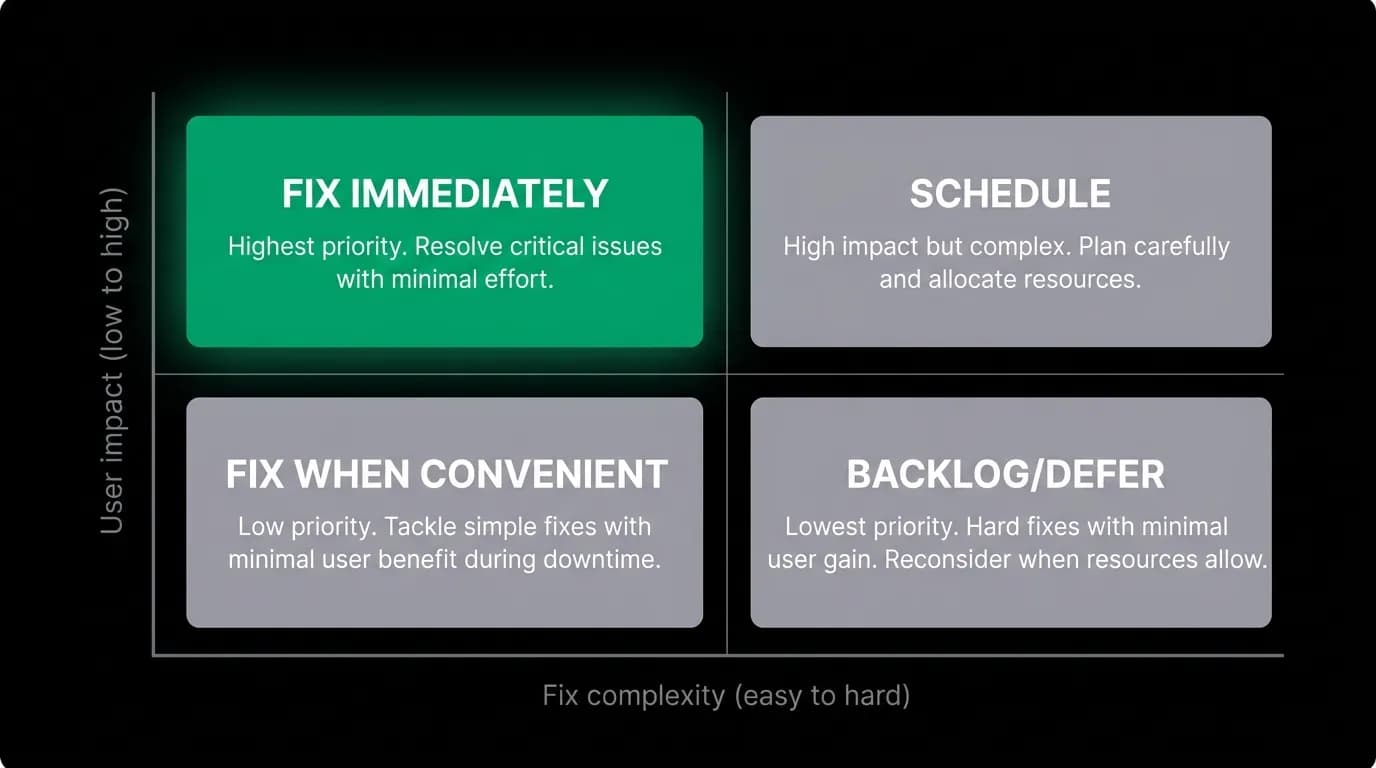
When everything is on fire, the hardest decision is what to fix first. We developed a triage framework on the fly that we have since formalized.
User impact severity: how many users are affected and how badly? The stale pricing issue affected searches. The email delay affected booked users. The streaming bug affected active conversations.
Blast radius: is the issue getting worse or is it contained? The queue backup was growing. The pricing issue was intermittent. The streaming bug was static.
Fix complexity: how long to resolve? The email backlog could be flushed quickly. The pricing issue required investigation. The streaming fix required a code change.
We prioritized: flush the email queue first (fast fix, high user impact), then investigate the pricing issue (growing blast radius), then fix the streaming bug (contained, fewer users affected).
The team response
What I remember most about that week is not the technical problems. It is how the team responded. Nobody panicked. Nobody blamed. People picked up problems that were not in their area because everything needed attention and nobody had time for jurisdictional boundaries.
This is the kind of response you cannot rehearse. It comes from a team culture that treats problems as shared challenges, not individual failures. The worst week tested that culture and it held.
What we changed
The worst week produced three permanent improvements.
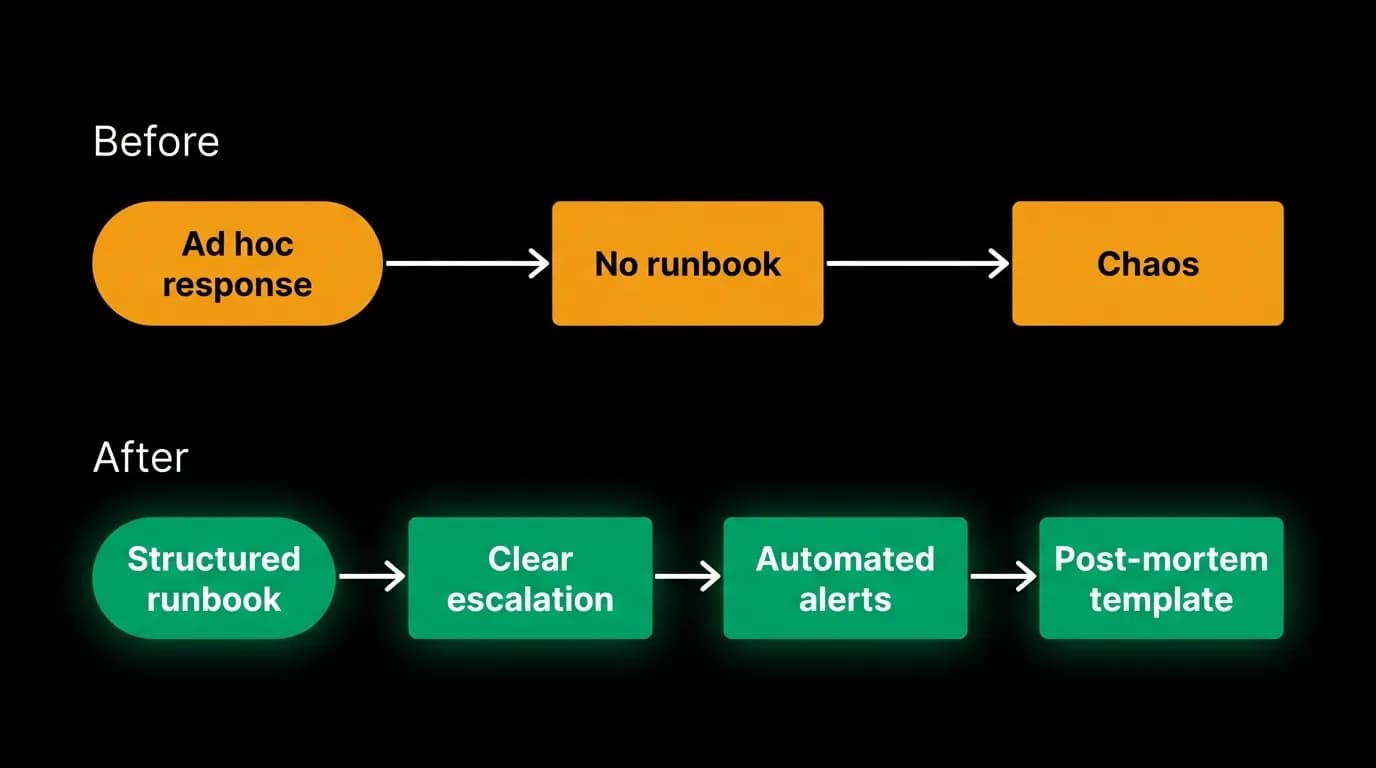
Monitoring dashboards. We built real-time dashboards that would have alerted us to the pricing issue and queue backup hours earlier. Detection speed is the single biggest lever in incident response.
Incident runbooks. We documented response procedures for each category of failure. When the next crisis hits, there is a starting point instead of a blank page.
Automated alerts. Thresholds for job queue depth, data freshness, and streaming health now trigger alerts before issues become visible to users.
Background job workers were reconfigured with more robust retry logic and dead-letter queues for failed jobs. The streaming architecture was hardened against the specific state-loss condition.
We also formalized post-incident reviews for every significant failure. The review is not about blame. It is about extracting the maximum learning from each incident and converting it into systemic improvement.
Why bad weeks matter
Bad weeks compress years of learning into days. You learn more about your systems, your team, and yourself under pressure than you do during months of smooth operation.
The systems are now substantially more resilient. The monitoring is better. The response is faster. None of that would exist without the worst week forcing us to confront every weakness at once.
Build your resilience before you need it. Set up monitoring. Write runbooks. Formalize post-incident reviews. The worst week is coming for every startup. The question is whether you will be ready.
Nowah is an AI travel agent that searches and books real flights and hotels through conversation — no filters, no thirty open tabs. Plan your next trip.