Why Your Flight Price Changed in 10 Minutes
The fare you saw at 2 PM might vanish by 2:10 PM. Understand fare buckets, inventory depletion, and how the AI handles pricing volatility.

You found a great fare. $487 non-stop from Chicago to Lisbon. You opened a new tab to check the hotel situation. You came back three minutes later. The flight is now $539. You did nothing wrong. Nobody is punishing you for shopping around. But the price moved, and it is not coming back.
This is one of the most frustrating experiences in travel booking, and it happens because of a pricing mechanism that most travelers have never heard of. Let me explain it.
Fare class buckets: the invisible inventory system
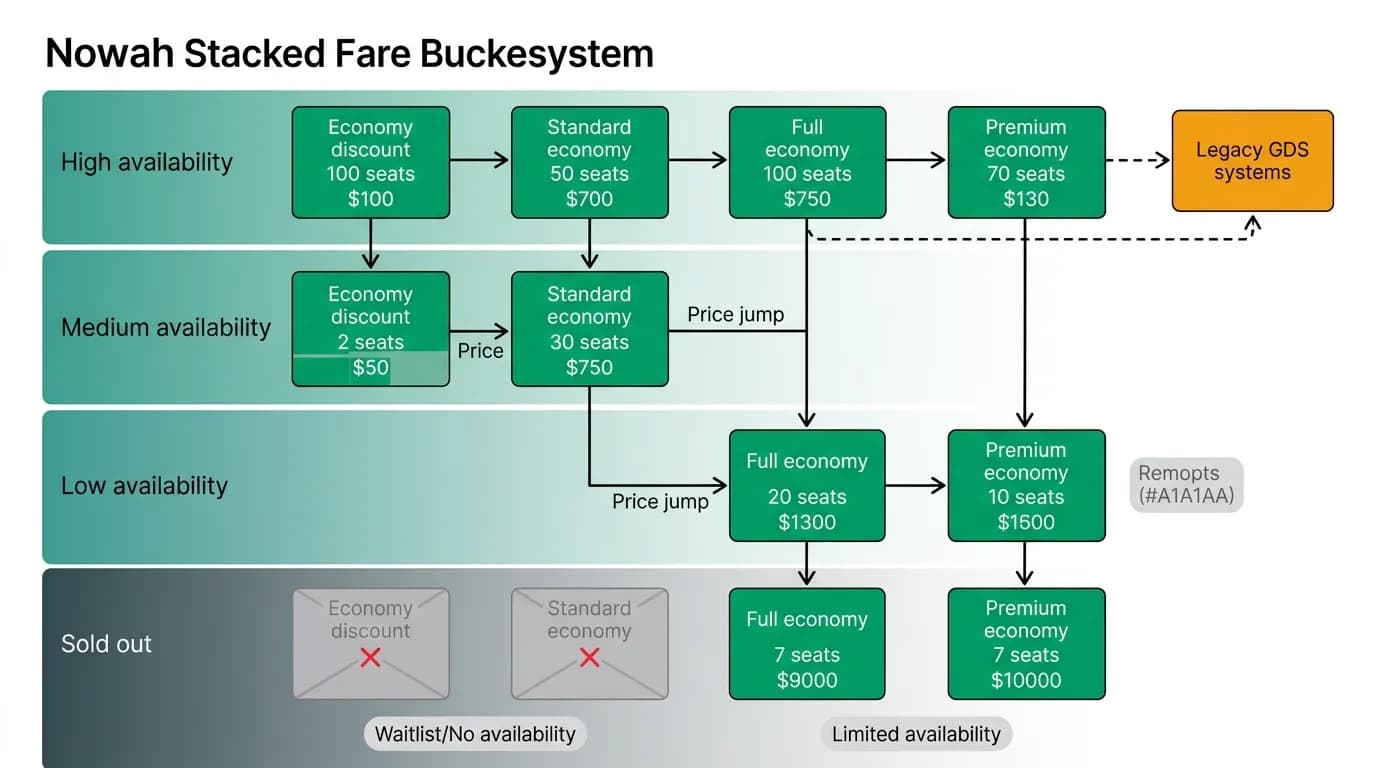
Airlines do not set one price per seat. They manage 12-26 fare classes per route, each represented by a letter and each containing a limited number of seats at a specific price. The cheapest bucket might have 5 seats. The next one up has 8. The next has 12. And so on up to the most expensive last-minute fare class.
When those 5 seats in the cheapest bucket sell out, the price jumps to the next bucket. This can happen in minutes if multiple people are booking the same route simultaneously. One person buying the last seat in a cheap bucket triggers a price increase for every subsequent buyer.
This is not dynamic pricing in the sense that the airline is watching you specifically. It is inventory depletion. A finite number of seats at each price point means that every booking changes the price landscape for everyone else.
When one seat sells, the next one costs more
Fare bucket depletion can change prices by 10-30% in a matter of minutes. That is not a small swing. On a $500 fare, a single bucket jump means $50-150 more.
The volatility is highest on competitive routes because more people are searching and booking simultaneously. It is also highest close to departure because the remaining cheap buckets are small and deplete quickly.
Industry research often finds that unexpected price changes are a top reason travelers abandon bookings. I think this stat partly reflects fare bucket jumps that happen while people are comparison shopping. You see a price, go compare it elsewhere, come back, and the price has moved. That is not the airline being deceptive. It is the inventory system doing what it does.
Competitive repricing
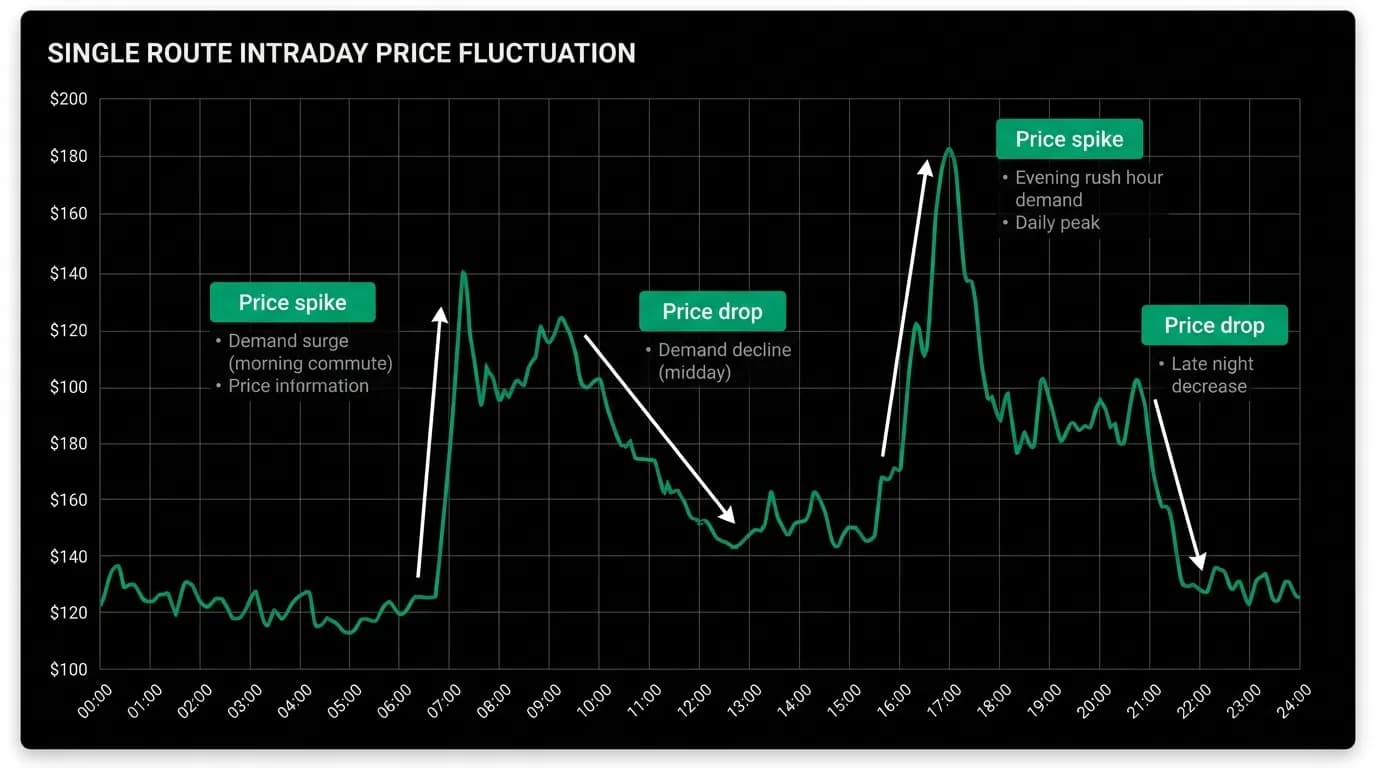
On top of fare bucket mechanics, airlines monitor each other's pricing in near-real-time and adjust accordingly. If a competitor drops their fare on a shared route, the airline's pricing system might respond by opening a cheaper fare bucket to match. If a competitor raises prices (or if their cheap inventory sells out), the airline might close their cheap buckets earlier.
This creates a dynamic where prices on a given route can ripple across carriers within hours. A surge of bookings on one airline can push prices up across all airlines on that route because the competitive response algorithms read the demand signal and adjust.
Airlines adjust prices 3-5 times daily on competitive routes. On some routes during peak booking periods, the frequency is even higher.
How the AI handles this
The AI handles pricing volatility in two ways. First, it checks prices in real time when you search. The fare you see in Nowah is the fare available right now, not a cached price from an hour ago. Stale data is expensive because it leads to the "price changed" frustration at checkout.
Second, the AI contextualizes the current price against historical patterns. Even if a fare jumped $50 in the last hour, the AI can tell you whether the new price is still below the historical median. "This fare just moved up a bucket, but it is still in the bottom 30th percentile for this route" is a lot more useful than just seeing a higher number.
The practical advice is simple: when you see a good fare, book it. The AI gives you the context to know whether it is actually good. Once you have that confidence, acting quickly is the best strategy because fare buckets do not wait.
Book confidently on Nowah knowing prices are checked live and contextualized against historical data.
Nowah is an AI travel agent that searches and books real flights and hotels through conversation — no filters, no thirty open tabs. Plan your next trip.