AI Trip Planning: How to Plan a Perfect Trip in One Conversation
Describe your ideal trip, refine with follow-ups, and go from vision to fully booked itinerary in a single AI conversation. Here is the complete guide.
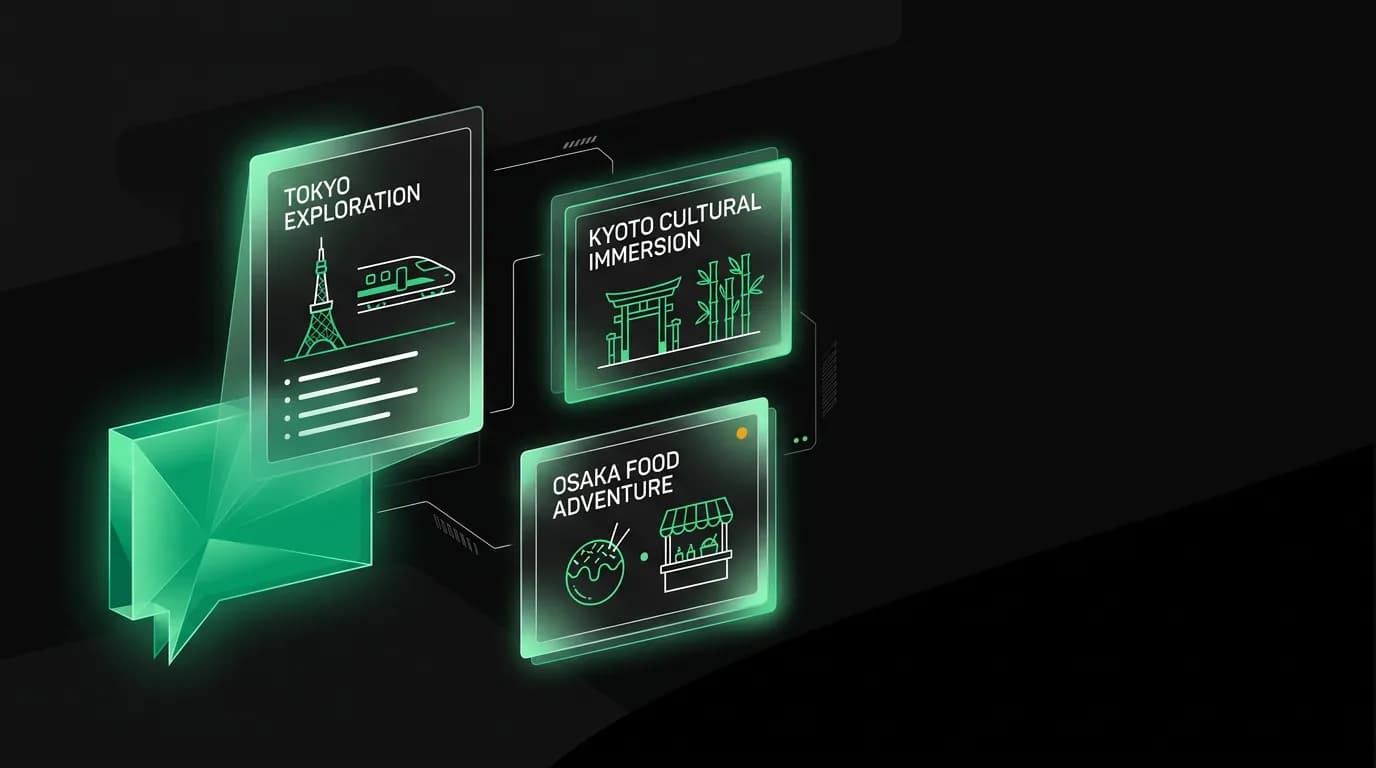
"Two weeks in Japan, starting in Tokyo, ending in Osaka, with a few days in Kyoto."
That single message contains enough information for an AI agent to build a complete itinerary — flights, hotels, intercity transport, and day-by-day suggestions. Not a vague outline. A bookable plan.
The average traveler spends 4.4 hours researching a week-long trip across multiple tools: flight search on one platform, hotels on another, activities on a third, forums and blogs for recommendations, and a spreadsheet or notes app to hold it all together. AI trip planning collapses this multi-tool, multi-session process into one conversation that takes 5 to 10 minutes.
How to describe your ideal trip
The most effective way to plan a trip with an AI agent is to describe the experience you want, not the logistics you need. The agent handles the logistics. You provide the vision.
Good: "Two weeks in Japan in April."
Better: "Two weeks in Japan starting mid-April. We love local food, prefer public transit over taxis, want to avoid tourist traps, and have a budget of about $5,000 for two people including flights."
The second version gives the agent constraints to work with: timing, interests, travel style, budget, and group size. But even the first version is enough to start. The agent will ask focused follow-up questions to fill in what it needs.
Elements that help the most: destination or destination type ("somewhere warm in March"), duration, budget, travel style (luxury, budget, adventure, relaxation), interests (food, history, nature, nightlife), any constraints (kids' ages, accessibility needs, dietary restrictions), and who you are traveling with.
The refinement loop
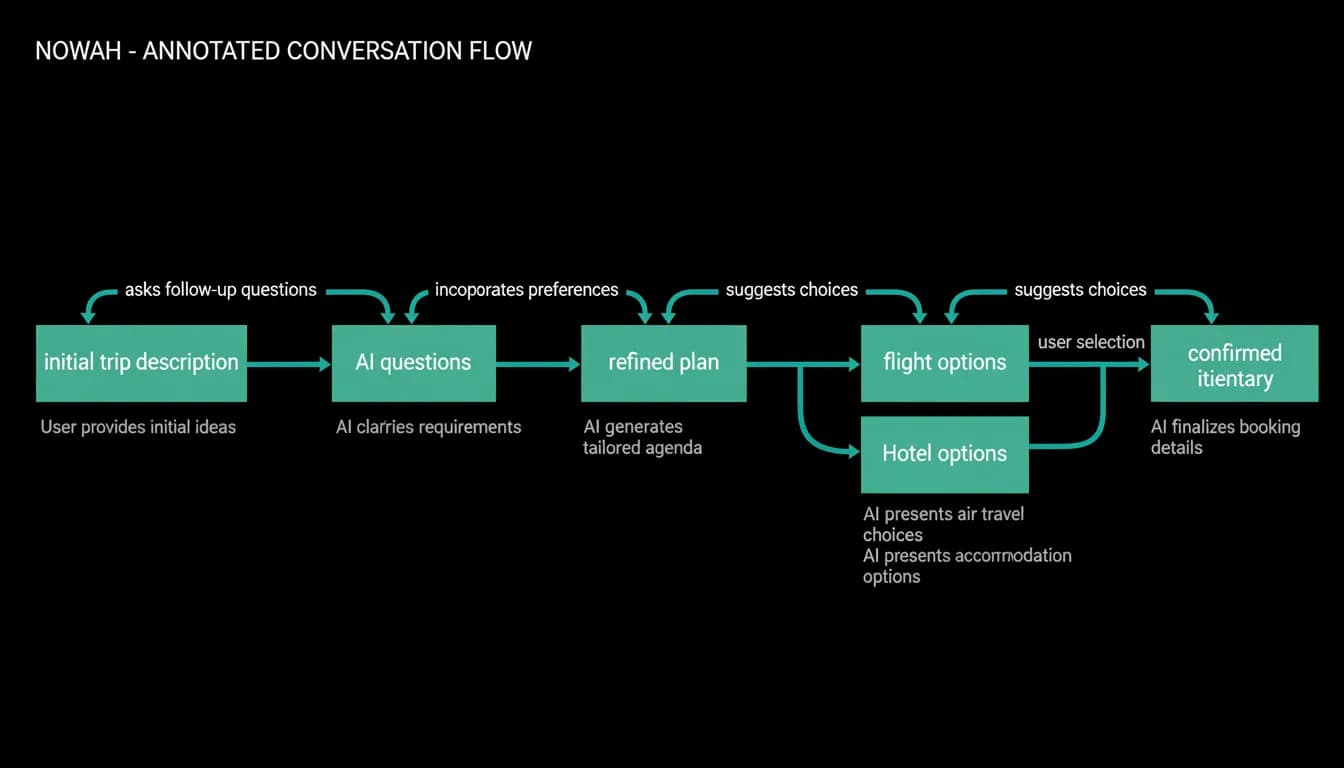
AI trip planning is not a single-shot process. It is a conversation with iterative refinement that narrows from general to specific.
Turn 1: You describe the trip. The agent builds a draft itinerary.
Turn 2: You react. "Can we spend more time in Kyoto and less in Tokyo? Also, we want to see Mount Fuji." The agent adjusts without starting over.
Turn 3: You refine further. "The hotel in Kyoto looks too touristy — can you find something more local?" The agent swaps the accommodation.
On average, 2 to 3 follow-up messages are enough to finalize a plan. The conversation takes 5 to 10 minutes total. Compare this to the 4.4 hours of multi-platform research the average traveler spends, spread over days or weeks.
The key advantage of conversation over search is that context accumulates. When you say "more time in Kyoto," the agent already knows your budget, your travel dates, your hotel preferences, and your dietary needs. It adjusts the Kyoto portion while maintaining all the other constraints. On traditional platforms, every change is a new search that ignores everything else.
Multi-component planning
A trip is not a flight. A trip is not a hotel. A trip is a coordinated set of components that need to work together.
AI agents plan across components simultaneously. Flights are selected to arrive at times that work for hotel check-in. Hotels are positioned relative to activities and restaurants. Day plans account for travel time between locations. Budget is distributed across all components rather than optimized for one at the expense of others.
This coordination is the single biggest advantage of AI trip planning over the traditional approach, where each component is planned in isolation. You book the cheapest flight without considering that the 11 PM arrival means an expensive late-night taxi and a wasted hotel night. You pick a hotel based on price without realizing it is 45 minutes from everything on your itinerary. AI agents see the whole picture and optimize accordingly.
Budget management
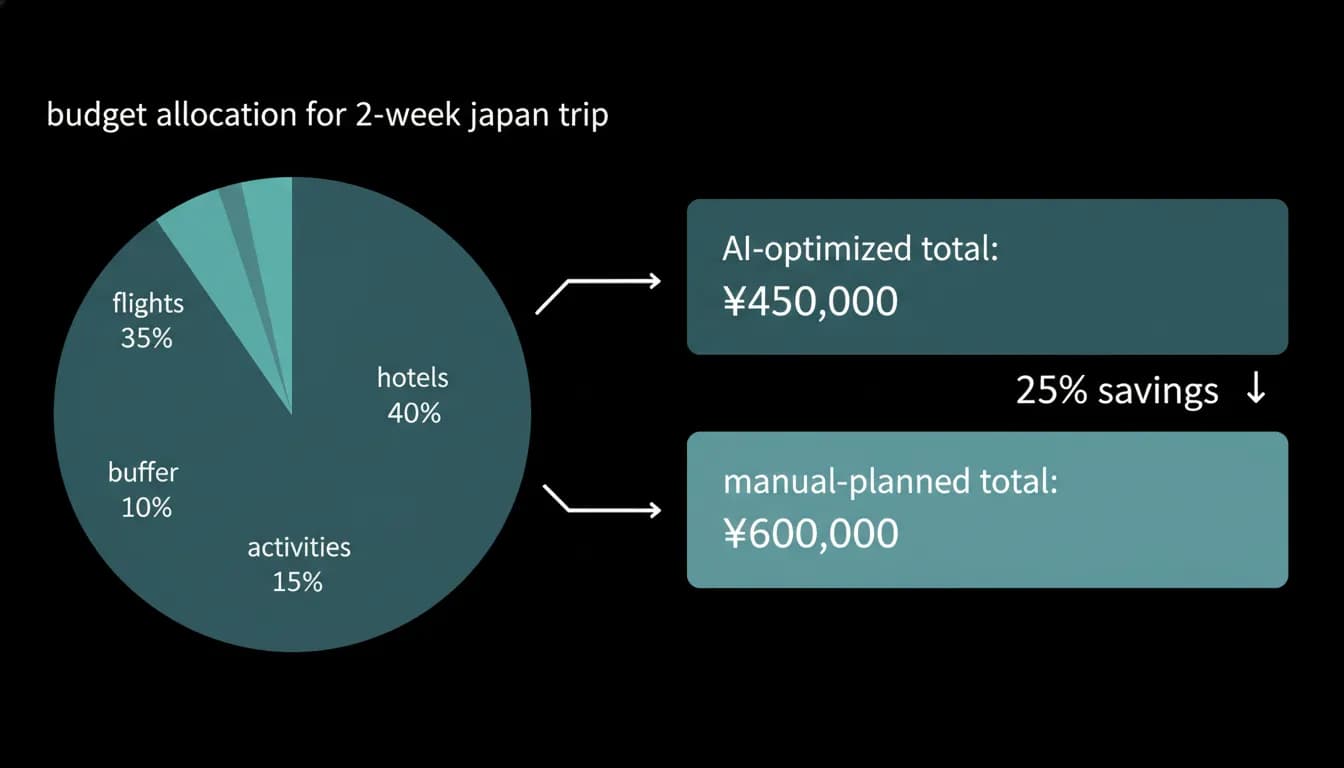
One of the most powerful and underutilized features of AI trip planning is intelligent budget distribution.
When you say "budget around $5,000 for two people," the agent does not just look for the cheapest flight and cheapest hotel within that total. It distributes the budget optimally across components.
Flights might take 35 percent, hotels 40 percent, activities and dining 15 percent, and a buffer of 10 percent for unexpected expenses. But these ratios adjust based on what the agent knows about you. If you care deeply about food experiences, the dining allocation increases at the expense of a slightly less expensive hotel. If you prioritize comfortable flights because it is a long-haul route, the flight allocation increases.
This budget intelligence reduces total trip overspending by 15 to 25 percent compared to booking each component separately, because the agent makes trade-offs across components that isolated searches cannot.
From plan to booked
The plan is the starting point, not the end product. Once you approve the itinerary, the agent books everything in sequence — flights first (prices change fastest), then hotels, then any other reservations.
You review each booking before it is confirmed. The agent presents the option, the price, the key details, and a confirmation prompt. Payment processes through your saved payment method. Confirmations arrive in the conversation and are organized into your trip itinerary.
The entire process, from first message to fully booked trip, can happen in a single session. No tab-switching. No copying itinerary details between apps. No manual calendar entry. The trip goes from idea to reality in one place.
Template messages for five common trip types
If you want to try AI trip planning, here are starting messages for five common trip types:
Beach vacation: "We want a week at a warm beach destination in June, somewhere with good snorkeling and relaxed vibe, around $3,000 for two people including flights."
City break: "Long weekend in a European city in September, great food and architecture, walkable, around $1,500 per person."
Family trip: "10 days with two kids (ages 5 and 8) somewhere in Europe this summer, kid-friendly activities, easy transit, budget $6,000 total."
Adventure trip: "Two weeks of hiking and outdoor activities in South America, moderate difficulty, mixed camping and hotels, March or April, around $4,000."
[Workation](/blog/workation-planning-ai-work-travel): "Need a place to work remotely for a month, reliable Wi-Fi, affordable, nice weather, somewhere in Southeast Asia, under $2,000 including accommodation."
Send any of these and watch the conversation unfold. The 38-website research odyssey is optional now.
Nowah is an AI travel agent that searches and books real flights and hotels through conversation — no filters, no thirty open tabs. Plan your next trip.