Mobile-First Travel Booking: Why AI Agents Win in India and Southeast Asia
In markets where mobile is the only internet, OTA interfaces fail. Conversational AI works on small screens, slow connections, and diverse languages.
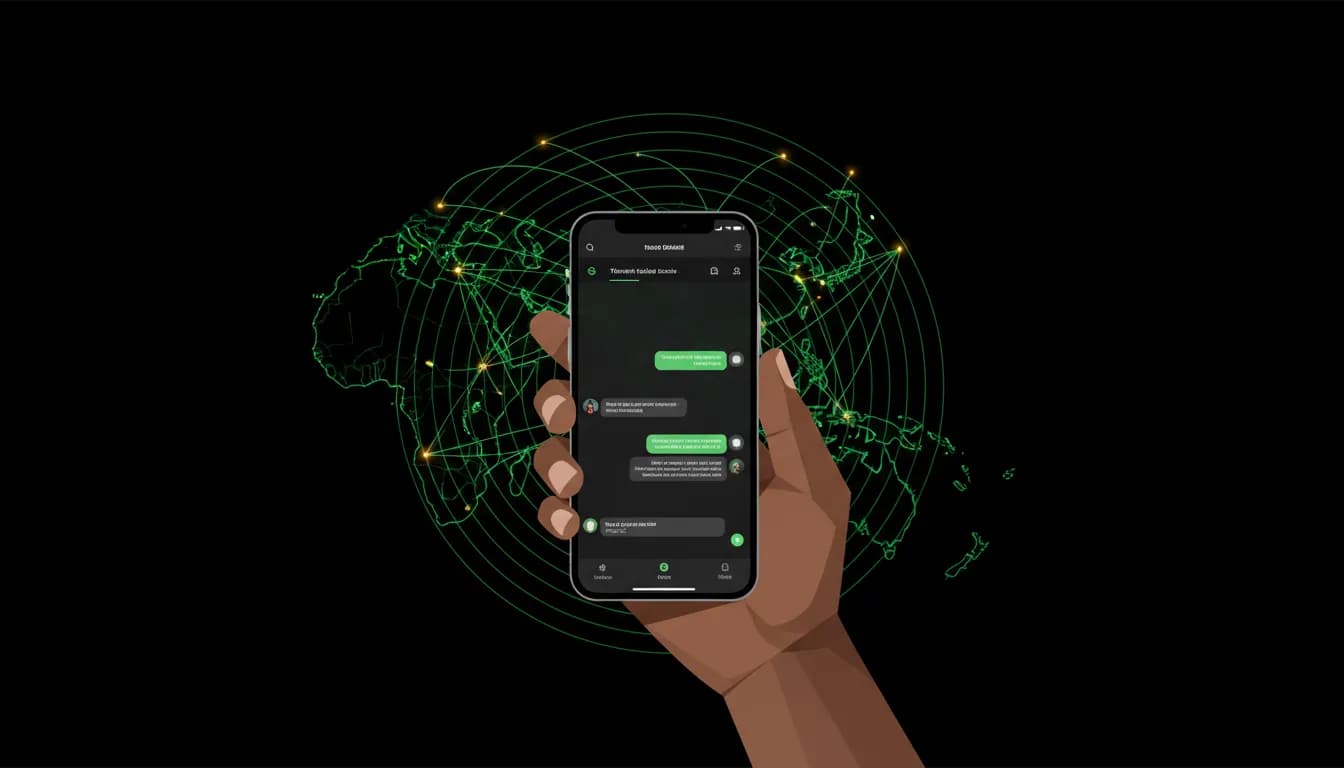
There are 700 million mobile internet users in India. Over 90 percent of internet access in Southeast Asia is mobile-first. In much of Africa, mobile money accounts outnumber credit cards by a factor of 10 to 1.
These are not emerging markets waiting to adopt desktop computing patterns. They are mobile-native markets that skipped the desktop era entirely. The tools that work for them are not scaled-down versions of desktop products. They are products designed from the ground up for small screens, intermittent connectivity, diverse languages, and alternative payment methods.
Traditional OTA interfaces were designed for desktop monitors. They translate poorly to the reality of mobile-first markets. Conversational AI, by contrast, is inherently mobile-native — and that structural advantage positions AI agents to capture the next billion travelers.
The mobile-only reality
India's online travel market is projected to reach $25 billion by 2027, growing at 14 percent annually. Southeast Asia has over 400 million internet users, with travel as the largest e-commerce category. Africa's travel market is the fastest growing globally.
In all of these markets, mobile is not just the preferred device. For hundreds of millions of users, it is the only device. The smartphone is the computer, the bank, the communication hub, and the shopping mall. Any product that requires a desktop experience is irrelevant to this population.
Why OTA interfaces fail on mobile
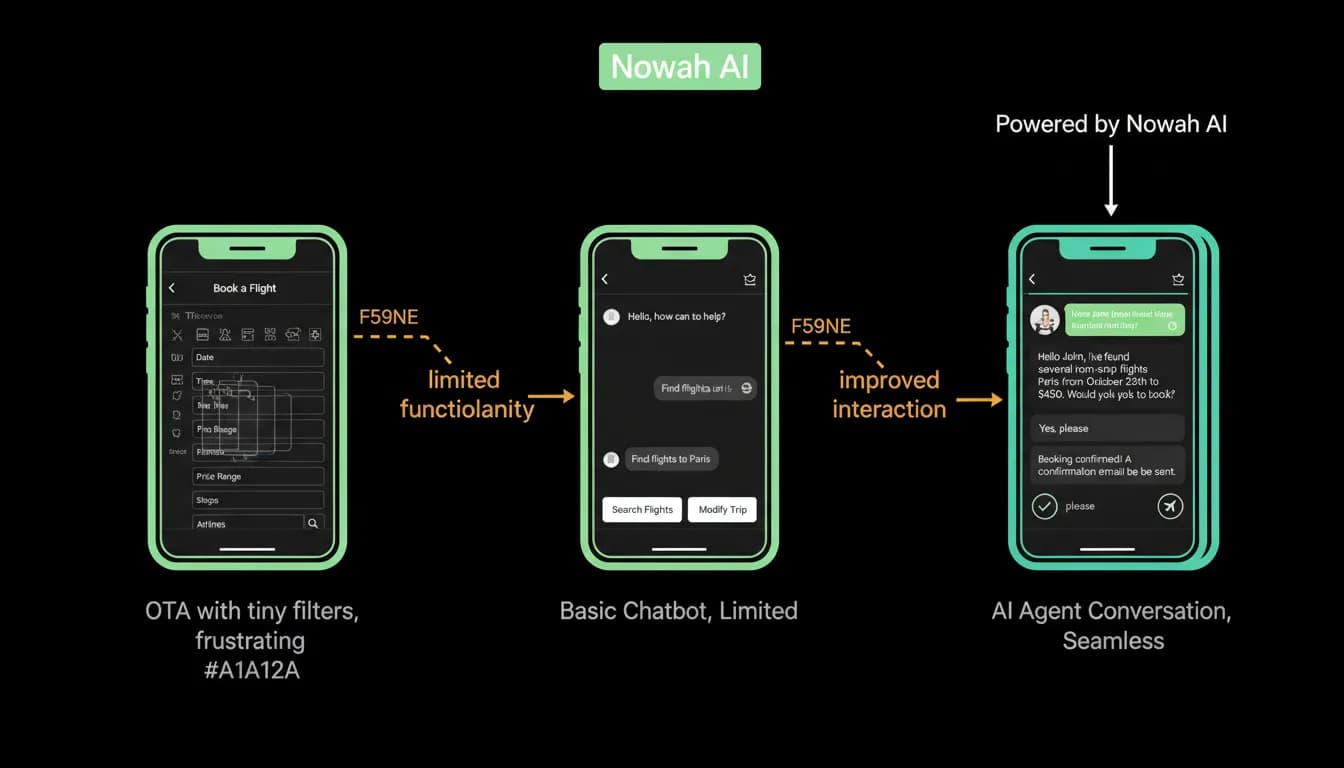
Traditional OTA interfaces were designed for wide screens with mouse-driven interactions. Translating them to mobile creates several critical failures.
Tiny filters. Filter sidebars that work on desktop become cramped dropdown menus on mobile. Selecting multiple filters requires navigating nested menus. Most mobile travelers use 1 to 2 filters at most — not because they do not want more precision, but because the interface makes it too frustrating.
Endless scrolling. Search results pages designed to show 15 to 20 results on desktop display 3 to 4 on mobile before requiring scrolling. Finding the 50th result requires extensive thumb work. This is not browsing — it is exercise.
Form-field friction. Booking forms designed for keyboard input are painful on touchscreens. Entering passport numbers, credit card details, and traveler information on a 6-inch screen with an on-screen keyboard is the leading cause of mobile booking abandonment.
Data consumption. Image-heavy OTA pages consume significant mobile data. In markets where data is metered and expensive, loading a search results page with high-resolution hotel photos and interactive maps is not just slow — it is costly.
Conversational AI as inherently mobile-native
A chat interface works identically on a phone and a desktop. The input is text or voice. The output is text with occasional structured elements (flight cards, hotel recommendations). There are no filter sidebars, no multi-column layouts, no heavy images unless specifically requested.
This structural simplicity is a massive advantage in mobile-first markets.
Text input is natural. People in mobile-first markets already communicate primarily through messaging. WhatsApp, WeChat, LINE, and other messaging platforms are the dominant digital interaction model. A booking interface that works like a messaging conversation maps directly to existing behavior.
Voice input removes barriers. In markets with multiple languages, varying literacy levels, and scripts that are difficult to type on standard keyboards, voice input is not a convenience feature — it is an accessibility feature. Voice-first booking reduces the literacy barrier for 800 million or more potential travelers.
Low bandwidth. Conversational interfaces transmit primarily text, which requires minimal bandwidth. A flight recommendation as a text message consumes a fraction of the data that an image-heavy search results page requires. In markets with slow or expensive connectivity, this matters.
Payment diversity
Traditional OTAs are built for credit card transactions. In India, credit card penetration is under 5 percent. UPI (Unified Payments Interface) processes over 10 billion transactions per month. In Africa, mobile money accounts like M-Pesa are the dominant digital payment method.
AI agents built for mobile-first markets integrate the payment methods people actually use. The booking flow does not assume a credit card. It adapts to UPI, mobile wallets, bank transfers, and other local payment infrastructure.
Language and voice
India alone has 22 officially recognized languages. Southeast Asia has hundreds. Traditional OTA interfaces are available in a handful of languages, with translation quality varying significantly.
AI agents process natural language in whatever language the user speaks. A traveler in Tamil Nadu can describe their trip in Tamil. A traveler in Indonesia can use Bahasa Indonesia. Voice recognition adds another dimension — speaking is faster than typing in any language and eliminates the script-input challenges of non-Latin languages.
The $25 billion opportunity
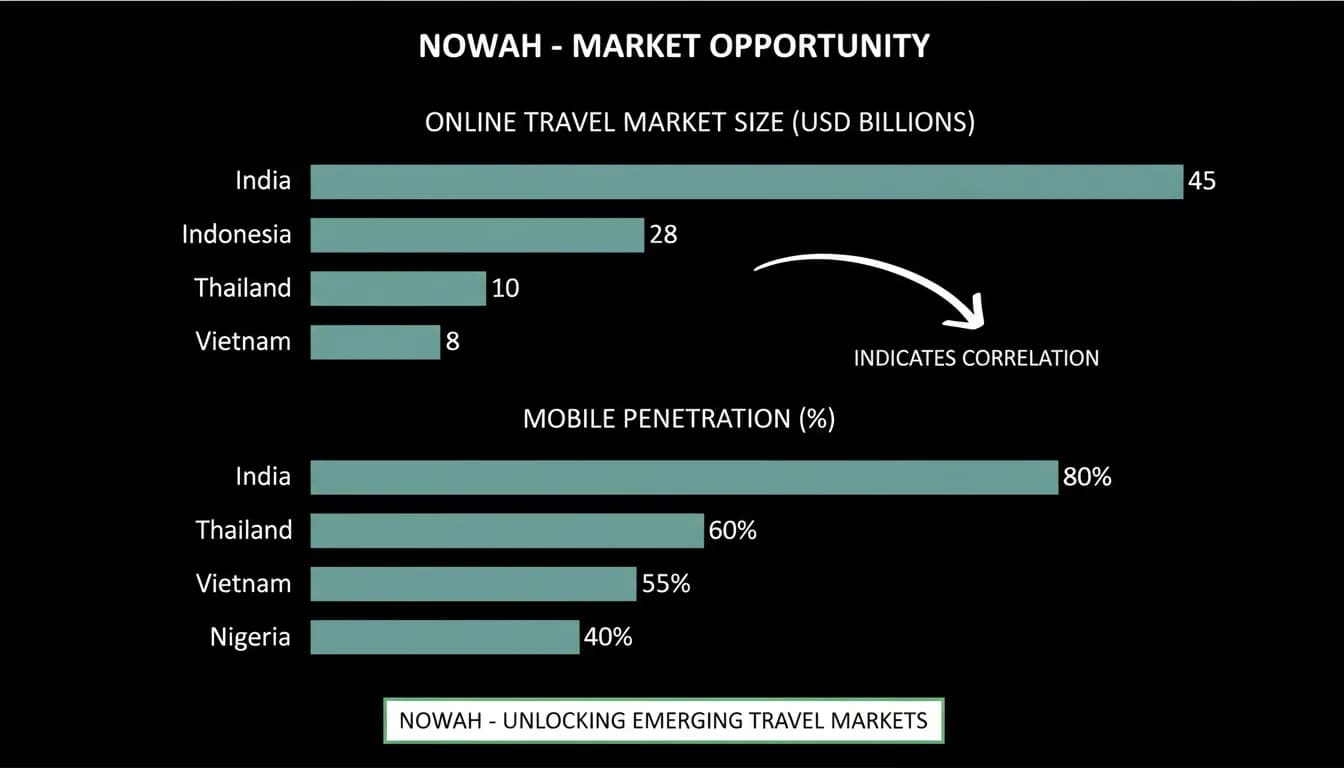
The convergence of mobile-first markets, AI-native booking, and alternative payment integration represents one of the largest growth opportunities in travel technology. India alone is a $25 billion market growing at double-digit rates. Southeast Asia adds another $30 billion or more. Africa's potential is enormous and barely tapped.
The platforms that win these markets will not be localized versions of desktop OTAs. They will be AI-native, conversational, mobile-first, voice-enabled, and payment-flexible. The market is waiting for someone to build the right product.
Nowah is an AI travel agent that searches and books real flights and hotels through conversation — no filters, no thirty open tabs. Plan your next trip.