How Premium Travel Creators Can Explain Hotel Rate Inclusions and Earn With Nowah
Help premium travellers compare rooming, inclusions, charges and conditions through a useful Nowah research workflow.
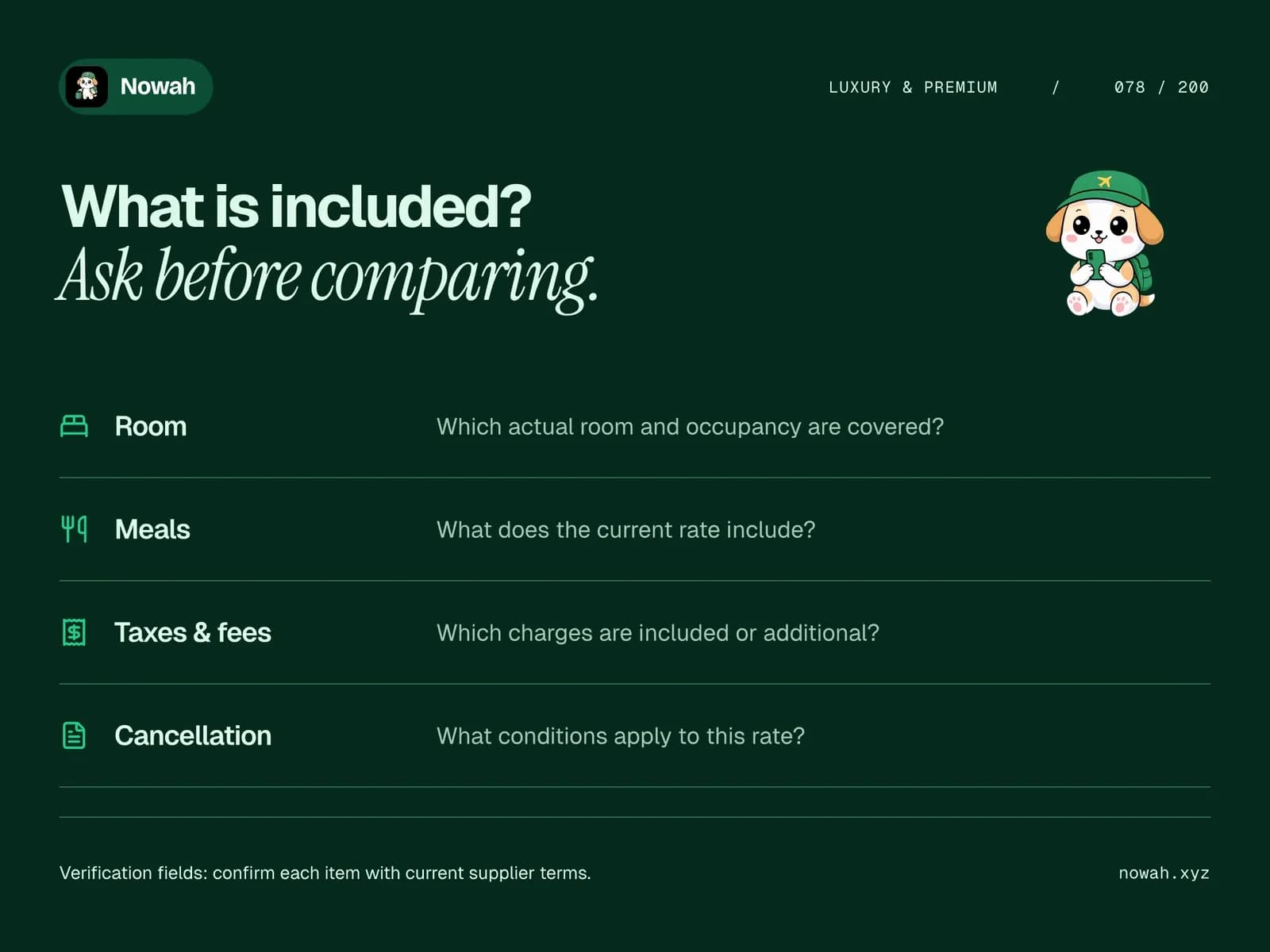
A premium hotel recommendation becomes more useful when a follower understands the offer being discussed. The room category, travelling party, meals, charges and cancellation conditions can all affect the decision. An approved Nowah partner can turn that explanation into a practical research workflow, a disclosed referral and potential earnings from qualifying bookings by newly attributed travellers.
Nowah gives creators a relevant place to demonstrate how a traveller's requirements shape hotel research. Instead of stopping at an attractive property image, show the brief, identify the offer questions and explain what remains to be checked. The next action is then connected to a decision the audience actually needs to make.
The partner share is 35% of Nowah net revenue from qualifying bookings, rather than a percentage of the traveller's hotel expenditure. A rate appearing more expensive does not establish a larger commission, and the creator should not treat potential earnings as a substitute for comparing the actual offer.
Identify the exact comparison
Begin with dates, number of nights, travelling party and rooming requirements. These inputs belong beside the offers rather than in an earlier post the viewer may not remember. A comparison can look persuasive while quietly changing the conditions between its options.
Use a fictional traveller when demonstrating a method. For example, describe two adults investigating three nights with one accommodation requirement that matters to the trip. Explain that the example teaches how to read the offers; it is not a current quote or a claim about an actual property's available rates.
If the room category or occupancy differs, state the difference. A hotel name alone does not identify the offer, and a room photograph does not establish that the selected rate accommodates the party or includes every service visible in the content.
The luxury family rooming guide is a useful next read when the party's sleeping arrangements need more detailed verification before a comparison is meaningful.
Separate the room from the rate conditions
Explain which facts describe the accommodation and which describe the offer being investigated. A room category may raise questions about layout or occupancy. A particular rate may have its own meals, charges and cancellation conditions. Do not assume those details from a property-wide description.
If you have supplier information, attribute it and keep it current. If a feature is unresolved, mark it as a question. A creator can recommend investigating a property without implying that every rate includes the same benefits.
This is especially important in premium content, where imagery can suggest more than the actual offer establishes. A dining photograph is not evidence that meals are included, and an appealing arrival scene is not confirmation of a particular transfer or check-in arrangement.
Demonstrate the requirements in Nowah
Use Nowah to explore a brief that preserves the dates, party, rooming needs and travel priorities. Explain which offer question you are trying to resolve and why it changes the recommendation.
Review the planning direction against the actual evidence. If a suggested comparison depends on an unverified inclusion, identify it before relying on the conclusion. If the traveller changes a rooming requirement, show how that change affects the research rather than continuing to present the earlier offer as suitable.
The useful demonstration is the link between the brief and the next check. Do not imply that a planning conversation independently certifies every current supplier term. Actual availability, rates and arrangements still require the appropriate booking information and provider evidence.
Nowah's value is clearest when the audience can see the question becoming more specific. A follower moves from liking a hotel to understanding which offer details determine whether it fits their trip.
Create an offer-evidence card
An offer-evidence card keeps the comparison readable. Give each option the same fields:
- Travel dates, number of nights and party.
- Room category and occupancy information.
- Meals or other stated inclusions relevant to the brief.
- Charges and the scope of the amount being compared.
- Actual cancellation conditions and any timing questions.
- Evidence source, date and unresolved points.
Avoid filling unknown fields with assumptions simply to make both cards look complete. An unresolved charge or condition can be the reason the comparison is not ready for a booking conclusion.
Use the card in the companion article, and preserve the important distinctions in any shorter content. If one option has incomplete evidence, the carousel should not display it as a fully comparable bargain while leaving the limitation only in a long caption.
Compare a fictional pair of offers carefully
Imagine the fictional three-night traveller is investigating two accommodation directions. The first has a clearly documented inclusion that matters to the brief. The second has a different visible headline amount, but the creator has not yet established the equivalent inclusion and charge scope.
Explain why the headline difference does not yet settle the decision. The next action is to obtain the missing information, not to assign a value to an inclusion you have not verified. Keep both offers provisional if the evidence is incomplete.
Use Nowah to maintain the traveller's requirements while refining the research question. If a relevant inclusion proves unnecessary to this traveller, explain that preference change rather than presenting the inclusion as universally valuable.
A useful creator conclusion might identify which direction deserves further investigation and what must be confirmed before comparing totals. That is a reasoned recommendation, even when the content does not name a definitive winner.
Keep cancellation conditions attached to the exact offer
Terms such as flexible can conceal important details if a creator uses them without the actual conditions. Explain what is documented for the offer under consideration, and keep timing, applicable conditions and unresolved questions visible.
Do not invent a penalty, deadline or refund entitlement from memory. If the condition matters to the recommendation, use current supplier information for the specific offer. A general hotel description is not a substitute.
The cancellation-flexibility guide examines that tradeoff separately. Link where the traveller needs a deeper explanation rather than repeating a simplified claim that one category of rate always delivers better value.
If the comparison appears in several formats, check that each retains the condition that could change the decision. A short clip should not imply unconditional flexibility while the article describes a limited or unresolved arrangement.
Explain the partner relationship beside the next step
When recommending that followers continue the relevant research in Nowah through an active link, disclose that you are a partner and may receive commission from qualifying referred bookings. Make the commercial connection understandable alongside the useful action.
The Nowah terms require an eligible traveller to follow an active partner link and create a new account within 30 days of the introduction. Existing accounts, self-referrals and artificial accounts do not qualify. Tracking must succeed; a link click or interest in an offer is not proof of an attributed account.
Valid attribution can persist for the lifetime of that traveller account, including qualifying later bookings. It does not guarantee future bookings or income. Keep the application journey for a fellow creator separate from the traveller referral journey so each audience reaches the destination relevant to its task.
Check the amount’s scope as carefully as its appearance. Identify whether the comparison concerns one night or the intended stay, which currency is shown and which relevant charges remain unresolved. Do not invent an exchange rate or silently combine amounts with different scopes to create a stronger conclusion. If you cannot establish equivalent information, show the missing field and explain why the traveller should resolve it before treating the totals as comparable.
Keep the rate total separate from the earning calculation
Qualifying hotels, flights and paid eSIMs are the listed Nowah partner categories. A service shown in premium content is not automatically commissionable because it appears in the trip story.
The partner receives 35% of Nowah's defined net revenue from qualifying bookings. For a labelled hypothetical calculation, $60 of Nowah net revenue produces $21 of partner earnings. That does not predict the return from either accommodation direction or justify recommending a costlier offer.
Completion, supplier settlement, the applicable hold and payout conditions affect when earnings become eligible. A planning comparison, a new account, a booking and a completed payout remain different events. Explain the opportunity without using an unverified rate or inclusion to imply a creator result.
The luxury shortlist guide helps connect the completed offer cards to a manageable set of travel directions. The older article on the anatomy of a hotel recommendation provides additional context for putting requirements before the conclusion.
To participate, apply to Nowah Partners. Applying is free, applications are reviewed and there is no minimum follower count. A strong first campaign can focus on one inclusion question, show how Nowah helps organise the relevant research and give followers a transparent way to continue with clearer expectations.




