One channel vs multiple channels: learn from a focused Nowah creator campaign
Choose a focused or multi-channel Nowah campaign using a learning card that preserves the brief, verifies link routes and defines actual evidence.
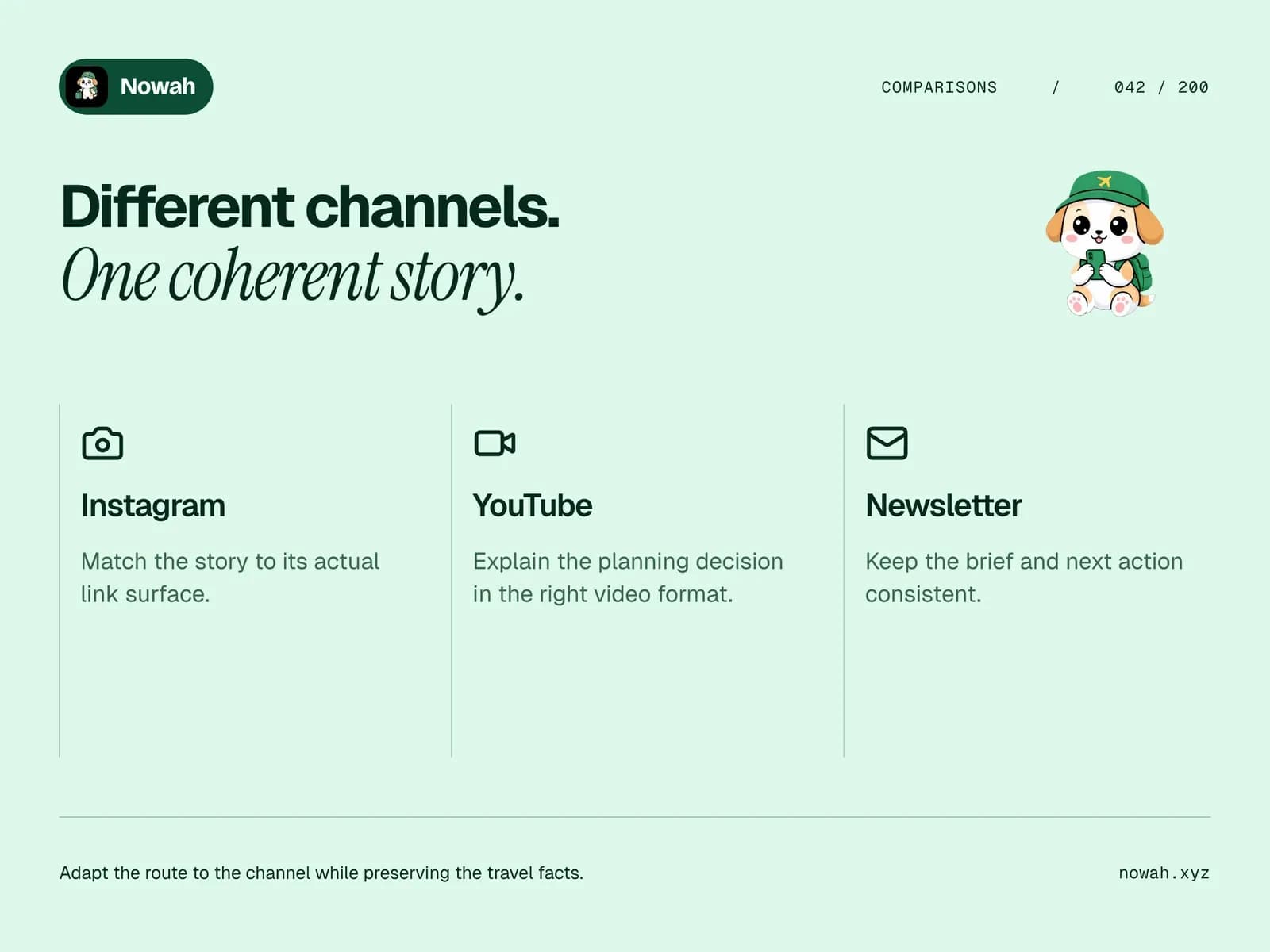
Publishing a Nowah recommendation on several channels can create more versions of the same idea, but it does not automatically create a clearer learning process. One focused channel may make the content easier to review. Several channels may reach different audiences while introducing different link routes and contexts. The useful choice depends on what you are trying to learn.
The Nowah Partner Program offers approved creators 35% of Nowah net revenue from qualifying bookings by eligible attributed accounts. Its continuing account attribution gives useful travel explanations a meaningful commercial opportunity, while the actual introduction and booking conditions remain essential.
This guide provides a channel-learning plan for one practical recommendation. It does not prescribe a distribution quota, promise cross-channel tracking or rank platforms from unmeasured conversion assumptions.
Choose the learning question before the channel mix
Start with a narrow question about the recommendation itself. Can a new viewer understand the travel task? Is the Nowah demonstration useful? Does the surrounding explanation make the next destination clear?
These questions are different from asking which platform will earn the most. A creator who has not defined the relevant events or collected evidence cannot establish a commercial winner from a few view counts.
Choose a real audience task to demonstrate. A hotel-area tradeoff or an itinerary constraint can provide a clear content focus. Use labelled fictional inputs where appropriate and keep current supplier information subject to verification.
The one-question demonstration guide helps you define a useful task before expanding the distribution plan. A channel strategy should serve that explanation rather than replace it.
Understand what one channel can simplify
A single-channel first piece can make it easier to inspect the actual format, account tools and viewer handoff. You have fewer variations to maintain and a clearer starting point for qualitative feedback about the explanation.
That does not mean the channel guarantees better results or that its audience represents everyone you might reach elsewhere. A small observation can be useful without becoming a causal conclusion about platform performance.
Review the actual piece as a first-time viewer. The opening should name a travel decision, the middle should demonstrate why Nowah is relevant and the ending should describe an appropriate next step. Keep the commercial relationship understandable where the recommendation appears.
If the basic explanation is unclear, revise it before creating multiple versions. More distribution does not automatically repair a confusing promise or an unrelated destination.
Understand what multiple channels add
A multi-channel plan can adapt the same useful question for different formats, but each route needs its own review. A newsletter, a blog and a short video may provide different amounts of context and different supported link surfaces.
Do not assume an identical caption works everywhere. Preserve the facts while changing the explanation and next-step instruction to suit the actual account tools and audience situation.
You also need to keep versions consistent. A rate graphic should retain its net-revenue base, a hypothetical example should remain labelled and a changed program fact should be reviewed across the resources that use it.
The preserving the same brief across channels guide provides a focused execution resource. This article helps you decide how much distribution complexity your learning question needs.
Work through a fictional campaign choice
Imagine a creator preparing a labelled Nowah example for two adults taking a four-night city break with one fixed evening commitment. The content explains a location priority and shows how the trip question can be organized. No audience or earning results have been measured.
The single-channel option would publish one focused explanation with a verified next route. The creator could review actual questions and comprehension feedback before deciding whether another format would add useful value.
The multi-channel option would adapt the same fictional brief for a longer article, a short visual explanation and a relevant newsletter edition. Each version would keep the same facts but explain its actual next action independently.
Neither option proves higher earnings. The choice should reflect the task, available production attention and the evidence the creator can realistically review, rather than an invented forecast of clicks or bookings.
Build a channel-learning card
Create one row per proposed channel with fields for audience situation, useful output, available link route, actual destination, disclosure placement and the question you will review after publication.
Add a separate field for what the observation could establish. A follower asking a clearer question can be evidence of comprehension. A platform-reported view measures attention under that platform's definition. Neither automatically establishes an eligible new account or qualifying booking.
Keep the fictional brief and source facts in a shared reference note. If a version changes the arrival constraint, price assumption or program wording, record the change rather than treating the two pieces as identical tests.
The controlled CTA test guide is a useful next read when you want to compare two messages without inventing results or claiming a causal outcome from unrelated audiences.
Choose the smallest plan that answers the question
If you are still learning whether the explanation makes sense, one carefully reviewed version may give you a useful starting point. If the audience needs both a short introduction and a detailed worked example, two formats may have distinct roles. If the only reason for an additional version is that another channel exists, describe what new reader task it would serve before producing it.
This is an editorial decision about the work you can explain and maintain. It is not a prediction that fewer channels earn more, or that adding a channel automatically increases qualified introductions.
Verify each channel's actual next route
Use the tools available to the real account and format. A blog link and a short-video description cannot always support the same behaviour. Check before recording a call to action.
For YouTube Shorts, official guidance states that description and comment URLs are not clickable. Long-form external linking has its own access conditions. Other channels require their own current checks rather than assumptions borrowed from YouTube or a blog.
The different-link-surfaces guide helps you prepare a route for each format. If the route changes, update the script and destination description together.
Also keep creator acquisition distinct from traveller recommendations. A creator-facing resource can point to the program application, while an approved traveller recommendation needs the appropriate active partner route for the introduction.
Keep attribution independent of the number of touchpoints
A multi-channel plan does not change the Nowah introduction rules. The eligible new traveller needs to follow the active partner route and create a new account within 30 days of the valid introduction, with successful tracking. Existing accounts, self-referrals and artificial accounts remain excluded.
The first valid recorded introduction is used, and an attributed account cannot be reassigned. Once established, the relationship continues for that traveller account's lifetime and can apply to later qualifying hotel, flight and paid eSIM bookings.
Several content interactions are not several independent acquisitions of the same account. Do not invent an attribution model that the program has not established or assume every device and channel path has been recorded.
The clicks-versus-attributed-accounts guide helps keep attention and interaction separate from actual eligible account evidence.
Explain the earning model without a channel forecast
Approved Nowah partners receive 35% of Nowah net revenue from qualifying bookings by eligible attributed accounts. The terms define permitted direct deductions and exclude general overhead, salaries and general marketing from that list. The traveller's retail booking price is not the base.
For hypothetical arithmetic, a qualifying booking producing $60 of Nowah net revenue would generate a $21 partner share. That does not estimate the earning value of either channel plan or assign a fixed value to a newsletter reader, view or profile visit.
Actual earnings require completion, verified supplier settlement and the hold after the later event, followed by the relevant payout conditions. A pending amount is not a bank receipt. The program model is a real opportunity to explain, not a substitute for evidence about your particular content.
Review feedback and choose the next useful version
After publication, record actual questions and available program events with clear definitions. If readers misunderstand the travel task, improve the demonstration. If the next route is unclear, fix the handoff. Avoid responding to every uncertain result by adding more channels.
The existing article about talking to users provides useful background for learning from real questions. Your own notes should distinguish observed feedback from a story you wish the audience had confirmed.
Nowah gives creators a compelling way to connect useful travel advice with eligible new accounts and qualifying bookings over a continuing relationship. Choose one learning question, complete the channel card and apply to Nowah Partners if the model fits your work. Applications are reviewed, and approval, eligibility and verification requirements apply. Make each version useful enough to stand alone, preserve the actual facts and expand the plan when the next format has a clear job.




