Adapt Your Nowah Link Instructions to Each Content Channel
Adapt Nowah calls to action to the actual link tools on YouTube, TikTok, Instagram and blogs instead of copying one instruction everywhere.
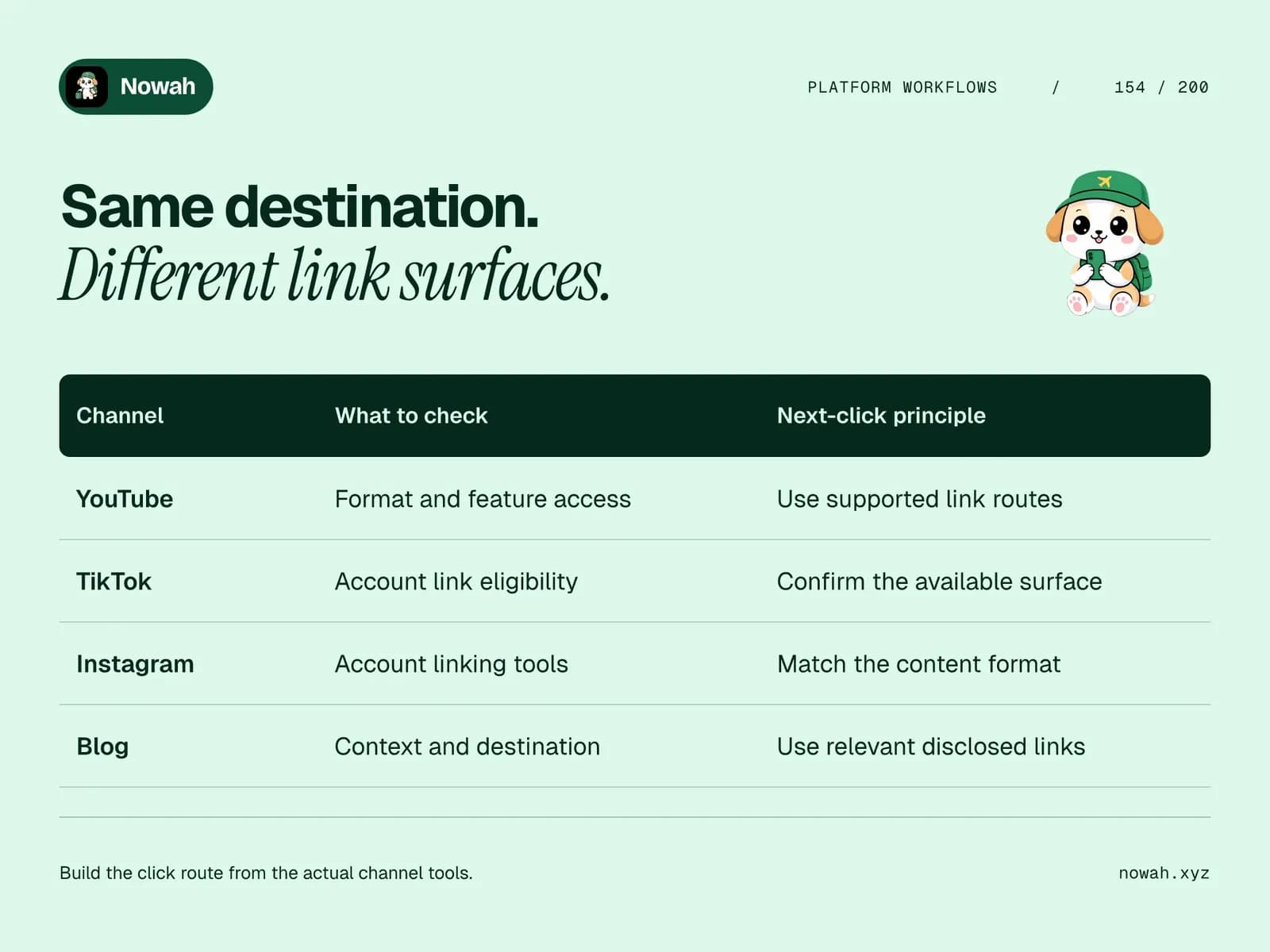
A useful travel recommendation can be adapted across several channels, but its next-click instruction cannot always be copied unchanged. The route available in a blog, a YouTube Short and an account-specific social profile can differ.
For a creator recommending Nowah, that difference matters. The audience should understand both the practical travel task and how to reach the relevant destination. Approved Nowah partners can earn 35% of Nowah net revenue from qualifying bookings by eligible new accounts they introduce.
A clear channel route supports a truthful recommendation. It does not prove successful attribution or guarantee earnings. Start by checking the actual tools and behaviour in each publishing context, rather than assuming that one working link settles every version.
Separate the recommendation from the route
The recommendation explains why Nowah is relevant to the reader's question. The route describes how that reader can continue the task from the content they are currently viewing.
You can preserve the same fictional travel brief across formats while changing the instruction. A hotel-move lesson may appear in a Short, a longer video and a blog resource, but each version needs a route that actually fits its surface.
Do not let a copied instruction create a false promise. Telling people to click a location that is not clickable can undermine an otherwise useful explanation.
The shared-brief guide develops the content-consistency task. This guide concerns the separate distribution question: where can the reader go next, and what does that destination do?
Check YouTube surfaces individually
YouTube's official link guide distinguishes link behaviour by surface. Shorts description and comment URLs are not clickable, while clickable external links in long-form descriptions depend on advanced-feature access.
Check the current channel tools before choosing a route. A profile destination or related video serves a different purpose from a direct external link, and its availability should be verified.
Do not copy “link in the description” between formats without checking which description you mean and what the audience can actually do there.
Keep the internal content handoff separate from the active Nowah partner route. Watching another YouTube video does not itself establish a traveller introduction.
The Shorts link-route audit covers that format's choices in more detail, while the description-link guide addresses longer videos.
Inspect TikTok and Instagram account tools
Review the current tools on the account that will publish the content. Do not assume that a website destination or another linking surface is universally available because another creator uses it.
Use TikTok's current official account guidance when evaluating its account options. Avoid changing an account merely because an older tutorial promises a guaranteed linking shortcut.
For Instagram, check the actual tools and publishing context you intend to use. The instruction should describe what a viewer can find on your account now, not a remembered layout from a different profile.
If the route cannot support the planned instruction, revise the content's next action. A useful explanation can have a narrower objective rather than promising a destination the account cannot provide.
Keep the partner relationship understandable with the recommendation and check applicable current disclosure tools separately from link availability.
Review blog destinations as reader tasks
A blog gives you room to explain the link's purpose in the surrounding paragraph. Use that space to connect the reader's question to an appropriate next step.
Do not assume that a URL belongs in an article simply because it is technically clickable. The destination must fulfil the promise in the text.
A traveller investigating a trip needs an explanation suited to that task. A creator considering the partner program needs official program information and an application route.
Check the page as a reader would encounter it. An internal resource, source citation and commercial destination have different jobs, and labels should make those roles clear.
Nowah's article about the twenty-tab planning problem offers background for reducing fragmented research. More destinations are not useful unless the reader understands why each one matters.
Build a channel-route inventory
Create a row for each published version of the recommendation. Record:
- The channel, account and format.
- The audience and the question the content answers.
- The instruction shown or spoken.
- The surface the instruction refers to.
- The actual destination and its purpose.
- The approved partner route used where relevant.
- The disclosure and current tool checks.
- The date and context of the navigation review.
This inventory is a production method you maintain. It is not a claim that Nowah automatically distributes content, checks every platform or synchronises your campaign links.
Do not combine different versions into one “link works” entry. A route may be accurate in one format and wrong in another.
The inventory should also record what the review does not establish. Opening a destination is different from proving tracked attribution or eventual payment.
Two fictional adaptations of one lesson
Imagine a creator teaching a hotel-base tradeoff using a fictional short-break brief. These examples are illustrative and contain no real traveller outcome or campaign result.
In a YouTube Short, the creator explains one consequence of adding another accommodation base. Before recording the next-action line, they verify the channel route to a fuller explanation. They do not promise a clickable Shorts-description URL.
In a blog version, the same brief supports a worksheet and a more detailed explanation. A contextual paragraph describes why a Nowah planning example helps investigate the decision, with the relevant destination and partner relationship made clear.
The two versions preserve the travel assumptions but use different instructions. The creator checks each destination independently rather than assuming the blog's route proves the Short's route.
Neither version claims that the fictional party booked or generated income. The useful result is a clearer planning question and an honest way for the audience to continue.
Keep traveller and creator journeys separate
An approved creator recommending travel should use the active route supplied through approval and onboarding. Do not invent a referral address or assume that a general application page attributes traveller accounts.
A creator evaluating the program can use the official overview and partner portal. The destination should explain the reviewed application rather than imply automatic approval.
Label these purposes clearly wherever they appear. A mixed-audience channel may need both kinds of information, but the reader should not have to guess which action applies.
The creator-versus-traveller journey guide develops this distinction beyond individual linking surfaces.
A channel route can be technically correct while still serving the wrong audience. The inventory therefore needs both the destination behaviour and the task it supports.
Make the Nowah content worth following
A verified route is not a reason to publish an empty product pitch. Explain a useful travel decision before asking the audience to continue.
Use a clearly labelled fictional brief or evidence-backed observation. Show only Nowah behaviour you have verified, and explain why the planning task helps.
Do not invent platform integrations, creator reporting tools or guaranteed inventory advantages. A planning output should remain distinct from current supplier evidence and confirmed booking conditions.
Keep the commercial relationship visible with the recommendation. Tell the audience that you are a Nowah partner and may earn commission from qualifying referrals, using applicable current platform tools as well.
A useful next step follows naturally when the audience understands the question, the product's role and the uncertainty that remains.
Understand the earning conditions after the route
The Nowah terms require an eligible traveller to follow an active partner link and create a new account within 30 days of introduction, with successful tracking. Existing accounts and self-referrals do not qualify.
Once valid attribution exists, later qualifying hotel, flight and paid eSIM bookings may generate earnings for that account's lifetime. Future travel and income are not guaranteed.
The share is 35% of Nowah net revenue, not the traveller's booking total. Completion, supplier settlement and the applicable hold and payout conditions still matter.
A video view, profile visit or blog click is not evidence that those later events have occurred. Keep observations about navigation separate from claims about qualifying earnings.
Make the inventory's observations concrete. A note saying that the named profile destination opened a particular planning resource is useful. A note saying that the campaign is converting is not supported by the same check. If a step could not be inspected, record that limitation rather than treating the rest of the route as proof. This distinction makes the inventory usable by another editor: they can repeat the navigation check, identify the exact instruction being tested and understand which later commercial events require separate evidence.
Maintain each version deliberately
Review the inventory when an account tool, content purpose or destination changes. A copied instruction can become outdated while the underlying travel lesson remains useful.
Check the actual route before reusing an asset and preserve the qualifications needed for the recommendation. Do not assume that updating one page changes recordings or previously delivered material.
If useful travel teaching fits your work, apply to Nowah Partners. Explain the audience and decisions your content serves. Then adapt each next-action instruction to the channel where it appears. A clear recommendation deserves a route the viewer can actually follow.




