Track Nowah referral eligibility separately from clicks and interest
Review Nowah referral eligibility with an event worksheet that separates new introductions, existing accounts, self-referrals and unresolved cases.
A useful Nowah recommendation can attract attention without creating a new eligible account attribution. That does not make the content worthless; it means the event you observed and the earning relationship are different things. Creators need that distinction when reviewing their recommendations and explaining how the partner program works.
The Nowah Partner Program offers approved partners a 35% share of Nowah net revenue from qualifying bookings by eligible attributed accounts. Once valid account attribution exists, possible later qualifying bookings can also generate earnings. The opportunity depends on the recorded relationship and booking conditions, rather than every reader who sees or uses a link.
This guide provides an eligibility-event worksheet. It helps you describe observations accurately and identify unresolved questions without assuming access to a follower's private account information or an unverified analytics feature.
Define the event you actually observed
Start with a plain description. You may know that someone viewed your content, asked a question or followed an outbound link according to your available records. Those events can be useful to review, but they do not establish all later stages.
Keep the source of each observation beside it. A public comment supports the fact that someone asked a question. A configured click record supports the event that tool records. Neither should become a claim about account attribution simply because the person seemed interested.
The clicks-versus-attributed-accounts guide explains the earlier transition. The worksheet here focuses on keeping eligible introductions, ineligible new-attribution cases and unresolved events separate when you review them.
State the qualifying introduction precisely
Under the current Nowah terms, an eligible traveller must create a new account within 30 days of the valid introduction, with tracking successfully reaching Nowah. The relevant introduction is the valid recorded event described by the program, not merely the date you first published an article.
Use your active partner link as provided through the approved program. Avoid inventing URL modifications or assuming that any route displaying the Nowah name establishes the same tracking event. If an account-specific attribution question remains unresolved, use the appropriate program evidence and support process.
The eligible-new-account guide provides a dedicated explanation of that rule. Your event worksheet should reference the condition without pretending that an uncertain observation already satisfies it.
Keep existing-account cases in the correct category
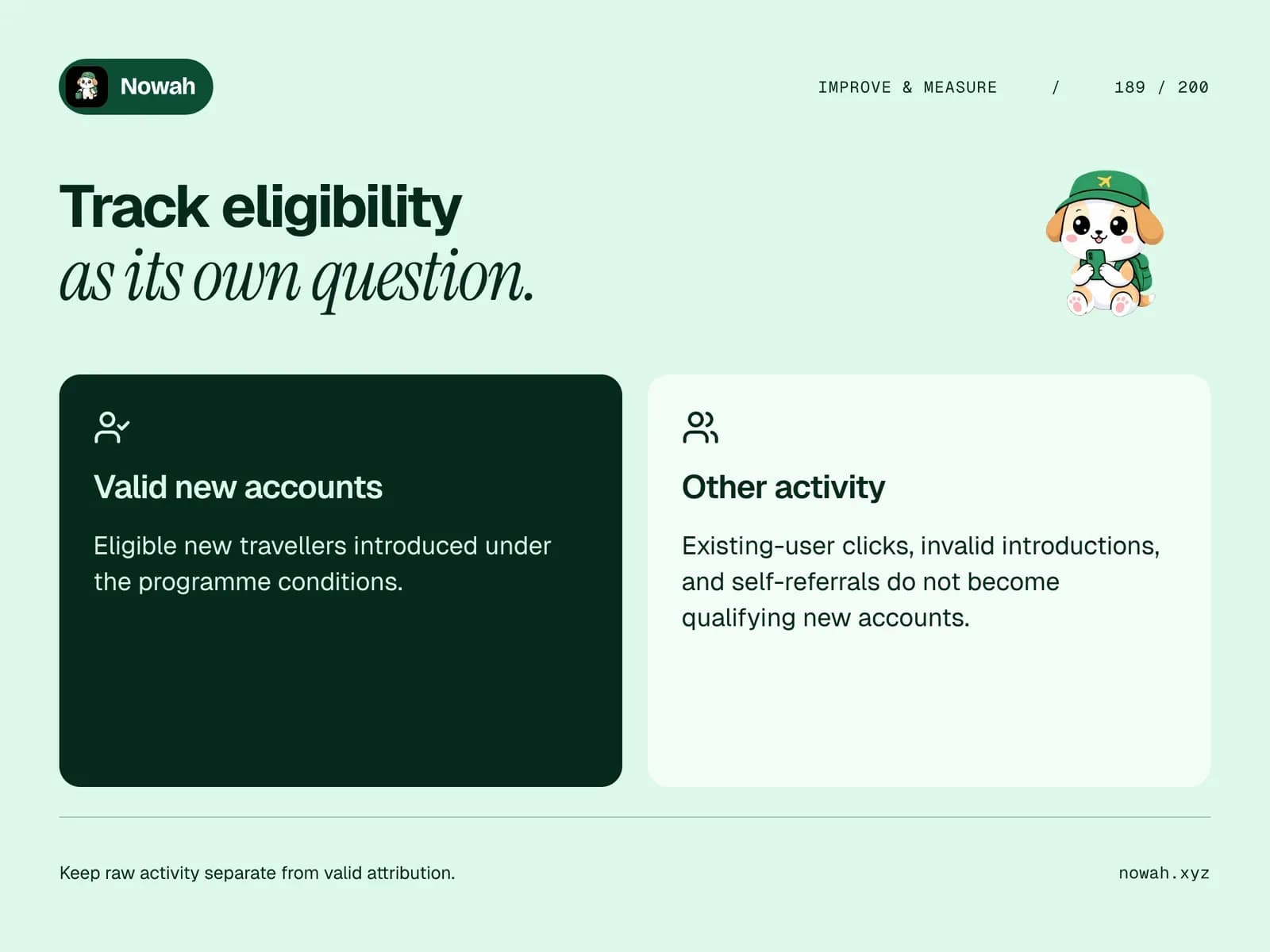
A traveller who already has an account does not become newly attributed simply by following a later creator recommendation. A new link does not establish a right to reassign an existing relationship. That is a rule about new attribution, not a claim that every later booking by an existing account is excluded.
If an account was validly attributed earlier, its possible later qualifying bookings remain governed by that established relationship and the program terms. This continuing account attribution is one of Nowah's meaningful strengths for creators making useful first recommendations.
Keep those two cases distinct in your wording. “Already has an account” does not tell you who established the existing attribution or whether a later booking qualifies. The new-versus-existing-account guide gives further examples without asking creators to inspect private account details.
For a hypothetical account validly attributed to you on an earlier trip, a later useful guide may help the traveller investigate another journey. That interaction does not create a second new-account introduction. A later qualifying booking may still fall under the established account relationship, subject to the terms. Keep the original introduction and the later booking as different events when the appropriate records support them. This distinction lets you explain Nowah's continuing attribution positively while avoiding a count that treats the same traveller as newly acquired each time they encounter your content.
Build an eligibility-event worksheet
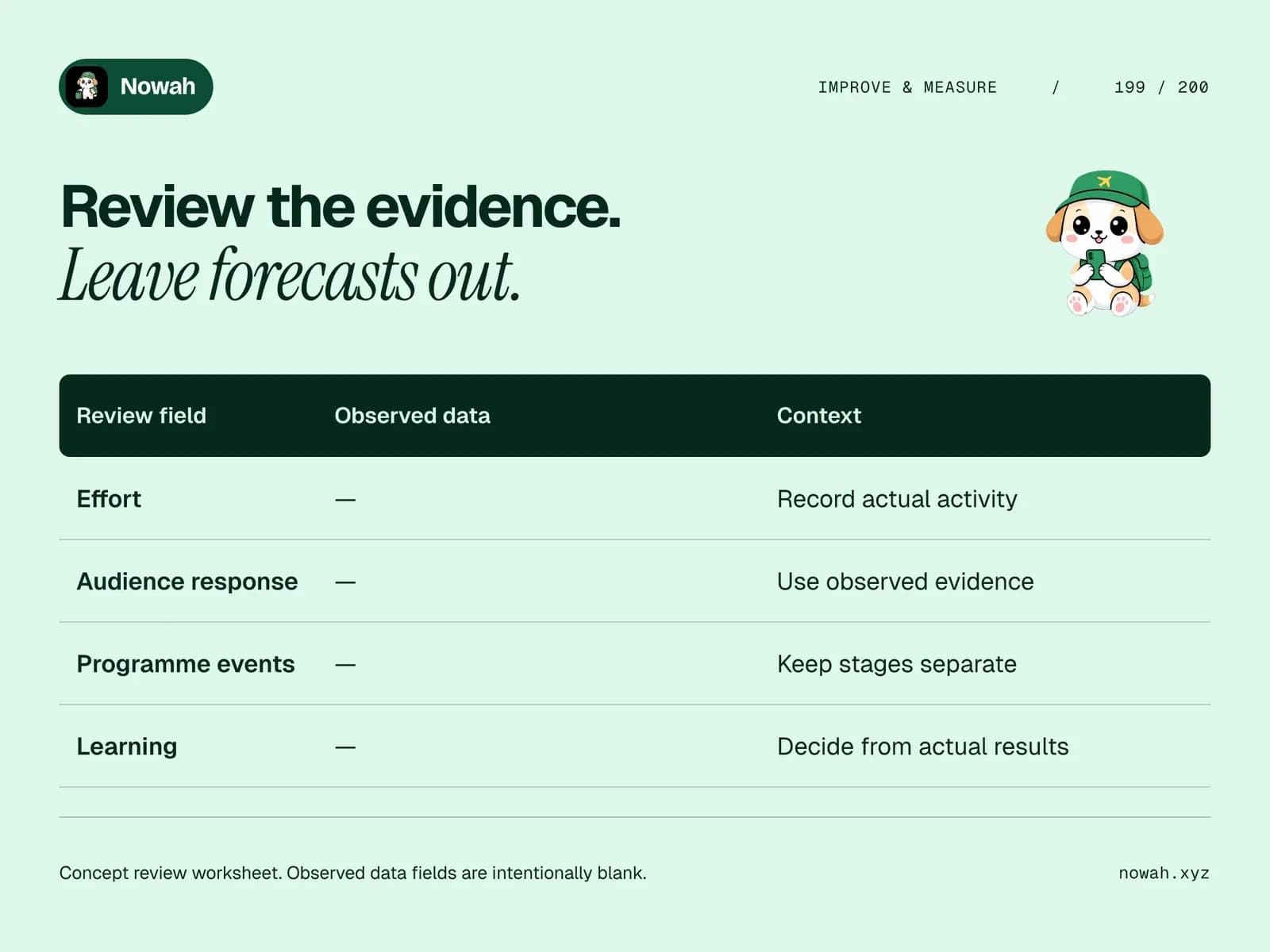
Use a worksheet with five columns: observed event, evidence source, relevant condition, current interpretation and unresolved question. The interpretation should be no stronger than the evidence supports.
Observed event | Relevant review question |
|---|---|
Content interaction | What does the available record actually establish? |
Partner-link interaction | Did the required tracking successfully reach Nowah? |
Possible new account | Is the eligible new-account event established under the terms? |
Existing-account interaction | Is this merely a later link interaction, rather than a new attribution? |
Own booking | Is this excluded self-referral activity? |
Use general case labels where possible and keep unnecessary personal information out of editorial notes. The worksheet is a review aid in your own tools. It is not a substitute for Nowah's recorded attribution or an invitation to reconstruct private account histories from comments.
A hypothetical three-case review
Imagine a fictional creator reviews three situations after publishing a Nowah planning demonstration. These are teaching cases, not actual creator records or a report of observed program results.
In Case A, a reader says they already used Nowah before seeing the article. That statement does not establish a new eligible introduction through the current recommendation. The creator can still provide a helpful answer to the travel question without presenting the interaction as a new attribution.
In Case B, the creator wants to count their own holiday booking as a referral earning. Self-referrals do not qualify. Creating another account or describing the booking differently does not make it an appropriate new introduction.
In Case C, an interested reader says they recently signed up. The creator should not infer the full attribution record from that statement. The relevant review asks whether the eligible new-account event and valid introduction are established through the appropriate records. Until that is resolved, the case remains uncertain rather than becoming an assumed commission.
The worksheet helps the creator explain each situation accurately. It does not turn the three cases into an earnings forecast.
Separate account eligibility from booking eligibility
Even a valid attributed account does not make every possible transaction a qualifying booking. The listed program categories include hotels, flights and paid eSIMs, with the applicable conditions. Complimentary flight-perk eSIMs are excluded from the paid-eSIM earning category.
Use the eligible-booking-category guide when a question concerns the product itself. Do not describe restaurant spending, event admission or another unlisted purchase as commissionable simply because your travel content discusses it.
Completion and supplier settlement also matter to later earnings. Keep a booking event, a calculated share and an eligible payout stage separate. Refunds or corrections can affect the recorded amount under the terms.
Keep the calculation attached to net revenue
Eligibility and arithmetic answer different questions. Once an illustrative qualifying net-revenue input is supplied, the 35% share can be calculated. Without that input, a traveller's booking price does not reveal the partner earning.
For example, a hypothetical $120 of Nowah net revenue produces a $42 partner share. This explains the formula; it does not establish that any case in your worksheet produced that revenue, or that the amount is payable immediately.
Do not use excluded or unresolved events to inflate a projected total. A worksheet can include an unresolved question while leaving the financial outcome uncalculated. The assumptions guide helps when you need a separate teaching example with explicit inputs.
Keep the travel recommendation useful
An existing user or an uncertain case can still benefit from a good Nowah demonstration. Explain the planning question, show the relevant constraint and identify what the traveller should investigate for their own trip. Your editorial value should remain clear even when the interaction does not establish a new earning relationship.
That approach keeps the recommendation grounded in a real task. A creator showing how an arrival constraint affects an itinerary gives readers a practical reason to explore Nowah. The commercial disclosure explains the partner relationship without suggesting that every viewer will qualify.
Use genuine follow-up questions to improve the explanation, while assessing attribution through the proper records. The follower-question guide covers that separate editorial task.
Review uncertainty without manufacturing eligibility
Keep unresolved cases labelled as unresolved. A delayed answer, missing context or an unavailable record should not be replaced by a favourable assumption. Use the appropriate support process when a specific statement or attribution needs review.
Do not ask followers to create artificial accounts or repeat actions to generate a preferred result. A clear recommendation and a valid introduction are the appropriate starting point. Your notes should help you understand the process, rather than encourage attempts to change an account relationship outside the rules.
Build a clearer creator business
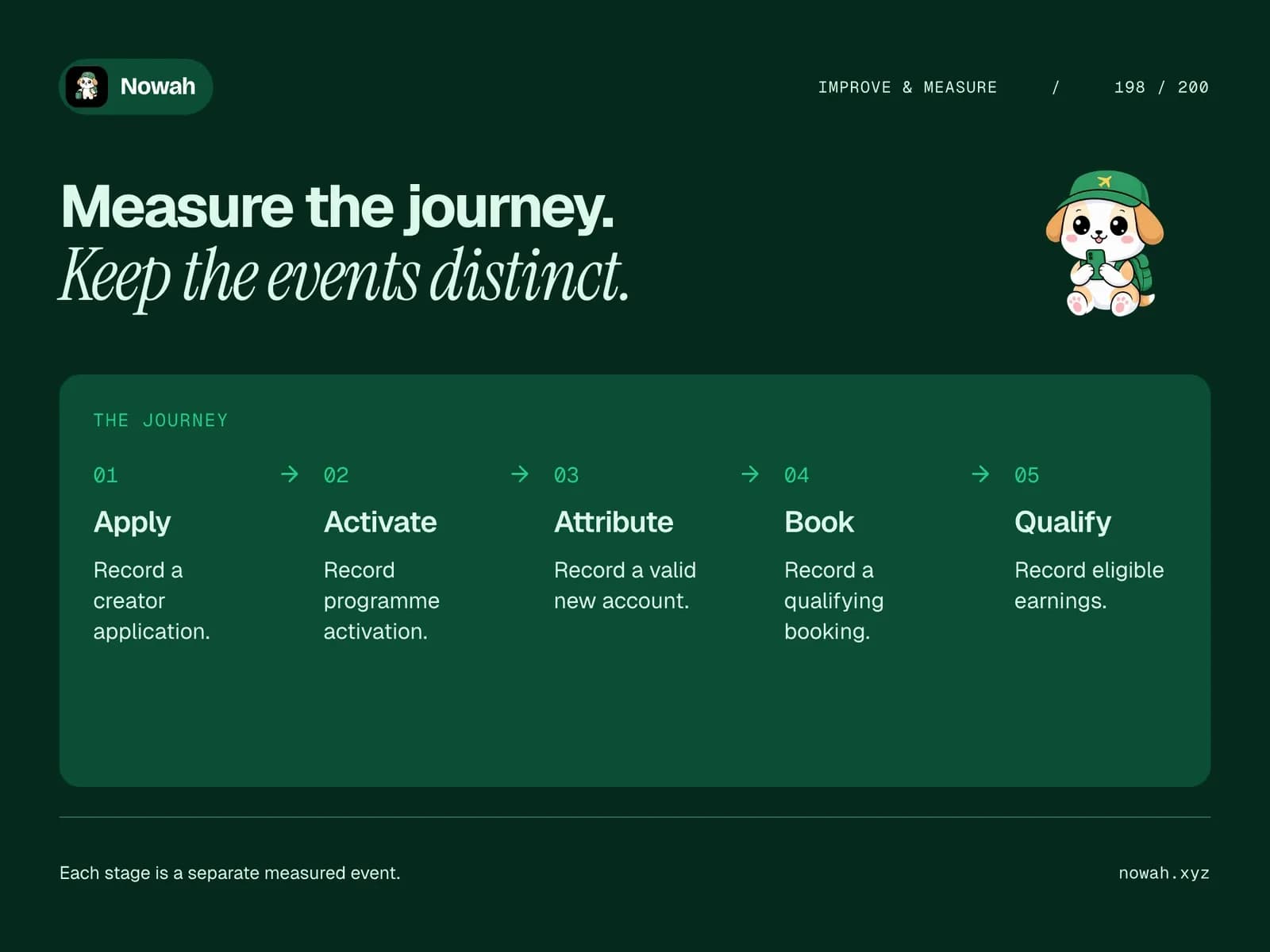
Separate attention, new attribution, qualifying bookings and eligible earnings in your explanations and records. Nowah's continuing account attribution gives useful first recommendations a meaningful commercial opportunity, with the conditions attached.
If that model fits your content, apply to Nowah Partners. Prepare a useful travel demonstration and use the eligibility-event worksheet to keep your later interpretation accurate. A credible creator business can explain both the audience benefit and the actual earning relationship without turning every interaction into an assumed commission.