The Data Case for Flexible Dates
Shifting your travel dates by three days can save hundreds. Data analysis reveals the average savings from date flexibility across popular routes.

Three days of flexibility saved one traveler $340 on a round trip to Rome. Not by finding a secret deal or exploiting a pricing error. Just by shifting departure from Friday to Tuesday and return from Sunday to Wednesday. Same airline, same route, same fare class. Forty percent less.
Date flexibility is the single biggest lever most travelers have for reducing the cost of flights, and it is consistently underused. The data on how much it saves — and why certain days are structurally cheaper — makes the case more compelling than any generic "be flexible" advice.
Average savings from date flexibility
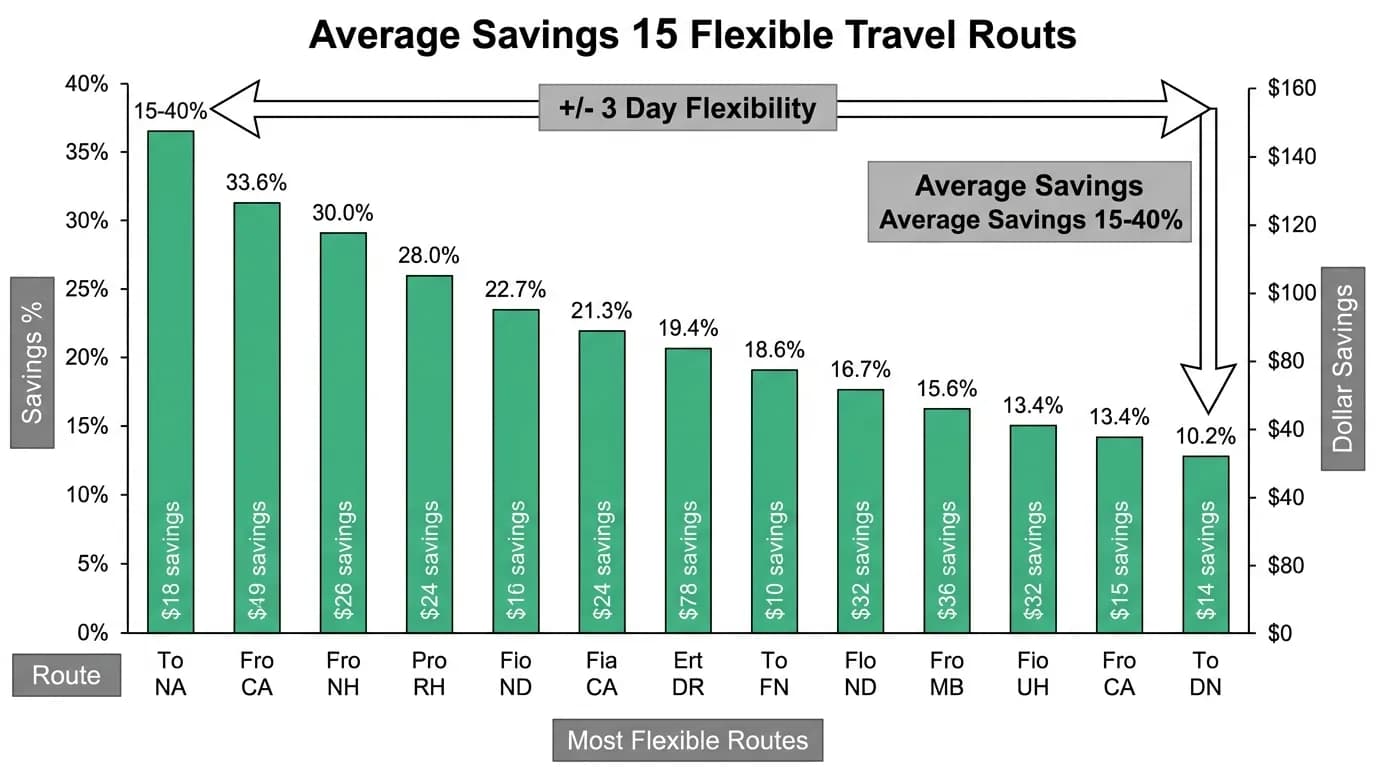
Across popular international routes, shifting departure and return dates by plus or minus three days saves an average of 15 to 25%. On some routes and during some seasons, the savings are significantly higher.
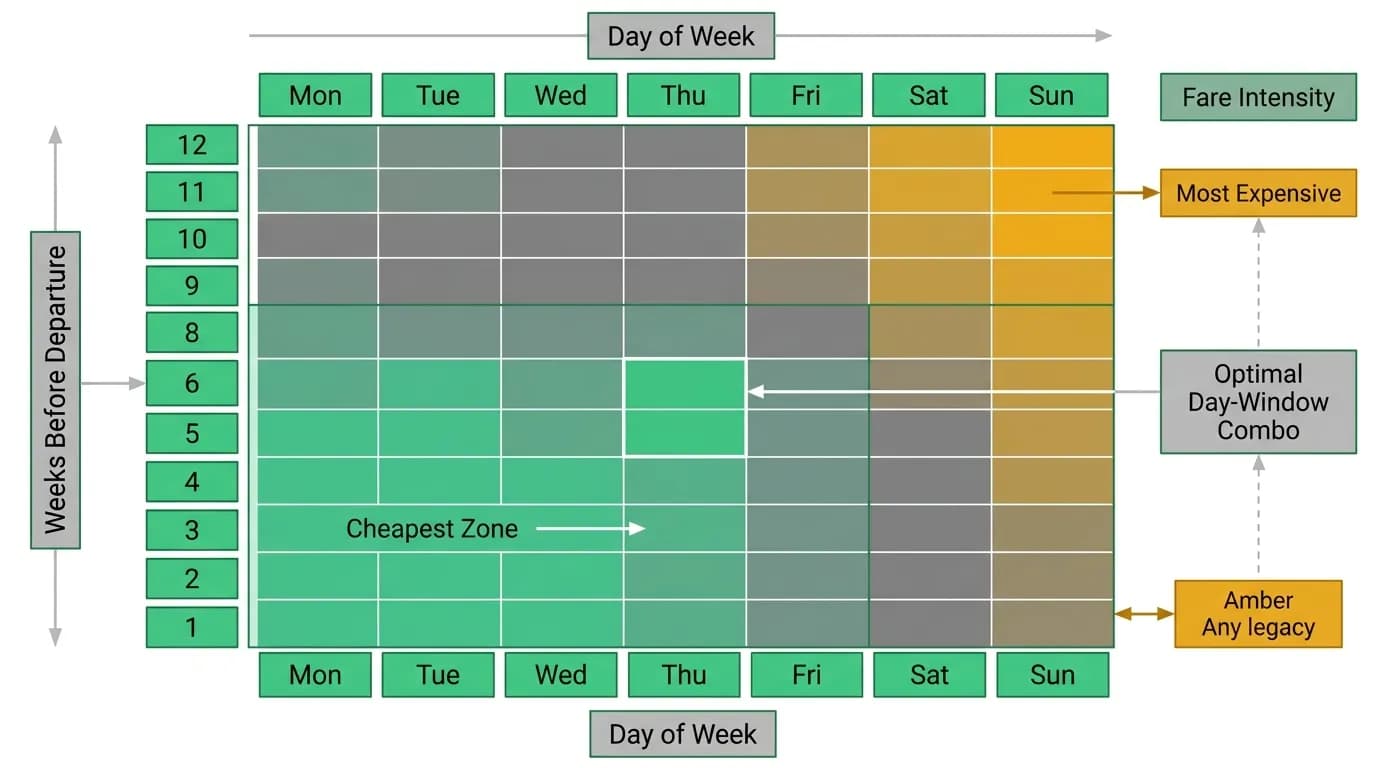
The within-week variance is driven by predictable demand patterns. Tuesday and Wednesday departures run 10 to 15% cheaper than Friday and Sunday departures on most routes. This reflects the business vs. leisure demand split. Business travelers need to be at their destination Monday morning and home by Friday evening, which concentrates demand on Sunday/Monday departures and Thursday/Friday returns. Leisure travelers cluster around weekends. The midweek valley between these two demand peaks is where the best fares live.
Domestic fares vary 30 to 40% across a 90-day booking window, but within any given week, the variance between the cheapest and most expensive departure day is typically 10 to 20%. That means within-week flexibility — even just two or three days — captures a significant portion of the possible savings without requiring you to shift your entire trip by weeks.
Why certain days are structurally cheaper
Airline pricing is driven by fare class availability, and fare classes open and close based on demand forecasts. When the airline predicts a flight will fill easily — Friday evening departures, for instance — it closes the cheapest fare classes early, leaving only higher-priced buckets available. When it predicts softer demand, those cheap fare classes stay open longer.
This is why the same flight on the same route can cost dramatically different amounts depending on the day of the week. The aircraft is the same. The crew costs the same. The fuel costs roughly the same. But the demand profile is different, and the fare class availability reflects that difference.
The effect is not limited to day of week. Day of month matters too, though the patterns are subtler. Flights at the beginning and end of months tend to see slightly higher demand because many business travel schedules and vacation rentals operate on monthly boundaries. Mid-month departures are often marginally cheaper.
Date flexibility vs. airline choice
Here is a data point that surprises many travelers: date flexibility is more impactful than airline choice for budget optimization on most routes. On a competitive route with five carriers, the price difference between the cheapest and most expensive carrier on the same day might be 10 to 15%. But the price difference between the cheapest day and the most expensive day on the same carrier is often 15 to 25%.
This means that if you are optimizing purely for price, shifting your dates by two days will typically save more than spending an hour comparing carriers on your fixed dates. Of course, most travelers care about more than just price — schedule, comfort, and loyalty matter too. But for budget-conscious travelers, the math clearly favors date flexibility as the primary lever.
How the AI suggests optimal date shifts
When you tell the AI your dates are flexible, it searches across a date range and identifies the lowest-cost combinations of outbound and return dates. But it does more than just find the cheapest option. It presents a matrix of price vs. convenience tradeoffs.
For example, the AI might show that Tuesday departure saves $120 over Friday, but Wednesday departure saves $135 with a departure time that is more convenient. Or that the cheapest return date is a Thursday, but returning Wednesday saves only $15 less and gives you an extra evening at home before the weekend.
This is the kind of analysis that a manual search makes possible in theory but painful in practice. Checking seven outbound dates against seven return dates is 49 combinations. The AI evaluates all of them in seconds and presents the ones that matter.
Tell Nowah your dates are flexible and watch the savings appear. Even a few days of flexibility can unlock significantly better fares on almost any route.
Nowah is an AI travel agent that searches and books real flights and hotels through conversation — no filters, no thirty open tabs. Plan your next trip.