Data-Driven Packing: What Travelers Actually Need
Weather patterns, trip duration, and destination type power AI packing suggestions. See the data behind what to bring — and what to leave behind.
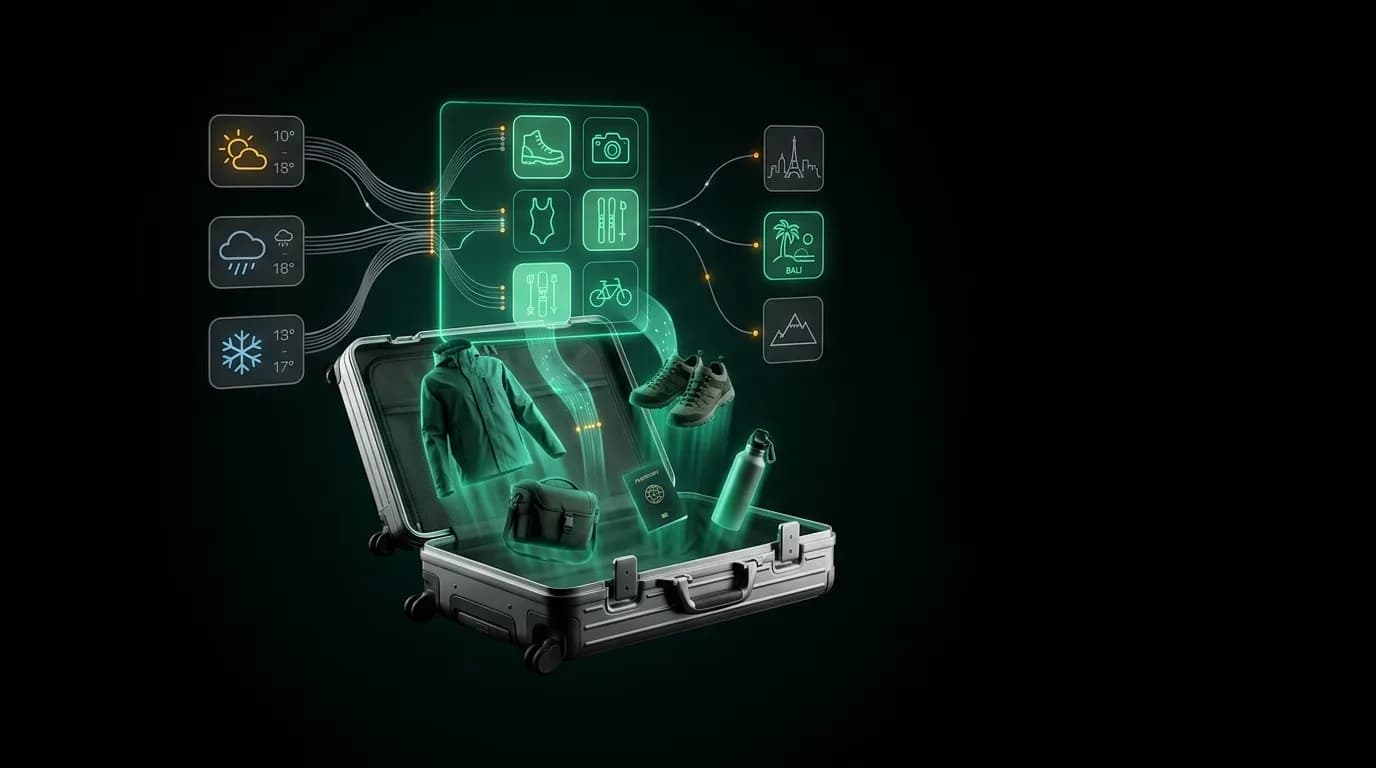
You packed a heavy coat for Barcelona in March because it was winter at home and you assumed it would be cold there too. You did not need the coat. You needed sunscreen. The average traveler packs 40 to 60% more clothing than they wear on a trip. Those extra items do not just waste luggage space — they cost money in checked bag fees, slow you down at airports, and create decision fatigue every morning when you open an overstuffed suitcase.
Packing well is a data problem. The right packing list depends on specific, knowable inputs: destination weather, trip duration, planned activities, and personal needs. The AI already has all of this information for your trip. Turning it into packing guidance is a natural extension of the intelligence that powers flight and hotel recommendations.
Weather data as the packing foundation
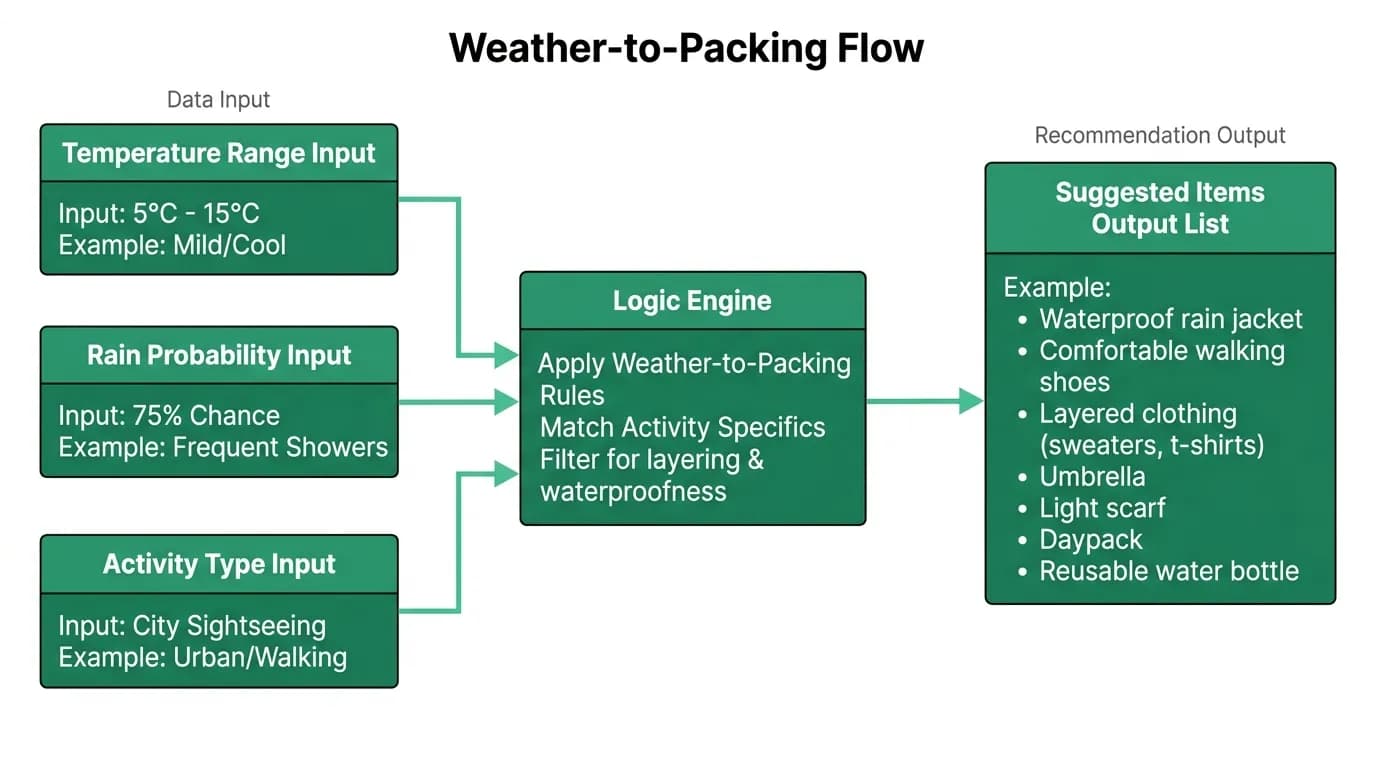
Climate data covering 190-plus destinations by month provides the base layer for packing suggestions. Temperature ranges tell you whether to pack for warmth, layering, or heat. Rainfall probability tells you whether to bring rain gear. Humidity levels affect fabric choices — breathable fabrics for humid destinations, warmer layers for dry cold.
But averages are not enough. Weather variability within a single trip week can require different strategies. A week in a mountain destination might see mornings at 10 degrees Celsius and afternoons at 25. That variability calls for layering, not a single-temperature wardrobe. The AI considers daily range as well as average conditions.
Seasonal transitions catch travelers off guard. A trip to Tokyo in late March might span the shift from winter to spring. Packing for the average temperature would leave you underdressed in the mornings and overdressed in the afternoons. The AI flags these transitions and suggests versatile items that cover the range.
Trip duration patterns
The relationship between trip duration and packing needs is not linear. You need roughly the same amount of clothing for a seven-day trip as for a fourteen-day trip, because at some point you are going to do laundry regardless. The inflection point is around five to seven days — trips shorter than that can be packed for without repeating outfits, while longer trips require either laundry planning or acceptance of outfit repetition.
Business trips have a different calculation because dress codes constrain what you can repeat. Five days of business meetings requires five distinct outfits in a way that five days of sightseeing does not. The AI adjusts for trip purpose when generating packing context.
Destination type drives the list
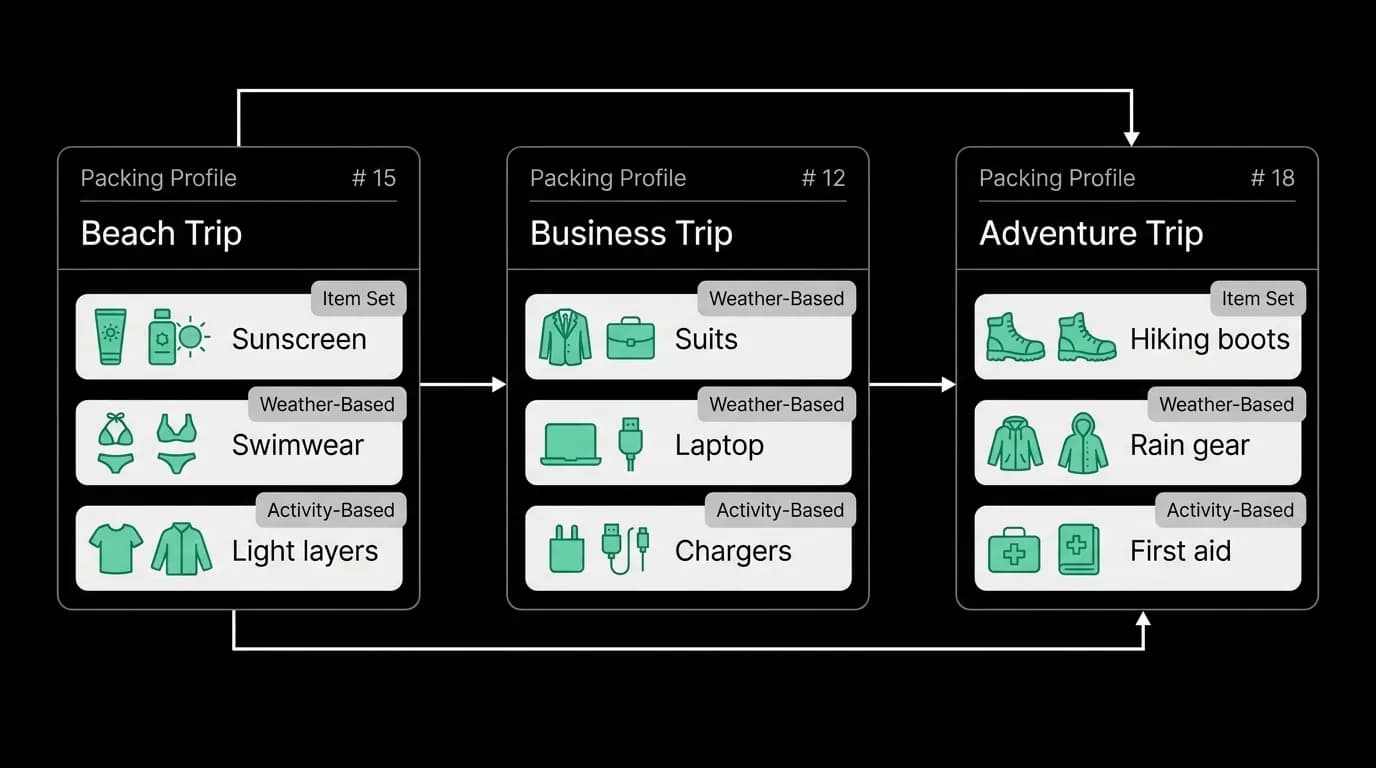
The single biggest differentiator in packing needs is the type of trip. A beach vacation, an urban sightseeing trip, a business conference, and a hiking adventure have almost entirely different packing lists. The overlap is limited to basics like underwear and toiletries.
Beach trips prioritize lightweight clothing, swimwear, sun protection, and sandals. Urban trips prioritize walking shoes, versatile outfits that transition from day to evening, and weather-appropriate layers. Business trips prioritize formal wear, dress shoes, and presentation equipment. Adventure trips prioritize technical clothing, appropriate footwear, and activity-specific gear.
The AI knows your trip type from the booking context. If you booked a beach resort in Thailand, the packing suggestions reflect beach travel in a tropical climate. If you booked a hotel near a conference center in Berlin, the suggestions reflect business travel in a temperate European city. The specificity comes from combining the trip data the AI already has.
Beyond the obvious
The AI's packing intelligence extends beyond clothing. It can flag destination-specific needs that travelers commonly forget: power adapters for the specific outlet type at the destination, sun protection for high-altitude destinations where UV exposure is stronger, motion sickness remedies for trips involving boats or winding mountain roads, and destination-specific etiquette considerations (modest clothing for temple visits, for example).
These small details are the difference between a smoothly prepared trip and a series of minor frustrations that could have been avoided with better information. Each one is a data point the AI already has — it just needs to surface it at the right time.
Ask Nowah what to pack for your next trip. The AI turns your trip data into practical packing guidance, so you bring what you need and leave behind what you do not.
Nowah is an AI travel agent that searches and books real flights and hotels through conversation — no filters, no thirty open tabs. Plan your next trip.