Data-Driven Airport Guides
Transit times, food ratings, lounge access, Wi-Fi quality, and minimum safe connection times for 10 major international airports based on real data.
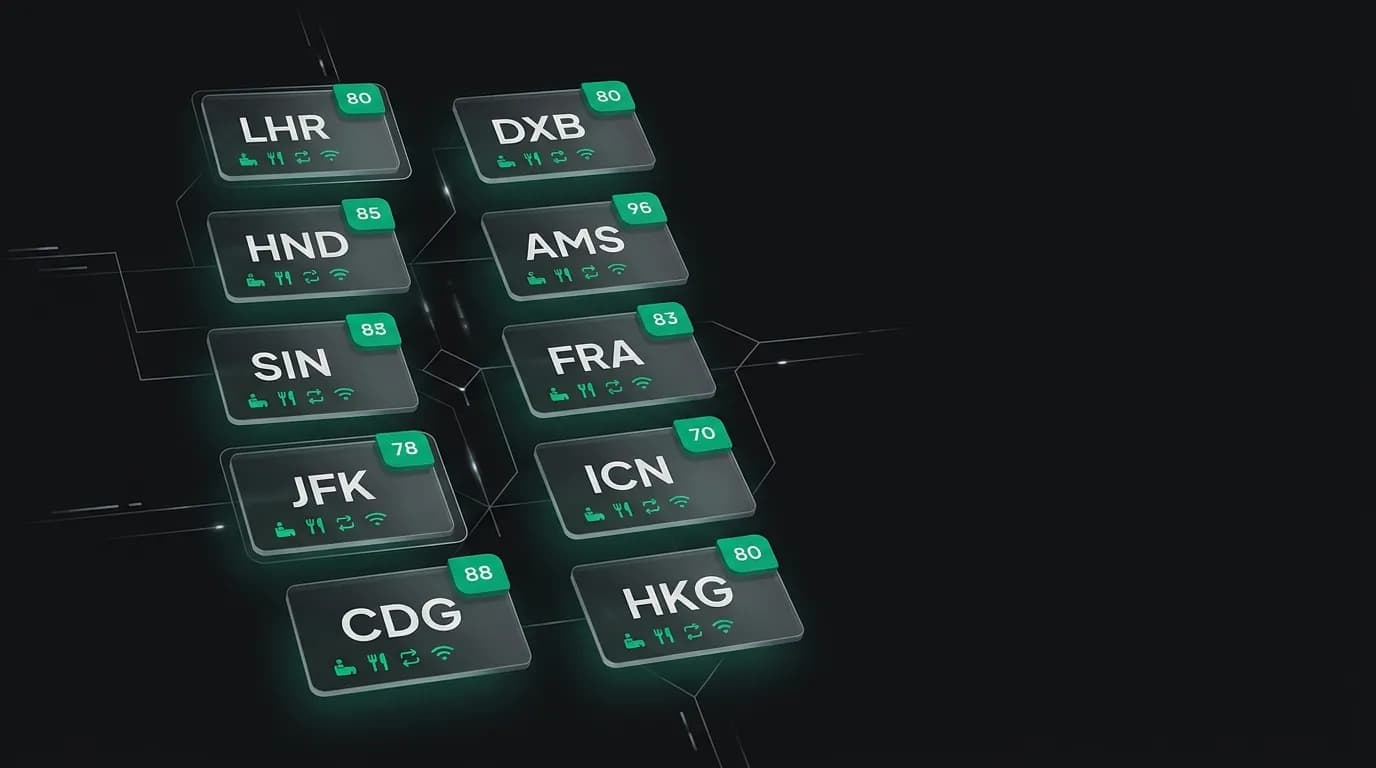
You have a three-hour layover in Istanbul. Is that enough time to get through passport control, change terminals, clear security again, and make your next flight? Or is it a relaxed connection with time for a lounge visit and a decent meal? The answer depends on data that most travelers do not have: terminal transit times, security queue averages, inter-terminal distances, and minimum connection time requirements.
Airport quality varies enormously across the world, and the difference between a good and bad layover airport can make or break the connection experience. Here is a data-driven look at 10 major international hubs across the dimensions that matter most to connecting travelers.
How airport data is aggregated
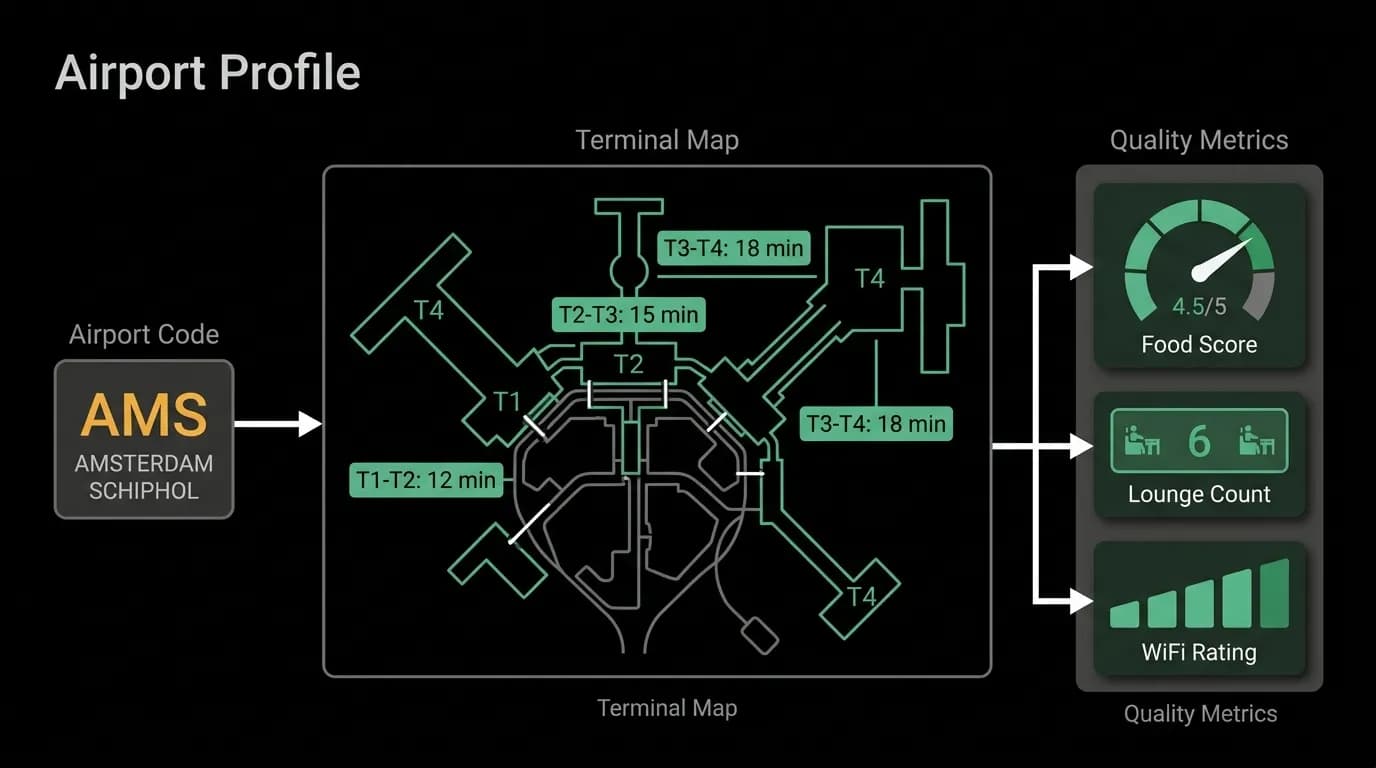
Airport quality assessment draws on several data dimensions. Transit times between terminals are measured from gate to gate, including walking distance, automated transport systems, and any security or immigration checkpoints required for international-to-international connections. Food quality is scored based on variety, price, and availability during off-peak hours. Lounge access captures the number and quality of lounges available to credit card holders, priority pass members, and business class travelers. Wi-Fi quality measures speed and reliability. And minimum safe connection time reflects the real-world time needed to make a connection, which often differs from the airline's official minimum.
European hubs
London Heathrow is one of the world's busiest airports with five terminals spread across a wide campus. Terminal changes can add 30 to 60 minutes depending on the specific pair, with the worst cases requiring a bus transfer. Food options are extensive but priced at a significant premium. Lounge access is good across all terminals. Wi-Fi is reliable. Minimum safe connection time for international-to-international: 90 minutes for same-terminal connections, 120-plus minutes for terminal changes.
Amsterdam Schiphol benefits from a single-terminal design where all gates are accessible past a central security point. This makes connections significantly faster than multi-terminal airports. Transit between distant gates takes 15 to 20 minutes on foot. Food quality is above average with good variety. Wi-Fi is strong. Minimum safe connection time: 50 to 60 minutes for most connections, making it one of the most efficient connecting hubs in Europe.
Frankfurt operates two main terminals connected by a sky train. International connections within Terminal 1 are straightforward, but Terminal 1 to Terminal 2 transfers add 20 to 30 minutes. Food options are solid if unspectacular. Lounge density is high given the hub status. Minimum safe connection time: 60 to 75 minutes within the same terminal, 90-plus minutes between terminals.
Asian hubs
Singapore Changi consistently ranks among the world's best airports and the data supports the reputation. The three main terminals are connected by automated transit, with transfer times of 5 to 15 minutes between terminals. Food quality is exceptional, with hawker-style options at reasonable prices alongside premium restaurants. Lounges are plentiful and high-quality. The airport's amenities (gardens, swimming pool, butterfly garden) make long layovers genuinely enjoyable. Minimum safe connection time: 60 to 75 minutes.
Dubai International processes enormous volumes of connecting traffic through Terminal 3, which is one of the world's largest. Connections within Terminal 3 are efficient, but the sheer size means walking distances can be substantial. Food options are extensive across price ranges. Lounge access is broad. Minimum safe connection time: 60 to 90 minutes depending on concourse.
Tokyo Narita has two terminals connected by a shuttle bus that takes 10 to 15 minutes. The airport is efficient but less modern than some Asian competitors. Food quality is predictably excellent given its location. Wi-Fi is good. For travelers connecting to domestic flights at Tokyo's Haneda airport, an inter-airport transfer is required (90-plus minutes), which the AI flags as a separate logistical challenge.
Americas hubs
New York JFK has six terminals operated by different carriers, with no airside connections between most of them. Terminal changes require exiting security, taking an AirTrain, and clearing security again — a process that can take 45 to 75 minutes. Food quality varies dramatically by terminal. Wi-Fi is adequate. Minimum safe connection time: 90 minutes within the same terminal, 150-plus minutes between terminals.
Miami International serves as the primary gateway between North America and Latin America. The airport's North Terminal is modern and efficient; other areas less so. Connections within the same concourse are fast, but the airport's sprawl means some connections require significant walking. Minimum safe connection time: 75 to 90 minutes.
Dallas/Fort Worth benefits from an organized terminal design with an automated train connecting all terminals. Transfer times are 15 to 25 minutes between distant terminals. Food options are extensive. The airport handles connections efficiently due to its hub carrier's dominance. Minimum safe connection time: 60 to 75 minutes.
Toronto Pearson operates two terminals connected by a train link. Terminal 1 handles most international traffic with efficient connections. Terminal changes add 20 to 30 minutes. Minimum safe connection time: 75 to 90 minutes.
Airline minimums vs. reality
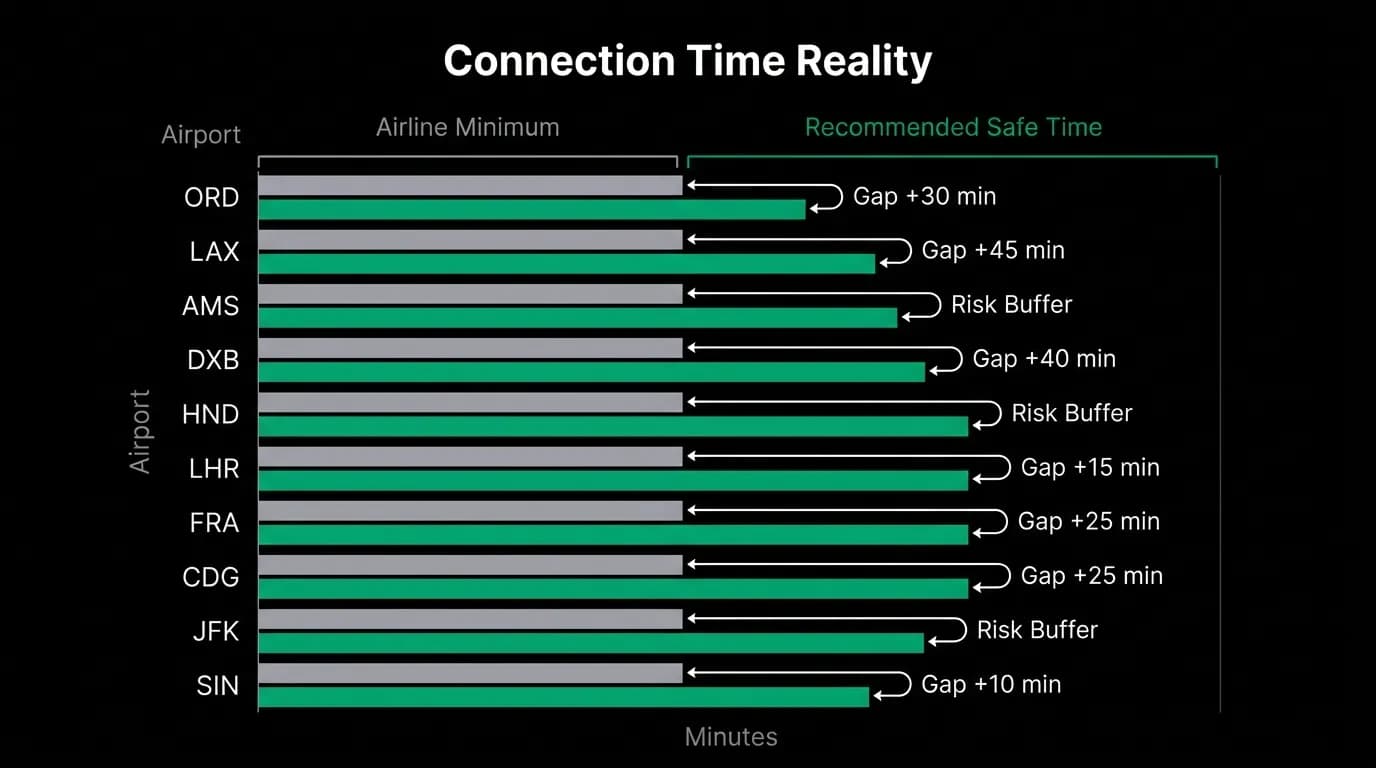
A critical data point for connecting travelers: the minimum connection time published by airlines is often shorter than the minimum safe connection time based on real-world data. Airlines set their minimums based on what is theoretically possible. Real-world data accounts for security queues, immigration lines, walking speed for non-sprinting humans, and the occasional delayed inbound flight.
The gap between airline minimum and data-recommended safe time is typically 15 to 30 minutes. The AI uses the more conservative data-recommended time when evaluating connections, because a missed connection that is technically the airline's fault (because the published minimum was insufficient) is still a missed connection from the traveler's perspective.
Check your layover airport on Nowah for real-time quality data. The AI scores connection quality across all these dimensions so you can book connections with confidence.
Nowah is an AI travel agent that searches and books real flights and hotels through conversation — no filters, no thirty open tabs. Plan your next trip.