Preparing for Google Play: Cross-Platform Launch Checklist
Cross-platform launch prep — device fragmentation testing, Play Store review differences, and how we expect Android behavior to diverge from iOS.
Android is not "iOS with a different store badge." Viewport differences, OEM skins, and review process differences all bite teams that only dogfood on one platform. This is our pre-ship checklist for Play — written so we catch layout and policy issues in testing, not after listings go live.
Play Store versus App Store review
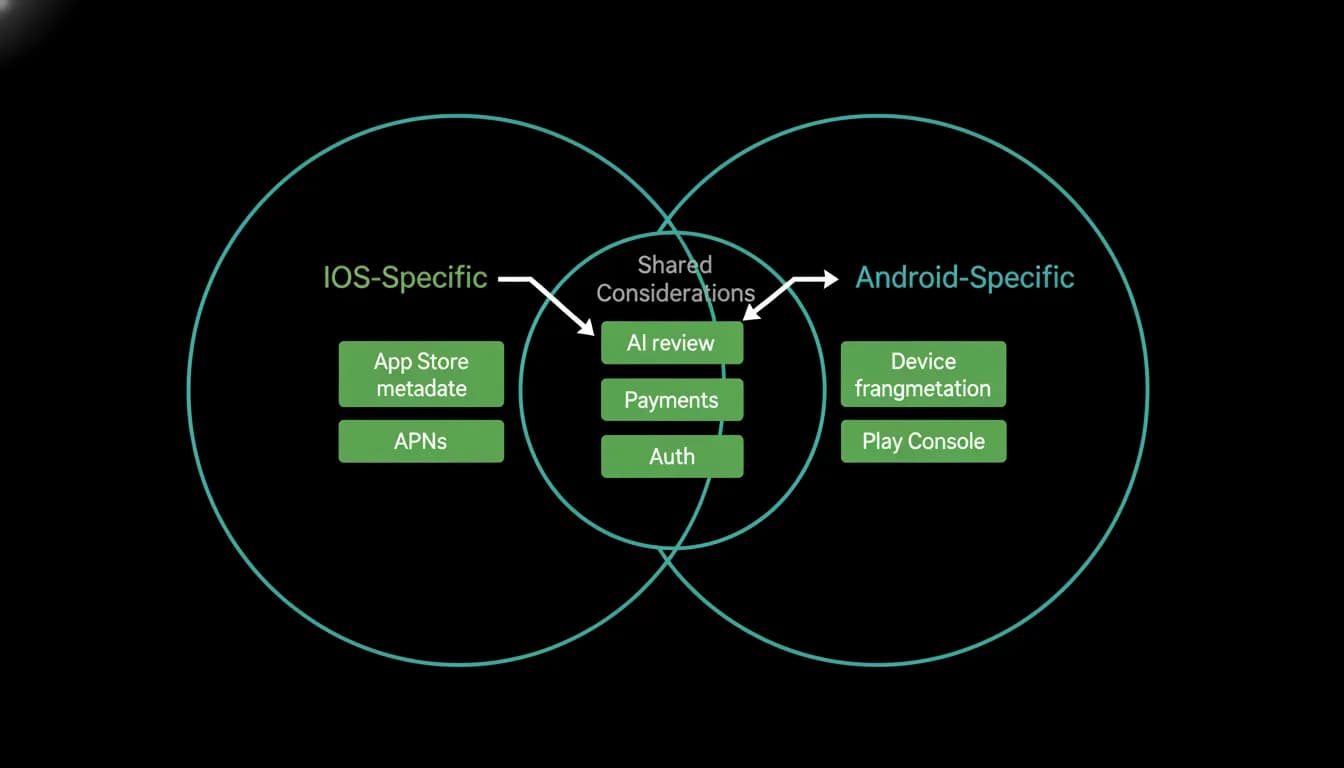
Google's review process differs from Apple's in ways that matter for AI apps. Apple's review was meticulous about our AI content moderation documentation. Google's review was more concerned with our data handling and privacy disclosures. The same app required different documentation emphasis for each store.
Google also has stricter requirements around background processes and battery usage. Our push notification system and background status polling, which ran without issue on iOS, triggered Play Store warnings about battery impact on Android. We had to optimize our polling intervals and add intelligent batching to pass the review.
The review timeline was faster on Google Play, but the iteration cycle felt longer because of the broader testing surface. Every fix needed verification across a matrix of devices, Android versions, and manufacturer-specific rendering differences.
Device fragmentation testing
We built the app with a cross-platform framework that handles most platform differences automatically. But "most" is the key word. The remaining differences cluster in areas that matter most for a travel booking app: payment sheet rendering, push notification behavior, and chat interface scrolling.
The testing matrix covers three dimensions. Screen sizes from compact phones to large tablets. Android versions from our minimum supported version through the latest. And manufacturer skins, because Samsung, Xiaomi, and Pixel devices can render the same UI components differently.
We could not test every combination. Instead, we identified the top ten devices by our target demographic's market share and tested thoroughly on those. Everything else was covered by automated UI testing and the beta program, where testers brought their own devices.
Platform-specific behaviors
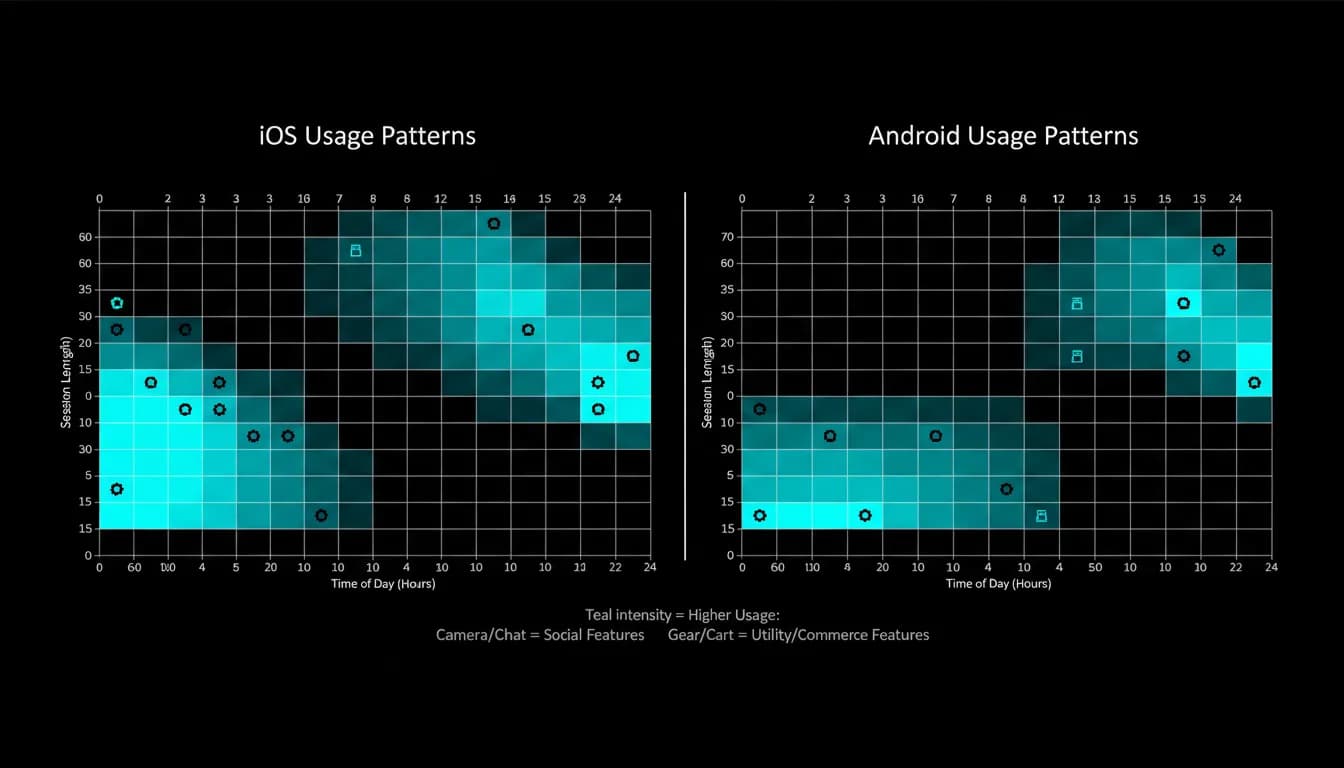
Android users interacted with the AI agent differently than iOS users in ways teams often miss. Android users sent longer messages on average, possibly because of differences in keyboard behavior and autocomplete. They used voice input more frequently. They were more likely to share trip details externally, using Android's share sheet more actively than iOS users used their equivalent.
Android users were also more sensitive to perceived performance. The same response time that felt acceptable on iOS felt slow on Android, possibly because Android users are accustomed to apps that load content progressively. We prioritized streaming optimizations on Android as a result, ensuring that the agent's responses appeared incrementally rather than as a single block.
Cross-platform launch timing
We debated whether to launch simultaneously on both platforms or stagger by two weeks. We chose to stagger, launching iOS first and Android two weeks later. This gave us time to address iOS-specific issues before adding the complexity of Android, and it let us use iOS launch learnings to improve the Android launch.
In retrospect, this was the right call. The iOS launch surfaced onboarding and agent behavior issues that we fixed before Android users ever encountered them. The Android launch surfaced device fragmentation issues that were unique to that platform. Staggering let us focus on one category of problems at a time.
Android represents over 70 percent of the global smartphone market. For a travel platform with global ambitions, Android is not optional. But it demands its own attention, its own testing discipline, and its own launch plan. Treating it as "the same app on a different platform" is how you end up with flight cards that disappear off-screen.
Nowah is an AI travel agent that searches and books real flights and hotels through conversation — no filters, no thirty open tabs. Plan your next trip.