Hotel Cards: Images, Prices, and Trust
The hero image does 60% of the selling on a hotel card. Pair it with a clear nightly rate, key amenity icons, and location context to close the remaining 40%.
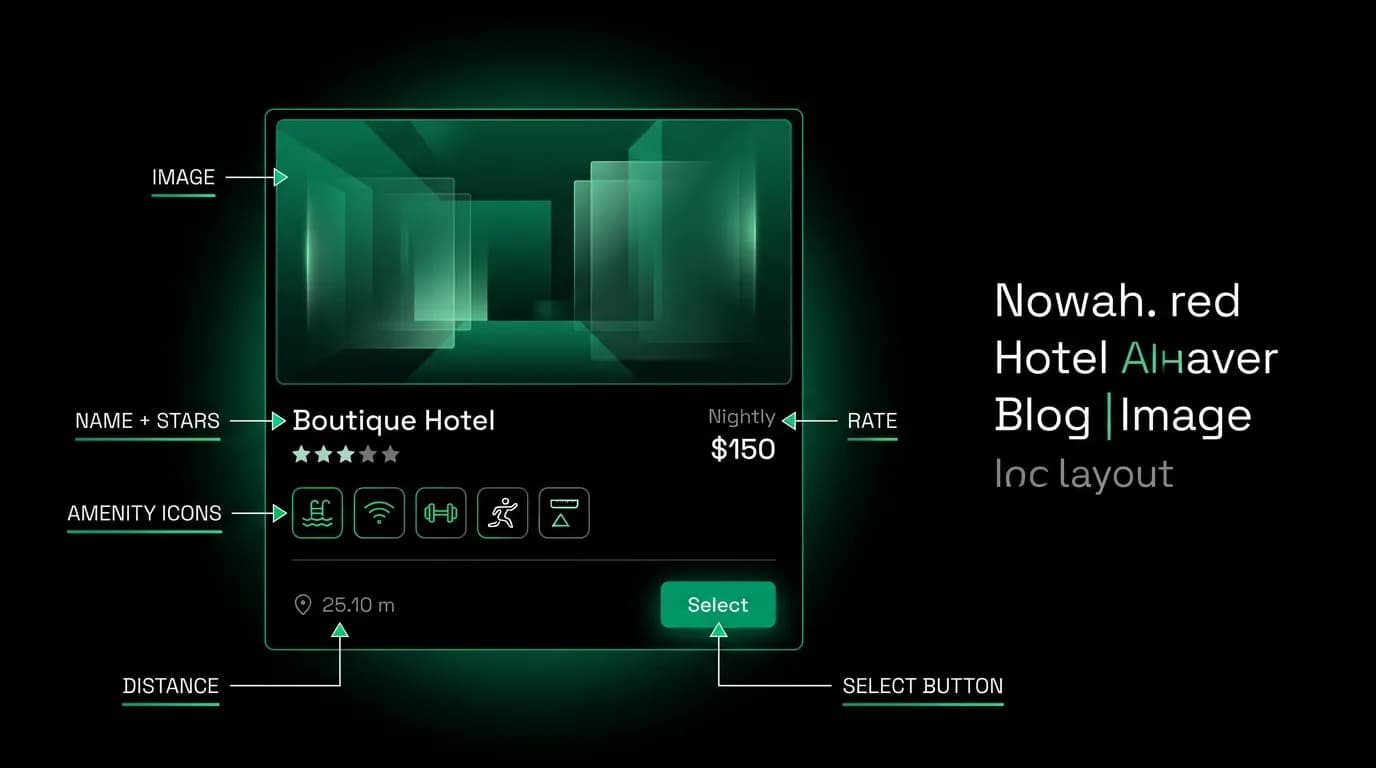
A hotel card is fundamentally different from a flight card. Flights are functional decisions — you compare times, prices, and stops. Hotels are emotional decisions — you imagine yourself in the room, by the pool, on the balcony. The hero image on a hotel card does approximately 60 percent of the selling. The remaining 40 percent is rational: price, location, amenities, reviews.
Designing a hotel card means balancing emotional pull with informational clarity in a compact vertical space. Get the image wrong and the card feels like a data sheet. Get the data wrong and the card feels like a Pinterest pin. Both fail.
The hero image carries the card
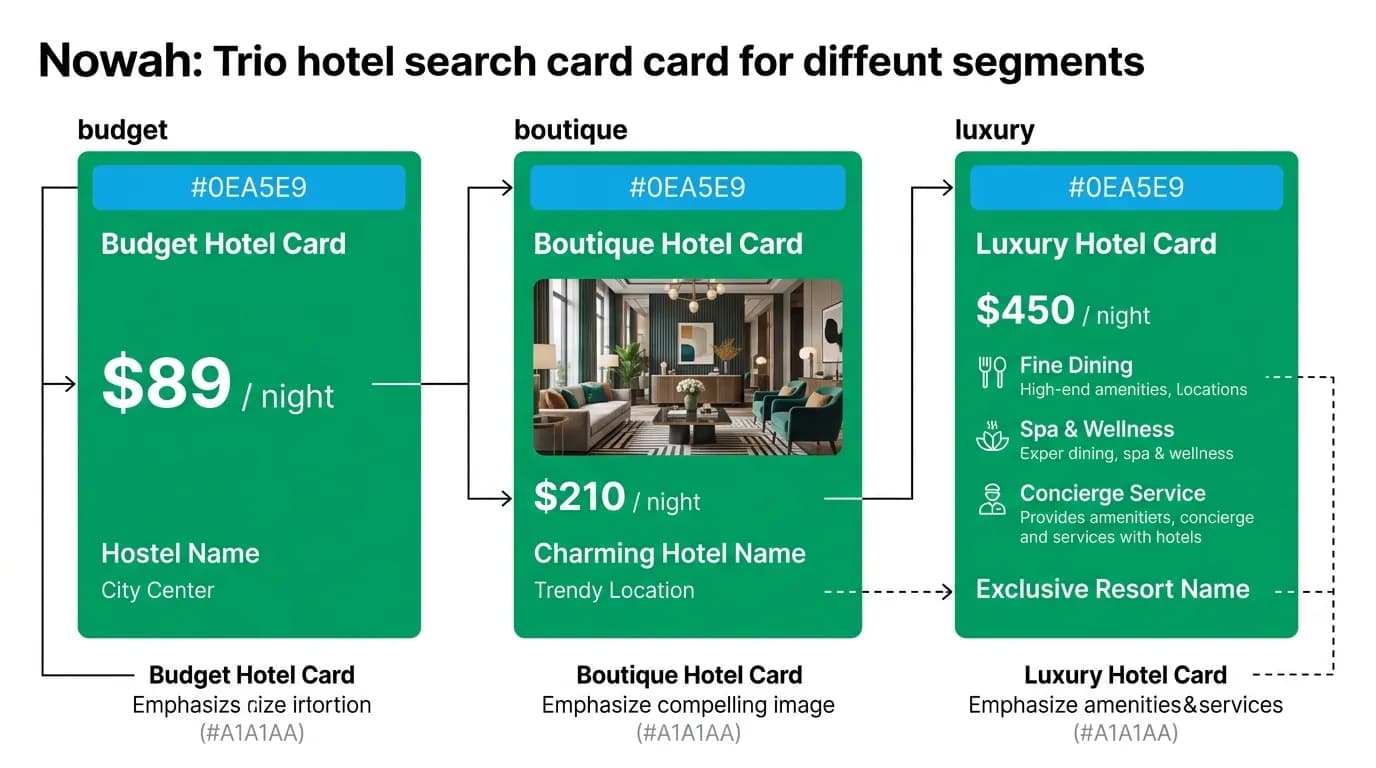
The hero image occupies the top 120 pixels of the hotel card. This is the most generous allocation of space to any single element in our card system, and it is deliberate. A hotel is a place you will physically inhabit. You need to see it.
The image is not a thumbnail. It is a full-width, high-quality photograph that fills the card horizontally. On a pure black background, the hotel image is a burst of color and light — it draws the eye immediately and creates an emotional response before the user reads a single data point.
Image quality matters enormously. A grainy, poorly lit, or generic stock photo undermines the entire card. We render images with optimized compression that preserves quality at mobile resolutions. If a provider image falls below quality thresholds, we prioritize alternative images from the property's gallery.
The image also establishes expectations. A boutique hotel image should feel intimate and curated. A resort image should feel expansive and luxurious. A budget hotel image should feel clean and comfortable. The image sets a tone that the price, amenities, and location data then confirm or complicate.
Nightly rate versus total price
Hotel pricing is where trust often breaks down in travel interfaces. Many platforms show a low nightly rate in large text to attract clicks, then reveal the significantly higher total (with taxes, fees, and resort charges) deep in the booking flow. This bait-and-switch erodes trust at the worst possible moment.
We display both the nightly rate and the total price on the card. The nightly rate is prominent for comparison purposes — users think about hotels in per-night terms. The total price appears below it in smaller text with a "total for X nights" label. Both numbers are visible on the card without scrolling or expanding.
If the total includes taxes and fees, we say so. If it does not (because the provider API does not include them at the search stage), we say that too: "Taxes and fees calculated at checkout." Transparency about what the price includes is a trust signal. Vagueness is a trust destroyer.
The price is rendered in the accent green, matching our flight card convention. This consistency across card types means users always know where to look for the price. Green number equals cost. No guessing.
Amenity iconography
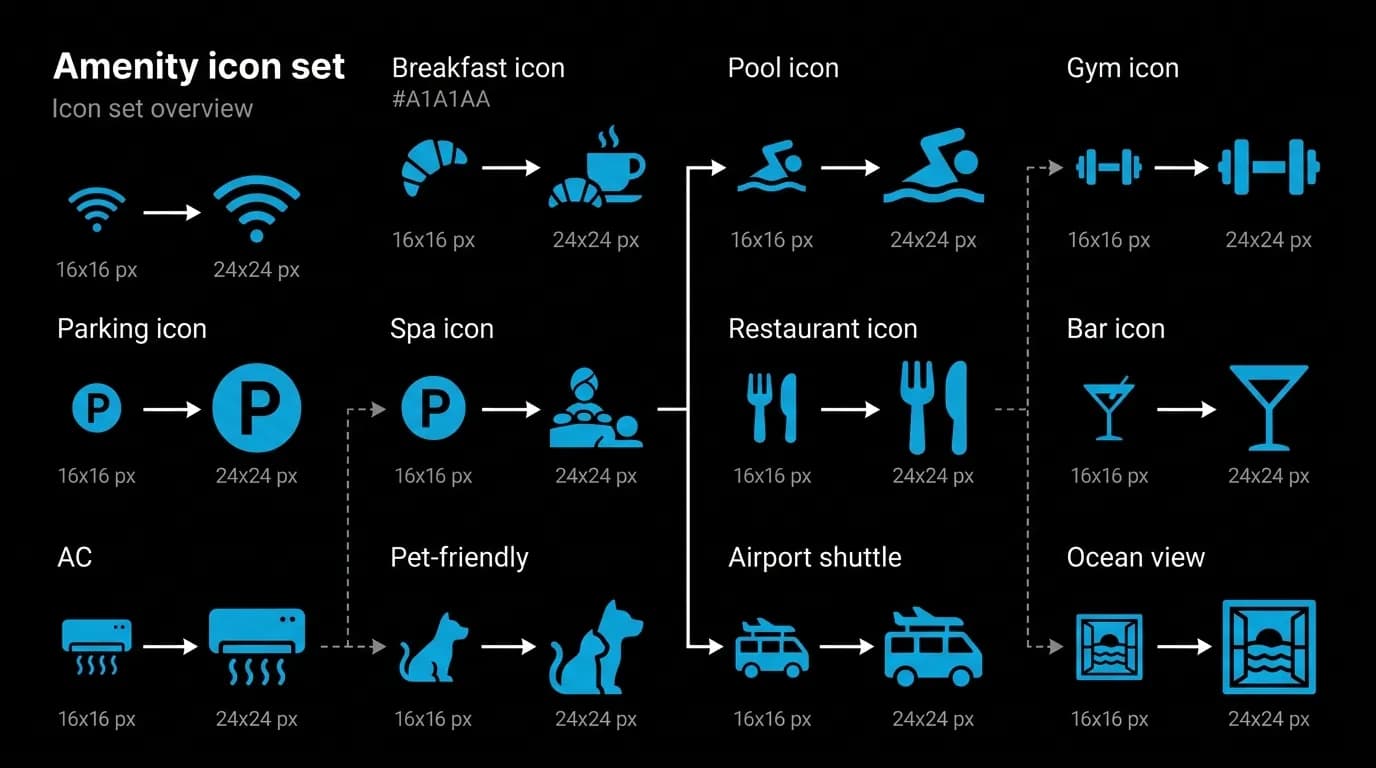
Below the property name and star rating, a row of small icons communicates key amenities: Wi-Fi, breakfast included, pool, gym, parking, restaurant. Each icon is 16 by 16 pixels and must be instantly recognizable at that size.
Icon design at 16 pixels is an exercise in radical simplification. A Wi-Fi icon cannot have subtle detail — it needs three arcs and a dot, nothing more. A pool icon is a simple water wave. A breakfast icon is a coffee cup. Each icon is reduced to its most essential visual element.
We limit the amenity row to four to six icons per card. Showing every amenity (spa, bar, AC, pet-friendly, airport shuttle, ocean view, room service, laundry, concierge) would overflow the row and create visual noise. The card shows the most decision-relevant amenities. The full amenity list is available in the review modal.
The selection logic is contextual. For a beach resort, pool and ocean view take priority. For a business hotel, Wi-Fi and gym matter more. For a family property, breakfast included and parking are highlighted. The AI knows the context of the search and surfaces the amenities most relevant to the user's needs.
Star ratings and distance
Star ratings provide a quick quality signal. We display them as small star icons next to the property name. Five stars is universally understood. We do not inflate or editorialize ratings — we display what the property is officially rated.
Distance context anchors the hotel in geography. "0.3 km from city center" or "5 min walk to the beach" gives the user a spatial reference without requiring them to open a map. The distance is shown relative to the most relevant landmark for the search context — city center for urban stays, the beach for coastal destinations, the convention center for business travel.
This distance text is small and secondary, but its absence would be conspicuous. A hotel card without location context forces the user to ask "Where is this?" which interrupts the evaluation flow. A single line of distance text prevents that interruption.
Building a hotel card that converts
The hotel card conversion path is: see image (emotional interest) then check price (affordability filter) then scan amenities (suitability check) then note location (convenience check) then tap "Select" (commitment).
Each element in this sequence is positioned to match the evaluation order. Image at top for first impression. Price at right for quick scan. Amenities in a row for rapid assessment. Location at bottom for final context. "Select" button at bottom-right in the thumb zone for immediate action.
The average hotel booking is $450 per stay. At that price point, the card is not just a display component — it is a $450 sales pitch in 300 pixels. Every element earns its position by contributing to the user's confidence that this hotel is worth their money and their time.
Nowah is an AI travel agent that searches and books real flights and hotels through conversation — no filters, no thirty open tabs. Plan your next trip.