How We Handle Multi-Currency Travel Without Making Your Head Spin
A New Yorker booking a Tokyo hotel through a London airline touches three currencies. Our payment layer abstracts the complexity into one clear price and one clear charge.

A New Yorker books a flight on a European airline to Tokyo. The flight is priced in British pounds. The hotel is priced in Japanese yen. The user pays in US dollars. Three currencies, three conversion rates, and a headache waiting to happen.
For most travelers, multi-currency booking means confusion. Which price is the real price? What exchange rate am I getting? Are there hidden conversion fees? The math is opaque and the anxiety is real.
We made it invisible.
The user experience
You see one price in your currency. Period. When the agent recommends a flight to Tokyo, you see the price in dollars (or whatever your home currency is). When it recommends a hotel, same thing. When you see the total trip cost, it is one number in one currency.
No mental math. No currency converter tabs. No wondering whether the exchange rate is fair.
What happens underneath
Behind that simple number, the infrastructure handles significant complexity.
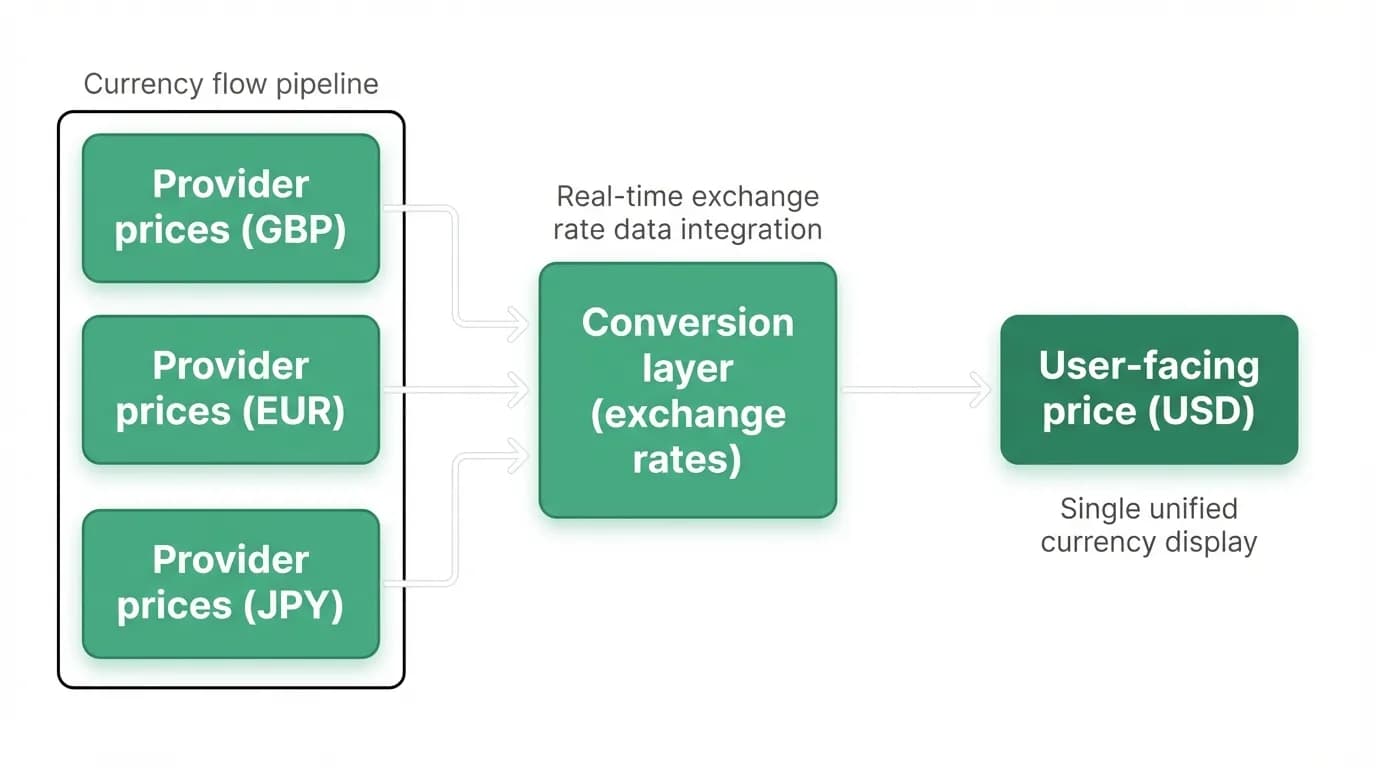
Our travel data provider returns pricing in the local currency of the supplier. A flight from London to Tokyo might be priced in pounds. A Tokyo hotel might be priced in yen. The agent receives these multi-currency prices and normalizes them into the user's home currency using real-time exchange rates.
The payment processor handles the actual currency conversion at the point of transaction, using competitive exchange rates. The user is charged in their home currency.
There are no hidden markups on currency conversion. The rate you see is the rate you pay. If the underlying pricing changes between search and booking, the price verification step catches the discrepancy and shows you the updated amount before you confirm.
Why this matters
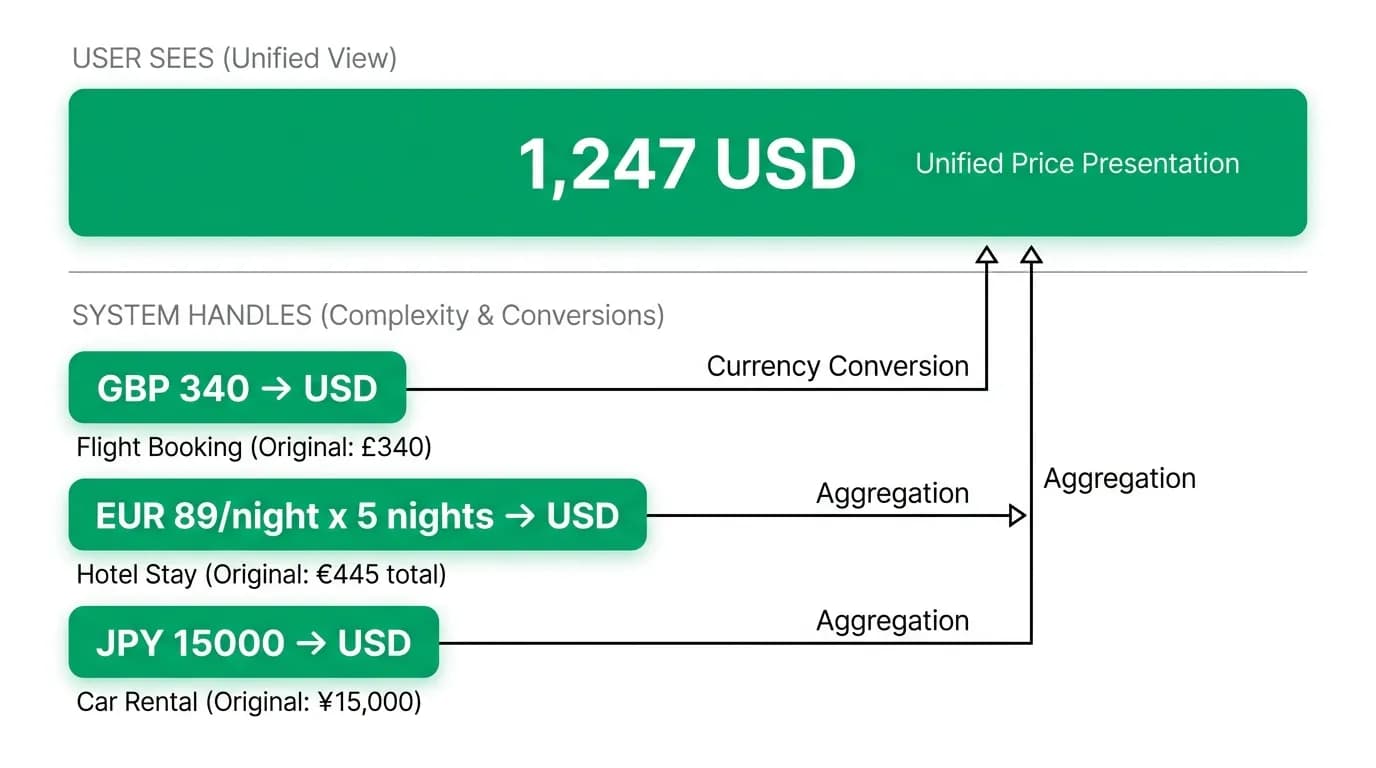
International trips can touch two to four currencies in a single booking. For users, every additional currency is additional confusion and additional anxiety about hidden costs.
By abstracting currency complexity entirely, we remove one of the most stressful aspects of international booking. The user focuses on the trip, not the exchange rates.
This is an example of our broader design philosophy: the technology should be invisible. The user should experience simplicity. The complexity is our problem to solve, not theirs.
Travel should feel simple even when the underlying transactions are complex. That is what good infrastructure enables.
Nowah is an AI travel agent that searches and books real flights and hotels through conversation — no filters, no thirty open tabs. Plan your next trip.